Walk into any boutique or scroll through luxury e-commerce sites, and you’ll notice two terms used almost interchangeably: “silk blouse” and “silk shirt.” One appears in workwear sections, the other in evening collections. One might cost $80, the next $250—same fabric, similar silhouette. So what gives? Are these distinctions rooted in design and function, or are consumers simply being charged more for clever branding?
The answer isn’t as straightforward as yes or no. While both garments are made from silk and share core qualities like softness, sheen, and breathability, subtle—but meaningful—differences in cut, construction, context, and branding shape how they’re categorized, priced, and worn.
Defining the Terms: What’s in a Name?
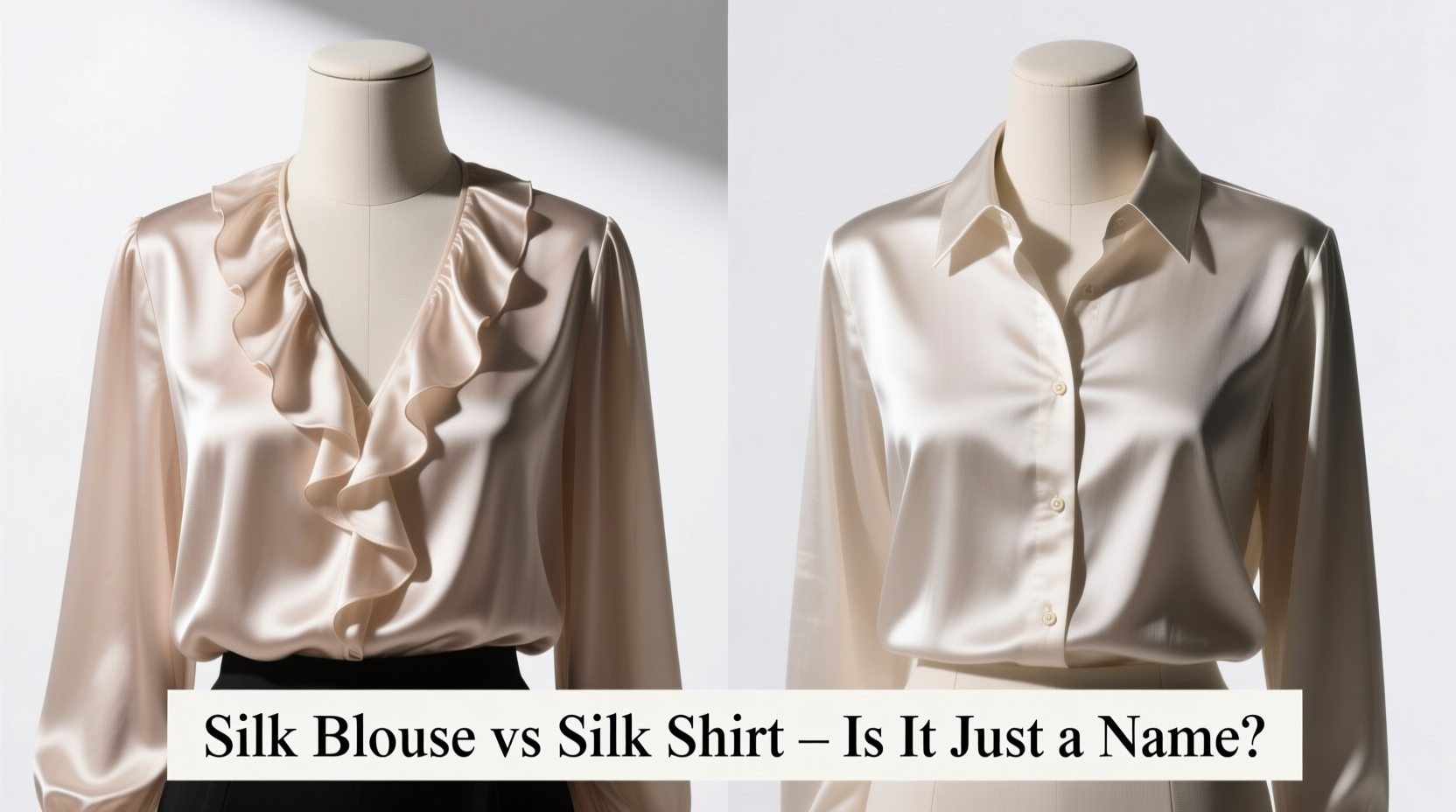
At first glance, the distinction seems semantic. A “blouse” traditionally refers to a loose-fitting, often decorative top typically associated with women’s wear. It may feature ruffles, pleats, draping, or intricate details around the neckline and cuffs. Blouses are commonly paired with skirts or tailored pants and lean toward formal or semi-formal aesthetics.
A “shirt,” by contrast, implies structure. Think button-down collars, structured shoulders, straight hems, and functional pockets. Shirts borrow from menswear silhouettes and are designed for versatility—worn tucked in, layered under blazers, or styled casually with jeans.
But when both are made from 100% mulberry silk, does the label really matter?
Tip: Don’t assume price reflects quality alone—always check the momme weight, stitching, and lining to assess true value.Construction & Design: Where the Devil Lies in the Details
The real divergence between a silk blouse and a silk shirt lies not in the fabric but in how it’s used. Consider these key differences:
- Cut and Fit: Silk shirts tend to follow boxier, more symmetrical patterns with minimal draping. Blouses often use bias cuts, gathers, or tucks to create volume and movement.
- Neckline & Collar: Shirts usually have classic pointed or button-down collars. Blouses may feature peter pan collars, V-necks, off-the-shoulder designs, or lace trims.
- Sleeve Style: Shirt sleeves are typically straight and finished with simple cuffs. Blouse sleeves might include bishop, puff, or lantern shapes with elastic or ties.
- Hemline: Shirts often have straight, longer hems meant to be tucked. Blouses can be cropped, curved, or asymmetrical for untucked styling.
These variations affect not only appearance but also production complexity. A silk blouse with hand-rolled hems and French seams requires more labor than a standard shirt with machine-stitched edges—directly influencing cost.
Case Study: The $120 Shirt vs. The $220 Blouse
Take two garments from the same brand, both labeled “100% Mulberry Silk.” The “Classic Silk Shirt” retails at $120. It has a point collar, single chest pocket, and standard button placket. The “Luxe Silk Blouse” costs $220. It features an exaggerated puff sleeve, hidden side zipper, interior lining, and hand-finished seams.
Same fabric supplier. Same care instructions. Yet the blouse takes 40% more time to assemble due to delicate detailing. The markup isn’t arbitrary—it reflects craftsmanship. But here’s the catch: if you don’t value puff sleeves or lining, you’re paying for elements you won’t use.
“Design intent separates a shirt from a blouse. One solves a problem—professional polish. The other evokes emotion—elegance, drama, femininity.” — Lena Torres, Fashion Designer & Textile Consultant
Material Quality: Not All Silk Is Created Equal
Even within silk, disparities exist. Garments labeled “silk” could range from 19-momme charmeuse to ultra-light 12-momme crepe de chine. Momme (mm) weight measures silk density—the higher the number, the heavier, more durable, and lustrous the fabric.
A high-end silk shirt might use 22-momme silk with a tight weave for wrinkle resistance, while a budget blouse uses 16-momme silk that snags easily. Always inspect the product details. Many brands exploit vague labeling to justify premium prices without delivering superior material.
Comparison Table: Silk Blouse vs. Silk Shirt
| Feature | Silk Shirt | Silk Blouse |
|---|---|---|
| Typical Cut | Structured, straight | Flowy, draped |
| Collar Style | Pointed, button-down | Peter pan, notch, or none |
| Sleeves | Standard, cuffed | Puff, bishop, balloon |
| Intended Use | Office wear, layering | Evening events, statement looks |
| Common Price Range | $90–$180 | $150–$300+ |
| Likely Construction | Machined seams, fewer details | Hand-finishing, lining, darts |
Branding & Psychology: The Power of Labeling
There’s no denying that marketing plays a role. Calling a garment a “blouse” can elevate its perceived femininity and exclusivity. “Shirt” sounds utilitarian—even democratic. Luxury brands often rebrand simple silk tops as “artisan blouses” to justify higher margins.
In a 2022 retail analysis, identical silk garments were tested under two names. When labeled “couture silk blouse,” 68% of shoppers deemed it “worth $200+.” Under “classic silk shirt,” only 32% assigned the same value—even when shown the same photos.
This isn’t manipulation—it’s positioning. But it means consumers must look beyond nomenclature and ask: What am I actually paying for?
Tip: Flip the care label. If it says “dry clean only” and has no lining, question whether the price reflects luxury or just labeling.How to Decide What You Really Need
Before purchasing, consider your lifestyle, wardrobe goals, and how you plan to wear the piece. Here’s a step-by-step guide to making a value-driven choice:
- Assess Your Wardrobe Gaps: Do you need a polished layer for work (shirt), or a standout piece for dinners (blouse)?
- Check Fabric Weight: Look for 19–22 mm silk for durability. Below 16 mm may feel flimsy.
- Evaluate Stitching: Inspect seams. Double stitching, French seams, or rolled hems indicate better construction.
- Consider Versatility: Can it be dressed up and down? A classic silk shirt often wins here.
- Read Between the Lines: If a “blouse” has no special details, it may just be a shirt with a fancier name.
Checklist: Smart Silk Buying Guide
- ✅ Confirm 100% pure silk (not silk-blend)
- ✅ Check momme weight (aim for 19+)
- ✅ Look for lined yokes or sleeves in blouses (prevents sheerness)
- ✅ Examine buttons—real mother-of-pearl lasts longer
- ✅ Review return policy—silk often requires trial fitting
Frequently Asked Questions
Is a silk blouse more formal than a silk shirt?
Not necessarily. Formality depends on cut and context. A tailored silk shirt with a slim tie can be more formal than a ruffled blouse worn casually. However, blouses are often designed with evening wear in mind, giving them a dressier reputation.
Can I wear a silk shirt untucked?
Yes—if it’s designed for it. Some modern silk shirts have curved hems and shorter lengths ideal for untucked wear. Traditional long-cut shirts may look awkward untucked unless specifically styled that way.
Why do some silk blouses cost twice as much as shirts?
Higher prices usually reflect complex design, handwork, lining, or lower production volumes. But always verify: sometimes the only difference is the label.
Final Thoughts: Pay for Value, Not Just Vocabulary
The line between silk blouse and silk shirt is blurred by design overlap and marketing flair. Yes, there are legitimate differences in construction, purpose, and craftsmanship. But no, you’re not always getting more fabric or better silk when you pay extra for a “blouse.”
The smartest approach? Judge each piece on its own merits. Ignore the name. Focus on fabric weight, seam quality, functionality, and how well it fits your life. Whether it’s called a shirt or a blouse, the best silk garment is the one you reach for again and again—not because it sounds luxurious, but because it feels worth it.
💬 Have you ever bought a “blouse” thinking it was special—only to realize it was just a shirt with a different name? Share your experience and help others shop smarter!








