The line between polished and overly formal can be thin—especially when choosing outerwear. The short socialite coat and the blazer are two wardrobe staples that often occupy similar visual space, yet serve distinct purposes. One exudes tailored elegance; the other leans into fashion-forward flair. Understanding their differences—and how they function in real-life settings—can help you avoid looking out of place at brunch or underdressed at a meeting.
A common concern among professionals and style-conscious individuals alike is whether wearing a blazer makes them appear too formal for casual or semi-formal environments. The answer isn’t binary. It depends on fabric, fit, pairing, and context. Let’s break down what sets these garments apart and how to wear each with intention.
Understanding the Key Differences
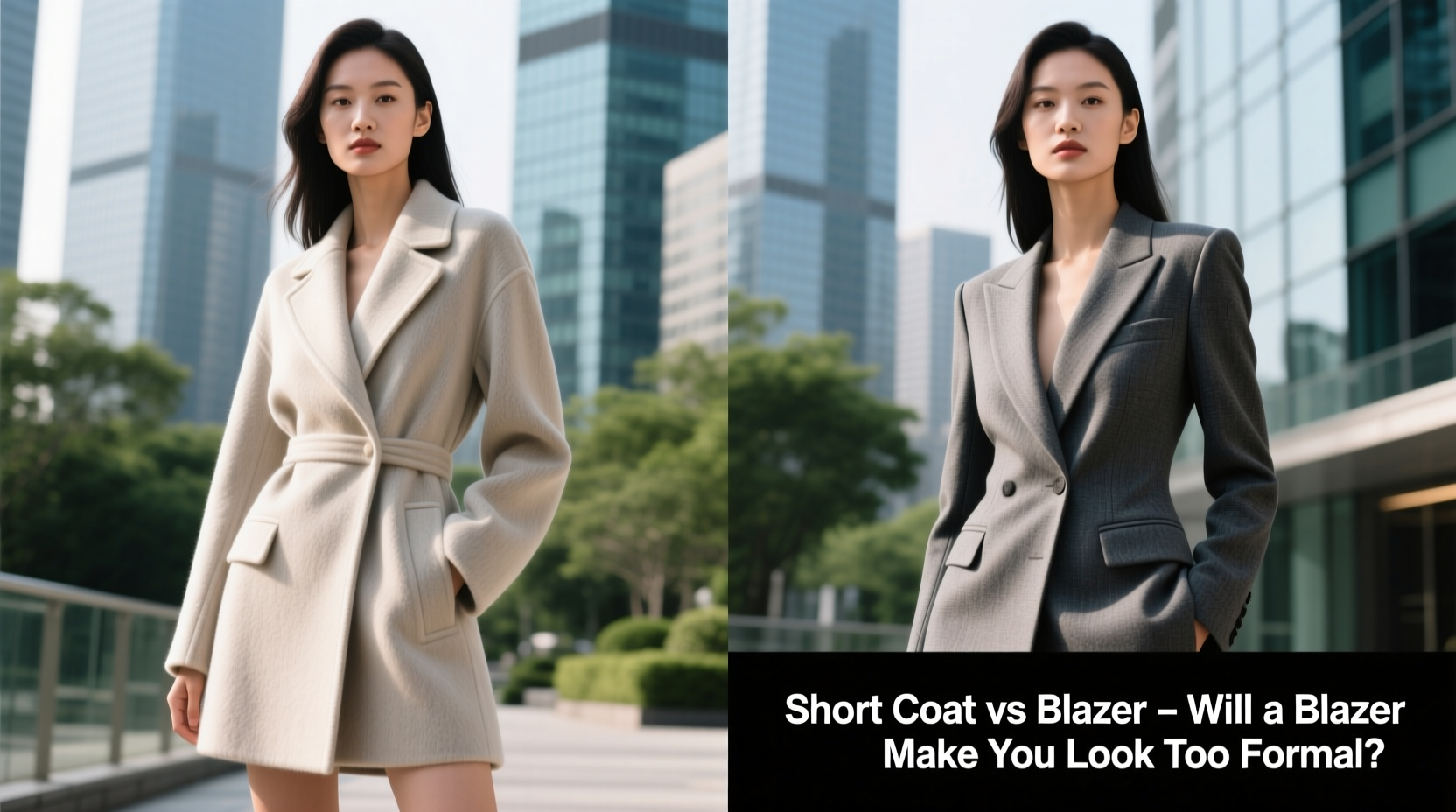
At first glance, a short socialite coat and a blazer may seem interchangeable—both are hip-length, structured jackets typically worn over shirts or sweaters. But their design origins, materials, and styling cues diverge significantly.
- Blazers are rooted in traditional suiting. They’re usually made from wool, cotton, or blends, feature notch lapels, functional buttons, and are designed to coordinate with trousers (though not always required). Their structure emphasizes symmetry and formality.
- Socialite coats, by contrast, are fashion-driven outerwear pieces. Often seen in luxe fabrics like velvet, satin, or textured wools, they prioritize aesthetic impact over uniformity. These coats frequently have exaggerated shoulders, unique closures, or bold linings, making them statement items rather than workhorse layering tools.
While a blazer signals preparedness and professionalism, a socialite coat announces personal style. Choosing between them should align with your environment—not just your mood.
Tip: If you're unsure which jacket fits the occasion, ask: \"Is this about credibility or charisma?\" Choose the blazer for the former, the socialite coat for the latter.When a Blazer Crosses the Formality Line
Not all blazers scream boardroom. But certain elements push them toward excessive formality in relaxed settings:
- Fully lined construction with heavy padding
- Pinstripes, chalk stripes, or suit-matching fabric
- Double-breasted cuts with gold or metallic buttons
- Pairing with dress pants and oxfords
In a coffee shop, creative studio, or weekend gathering, these combinations can create a disconnect—like showing up in full armor to a picnic. Yet, a well-chosen blazer in unstructured linen, soft tweed, or dark denim can blend seamlessly into smart-casual environments.
“Formality isn’t inherent in the garment—it’s constructed through context. A navy blazer with jeans reads approachable; the same piece with tie and oxfords reads executive.” — Marcus Lin, Style Consultant & Former Editor, *Men's Fashion Review*
Comparison: Socialite Coat vs Blazer – Practical Use Cases
| Feature | Short Socialite Coat | Blazer |
|---|---|---|
| Primary Purpose | Fashion statement, seasonal layering | Professional polish, structured layering |
| Typical Fabric | Velvet, silk-blend, embroidered wool | Wool, cotton, gabardine, hopsack |
| Fit | Dramatic silhouette, often oversized or cropped | Tailored, clean lines, fitted shoulders |
| Best For | Cocktail events, gallery openings, date nights | Office meetings, client calls, business travel |
| Paired With | Slip dresses, wide-leg trousers, heels | Dress shirts, chinos, loafers |
| Too Formal Risk? | Rare—more likely to stand out as bold | Moderate—if styled traditionally in casual spaces |
How to Wear a Blazer Without Looking Overdressed
The key to avoiding an overly formal appearance lies in deconstructing the blazer’s traditional associations. You don’t need to ditch it—you just need to reframe it.
- Choose Unstructured Fabrics: Opt for soft-shoulder blazers in cotton, linen, or jersey. These lack internal padding and feel more relaxed.
- Roll the Sleeves: A slightly rolled cuff instantly reduces rigidity and suggests ease.
- Swap the Shirt: Instead of a button-down, wear a crewneck tee, turtleneck, or henley underneath.
- Mix Textures: Pair the blazer with washed denim, corduroy, or suede boots to soften its presence.
- Leave It Open: Buttoned blazers signal formality. Wearing it open with a simple top beneath keeps the vibe effortless.
Real-Life Example: Office-to-Dinner Transition
Consider Sarah, a marketing strategist attending a client lunch followed by a casual drinks meetup. She wears a charcoal wool blazer over a white silk blouse and tailored trousers—perfect for the midday meeting. Afterward, she removes her heels, swaps her tote for a crossbody bag, rolls her blazer sleeves, and pairs it with dark jeans and ankle boots. The same blazer now feels intentional but unstudied. No change of clothes needed—just a shift in styling.
This scenario illustrates how context and coordination, not the garment itself, dictate perceived formality.
Checklist: Is Your Blazer Too Formal for the Occasion?
Before stepping out, run through this quick checklist:
- ✅ Is the fabric stiff or heavily structured? → May read as formal
- ✅ Are you wearing matching suit trousers? → Increases formality
- ✅ Is your shirt crisp with a tie? → Leans professional
- ✅ Are your shoes polished oxfords or brogues? → Adds seriousness
- ✅ Could someone mistake you for a wedding guest? → Reconsider the combo
If three or more apply, consider swapping in a socialite coat or reworking the outfit with casual layers.
FAQ: Common Concerns About Blazers and Formality
Can I wear a blazer to a casual outdoor event?
Yes, if styled appropriately. Choose a cotton or linen blazer, pair it with chinos or clean jeans, and wear casual footwear like suede loafers or minimalist sneakers. Avoid ties or dress shirts unless the weather demands extra warmth.
Is a black blazer always too formal?
Black can be sleek rather than severe. A black unstructured blazer in soft wool or cashmere blend works well for evening outings or creative workplaces. The issue arises when black is paired with full suits or shiny finishes—those combinations default to formal.
What’s a good alternative to a blazer for looking put-together without being stuffy?
A short socialite coat in a neutral tone (camel, taupe, deep green) offers structure with personality. Alternatively, a tailored chore coat or a wool peacoat in a modern cut provides polish without the corporate connotation.
Final Thoughts: Confidence Is the Best Fit
Whether you choose a short socialite coat or a blazer, the ultimate determinant of appropriateness is how you carry yourself. Garments don’t define formality alone—styling, posture, and self-assurance do. A blazer doesn’t have to belong only to boardrooms, just as a socialite coat shouldn’t be reserved for red carpets.
The goal isn’t to eliminate formality, but to control it. Mastering this balance allows you to navigate diverse environments with authenticity and ease. So next time you reach for your blazer, ask not “Will I look too formal?” but “How can I make this work for where I’m going?”
🚀 Ready to refine your wardrobe strategy? Try wearing your blazer with jeans and sneakers this week—then assess how people respond. Small experiments lead to big style breakthroughs. Share your experience in the comments!