Pairing Scotch whisky and cigars is less about rigid rules and more about thoughtful alignment of intensity, texture, and character. For newcomers, the prospect can feel intimidating—especially when faced with hundreds of whiskies and thousands of cigar vitolas. Yet the experience rewards patience and curiosity. A well-matched pairing doesn’t just coexist; it reveals hidden layers in both spirits and tobacco—softening tannins, lifting spice, or deepening caramel and oak notes in ways neither could achieve alone. This guide distills decades of connoisseur practice into clear, grounded principles—not dogma, but direction. It assumes no prior knowledge of peat levels or ligero wrappers, only an openness to taste deliberately and learn incrementally.
Why Pairing Matters Beyond Flavor
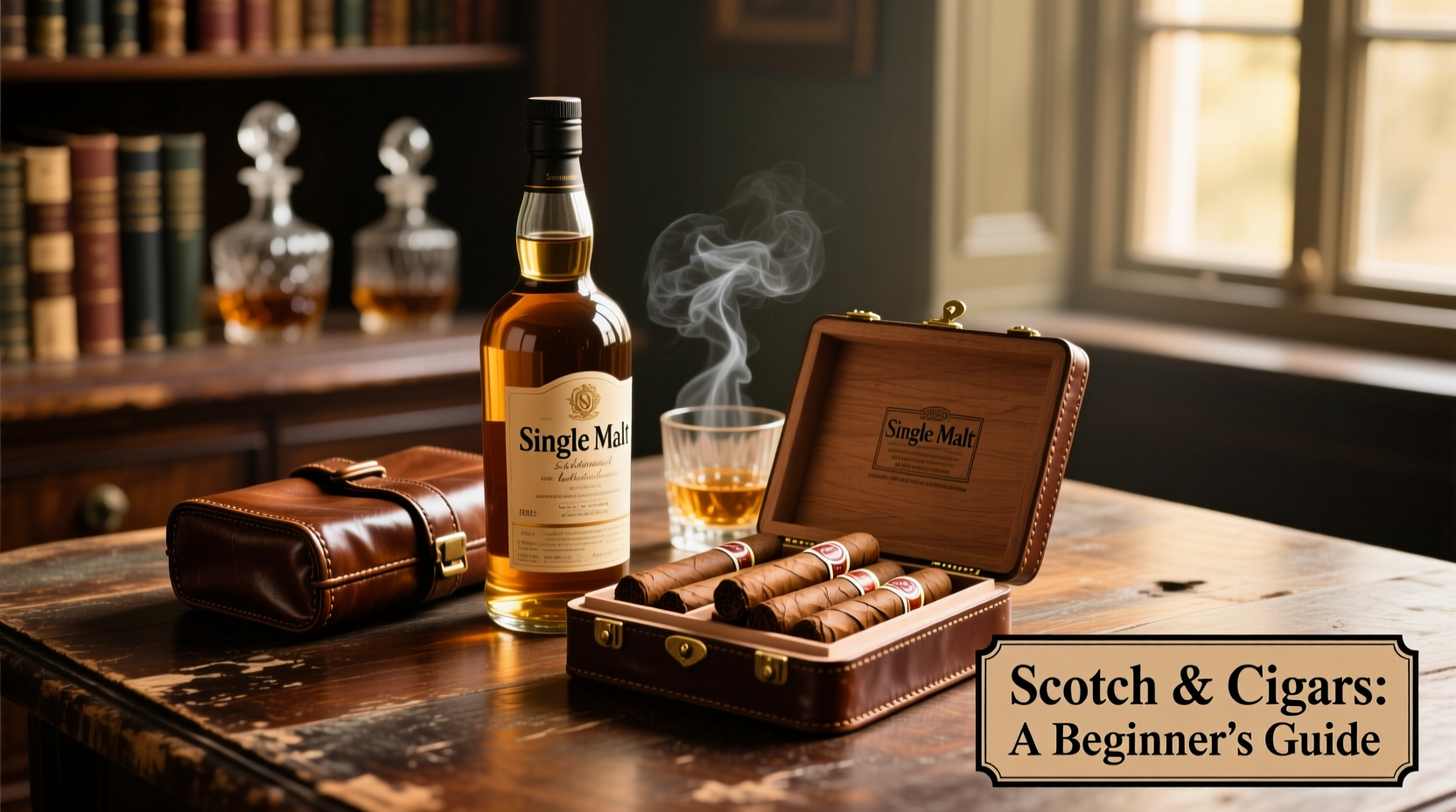
Scotch and cigars share a cultural rhythm: measured pace, ritual attention, and appreciation for craft built over time. But beyond ambiance, there’s physiological synergy. Alcohol slightly numbs the tongue’s bitterness receptors, allowing subtler tobacco flavors—like cedar, dried fig, or roasted almond—to emerge more clearly. Meanwhile, the natural oils and alkalinity of premium cigar smoke neutralize some of whisky’s ethanol heat and accentuate its sweetness and mouthfeel. This mutual softening creates space for nuance. As master blender Dr. Rachel McLeod observes, “A cigar doesn’t ‘go with’ a whisky—it converses with it. The best pairings are dialogues where neither dominates, but both listen.” That dialogue begins not with prestige labels, but with honest self-assessment: your palate’s sensitivity to smoke, tolerance for alcohol burn, and current comfort with bold flavors.
Foundational Principles: Matching Intensity, Not Just Origin
Forget geography-first thinking (“Islay with Dominican”). Begin instead with three interlocking dimensions: body, profile, and finish.
- Body refers to weight on the palate—light (e.g., unpeated Lowland malts), medium (many Speysides), or full (peated Islay or sherried Highlanders). Match cigar strength accordingly: light-bodied whiskies pair best with mild cigars (Connecticut-shaded, mild Dominican fillers); full-bodied whiskies need robust, slow-burning cigars (Nicaraguan or Honduran with Oscuro or Maduro wrappers).
- Profile describes dominant flavor families—smoky/peaty, fruity/floral, nutty/spicy, or rich/dessert-like. A smoky Laphroaig 10 Year Old will clash with a delicate Connecticut-wrapped cigar but harmonize with a medium-full Nicaraguan that offers leather, black pepper, and dark chocolate.
- Finish matters critically. A whisky with a long, drying, tannic finish (e.g., many ex-bourbon cask Highland malts) needs a cigar with creamy texture and low bite—otherwise the combination becomes astringent. Conversely, a short, sweet finish (like Glenfiddich 12) benefits from a cigar with lingering spice or earth to extend the sensory arc.
Classic Beginner Pairings (With Rationale)
Start with these five accessible, widely available combinations. Each uses bottles and cigars consistently stocked by reputable retailers—not limited editions or auction rarities. All assume proper storage: whisky at room temperature, cigars at 65% RH and 65°F (18°C).
| Scotch | Cigar | Why It Works |
|---|---|---|
| Glenmorangie Original (10 Year, unpeated, bourbon cask) | Arturo Fuente Hemingway Short Story (Connecticut Shade, Dominican) | Light body + citrus-honey notes meet mild creaminess and subtle cedar. Neither overwhelms; both highlight each other’s elegance. |
| Highland Park 12 Year Old (balanced peat, heather honey, orange) | Partagás Serie D No. 4 (Corojo wrapper, Cuban) | Medium body and restrained smoke complement the cigar’s earthy-sweet profile and gentle spice. Peat lifts the cigar’s leather; cocoa notes in the cigar deepen the whisky’s malt richness. |
| Lagavulin 16 Year Old (intense medicinal peat, seaweed, vanilla) | My Father Le Bijou 1920 (Nicaraguan, Oscuro wrapper) | Full-bodied, oily, and complex. The cigar’s black coffee, anise, and dark chocolate stand up to Lagavulin’s power without competing. Smoke tempers the whisky’s phenolic edge; whisky amplifies the cigar’s depth. |
| The Macallan 12 Year Old Sherry Oak (rich raisin, clove, polished oak) | Romeo y Julieta Wide Churchill (Maduro wrapper, Nicaraguan binder/filler) | Dessert-like sweetness meets dark, velvety smoke. The sherry’s dried fruit and cinnamon resonate with the cigar’s molasses and espresso notes; oak tannins align with the cigar’s structure. |
| Glengoyne 15 Year Old (unpeated, heavily sherried, honeyed spice) | Ashton Classic Corona (Dominican, Connecticut Broadleaf Maduro) | Unpeated but deeply fruited and spiced. The cigar’s sweet, earthy smoke bridges the gap between Glengoyne’s honey and oak—no clash, only layered warmth. |
Your First Tasting Session: A Step-by-Step Protocol
Don’t rush. A single, intentional 45-minute session teaches more than ten casual ones. Follow this sequence precisely the first three times you pair.
- Prepare the environment: Quiet space, no strong food aromas (avoid coffee, garlic, or perfume), clean palate (rinse with still water, no mint).
- Select one whisky and one cigar from the table above. Pour 30ml of whisky into a tulip-shaped nosing glass (or small tumbler). Cut and toast the cigar evenly—no charring, just even ignition.
- Initial nosing (whisky only): Hold glass 2 inches from nose. Breathe gently. Note 2–3 primary impressions (e.g., “vanilla,” “damp stone,” “green apple”). Write them down.
- First sip (whisky only): Sip 5ml. Let it coat your tongue. Note texture (oily? thin?), sweetness, acidity, and finish length. Swallow. Wait 20 seconds. Note what lingers.
- First cigar draw: After 60 seconds of burning, take a slow, cool draw. Hold smoke 3 seconds. Exhale. Note dominant flavors (wood? spice? sweetness?) and physical sensation (heat? dryness? creaminess?).
- The pairing sip: Immediately after second cigar draw, take another 5ml of whisky. Do not swallow yet. Hold it with the cigar smoke still present in your mouth. Swirl gently. Now swallow. Notice how flavors shift—does smoke soften alcohol heat? Does whisky lift a hidden note in the cigar?
- Compare and adjust: Repeat steps 4–6 two more times. Between sips, cleanse with water. After 15 minutes, reassess: has the whisky’s finish changed? Has the cigar’s flavor evolved? Jot observations.
Real-World Example: Sarah’s First Successful Pairing
Sarah, 34, worked in graphic design and had tried Scotch twice—both times finding it “too harsh.” She avoided cigars entirely, associating them with “old men’s lounges.” At a friend’s suggestion, she bought a bottle of Glenmorangie Original and a pack of Arturo Fuente Hemingway Short Stories. She followed the step-by-step protocol on a Sunday evening—no distractions, just her notebook and a quiet balcony. Her initial notes read: “Whisky smells like lemon cake. Tastes sweet, then warm, finish is short and clean. Cigar tastes like toasted bread and faint wood. First pairing sip: lemon cake came back stronger, and the cigar tasted smoother, almost buttery.” By the third pairing sip, she wrote: “The warmth isn’t heat anymore—it’s just… presence. Like the whisky and cigar are holding hands.” She repeated the session weekly for a month, gradually moving to Highland Park 12. Within six weeks, she’d joined a local tasting group—not as a collector, but as someone who finally understood how flavor conversations unfold.
Five Common Pitfalls (And How to Avoid Them)
Mistakes aren’t failures—they’re data points. Here’s what derails most beginners—and how to course-correct.
- Pitfall 1: Over-chilling the whisky. Ice or refrigeration dulls volatility, muting aroma and flattening texture. Solution: Serve at 18–20°C (64–68°F). If the bottle was cold, let it sit 10 minutes before pouring.
- Pitfall 2: Lighting the cigar with a lighter containing lighter fluid (e.g., Zippo). Chemical residue coats the wrapper, creating bitter, acrid off-notes. Solution: Use butane torch lighters or wooden matches (let sulfur burn off first).
- Pitfall 3: Pairing young, high-proof whiskies (e.g., cask strength under 5 years) with anything but the mildest cigars. Aggressive alcohol and raw grain notes overwhelm tobacco complexity. Solution: Stick to age-stated, 40–46% ABV whiskies for your first six months.
- Pitfall 4: Smoking too fast or too hot. Overheating the cigar releases ammonia and bitterness, masking nuanced flavors. Solution: Take one draw every 45–60 seconds. If the foot glows cherry-red, pause for 90 seconds to cool.
- Pitfall 5: Assuming “expensive = better match.” A $300 Macallan may overpower a $7 cigar, while a $60 Caol Ila 12-Year pairs beautifully with a $12 Perdomo Habano. Solution: Prioritize balance over price. Build your library gradually—one new whisky and one new cigar per month.
“The greatest pairings are never about prestige—they’re about humility. You show up curious, not certain. You taste slowly. You listen to what the liquid and leaf tell you—not what the label promises.” — James MacKenzie, Master Blender, The Glenrothes Distillery (2012–2023)
Frequently Asked Questions
Can I pair blended Scotch with cigars?
Absolutely—and often more successfully than single malts for beginners. Quality blends (e.g., Johnnie Walker Black Label, Chivas Regal 12, or Monkey Shoulder) offer consistency, balanced profiles, and approachable textures. Their grain whisky component adds silkiness that complements medium-bodied cigars exceptionally well. Avoid entry-level blends with heavy artificial coloring or excessive caramel additives—they create cloying, one-dimensional pairings.
Do I need a humidor for just a few cigars?
Yes—if you plan to store them longer than 48 hours. Even short-term exposure to dry air (below 60% RH) causes wrapper cracking and flavor loss. A small, passive desktop humidor ($40–$80) with Boveda 65g packs maintains ideal conditions reliably. Never store cigars in plastic bags, Tupperware, or Ziplocs—they trap ammonia and accelerate deterioration.
What if I don’t like peat? Can I still enjoy Scotch and cigars?
Peat is optional—not essential. Over 60% of Scotch production is unpeated. Focus on Speyside (Glenfiddich, Aberlour), Lowland (Auchentoshan), or lightly sherried Highland (Glengoyne, Tomatin) expressions. Pair them with Connecticut-shade or mild Maduro cigars. Your palate defines the journey, not tradition.
Conclusion: Your Palate Is the Only Authority You Need
This guide offers structure—not scripture. There is no universal “best” pairing, only your best pairing: the one that makes you pause, lean in, and say, “I didn’t know it could taste like that.” Start small. Choose one whisky and one cigar from the table. Follow the tasting protocol—not once, but three times over three weeks. Notice how your perception shifts: how the same whisky reveals new orchard fruit notes beside a different cigar, or how a previously “harsh” finish becomes comforting warmth when met with the right smoke. Every sip and draw is calibration. Every misstep refines your intuition. You’re not building a collection—you’re cultivating attention. And that attention, practiced patiently, transforms consumption into communion.
💬 Ready to begin? Pick your first pairing tonight—not tomorrow, not next weekend. Light it slow. Taste deliberate. Then come back and tell us what surprised you. Your observation might be the exact insight someone else needs to take their first confident step.