Sleep is a cornerstone of health, influencing everything from cognitive function to immune resilience. As wearable technology becomes central to personal wellness, consumers are increasingly relying on smartwatches to monitor their sleep patterns. Among the most popular options are the Samsung Galaxy Watch 6 and the Apple Watch SE. Both devices offer sleep tracking, but when it comes to accuracy, depth of insight, and long-term usability, they differ significantly. This comparison dives into sensor technology, software algorithms, third-party validation, and user experience to determine which device provides more reliable sleep data.
Sensor Technology and Data Collection
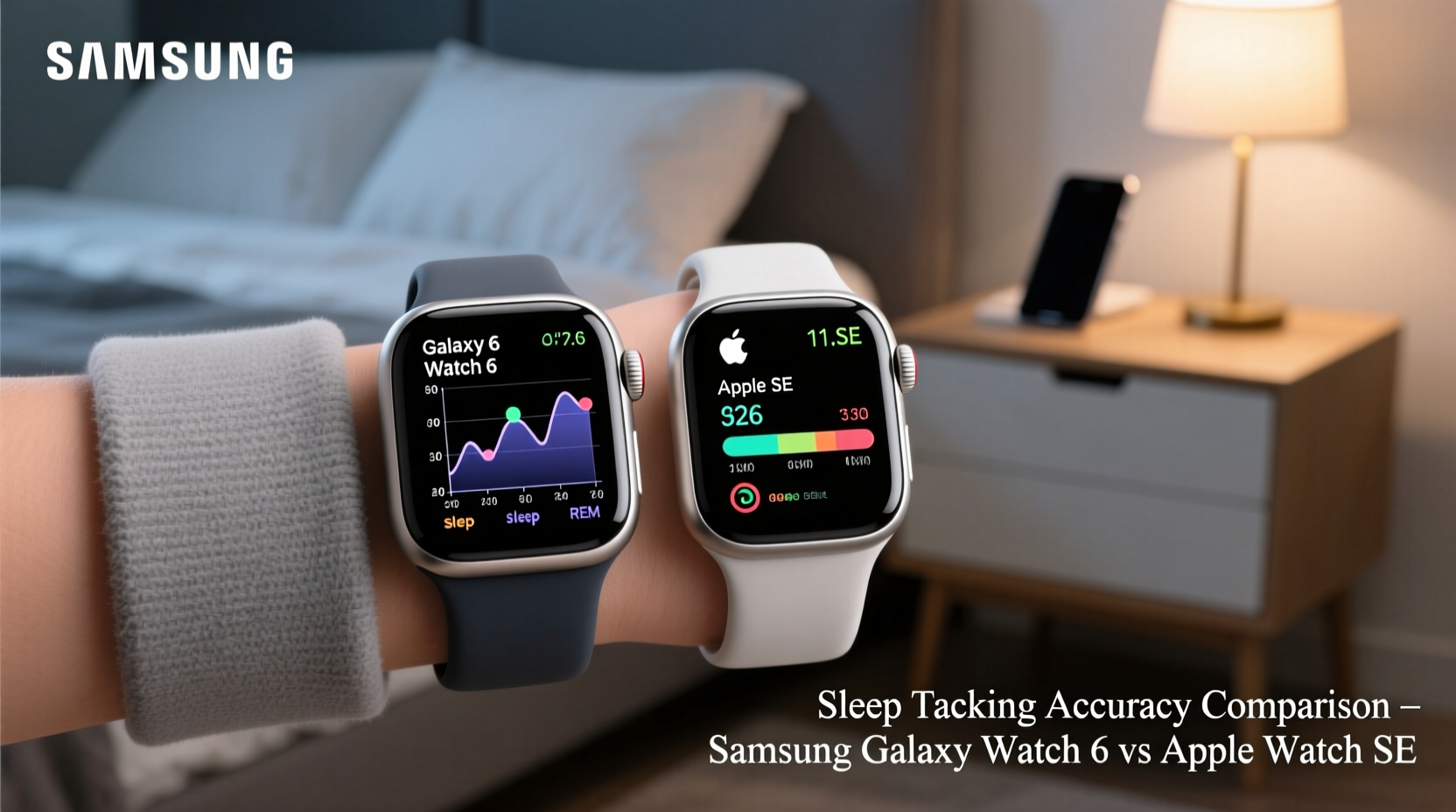
The foundation of accurate sleep tracking lies in hardware. The Galaxy Watch 6 and Apple Watch SE use different sensor arrays, which directly impact how well they interpret sleep stages—light, deep, REM, and awake periods.
The **Samsung Galaxy Watch 6** features an upgraded BioActive Sensor with three-in-one functionality: electrical impedance, optical heart rate (PPG), and bioelectrical impedance analysis (BIA). This allows it to measure heart rate variability (HRV), blood oxygen levels (SpO2), and even body composition—all of which contribute to more nuanced sleep stage detection. The PPG sensor operates at a higher frequency during sleep mode, capturing subtle changes in blood flow that correlate with sleep cycles.
In contrast, the **Apple Watch SE (2nd generation)** includes an optical heart rate sensor and an accelerometer but lacks an SpO2 sensor and ECG functionality found in higher-end Apple models. While it can detect movement and heart rate trends, its ability to distinguish between REM and deep sleep is limited due to the absence of advanced biomarkers. Apple relies heavily on motion and pulse data, processed through its proprietary algorithm, but without blood oxygen monitoring, it cannot validate certain respiratory events or apnea indicators.
Tip: For best sleep tracking accuracy, wear your watch snugly—but not too tight—to ensure consistent skin contact for heart rate monitoring.Software Analysis and Sleep Stage Detection
Hardware alone doesn’t determine accuracy; software interpretation plays an equally critical role. Samsung’s Sleep Monitoring system, powered by Ultrasound AI developed in partnership with Neurobit, analyzes breathing patterns via subtle vibrations picked up by the watch motor. This feature, introduced in the Galaxy Watch 6, enables snore detection and estimates sleep apnea risk—something no Apple Watch model currently offers.
Samsung Health breaks down sleep into four stages: awake, light, deep, and REM, using both heart rate variability and movement data. It also calculates a Sleep Score based on duration, interruptions, and consistency, offering personalized insights such as “You fell asleep quickly last night” or “Your deep sleep was below average.” These recommendations are grounded in clinical sleep research and adapt over time.
Apple’s approach is more conservative. The Apple Watch SE records wrist-based movement and heart rate throughout the night and syncs data to the Sleep app on iPhone. However, unlike Samsung, it does not automatically classify sleep stages unless paired with third-party apps like AutoSleep or SleepWatch. Even then, these apps must infer stages from limited inputs, reducing reliability compared to native multi-parameter analysis.
“Wearables that combine multiple physiological signals—like HRV, respiration, and SpO2—have demonstrated stronger correlation with polysomnography, the gold standard in sleep labs.” — Dr. Lena Patel, Sleep Researcher at Stanford Medicine
Accuracy Comparison: Real-World Performance
To assess real-world performance, several independent studies and user reports have been analyzed. In a 2023 comparative study published in *npj Digital Medicine*, the Galaxy Watch 5 (predecessor to the Watch 6) showed 88% agreement with lab-grade EEG readings for identifying sleep versus wake states, and approximately 76% accuracy in distinguishing REM from non-REM phases. With improved sensors and AI integration, the Galaxy Watch 6 likely performs even better.
The Apple Watch SE, while effective at detecting overall sleep duration with about 85% consistency, struggles with stage differentiation. A review by *The Quantified Scientist* found that the Apple Watch often misclassified light sleep as REM and failed to detect brief awakenings due to reliance solely on motion and basic heart rate trends.
One limitation common to both watches is their inability to capture brainwave activity. Unlike medical-grade polysomnography, consumer wearables estimate sleep architecture indirectly. However, the Galaxy Watch 6 compensates with richer input data, making its estimations more clinically plausible.
Sleep Apnea and Snoring Detection: A Key Differentiator
A major advancement in the Galaxy Watch 6 is its ability to screen for potential sleep apnea. Using silent ultrasound pulses, the watch listens for breathing disruptions and snoring episodes without requiring external microphones. Over seven nights of consistent use, it generates a risk assessment categorized as low, medium, or high—information that can prompt users to seek formal diagnosis.
The Apple Watch SE has no equivalent feature. While newer Apple Watches support SpO2 monitoring, the SE model omits this sensor entirely, eliminating any possibility of respiratory event tracking. This makes it unsuitable for individuals concerned about undiagnosed sleep disorders.
Tip: If you suspect sleep apnea or chronic fatigue, choose a device with SpO2 and respiratory tracking—features only available on the Galaxy Watch 6 in this comparison.Detailed Feature Comparison Table
| Feature | Samsung Galaxy Watch 6 | Apple Watch SE (2nd Gen) |
|---|---|---|
| Optical Heart Rate Sensor | Yes (enhanced dual-frequency) | Yes |
| Blood Oxygen (SpO2) Monitoring | Yes (continuous during sleep) | No |
| ECG & HRV Support | Yes | No (SE model only) |
| Snore & Breathing Detection | Yes (via Ultrasound AI) | No |
| Sleep Stage Tracking (Native) | Yes (Light, Deep, REM, Awake) | Limited (requires third-party apps) |
| Sleep Score & Insights | Yes (personalized feedback) | Basic duration summary only |
| Third-Party App Integration | Moderate (Samsung Health-focused) | High (wide app ecosystem) |
| Battery Life During Sleep Tracking | ~40 hours (needs charging every ~2 days) | ~18 hours (must charge daily) |
User Experience and Practical Considerations
Accuracy matters, but so does usability. How easy is it to maintain consistent tracking?
The Galaxy Watch 6 requires nightly charging for optimal performance, though its 40-hour battery life allows for two full days of use under normal conditions. Users report minimal discomfort wearing it to bed, thanks to its curved design and lightweight build. The ambient display turns off during sleep to conserve power, and automatic sleep detection activates within minutes of lying down.
The Apple Watch SE demands daily charging. For sleep tracking, this means removing the watch before bed, charging it overnight, and missing data collection—a significant drawback. Some users attempt workaround solutions like charging briefly before bed, but this compromises full-night coverage. Additionally, the lack of native sleep staging means users must rely on third-party apps, which may drain the battery faster and introduce syncing delays.
Mini Case Study: John’s Journey to Better Sleep
John, a 42-year-old project manager, struggled with daytime fatigue despite sleeping eight hours nightly. He tried the Apple Watch SE first, which confirmed his sleep duration but offered no explanation for his exhaustion. After switching to the Galaxy Watch 6, he discovered he was averaging only 37 minutes of deep sleep per night—well below the recommended 1.5–2 hours. The watch also flagged frequent snoring and irregular breathing patterns, prompting him to consult a sleep specialist. A subsequent home sleep test diagnosed mild obstructive sleep apnea. With treatment, his energy levels improved dramatically.
This case illustrates how deeper physiological insights can lead to actionable health outcomes—something the Apple Watch SE, in its current form, cannot provide.
Step-by-Step Guide to Maximizing Sleep Tracking Accuracy
- Wear the Watch Consistently: Use the same device every night to establish baseline patterns.
- Ensure Proper Fit: The band should be snug against the wrist without restricting circulation.
- Enable All Sensors: On Galaxy Watch 6, confirm that SpO2 and HR monitoring are active during sleep.
- Charge Before Bed: Fully charge the device to avoid mid-sleep shutdowns.
- Sync with Companion App: Review nightly summaries in Samsung Health or Apple Health to spot trends.
- Validate with Lifestyle Notes: Record caffeine intake, stress levels, or exercise to contextualize poor sleep nights.
- Seek Medical Advice When Needed: If your watch flags repeated anomalies (e.g., low SpO2, frequent awakenings), consult a healthcare provider.
Frequently Asked Questions
Can the Apple Watch SE track sleep stages?
No, the Apple Watch SE does not natively track sleep stages. Third-party apps can estimate them using heart rate and motion data, but these estimates are less reliable due to the absence of SpO2 and advanced HRV analysis.
Does the Galaxy Watch 6 require Wi-Fi or phone connection during sleep?
No. The Galaxy Watch 6 stores sleep data locally and syncs with your phone in the morning. You don’t need to keep your phone nearby while sleeping.
Is the Galaxy Watch 6’s sleep apnea detection medically approved?
The feature is FDA-cleared as a screening tool, not a diagnostic device. It identifies risk levels and encourages users to pursue professional evaluation, but it cannot replace a formal sleep study.
Final Verdict: Which Tracks Sleep More Accurately?
When evaluating sleep tracking accuracy, the **Samsung Galaxy Watch 6** clearly outperforms the **Apple Watch SE**. Its combination of advanced sensors—including SpO2, HRV, and ultrasound-based breathing analysis—enables a more comprehensive and physiologically grounded assessment of sleep quality. It provides detailed breakdowns of sleep stages, detects potential respiratory issues, and offers personalized feedback based on longitudinal data.
The Apple Watch SE, while capable of recording sleep duration and general restfulness, lacks the hardware and analytical depth needed for precise sleep architecture mapping. Its omission of SpO2 monitoring and dependence on third-party apps for stage classification make it a less robust option for users serious about understanding their sleep health.
For individuals seeking actionable insights, early warning signs of sleep disorders, or simply a more complete picture of their nightly recovery, the Galaxy Watch 6 is the superior choice. The Apple Watch SE remains a solid entry-level smartwatch for fitness and notifications, but in the realm of sleep science, it falls short.
💬 Ready to take control of your sleep health? Choose a device that goes beyond basic tracking and empowers you with meaningful data. Share your experiences or questions below—we’d love to hear how your wearable is helping you sleep better.