When building a cold-weather wardrobe, two iconic pieces often stand out: the red tweed dress and the cashmere sweater. Both are fashion staples—timeless, elegant, and associated with sophistication. But when it comes to staying warm and ensuring long-term wearability, they serve very different purposes. Understanding the material science, construction, and practical use cases behind each can help you make smarter choices for comfort, durability, and style.
This article breaks down the thermal efficiency, structural resilience, and everyday functionality of a red tweed dress versus a cashmere sweater—not just as fashion items, but as functional garments in real winter conditions.
Understanding the Materials: Tweed vs Cashmere
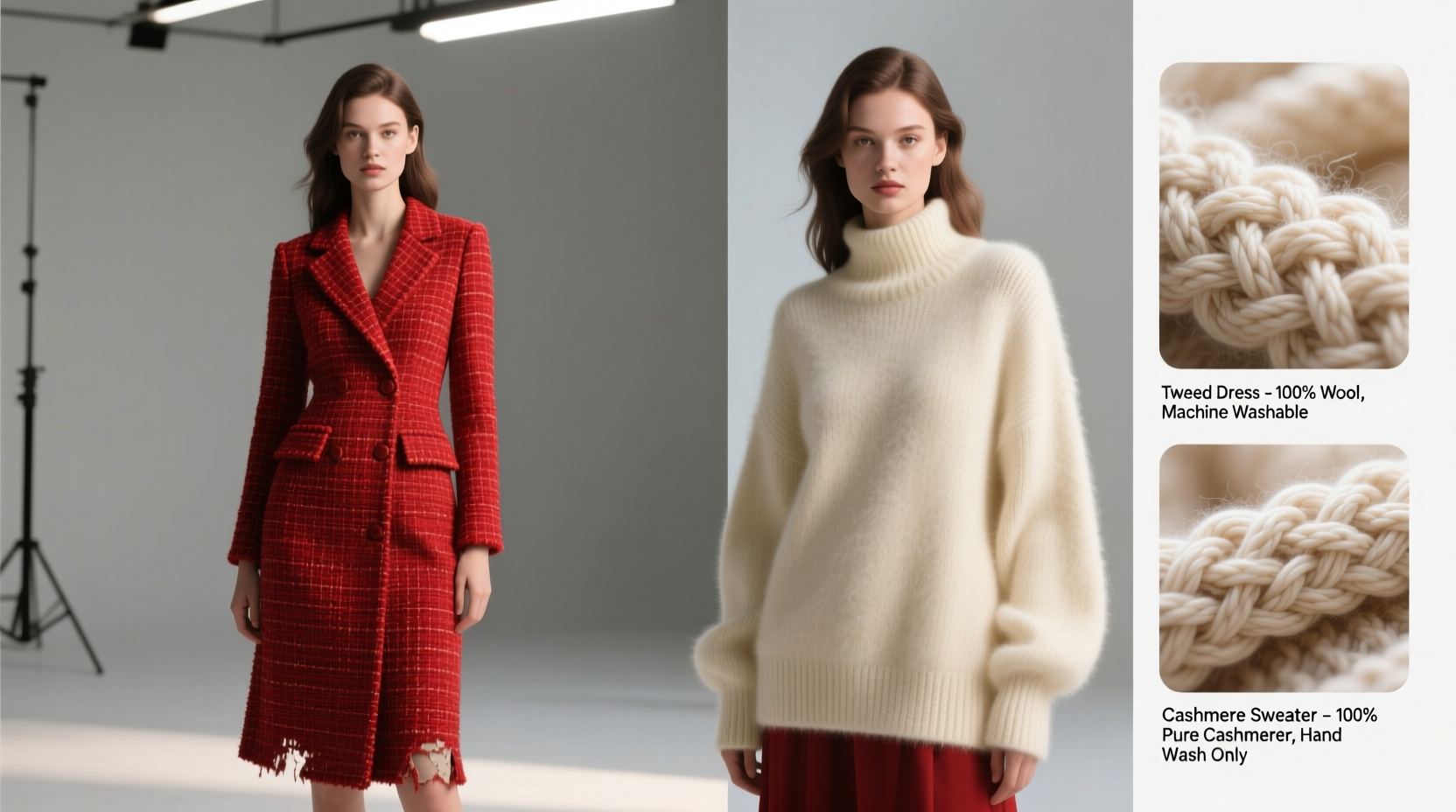
The foundation of any garment’s warmth and durability lies in its fabric composition. Tweed and cashmere come from entirely different textile traditions and serve distinct roles in clothing design.
Tweed is a tightly woven wool fabric, traditionally made from coarse sheep’s wool. It originated in rural Scotland and Ireland as a rugged outerwear textile designed to withstand wind, rain, and rough terrain. The weave is dense, often featuring herringbone, check, or plaid patterns, and sometimes blended with synthetic fibers for added strength.
Cashmere, on the other hand, comes from the soft undercoat of cashmere goats, primarily found in Mongolia, China, and Iran. It’s prized for its exceptional softness, lightweight feel, and fine texture. Unlike tweed, cashmere is not intended as a protective outer layer but rather as a luxurious insulating mid-layer.
“Tweed is built for endurance; cashmere is crafted for comfort. One defends against the elements, the other luxuriates in warmth.” — Dr. Lena Patel, Textile Scientist at Edinburgh Fashion Institute
Warmth Comparison: Insulation Performance in Cold Weather
Warmth depends on three key factors: fiber type, fabric density, and air-trapping capability. Let’s examine how each garment performs.
Red Tweed Dress: Wind Resistance and Thermal Mass
A red tweed dress typically uses a heavy, tightly woven wool blend. This structure creates natural wind resistance and traps heat effectively due to its thickness. Wool fibers themselves have a crimped structure that forms tiny air pockets—these pockets act as insulation by reducing heat transfer.
In temperatures between 30–45°F (-1 to 7°C), a lined tweed dress worn with tights and boots provides substantial warmth without needing additional layers. Its ability to shed light rain and resist wind makes it ideal for transitional seasons or urban environments where brief outdoor exposure is common.
Cashmere Sweater: Lightweight Warmth with High Loft
Cashmere has one of the highest warmth-to-weight ratios of any natural fiber. Its ultra-fine fibers create a lofty, fluffy texture that traps body heat efficiently. While lighter than tweed, high-grade cashmere can retain heat better than many thicker fabrics due to superior loft and low thermal conductivity.
However, cashmere lacks wind resistance. In windy or damp conditions, its warmth diminishes significantly unless protected by an outer shell. It excels indoors or under a coat but is vulnerable when exposed directly to the elements.
Tip: Layer a cashmere sweater under a wool coat for maximum warmth without bulk. Avoid wearing it as a standalone outer layer in wet or windy weather.Durability: Which Garment Lasts Longer?
Durability isn’t just about how long a garment survives—it’s about how well it maintains shape, color, and integrity after repeated use and washing.
| Factor | Red Tweed Dress | Cashmere Sweater |
|---|---|---|
| Fabric Strength | High – tightly woven, abrasion-resistant | Moderate – delicate fibers prone to pilling |
| Wear Resistance | Excellent – suitable for daily wear | Fair – best for occasional or layered use |
| Wash & Care | Low maintenance – spot clean or dry clean infrequently | High maintenance – hand wash only, lay flat to dry |
| Lifespan (with care) | 10+ years | 5–7 years |
| Environmental Resilience | Resists moisture, wind, mildew | Vulnerable to moisture, moths, stretching |
Tweed’s rugged heritage gives it a clear edge in durability. A well-made tweed dress can endure years of seasonal rotation with minimal degradation. In contrast, cashmere requires careful handling. Pilling, snagging, and fiber breakdown occur more easily, especially if worn frequently or washed improperly.
Real-World Example: Winter Commute in New York City
Consider Sarah, a marketing executive living in Brooklyn. Her morning commute involves walking six blocks to the subway, often in biting winds off the East River. She owns both a classic red tweed dress and a premium cashmere turtleneck.
On a 38°F (3°C) morning with 15 mph winds, she wears the tweed dress with opaque tights and ankle boots. Despite the gusts, she stays warm thanks to the fabric’s wind-blocking weave. The wool also resists the light drizzle that begins during her walk.
Another day, she opts for the cashmere sweater under a trench coat. Inside the heated office, she feels cozy and stylish. But during her outdoor wait at the subway platform, the thin coat offers little wind protection, and she feels chilled through the cashmere despite its warmth rating.
This scenario illustrates a critical point: context determines performance. Cashmere wins in controlled indoor environments; tweed dominates in unpredictable outdoor conditions.
Care and Maintenance: Longevity Through Proper Handling
Even the most durable materials fail without proper care. Here’s how to extend the life of each garment.
For Your Red Tweed Dress
- Brush regularly with a clothes brush to remove dust and restore texture.
- Spot clean stains with a damp cloth and mild soap; avoid full immersion.
- Store on a padded hanger in a breathable garment bag.
- Rotate seasonally to prevent compression and fiber fatigue.
For Your Cashmere Sweater
- Hand wash every 5–6 wears using cold water and wool-specific detergent.
- Lay flat on a towel to dry—never hang, as this causes stretching.
- Use a fabric shaver or de-piller to maintain smooth appearance.
- Store folded in a cedar-lined drawer to deter moths.
- Never machine dry or wring out.
FAQ: Common Questions About Warmth and Durability
Can a cashmere sweater be as warm as a tweed dress?
Not in practical terms. While cashmere has excellent thermal efficiency per gram, a full tweed dress covers more surface area and provides wind resistance that cashmere alone cannot match. Layered properly, cashmere can contribute to overall warmth, but it doesn't replace the protective qualities of tweed.
Is tweed itchy or uncomfortable to wear?
Traditional tweed can feel coarse, but modern blends often include softer wools or silk linings to improve comfort. Many contemporary tweed dresses feature full lining, making them comfortable for all-day wear without irritation.
How do I know if my cashmere is high quality?
Look for fiber length (longer = stronger), fineness (under 19 microns is ideal), and origin (Mongolian and Scottish cashmere are top-tier). Also, check for a “Grade A” label and minimal pilling upon inspection.
Final Verdict: Which Should You Choose?
If your priority is **warmth in variable outdoor conditions**, the red tweed dress is the superior choice. Its dense weave, wind resistance, and structural integrity make it ideal for autumn strolls, winter events, or city commutes.
If you value **luxurious softness and indoor warmth**, the cashmere sweater stands out. It’s perfect for layering, office wear, or evenings out where climate control is reliable.
In terms of **durability**, tweed clearly wins. It withstands friction, weather, and time far better than delicate cashmere. However, cashmere, when treated with care, can remain a cherished piece for years.
Conclusion: Make Smart Choices Based on Purpose
The debate isn’t about which garment is “better” overall—it’s about matching function to need. A red tweed dress is a workhorse: durable, weather-ready, and built to last. A cashmere sweater is a luxury: indulgent, warm in stable conditions, and deserving of gentle treatment.
Your wardrobe benefits from both—but knowing their strengths ensures you stay warm, look polished, and protect your investment. Whether braving the elements or enjoying a fireside evening, choose the right fabric for the moment.
💬 Do you lean toward tweed’s resilience or cashmere’s comfort? Share your go-to winter outfit and why it works for you!