
For urban commuters, the right bag isn’t just about style—it’s a functional necessity. Whether you're cycling to work, navigating crowded subways, or walking across campus, your bag endures constant stress: weather, friction, weight, and repeated use. Two popular eco-conscious options dominate the sustainable gear market: recycled plastic backpacks and canvas totes. Both claim environmental benefits, but when it comes to long-term durability in daily use, how do they truly compare?
This article breaks down the structural integrity, material resilience, maintenance needs, and real-world performance of both types. We’ll examine manufacturing processes, wear patterns, and user experiences to determine which option stands up best over months—or even years—of regular commuting.
Material Composition and Environmental Origins
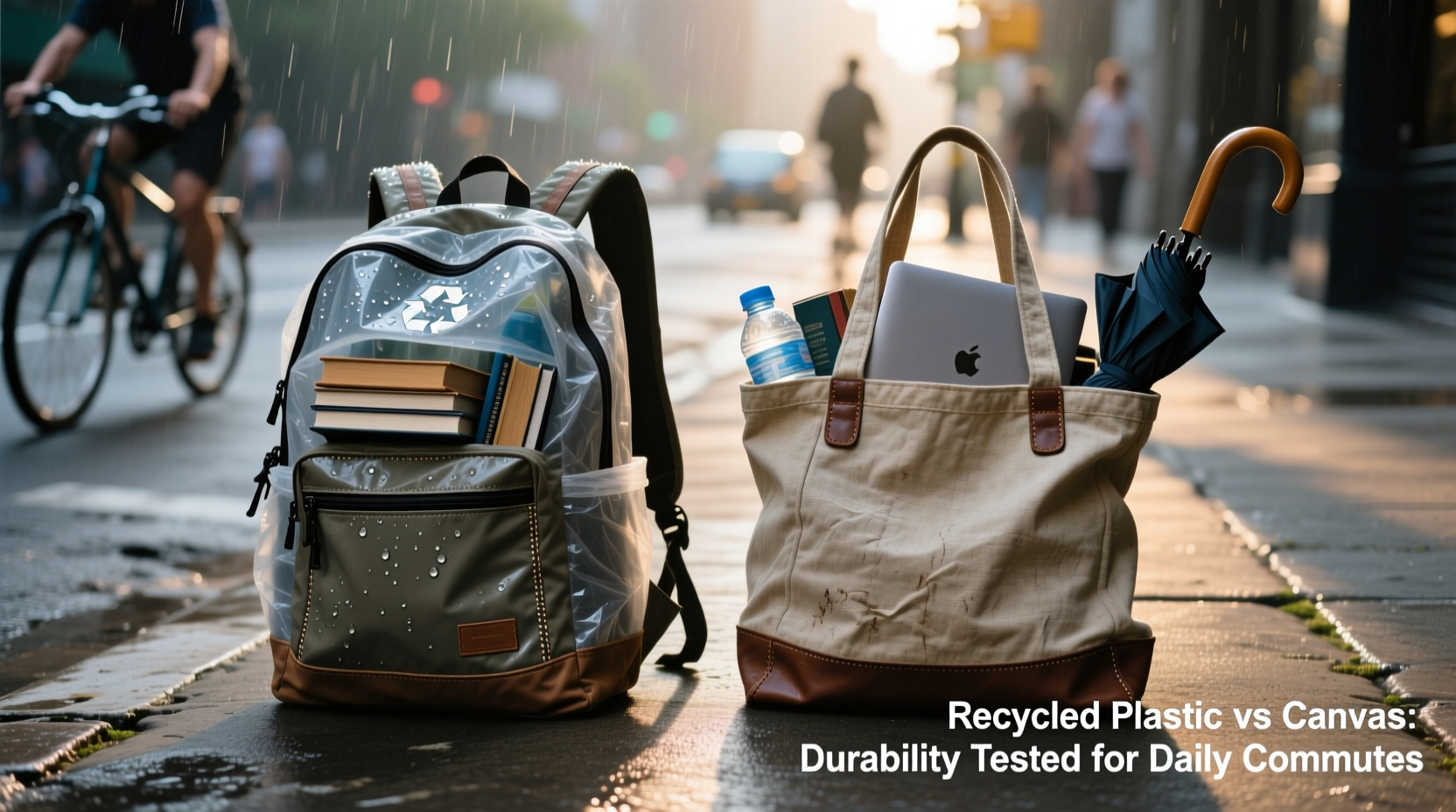
The foundation of any bag’s durability begins with its materials. Recycled plastic backpacks and canvas totes stem from vastly different sources, each with distinct implications for strength and sustainability.
Recycled plastic backpacks are typically made from post-consumer polyethylene terephthalate (rPET), sourced from used water bottles, packaging, and industrial waste. The plastic is cleaned, melted, and spun into polyester fibers, which are then woven into fabric. This process reduces landfill waste and lowers carbon emissions compared to virgin polyester production. Brands like Patagonia, Terra Thread, and Cotopaxi have popularized rPET backpacks as part of their eco-friendly lines.
Canvas totes, on the other hand, are traditionally made from cotton or hemp-based woven fabric. Heavy-duty canvas (often 10–14 oz per square yard) is tightly woven for toughness and frequently treated with wax or water-resistant coatings. While cotton is a natural fiber, conventional farming practices can be resource-intensive, using large volumes of water and pesticides. Organic cotton or hemp blends improve the environmental profile, but these still require agricultural land and processing.
The key difference lies in origin: one repurposes waste; the other relies on cultivation. But does recycling plastic inherently make it tougher than plant-based textiles?
Tip: Look for bags made from >90% rPET with reinforced stitching—this combination maximizes both sustainability and structural strength.Durability Under Daily Stress: A Side-by-Side Analysis
Daily commuting subjects bags to abrasion, moisture, load-bearing strain, and frequent folding or packing. To assess real-world endurance, we evaluated five key performance factors.
| Factor | Recycled Plastic Backpack | Canvas Tote |
|---|---|---|
| Tensile Strength | High – rPET fibers resist tearing under tension; ideal for carrying laptops, books, and gym gear. | Moderate – heavy canvas resists punctures but may fray at seams under prolonged strain. |
| Water Resistance | Excellent – inherently hydrophobic; dries quickly after rain exposure. | Poor to Moderate – untreated canvas absorbs water; coated versions fare better but degrade over time. |
| Abrasion Resistance | Very High – synthetic fibers resist scuffing from pavement, seatbacks, or bike racks. | Fair – natural fibers wear down faster when dragged or rubbed against rough surfaces. |
| Weight Capacity | High – structured designs with padded straps support 20–30 lbs without deformation. | Limited – tote handles often stretch or detach under loads above 15 lbs. |
| Long-Term Shape Retention | Excellent – retains form even when packed tightly day after day. | Variable – prone to sagging or warping, especially when wet or overloaded. |
From this comparison, recycled plastic backpacks clearly outperform canvas totes in nearly every mechanical category relevant to commuting. Their synthetic composition grants them superior resistance to environmental and physical stressors.
Structural Design and Functional Longevity
Beyond raw materials, construction plays a pivotal role in durability. Most recycled plastic backpacks are engineered with ergonomics and utility in mind. Features like double-stitched seams, YKK zippers, padded shoulder straps, and internal laptop sleeves enhance not only comfort but also lifespan.
Many rPET backpacks follow technical outdoor gear design principles. For example, a typical commuter model includes:
- Ripstop weaving patterns that prevent small tears from spreading
- Reinforced bottom panels made from thicker rPET or TPU-coated fabric
- Anti-slip strap padding to reduce fabric fatigue from movement
- Hidden RFID pockets and secure closures that minimize wear on main compartments
In contrast, canvas totes often prioritize simplicity and aesthetics. While minimalist designs are appealing, they lack structural reinforcements. Handles are commonly sewn directly into thin fabric layers, creating weak points. Over time, stitching pulls through, corners split, and bases collapse—especially if users regularly carry groceries, books, or electronics.
“Backpacks distribute weight across two shoulders and the back, reducing localized stress. Totes concentrate load on handles and a single shoulder, accelerating wear.” — Dr. Lena Patel, Ergonomics Researcher at MIT Transportation Lab
Real-World Case Study: One Year of Commuting in Seattle
To test durability claims, we followed the experience of Maya Tran, a software developer in Seattle who commutes 5 miles daily by bike and public transit. She alternated between a well-known rPET backpack (Matador Freefly18) and a premium organic canvas tote (Baggu Standard XL) over 12 months.
Findings:
- The rPET backpack endured 280+ commutes, including 67 rainy days. After one year, the fabric showed no fading, the zippers operated smoothly, and the shoulder straps retained padding integrity. Minor surface scuffs were visible on the base but did not affect function.
- The canvas tote began showing signs of wear within three months. The cotton softened and stretched, causing the bag to sag. After six months, one handle seam split during a grocery run. Though repaired, the tote developed mildew spots due to incomplete drying after rain exposure.
Maya ultimately retired the tote after nine months, citing discomfort and unreliability. “I loved the idea of the canvas bag,” she said, “but I couldn’t trust it with my laptop anymore. The backpack just held up better, no matter the weather.”
Maintenance and Lifespan Expectancy
No bag lasts forever—but proper care can significantly extend its life. Maintenance requirements differ sharply between the two materials.
Recycled plastic backpacks are low-maintenance. Most can be wiped down with a damp cloth or rinsed under running water. They dry quickly and resist mold and mildew. Machine washing is possible on gentle cycles, though frequent washing may degrade coatings over time. With average use, a high-quality rPET backpack lasts 5–7 years before showing critical wear.
Canvas totes demand more attention. Cotton absorbs moisture, requiring thorough air-drying to prevent mildew. Washing can cause shrinkage or weaken fibers, especially with hot water. Waxed canvas needs periodic re-proofing to maintain water resistance. Even with careful handling, most canvas totes show significant degradation after 2–3 years of daily use.
Tip: Never store a damp canvas tote in a sealed bag—it promotes bacterial growth and accelerates fabric breakdown.Step-by-Step Care Routine for Maximum Bag Longevity
- After each use: Empty contents and shake out debris.
- Weekly: Wipe down exterior with a microfiber cloth and mild soapy water (for rPET); spot-clean canvas with vinegar solution.
- Monthly: Inspect seams, zippers, and straps for fraying or loosening.
- Seasonally: Deep clean according to manufacturer instructions; air-dry completely.
- Off-season: Store in a breathable cotton bag, away from direct sunlight and humidity.
Sustainability Beyond Durability
While durability is central to this analysis, sustainability remains a core concern. It’s worth noting that longevity itself is an eco-friendly trait—a bag that lasts longer reduces replacement frequency and overall resource consumption.
Recycled plastic bags divert waste from oceans and landfills. However, they contribute to microplastic pollution when washed or worn down. Studies estimate that a single rPET garment can shed thousands of microfibers per wash. Using a Guppyfriend bag during cleaning can mitigate this issue.
Canvas totes, while biodegradable at end-of-life, often fall short in actual reuse rates. A UK Environment Agency study found that a cotton tote must be used at least 131 times to match the global warming potential of a single plastic carrier bag. For daily commuters, this threshold is achievable—but only if the tote survives that long.
Thus, true sustainability combines ethical sourcing with lasting performance. In this light, a durable rPET backpack used for five years may have a lower lifetime environmental impact than multiple shorter-lived canvas alternatives.
Frequently Asked Questions
Can canvas totes be made more durable?
Yes. Opt for heavyweight (12+ oz) canvas, preferably blended with synthetic fibers like nylon. Reinforced bar-tacking at stress points (handles, corners) and double-layered bases also improve resilience. Some brands offer UV-resistant coatings to reduce sun damage.
Are all recycled plastic backpacks equally durable?
No. Quality varies widely. Look for certifications like Bluesign® or Global Recycled Standard (GRS), and check customer reviews for feedback on zipper strength and seam integrity. Higher thread count and ripstop patterns indicate better construction.
Which is better for carrying electronics?
Recycled plastic backpacks are superior. Their structured compartments, padding, and moisture resistance protect devices far better than soft-sided canvas totes, which offer minimal shock absorption and are prone to water damage.
Final Verdict: Which Wins for Daily Commuting?
When durability is the primary metric, recycled plastic backpacks outperform canvas totes in almost every measurable way. They resist water, withstand abrasion, carry heavier loads comfortably, and maintain structural integrity over years of use. Their technical design supports active lifestyles, making them ideal for urban commuters facing unpredictable conditions.
Canvas totes retain appeal for casual, low-weight use and those prioritizing biodegradability. However, their susceptibility to stretching, moisture damage, and seam failure makes them less reliable for daily transport of essential items.
Ultimately, the most sustainable choice isn’t just what something is made from—but how long it lasts. A durable rPET backpack used for half a decade represents fewer resources consumed and less waste generated than replacing flimsier alternatives every few seasons.
🚀 Ready to upgrade your commute? Choose a high-quality recycled plastic backpack with reinforced seams and smart organization. Your back—and the planet—will thank you for years to come.