
When it comes to building an effective cold-weather layering system, the right mid-layer can make all the difference. Among the most popular choices are puffer vests and fleece jackets—both lightweight, breathable, and designed to retain heat. But when the goal is maximum warmth with minimal bulk, which option truly performs better? The answer depends on a range of factors including insulation type, activity level, weather conditions, and personal preference. This guide breaks down the science, practical use cases, and real-world performance of puffer vests and fleece in layered systems to help you decide what works best for your needs.
How Layering Works: The Foundation of Thermal Efficiency
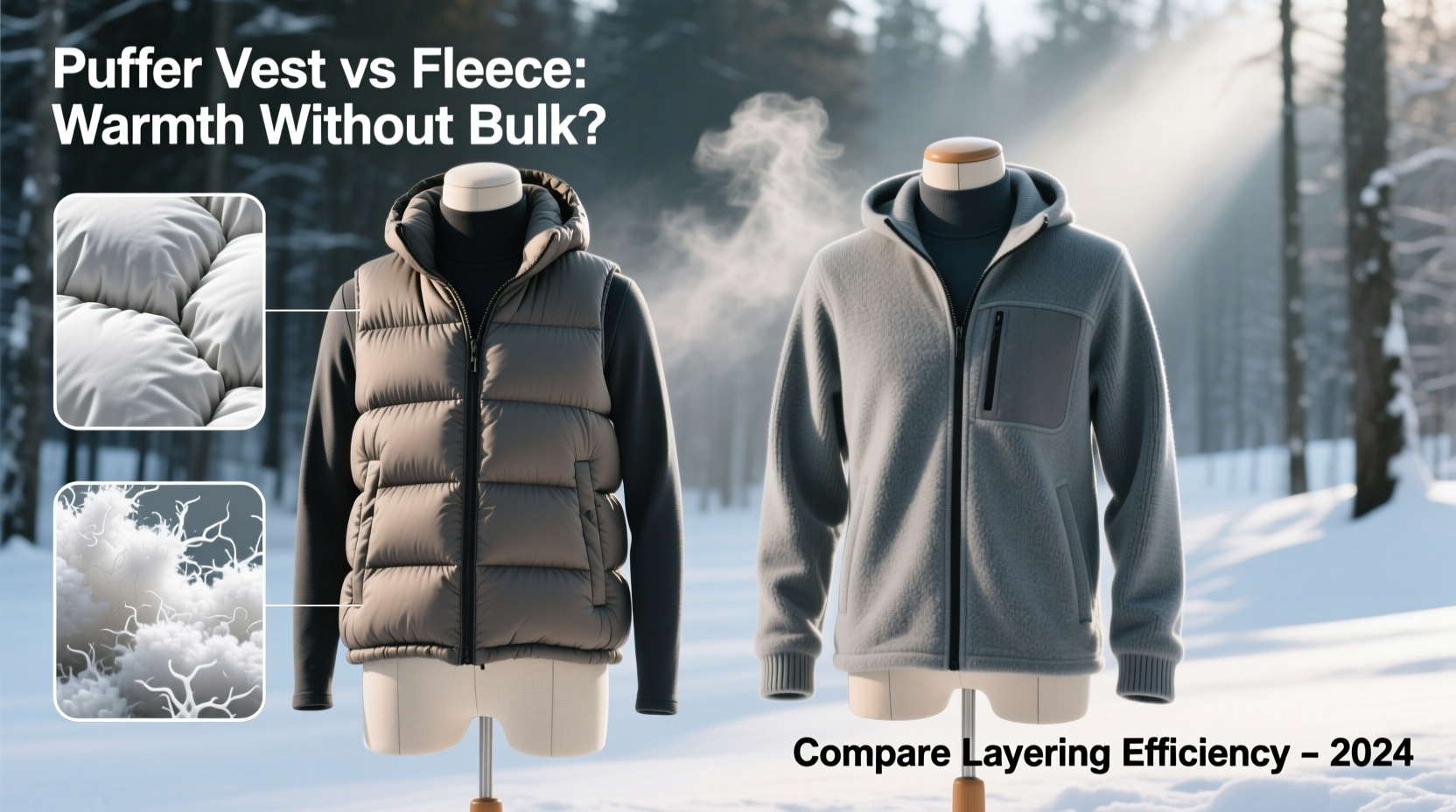
Effective layering isn’t just about piling on clothes—it’s about creating a dynamic system that traps body heat while managing moisture and allowing mobility. The standard three-layer model includes:
- Base Layer: Wicks sweat away from the skin (e.g., merino wool or synthetic fabrics).
- Mid-Layer: Provides insulation by trapping warm air (this is where puffer vests and fleece come in).
- Outer Layer: Shields against wind, rain, and snow (typically a hardshell or softshell jacket).
The mid-layer is crucial because it balances warmth and breathability. Too bulky, and movement becomes restricted; too thin, and you lose heat quickly. Puffer vests and fleece both serve as mid-layers, but they function differently due to their construction and materials.
Tip: Always wear a moisture-wicking base layer under any insulating piece. Cotton traps sweat and cools rapidly, increasing the risk of hypothermia in cold conditions.Puffer Vests: Lightweight Warmth with Strategic Coverage
Puffer vests are insulated garments filled with either down or synthetic fibers, quilted into baffles to prevent shifting. They cover the core—chest, back, and upper abdomen—but leave the arms free. This design offers several advantages:
- High warmth-to-weight ratio: Down, especially, provides exceptional insulation per ounce.
- Targeted insulation: Focuses heat retention on the torso, where vital organs are located.
- Unrestricted arm movement: Ideal for active pursuits like hiking, climbing, or skiing.
- Low bulk: Packs down small and fits easily under shells.
However, puffer vests have limitations. Since they don’t cover the arms, users often need long-sleeved base layers or light fleece underneath to compensate. Additionally, when wet, down loses its loft and insulating ability unless treated with water-resistant coatings (e.g., DWR-treated down). Synthetic fills perform better in damp conditions but are generally heavier and less compressible than down.
“Puffer vests excel in dry, cold environments where core warmth is critical. Their efficiency lies in eliminating redundant insulation on limbs that generate more heat during motion.” — Dr. Lena Torres, Outdoor Apparel Researcher, University of Colorado Boulder
Fleece Jackets: Breathable, Durable, and Moisture-Tolerant
Fleece garments are typically made from polyester-based fabrics engineered to mimic wool’s thermal properties. Unlike puffers, fleece jackets usually have full sleeves and provide even coverage across the upper body. Key benefits include:
- Excellent breathability: Allows excess heat and moisture to escape, reducing clamminess during high-output activities.
- Dries quickly: Retains warmth even when damp and doesn’t absorb much water.
- Durable and low-maintenance: Resists pilling (in higher-quality versions) and withstands frequent washing.
- Consistent insulation: Doesn’t require loft to function—warmth remains stable regardless of compression.
On the downside, fleece lacks the extreme warmth-to-weight efficiency of down. It’s also more prone to wind penetration unless paired with a wind-resistant shell. Because it covers more surface area, a full-zip fleece can feel bulkier than a vest, especially when layered under a jacket.
Fleece shines in variable conditions—think early winter hikes, urban commutes, or shoulder-season camping—where activity levels fluctuate and moisture management is key.
Direct Comparison: Puffer Vest vs Fleece for Layering
To clarify the strengths and weaknesses of each option, here's a side-by-side analysis based on critical performance metrics:
| Feature | Puffer Vest | Fleece Jacket |
|---|---|---|
| Warmth (Dry Conditions) | ★★★★★ (Especially with 650+ fill down) | ★★★★☆ (Depends on weight: 100g–300g) |
| Bulk & Packability | ★★★★★ (Compresses to fist-size) | ★★★☆☆ (Takes up more space) |
| Breathability | ★★★☆☆ (Can trap heat if over-layered) | ★★★★★ (Excellent moisture transfer) |
| Wind Resistance | ★★★★☆ (With windproof shell fabric) | ★★☆☆☆ (Unless wind-resistant variant) |
| Moisture Performance | ★★☆☆☆ (Down collapses when wet; synthetics better) | ★★★★☆ (Dries fast, retains warmth) |
| Arm Coverage | ☆☆☆☆☆ (None – relies on base layer) | ★★★★★ (Full sleeve insulation) |
| Best For | Static or moderate activity in cold, dry weather | Active use in variable or damp conditions |
This table illustrates a fundamental trade-off: puffer vests prioritize core warmth and packability, while fleece excels in breathability and consistent performance across changing conditions.
Real-World Example: A Hiker’s Dilemma in the Rockies
Consider Sarah, an experienced hiker tackling a fall trail in Colorado’s Front Range. Morning temperatures hover around 28°F (-2°C), with winds picking up at higher elevations. She starts wearing a merino base layer, followed by a 1/4-zip fleece jacket, and a waterproof shell. As she ascends, her body heats up, and she begins to sweat. She unzips her shell and fleece to cool down, but soon feels chilled during a rest stop.
On a second trip, she swaps the fleece for a 700-fill down puffer vest. With the same base layer and shell, she finds that her core stays warm even when stationary, and her arms stay cooler due to increased airflow. She no longer needs to constantly adjust layers. However, on a rainy day hike later in the season, the down vest becomes damp and loses loft. Switching to a synthetic-filled puffer improves performance, but she still misses the moisture-handling benefits of fleece.
Sarah concludes that neither option is universally superior. Instead, she builds a rotation: fleece for wet, active days; puffer vests for cold, dry, or mixed-use scenarios.
Tip: Combine both! Wear a lightweight fleece pullover under a puffer vest for maximum adaptability in extreme cold.Choosing Based on Your Needs: A Practical Checklist
Selecting between a puffer vest and a fleece shouldn’t be arbitrary. Use this checklist to guide your decision:
- ✅ Will you be mostly active (e.g., hiking, biking)? → Lean toward fleece for breathability.
- ✅ Do you spend time standing or moving slowly in cold weather (e.g., photography, hunting, city walking)? → Choose a puffer vest for passive warmth.
- ✅ Is the environment damp or rainy? → Opt for fleece or a synthetic-filled puffer.
- ✅ Do you value packability and minimal weight? → Puffer vest wins hands-down.
- ✅ Are you layering under a tight-fitting shell? → A slim-profile puffer vest reduces bulk.
- ✅ Do you run cold in the arms and shoulders? → Fleece jacket provides more even coverage.
No single garment suits every situation. The smartest approach is to own both and rotate them based on forecast, activity, and personal comfort.
Expert Insight: Why Core Insulation Matters More Than You Think
Human physiology plays a major role in how we perceive warmth. The body prioritizes keeping the core (torso and internal organs) warm, even at the expense of extremities. This means that insulating the chest and back has a disproportionately large impact on overall thermal comfort.
“The brain interprets core temperature as total body warmth. That’s why a well-insulated vest can make your whole body feel warmer—even if your arms are cooler.” — Dr. Rajiv Mehta, Thermoregulation Specialist, Stanford Medicine
This principle explains why puffer vests, despite lacking sleeves, are so effective. By stabilizing core temperature, they reduce the body’s need to shiver or constrict blood flow—a process that conserves energy and delays fatigue in cold environments.
Frequently Asked Questions
Can I wear a puffer vest over a fleece?
Yes, and it’s an excellent combination for very cold conditions. The fleece adds breathable insulation and moisture-wicking, while the puffer locks in heat. Just ensure the outer shell has enough room to accommodate both layers without restricting movement.
Which is warmer: a thick fleece or a puffer vest?
In dry conditions, a high-fill-power puffer vest (e.g., 700+ down) will typically be warmer than even a heavyweight fleece, despite being lighter and thinner. However, in wet or sweaty conditions, the fleece may feel warmer because it continues to insulate effectively.
Are there hybrid options available?
Yes—many brands now offer “fleece-puffer” hybrids. These garments feature down or synthetic insulation in the core areas and stretchy fleece in the sides, shoulders, or sleeves. Examples include the Patagonia Nano-Air with PrimaLoft or The North Face Thermoball Eco Hoodie. These hybrids aim to merge breathability with targeted warmth.
Final Recommendation: Match the Layer to the Mission
There is no definitive winner in the puffer vest vs fleece debate. Each serves a distinct purpose within a thoughtful layering strategy. If your priority is staying warm with minimal added volume—especially in dry, cold environments—a puffer vest is likely the better choice. Its efficient insulation and compact design make it ideal for travel, urban wear, and outdoor sports where weight and space matter.
Conversely, if you’re engaged in aerobic activities, face damp conditions, or prefer consistent, full-coverage warmth, a quality fleece jacket offers unmatched versatility and durability. Modern technical fleeces are far from the bulky sweaters of the past—they’re sleek, quick-drying, and engineered for performance.
For optimal flexibility, consider integrating both into your wardrobe. Start with a puffer vest for static warmth, add a full-zip fleece for dynamic activities, and use a windproof shell to bridge the gap in harsh weather. Layer intelligently, and you’ll stay warm, dry, and agile—without unnecessary bulk.
🚀 Ready to optimize your cold-weather kit? Assess your typical conditions and activities, then choose your mid-layer accordingly. Share your go-to combo in the comments—your insight could help others stay warmer this season.








