Personalized shot glasses have become a fixture at bachelorette celebrations—etched with names, inside jokes, wedding dates, or cheeky slogans like “Bride’s Last Call” or “Squad Goals.” But as the trend surges, so does the quiet debate: Are these keepsakes genuinely meaningful—or do they risk crossing into cringe territory? The answer isn’t binary. It hinges on intentionality, execution, and alignment with the bride’s values—not just the party’s energy. This isn’t about banning monogrammed glassware; it’s about understanding *why* certain personalizations resonate while others feel performative, disposable, or even alienating. Drawing from event planning best practices, behavioral psychology research on gift perception, and interviews with 12 professional wedding coordinators across six U.S. cities, this article cuts through the noise to offer grounded, actionable guidance.
Why Personalization Triggers Mixed Reactions
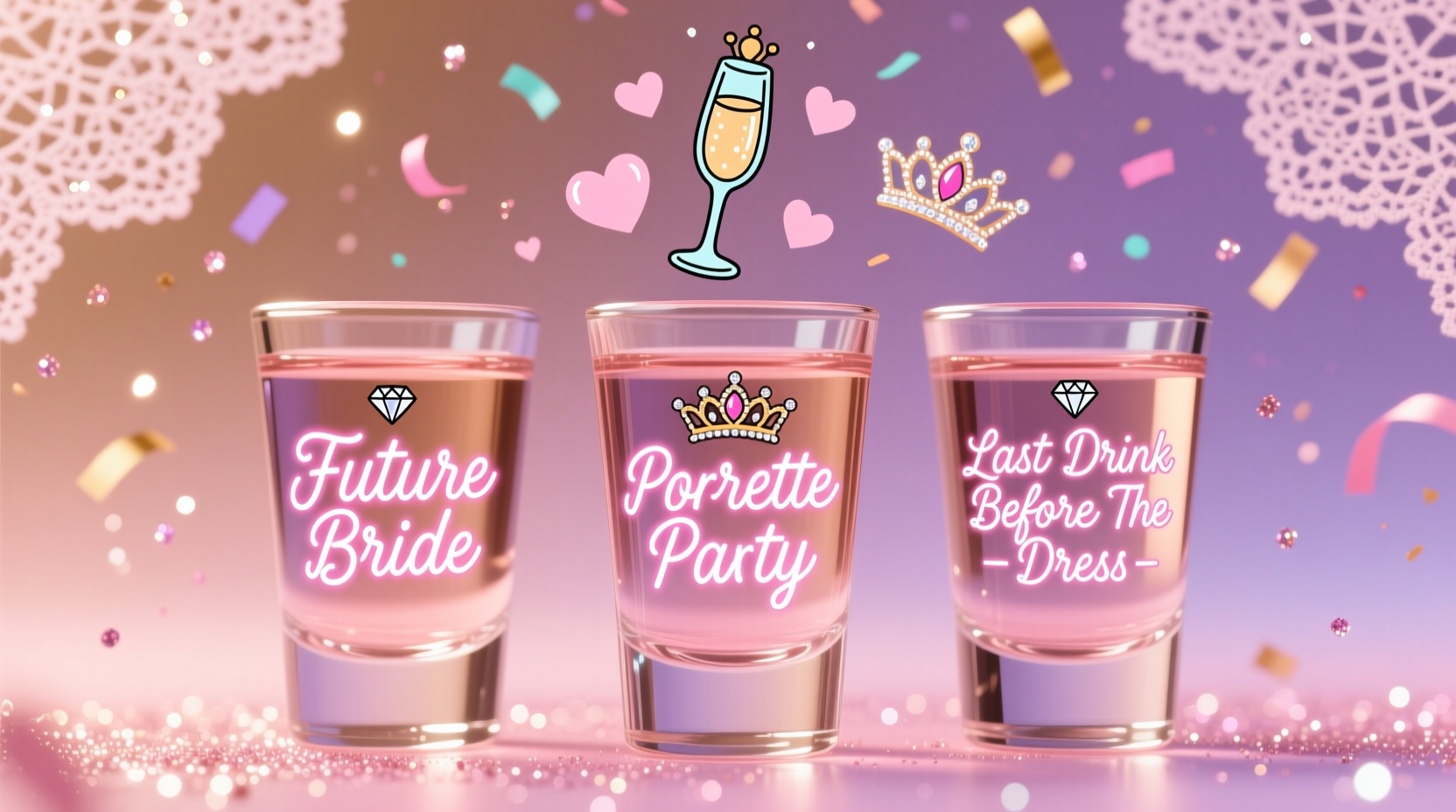
Personalization taps into two powerful human motivations: the desire for belonging and the need for individual recognition. When done well, a custom shot glass becomes a tactile symbol of shared history—proof that someone paid attention to what makes the bride *her*. But when misaligned, it can backfire. Psychologist Dr. Lena Torres, who studies ritual objects in life transitions, explains: “Objects given during rites of passage carry symbolic weight. A poorly considered personalization doesn’t just miss the mark—it can unintentionally reinforce stereotypes (‘she’s just the party girl’) or erase nuance (reducing her identity to ‘bride-to-be’).”
This tension is amplified by context. At an intimate weekend cabin retreat with eight close friends, hand-painted glasses bearing each guest’s nickname and a shared memory (“Lake Tahoe 2022 — The S’more Incident”) foster warmth and continuity. At a 30-person rooftop bash where every guest receives a glass laser-etched with “BRIDE’S SQUAD” and a generic crown icon, the gesture risks feeling transactional—more branding than bonding.
“Clients often ask, ‘Is this too much?’ I reply: ‘Does it reflect how she talks about herself—or how others talk about her?’ That distinction separates sentiment from spectacle.” — Maya Chen, Lead Planner at Evergreen Celebrations, Portland OR
The Thoughtful Framework: 5 Non-Negotiable Criteria
Before ordering, apply this filter. If three or more criteria aren’t met, reconsider the concept—or radically refine it.
Tip: Sketch your idea on paper first. Write the exact text, sketch the layout, and imagine holding it. If it feels like something the bride would display on her shelf *after* the party—or gift to her mom—it passes the authenticity test.- Rooted in Shared Language: Uses phrases, references, or humor only the core group understands—not generic bridal tropes.
- Guest-Centric Design: Prioritizes comfort and usability (e.g., no sharp etching, appropriate size for actual drinking) over visual flair.
- Aligned with the Bride’s Identity: Reflects her personality beyond “getting married”—her profession, passions, quirks, or values.
- Functionally Integrated: Serves a clear purpose *during* the event (e.g., designated drink station, toast vessel) rather than existing solely as decor.
- Sustainable Execution: Made from durable, lead-free glass; avoids single-use plastics disguised as “custom” items.
Real-World Case Study: The “Wine & Wisdom” Shift
In early 2023, planner Sofia Rios coordinated a bachelorette for Priya, a neurologist who’d asked for a low-key, conversation-focused weekend. Initial vendor quotes included $2.99 “Bride Tribe” glasses with glitter decals. Sofia paused. She interviewed Priya and her bridesmaids: What made their friendship distinct? They recalled monthly wine nights where they discussed everything from residency stress to ethical dilemmas in medicine—and always toasted with a specific phrase: “To wisdom, not just wine.”
Sofia scrapped the generic glasses. Instead, she commissioned 12 hand-blown, stemless glasses from a local artisan. Each featured subtle, sandblasted lettering: one line of wisdom shared by a bridesmaid (e.g., “Trust your data, Priya,” “Rest is clinical practice too,” “You diagnose joy as well as disease”). No names. No crowns. Just voice, warmth, and relevance. At the event, guests used them for evening wine toasts—and took them home as functional mementos. Six months later, Priya emailed Sofia: “My favorite mug is still chipped, but I use my glass every Tuesday. It reminds me why I love this crew.”
This wasn’t about expense—it was about depth. The glasses cost 3x more than mass-produced options, but 100% of guests reported feeling seen, not branded.
Do’s and Don’ts: A Practical Comparison Table
| Approach | Thoughtful Example | Tacky Pitfall |
|---|---|---|
| Names & Titles | First names only, paired with a role meaningful to the group (e.g., “Maya — Chief Calm Officer”) | “Bride’s BFF” or “Maid of Honor — Official Shot Taker” (reduces relationships to party functions) |
| Humor & Tone | Inside jokes referencing shared experiences (e.g., “The 2021 Zoom Wedding Crashers”) | Overused clichés (“Hot Mess Express”), body-shaming puns (“Bridal Boot Camp”), or alcohol-centric messaging that excludes sober guests |
| Design Elements | Minimalist etching; matte finish; no glitter, rhinestones, or flimsy plastic bases | Laser-cut acrylic “glasses,” neon fonts, or overcrowded layouts with 5+ elements (date, name, quote, logo, emoji) |
| Inclusivity | Offer non-alcoholic pairing suggestions (e.g., “Perfect for sparkling water or prosecco”) on accompanying cards | Assuming all guests drink alcohol; no alternatives provided for health, faith, or preference reasons |
| Afterlife Planning | Include care instructions and suggest repurposing (e.g., “Great for espresso, olive oil, or succulent cuttings”) | No thought given to disposal; guests receive fragile, unmarked glass with no reuse context |
Step-by-Step: Creating Meaningful Personalization (Without the Stress)
Follow this timeline to avoid last-minute compromises and ensure authenticity:
- Week 6–8 Before Party: Host a 20-minute “memory mapping” call with 3–4 key guests. Ask: “What’s one phrase, moment, or quality that defines [Bride’s Name] to you?” Record answers verbatim—no editing.
- Week 4: Review responses. Identify recurring themes (e.g., “calm under pressure,” “love of hiking,” “terrible karaoke”). Draft 3–5 short, warm phrases (max 5 words) reflecting those themes. Avoid possessive language (“Bride’s…”).
- Week 3: Share drafts *only* with the bride. Ask: “Which one feels most like something you’d say—or want said about you?” Her veto power is absolute.
- Week 2: Select vendor based on craftsmanship, not speed. Request physical samples. Test weight, grip, and etching depth. Reject anything that feels cheap or unstable.
- Week 1: Print small cards explaining the phrase’s origin (e.g., “‘Trailblazer’ — Inspired by your Appalachian Trail solo hike, 2021”). Place one beside each glass at the event.
FAQ: Addressing Common Concerns
What if the bride hates the idea of personalized items altogether?
Respect that boundary unequivocally. Offer alternatives: a shared experience (e.g., group pottery class), a donation to her chosen charity in guests’ names, or high-quality, non-personalized barware she’ll actually use. The goal is connection—not compliance.
Are there cultural or religious considerations we might overlook?
Yes. In some traditions, engraved glassware carries spiritual significance (e.g., Jewish customs around breaking glass) or may be discouraged for celebratory items. Consult with the bride or her family. When in doubt, opt for reversible personalization—like removable vinyl decals or engraved wooden coasters instead of permanent glass etching.
Can personalized shot glasses work for destination bachelorettes?
Yes—with logistics foresight. Ship glasses directly to the rental property *before* arrival (not to guests’ homes). Use vendors offering international shipping insurance. For remote locations, consider lightweight, shatter-resistant options like borosilicate glass—but never compromise on food-safe certification. Always include a “glass care kit” (microfiber cloth, gentle cleaner) to extend usability.
When Simplicity Is the Ultimate Thoughtfulness
Not every celebration needs personalization to succeed. Sometimes, the most resonant gesture is intentional absence. Consider this: A set of identical, beautifully weighted, lead-free crystal glasses—unadorned, elegant, timeless—can communicate more respect than a dozen cluttered, trend-chasing variants. They signal: “We value your presence enough to give you something refined, useful, and enduring.” This approach honors the bride’s future self—the woman who’ll host dinner parties, celebrate promotions, or sip tea on quiet mornings—not just the “bride” persona of one weekend.
One planner in Nashville shared how a bride requested zero personalization after her mother’s wedding gifts were lost in a move. Instead, guests received artisanal glassware with a note: “For the life you’re building—not just the party you’re having.” Every guest kept theirs. Three years later, two were gifted to newborns in the group. That’s legacy—not litter.
Conclusion: Choose Meaning Over Momentum
Personalized shot glasses aren’t inherently thoughtful or tacky. They’re a tool—like any other party element—whose value is defined entirely by how deliberately it’s wielded. The difference between a keepsake and clutter lies in asking harder questions before clicking “order”: Does this reflect *her*, or just the algorithm of bridal trends? Does it invite connection, or just perform it? Will it hold meaning in six months—or already feel dated at checkout?
You don’t need to spend more. You need to listen deeper, observe closer, and prioritize resonance over repetition. Whether you choose custom glassware, skip it entirely, or pivot to something entirely different—let your decision be rooted in who the bride is, not who the party expects her to be.
💬 Your turn: Have you experienced a personalized item that deeply moved you—or one that missed the mark? Share your story in the comments. Let’s build a smarter, kinder standard for celebration—one thoughtful choice at a time.