
Pearls have long symbolized elegance, refinement, and timeless beauty. When paired thoughtfully, they harmonize beautifully with various metals—including gold. Yet many wearers hesitate at combining gold accents with their pearl bracelets, fearing the contrast might cheapen the look. The truth is, gold doesn’t inherently devalue pearls. What matters most is intentionality: how you pair them, the quality of materials, and the overall aesthetic context. With the right approach, gold can actually elevate your pearl jewelry, adding warmth and dimension without compromising sophistication.
The Timeless Allure of Pearls
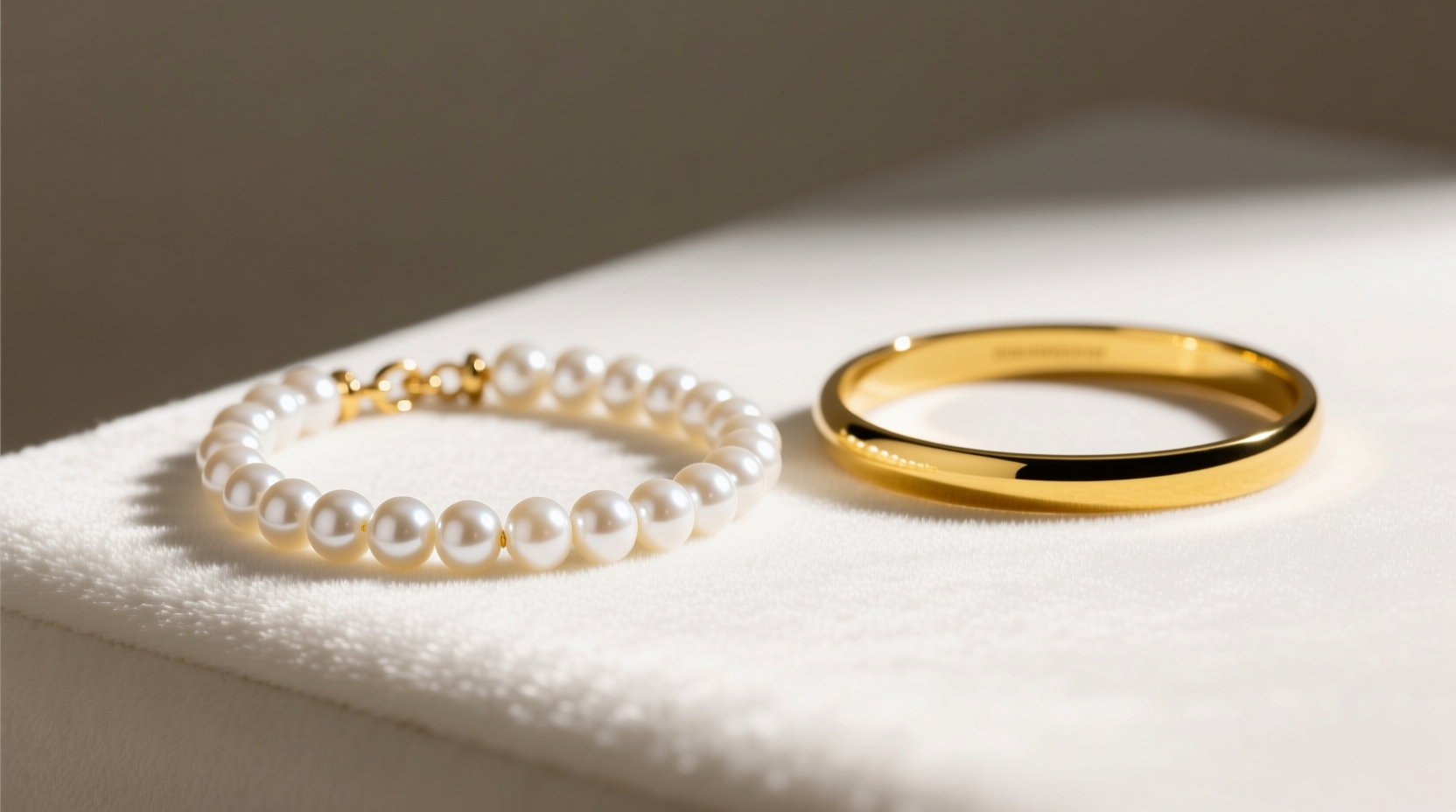
Pearls are unique among gemstones—they’re organic, formed within oysters through natural processes. Their soft luster, subtle iridescence, and classic appeal make them a staple in both formal and everyday wardrobes. Historically associated with purity and wealth, pearls have adorned royalty and tastemakers for centuries. Whether Akoya, South Sea, Tahitian, or freshwater, each type carries its own character, but all share an understated luxury that demands thoughtful styling.
Because pearls are delicate—both physically and aesthetically—the way they’re presented influences perception. A single strand of white pearls on bare skin exudes grace. But introduce metal elements, especially bold ones like yellow gold, and questions arise: Does the contrast clash? Does gold overpower the pearl’s quiet elegance?
Tip: Choose high-luster pearls with smooth surfaces to ensure they hold their own against metallic elements.Why Gold Doesn’t Automatically Make Pearls Look Cheap
The idea that gold diminishes a pearl’s value is a misconception rooted in outdated fashion rules. In reality, gold complements pearls when used with purpose. Yellow gold adds warmth that enhances creamy or champagne-toned pearls. White gold or rose gold can create modern contrasts with white or black pearls. The key lies not in avoiding gold, but in balancing proportions, finishes, and design intent.
Consider vintage jewelry from the Edwardian or Art Deco eras—many featured pearls set in gold filigree. These pieces are now prized antiques, celebrated for their craftsmanship and harmony of materials. Similarly, contemporary designers like Mikimoto and Tiffany & Co. regularly incorporate gold accents into pearl collections, proving that when done well, the combination enhances rather than detracts.
“Luxury isn’t defined by material alone—it’s about proportion, finish, and coherence. A well-crafted gold clasp on a pearl bracelet doesn’t cheapen it; it completes it.” — Clara Nguyen, Jewelry Designer & Historian
Design Principles for Pairing Pearls and Gold
To ensure your pearl bracelet maintains its elegance alongside gold, follow these foundational design principles:
- Proportion: Avoid oversized gold charms or bulky links that dominate the pearls. Subtle gold spacers or a delicately designed clasp preserve balance.
- Finish: Match the polish. A brushed gold accent softens the contrast with matte pearls, while high-polish gold works best with glossy Akoya or South Sea varieties.
- Color Harmony: Warm-toned pearls (e.g., golden South Sea) naturally align with yellow gold. Cooler whites pair better with white gold or platinum, though yellow gold can still work if balanced with neutral tones in your outfit.
- Context: Consider where and how you’ll wear the piece. A gold-accented pearl bracelet may be perfect for evening events but feel overdressed for casual daytime use.
Common Mistakes That Can Make the Combination Look Cheap
It’s not the presence of gold that risks cheapening a pearl bracelet—it’s poor execution. Watch out for these pitfalls:
| Mistake | Why It Looks Cheap | Better Alternative |
|---|---|---|
| Low-quality gold plating | Fades quickly, exposes base metal, looks tarnished | Solid gold, vermeil, or high-karat plating over sterling silver |
| Overly large gold charms | Distracts from pearls, disrupts flow | Small, elegant spacers or a minimalist clasp |
| Mismatched color temperatures | Clash between cool pearls and warm gold feels jarring | Pair warm pearls with yellow gold; cool whites with white gold |
| Poor craftsmanship | Gaps, rough edges, uneven spacing | Invest in reputable brands or custom designs |
Real-Life Example: A Stylist’s Approach
Claire, a 34-year-old marketing executive, inherited a strand of cultured pearls from her grandmother. The bracelet had a simple gold clasp, slightly worn but intact. Unsure whether to update it, she consulted a jewelry stylist. Instead of replacing the gold, the stylist recommended polishing the clasp and pairing the bracelet with a slim gold bangle in a matching hue. Worn together on a navy silk dress, the ensemble looked intentional and refined—not flashy, but quietly luxurious. The gold didn’t overpower the pearls; it grounded them, adding a touch of modernity to a classic heirloom.
This case illustrates that context and curation matter more than rigid rules. Claire’s updated look succeeded because the gold was consistent in tone, modest in scale, and part of a cohesive personal style.
How to Style Pearl and Gold Combinations with Confidence
Wearing pearls with gold accents can be a powerful expression of personal taste. Follow this step-by-step guide to get it right:
- Assess your pearls: Note their size, color, luster, and condition. High-quality pearls can carry stronger metallic elements.
- Evaluate the gold component: Is it part of the clasp, a spacer, or an added charm? Ensure it’s proportional and well-finished.
- Match metal tones to your wardrobe: If you often wear warm neutrals (beige, camel, olive), yellow gold will integrate seamlessly. For cooler palettes, consider white gold accents.
- Layer intentionally: Combine your pearl bracelet with other delicate gold pieces—a thin chain bracelet or a signet ring—to create cohesion.
- Test in different lighting: Natural light reveals true color harmony. Check how the combination looks outdoors versus under office lighting.
Frequently Asked Questions
Can I wear a gold watch with a pearl bracelet?
Yes, as long as the gold tones match. A yellow gold watch pairs well with warm-toned pearls or a yellow gold-accented bracelet. Avoid clashing metals unless you’re aiming for a deliberate mixed-metal look, which requires careful styling.
Is gold-filled or vermeil better for pairing with pearls?
Both are excellent choices. Gold-filled jewelry contains a thicker layer of gold than standard plating and lasts longer. Vermeil (gold-plated sterling silver) offers a rich finish and is hypoallergenic. Either option provides durability and luster without the cost of solid gold.
Will saltwater or perfume damage my pearl and gold bracelet?
Yes. Pearls are porous and can absorb chemicals, leading to discoloration. Gold, especially lower-karat or plated versions, can tarnish. Always put on your bracelet after applying perfume, lotion, or hairspray, and remove it before swimming or showering.
Final Thoughts: Elevate, Don’t Avoid
The belief that gold makes a pearl bracelet look cheap is a myth born from poorly executed combinations—not the materials themselves. When chosen with care, gold enhances pearls by adding contrast, warmth, and structural interest. The elegance of a pearl lies not in isolation, but in how it interacts with the world around it—your clothing, your other jewelry, and your personal style.
Instead of shying away from gold, focus on quality, proportion, and intention. Invest in well-made pieces, maintain them properly, and wear them with confidence. A pearl bracelet with a gleaming gold clasp isn’t diminished—it’s completed.
💬 Have a pearl bracelet with gold accents? Share how you style it in the comments below—we’d love to hear your tips and photos!