For centuries, people have turned to symbolic trinkets for protection, prosperity, and personal expression. Among the most popular are owl charms and traditional lucky charms—objects worn as pendants, carried in pockets, or gifted during significant life moments. While both promise fortune, their origins, meanings, and aesthetic appeal differ greatly. Understanding these differences helps you make a choice that aligns not only with your desire for luck but also with your sense of style.
The Symbolism Behind Owl Charms
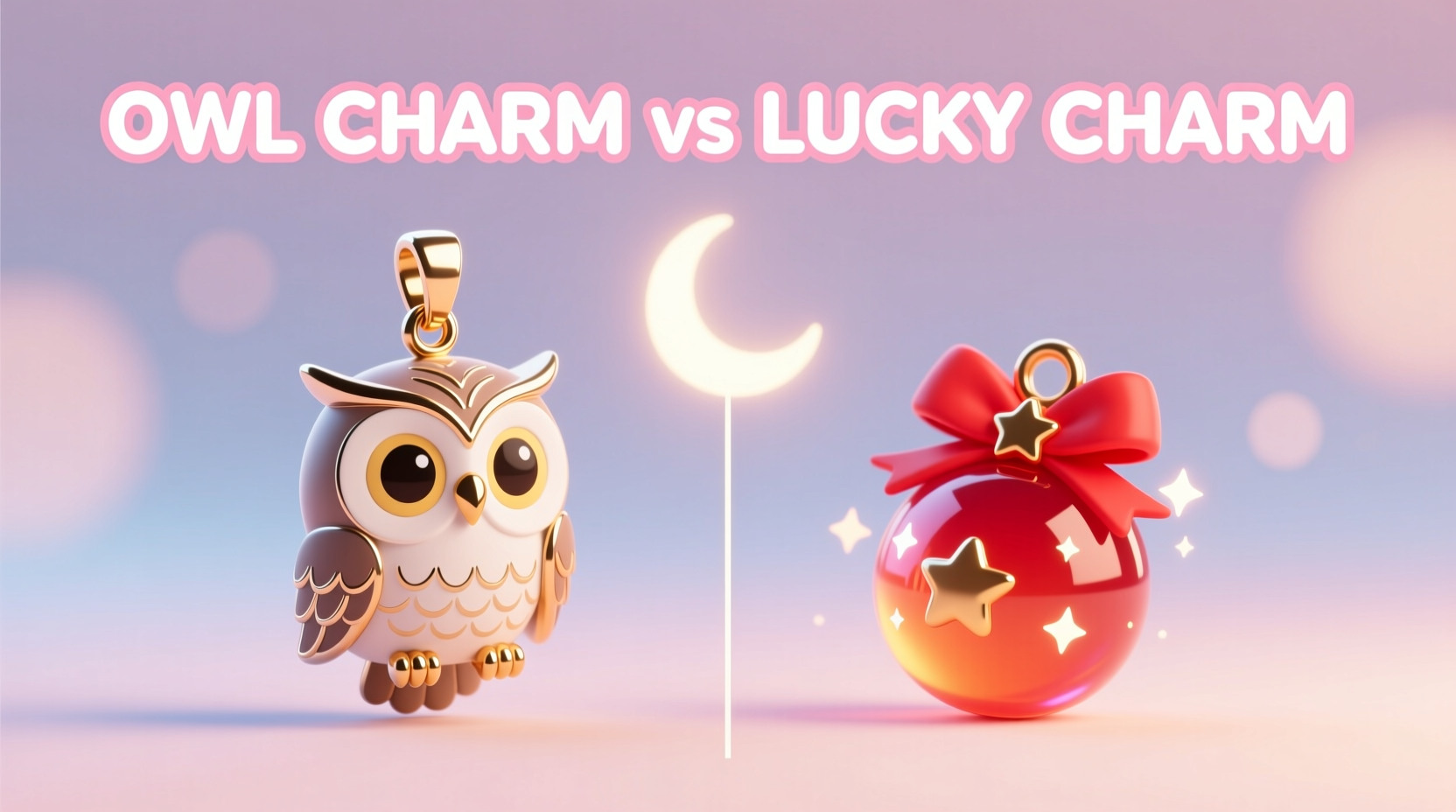
Owls have long been associated with wisdom, intuition, and mystery across cultures. In ancient Greece, the owl was sacred to Athena, goddess of wisdom and warfare. Carvings of owls adorned Athenian coins, symbolizing knowledge and strategic insight. In contrast, some Native American traditions view the owl as a guardian of the night, a spirit messenger between worlds. Japanese folklore sometimes portrays owls as protective spirits that ward off hardship.
Modern interpretations embrace the owl as a symbol of intellectual depth and quiet strength. Wearing an owl charm often signals a love for learning, introspection, or a connection to nature. Unlike generic lucky charms, which rely on broad superstition, owl charms carry layered meaning—making them appealing to those who value depth over simple fortune.
“An owl charm isn’t just about luck—it’s a statement of inner clarity and discernment.” — Dr. Lena Torres, Cultural AnthropologistTip: Choose an owl charm with detailed feather engraving or moon motifs to enhance its mystical aesthetic.
What Defines a Traditional Lucky Charm?
Lucky charms vary widely by culture but typically include items like four-leaf clovers, horseshoes, rabbits’ feet, or wishbones. These objects stem from agrarian and folk traditions where natural anomalies were seen as divine signs. The four-leaf clover, for instance, is a genetic rarity—one in 10,000 three-leaf clovers—and thus became emblematic of rare good fortune.
Unlike the owl’s intellectual association, lucky charms emphasize serendipity and chance. They’re often given during transitions—graduations, job starts, weddings—as tokens of hope. Their visual language is simpler: bold shapes, bright colors, and instantly recognizable symbols. This makes them ideal for playful, whimsical jewelry and accessories.
While less nuanced in meaning, lucky charms excel in emotional resonance. They evoke nostalgia, childhood memories, and universal optimism. For many, wearing one is less about belief and more about comfort—a small ritual to invite positivity into daily life.
Comparing Luck: Meaning vs. Momentum
Does one bring more luck than the other? The answer depends on how you define “luck.”
- Owl charms attract what might be called “earned luck”—the kind that comes from awareness, timing, and wise decisions. If you believe luck favors the prepared, an owl charm aligns with that philosophy.
- Lucky charms represent “random luck”—unexpected windfalls, fortunate accidents, or being in the right place at the right time. They appeal to those who believe in fate or cosmic favor.
In behavioral psychology, perceived luck often correlates with mindset. Studies suggest that people who consider themselves lucky tend to notice opportunities more readily. Whether it’s an owl or a clover, the real power may lie in the confidence the charm instills—not the object itself.
Owl Charm vs Lucky Charm: A Comparative Table
| Aspect | Owl Charm | Lucky Charm |
|---|---|---|
| Primary Symbolism | Wisdom, intuition, mystery | Fortune, chance, protection |
| Cultural Roots | Greek, Native American, East Asian | Celtic, European folk, global |
| Fashion Appeal | Elegant, minimalist, bohemian | Playful, colorful, retro |
| Wearability | Suitable for professional & casual settings | Better for casual, festive occasions |
| Emotional Impact | Empowers focus and insight | Boosts optimism and hope |
| Longevity as Trend | Consistently stylish; resurges in academic & nature-inspired fashion | Cyclical; peaks around St. Patrick’s Day or gift seasons |
Style Showdown: Which Fits Your Aesthetic?
When it comes to fashion, both types of charms have distinct strengths.
Owl charms lend themselves to artisanal designs—think sterling silver pendants with intricate eyes, enamel detailing, or stone inlays like amethyst or lapis lazuli. They pair well with neutral tones, layered necklaces, and minimalist wardrobes. Popular among educators, creatives, and spiritual seekers, the owl charm blends seamlessly into intellectual or nature-centric lifestyles.
Lucky charms, on the other hand, thrive in vibrant, expressive contexts. A gold-plated horseshoe pendant or a red string bracelet with a tiny clover adds a pop of color and cheer. These work best with casual outfits, festival wear, or as conversation starters. They’re especially common in friendship jewelry and holiday-themed collections.
Ultimately, style preference plays a decisive role. If your wardrobe leans toward timeless elegance, the owl may be your talisman. If you enjoy bold accessories and seasonal flair, a lucky charm could be your signature piece.
Mini Case Study: Two Professionals, Two Choices
Sophia, 34, Architect: Sophia wears a delicate owl charm necklace every day. She received it from her mentor before her first major project. “It reminds me to trust my judgment,” she says. “Clients don’t see it as superstitious—they think it’s artistic.” Her charm complements her structured blazers and monochrome palette, reinforcing her image as thoughtful and detail-oriented.
Daniel, 29, Event Planner: Daniel carries a small leather pouch with a rabbit’s foot and a mini horseshoe. “I’m not religious, but I like having something that feels like a safety net,” he admits. Before big events, he touches the pouch for reassurance. His lucky charm stays hidden but gives him mental calm—especially useful in high-pressure environments.
Their stories illustrate a key point: the best charm is the one that resonates personally, whether visible or private.
How to Choose the Right Charm for You
Selecting between an owl charm and a lucky charm isn’t just about tradition or trend—it’s about alignment with your values and lifestyle. Follow this checklist to make an informed decision:
- Assess your intentions: Are you seeking wisdom and clarity (owl) or hoping for unexpected breaks (lucky charm)?
- Consider your wardrobe: Does your style lean elegant and understated (owl) or fun and eclectic (lucky charm)?
- Reflect on cultural connection: Do you feel drawn to mythological wisdom (Athena’s owl) or folk traditions (Irish clover)?
- Think about visibility: Will it be worn daily or kept privately? Owls suit public wear; lucky charms can be intimate. <5> Test emotional response: Hold each type. Which one gives you a stronger sense of comfort or inspiration?
FAQ
Can I wear both an owl charm and a lucky charm?
Absolutely. Many people combine symbols for layered meaning—wisdom *and* opportunity. Just ensure the combination feels balanced and intentional, not cluttered.
Do these charms really bring luck?
There’s no scientific proof that charms alter fate. However, psychological research shows that belief in personal luck can improve resilience and openness to opportunity. The charm acts as a mental anchor, not a magical device.
Are owl charms considered bad luck in some cultures?
In certain African and Middle Eastern traditions, owls are associated with omens or death. If you’re gifting across cultures, consider context. Within Western and modern fashion contexts, however, they’re overwhelmingly positive.
Conclusion: Luck Meets Style—Make It Meaningful
The debate between owl charm and lucky charm isn’t about superiority—it’s about suitability. One offers depth, the other delight. One whispers wisdom, the other shouts hope. When chosen with intention, either can become more than an accessory: a personal emblem of what you value most.
Style evolves, but meaning endures. Whether you gravitate toward the watchful gaze of the owl or the cheerful promise of a four-leaf clover, let your charm reflect not just what you want (luck), but who you are.
💬 Which charm speaks to you—owl or lucky? Share your story or favorite design in the comments below.