As temperatures rise and humidity climbs, your wristwatch becomes more than just a timepiece—it’s an extension of your seasonal comfort. Summer brings increased sweating, exposure to water, and prolonged sun contact, all of which impact how your watch feels and functions. Among the most debated choices in horology is the strap: nylon versus metal. While both have loyal followings, their performance diverges significantly under summer conditions. This article examines breathability, durability, maintenance, comfort, and aesthetics to determine which option truly excels when the heat is on.
Breathability and Skin Comfort in Hot Weather
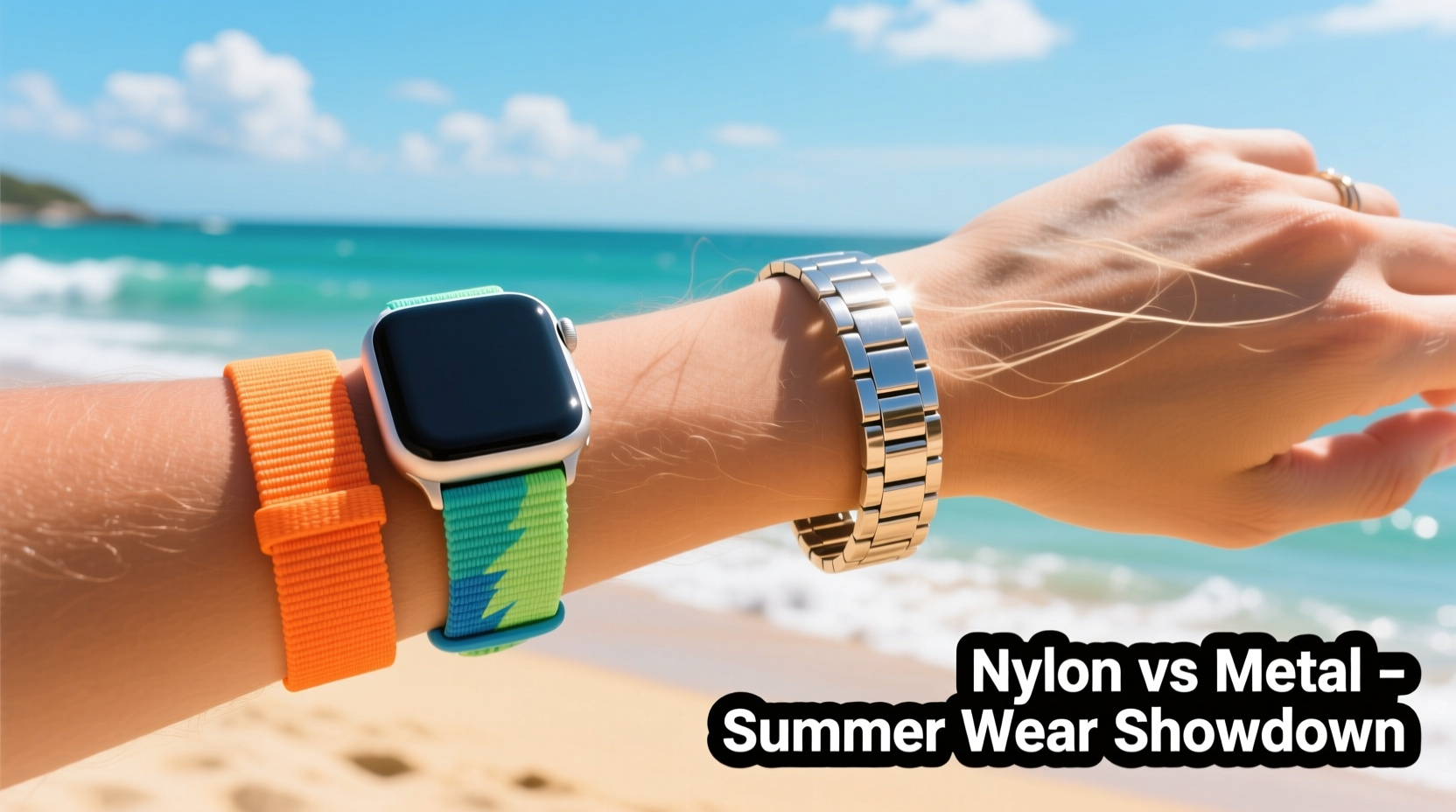
In high temperatures, breathability is paramount. A watch that traps moisture against the skin can lead to irritation, odor, and discomfort—especially during extended wear. Nylon straps, particularly those made from ballistic nylon or NATO-style weaves, are inherently breathable. The open weave structure allows air to circulate around the wrist, reducing sweat buildup and minimizing chafing.
Metal bracelets, typically crafted from stainless steel or titanium, offer minimal airflow. Solid links press directly against the skin, creating a sealed microclimate that traps perspiration. Even with expansion gaps or butterfly clasps, metal lacks the porous nature of fabric. In humid climates or during physical activity, this can result in a clammy, sticky sensation that detracts from daily comfort.
Tip: If you're wearing a metal bracelet in summer, consider adjusting it slightly looser to improve airflow—but not so loose that it slaps against your wrist.Nylon also benefits from moisture-wicking properties. Many modern nylon straps are treated with hydrophobic coatings or blended with synthetic fibers to resist absorption. This means sweat evaporates more quickly, keeping the skin drier. Metal, by contrast, conducts heat efficiently, often becoming uncomfortably warm in direct sunlight—a phenomenon familiar to anyone who’s touched a car door handle in July.
Durability and Resistance to Environmental Stressors
Summer isn’t just about heat; it involves saltwater, chlorine, UV radiation, and frequent handwashing. These elements test the resilience of any watch component, especially the strap.
Nylon straps excel in resistance to environmental damage. High-quality nylon is naturally corrosion-resistant and unaffected by salt or chlorine. Unlike leather, it won’t degrade when wet, making it ideal for beach outings or poolside lounging. Most nylon watch straps can be rinsed under tap water and air-dried within hours—no special care required.
Metal bracelets hold up well structurally but face different challenges. Stainless steel resists rust when properly finished, but microscopic crevices between links can trap moisture and salt, leading to pitting or discoloration over time. Regular cleaning is essential to prevent grime buildup. Titanium offers better corrosion resistance and is lighter, but at a higher cost. Additionally, metal can develop a dull sheen from prolonged sun exposure due to oxidation of surface oils left by skin.
“Nylon’s ability to endure constant wet-dry cycles without degradation makes it a top performer in coastal environments.” — Daniel Reyes, Watch Materials Analyst at Timepiece Review Lab
Maintenance Requirements Compared
Low maintenance is a key advantage for summer accessories. When you’re traveling, swimming, or simply trying to enjoy the season, complicated upkeep routines are impractical.
Nylon straps require minimal effort. Most can be cleaned with mild soap and water. Some users even toss them in the washing machine (on gentle cycle) for deep refreshes. Drying takes a few hours, and there’s no risk of warping or tarnishing. Replacement is inexpensive—many quality nylon straps retail under $30, allowing owners to rotate styles or retire worn ones without financial hesitation.
Metal bracelets demand more attention. They should be cleaned weekly during summer months using a soft brush and soapy water to remove trapped debris. Ultrasonic cleaners work well but aren’t always accessible. Polishing may be needed periodically to restore luster, especially if exposed to chlorinated water. Over time, spring bars and clasp mechanisms can corrode if not dried thoroughly, potentially leading to failure.
| Care Factor | Nylon Strap | Metal Bracelet |
|---|---|---|
| Cleaning Frequency | As needed (weekly recommended) | Weekly (essential) |
| Drying Time After Water Exposure | 2–4 hours | Several hours (risk of internal moisture) |
| Replacement Cost | $15–$35 | $100–$300+ |
| UV Resistance | High (colorfast options available) | Moderate (can oxidize with oils) |
| Salt/Chlorine Tolerance | Excellent | Good (with prompt cleaning) |
Style Flexibility and Seasonal Aesthetics
Aesthetic alignment with summer fashion plays a role in strap selection. Nylon offers vast versatility in color, pattern, and texture. From vibrant tropical prints to subdued earth tones, nylon complements casual summer attire like linen shirts, swimwear cover-ups, and lightweight jackets. Its informal character pairs naturally with dive watches, field watches, and pilot chronographs—styles commonly associated with adventure and outdoor living.
Metal bracelets project a more formal, polished image. While elegant with dress shirts or smart-casual ensembles, they can feel out of place at the beach or during weekend barbecues. That said, some integrated-bracelet designs (e.g., Rolex Oyster, Audemars Piguet Royal Oak) maintain year-round appeal due to their iconic status. However, even these benefit from seasonal context—few would argue that a platinum bracelet enhances a snorkeling excursion.
Another consideration is weight. Nylon straps typically weigh under 30 grams, contributing to a nearly imperceptible presence on the wrist. Metal bracelets, depending on design, can add 80–150 grams. During long days outdoors, that extra heft becomes noticeable, particularly when combined with hydration packs, sunglasses, or other gear.
Real-World Example: A Weeklong Beach Vacation
Consider Mark, a software engineer from Chicago, on a seven-day trip to Cancún. His wardrobe includes shorts, flip-flops, rash guards, and occasional button-downs for dinner. He owns two watches: a vintage-inspired diver on a navy NATO strap and a sleek date model on a stainless steel Jubilee bracelet.
On day one, he wears the metal-bracelet watch. By afternoon, after swimming and walking along the shore, he notices the bracelet clinging to his damp skin. Tiny grains of sand have lodged between the links. At dinner, it looks dull despite wiping it down.
Day two, he switches to the nylon strap. It gets soaked multiple times, yet dries quickly. Sand rinses off effortlessly. The lightweight feel goes unnoticed throughout hikes and snorkeling. Even when he wears a short-sleeve shirt later, the strap blends seamlessly into the outfit.
By day five, he doesn’t even consider the metal option. The nylon proves adaptable, comfortable, and low-maintenance—exactly what summer demands.
Step-by-Step Guide: Choosing the Right Summer Strap
Follow this sequence to make an informed decision based on your lifestyle and environment:
- Evaluate Your Daily Activities: Do you swim, hike, or spend time in humid areas? High-moisture environments favor nylon.
- Assess Your Wardrobe: If you lean toward casual or sporty clothing, nylon integrates more naturally.
- Check Your Watch Case Material: A titanium or plastic case pairs better with nylon for consistent weight distribution.
- Test Breathability: Wear each strap for a full day in warm conditions. Note where discomfort arises.
- Simulate Exposure: Rinse both straps with saltwater (1 tbsp salt per cup of water), then leave them overnight. Observe residue, odor, and drying behavior.
- Review Maintenance Willingness: Be honest—will you clean a metal bracelet weekly? If not, nylon reduces long-term hassle.
Expert Tips for Maximizing Summer Watch Performance
- Rotate straps weekly to extend lifespan and reduce odor accumulation.
- Choose quick-release pins for easy swapping between nylon and metal as occasions change.
- Opt for perforated metal bracelets if you prefer metal—they allow slightly better airflow.
- Select nylon with silicone backing for added grip and reduced slippage when wet.
- Avoid dark-colored straps in intense sun; they absorb heat faster than light tones.
Frequently Asked Questions
Can I wear a metal bracelet in the ocean?
Yes, but with precautions. Stainless steel is generally safe in saltwater, but it must be rinsed with fresh water immediately afterward. Failure to do so increases the risk of corrosion, especially in older or poorly finished bracelets.
Do nylon straps stretch over time?
Prolonged use, especially when wet, can cause slight elongation in lower-quality nylon. High-density weaves like Zulu or reinforced ballistic nylon minimize this. Proper fit—snug but not tight—helps maintain shape.
Are NATO straps secure enough for active use?
Absolutely. NATO straps pass through both spring bars and under the case, meaning even if one fails, the watch remains attached to the wrist. This safety feature makes them popular among military personnel and outdoor enthusiasts.
Final Verdict: Why Nylon Wins for Summer Wear
While metal bracelets offer prestige and longevity in controlled environments, nylon emerges as the superior choice for summer. Its combination of breathability, water resistance, ease of maintenance, and stylistic adaptability aligns perfectly with seasonal demands. Whether you're kayaking, commuting in sweltering heat, or enjoying al fresco dining, a nylon strap enhances comfort without sacrificing reliability.
That doesn’t mean metal has no place. For evening events or air-conditioned offices, a polished bracelet retains its elegance. But for true summer functionality—where performance meets practicality—nylon delivers unmatched value.
“The best watch for any season is the one you forget you’re wearing. In summer, that’s almost always a well-made nylon strap.” — Lena Patel, Horological Lifestyle Editor at *ChronoScope Magazine*
Take Action Today
Don’t wait until sweat stains your favorite bracelet or saltwater dulls its shine. Evaluate your current collection and consider adding at least one high-quality nylon strap to your rotation. Experiment with colors that reflect the season—turquoise, coral, sand beige—and experience firsthand how a simple change transforms both comfort and confidence. Share your summer watch setup in the comments below and help others discover smarter ways to stay cool while staying on time.
💬 What’s your go-to summer watch strap? Join the conversation and tell us why nylon or metal works best for your warm-weather adventures!