Choosing a pendant isn’t just about aesthetics—it’s a decision shaped by budget, ethics, durability, and personal values. In recent years, two standout options have emerged: moissanite and lab-grown diamonds. Both offer ethical sourcing, impressive sparkle, and affordability compared to mined diamonds. But when it comes to value for money, longevity, and visual appeal, how do they truly compare? And is paying more for a lab-grown diamond actually worth it?
Understanding the Basics: What Are Moissanite and Lab-Grown Diamonds?
Before diving into comparisons, it’s essential to understand what each stone actually is.
Moissanite is a naturally occurring mineral—silicon carbide—but the version used in jewelry today is almost exclusively lab-created. Discovered in a meteor crater by Dr. Henri Moissan in 1893, natural moissanite is extremely rare. The synthetic version, perfected in the 1990s, offers exceptional fire and brilliance, often exceeding that of diamonds.
Lab-grown diamonds, on the other hand, are real diamonds in every chemical, physical, and optical sense. They are grown in controlled laboratory environments using either High Pressure High Temperature (HPHT) or Chemical Vapor Deposition (CVD) methods. These stones are identical to mined diamonds but avoid the environmental and ethical concerns associated with traditional mining.
“Lab-grown diamonds are not ‘fake’—they are chemically indistinguishable from earth-mined diamonds.” — Dr. James Withers, Gemologist at the International Gemological Institute (IGI)
Visual Differences: Brilliance, Fire, and Color
One of the most debated aspects between these two stones is how they look under light.
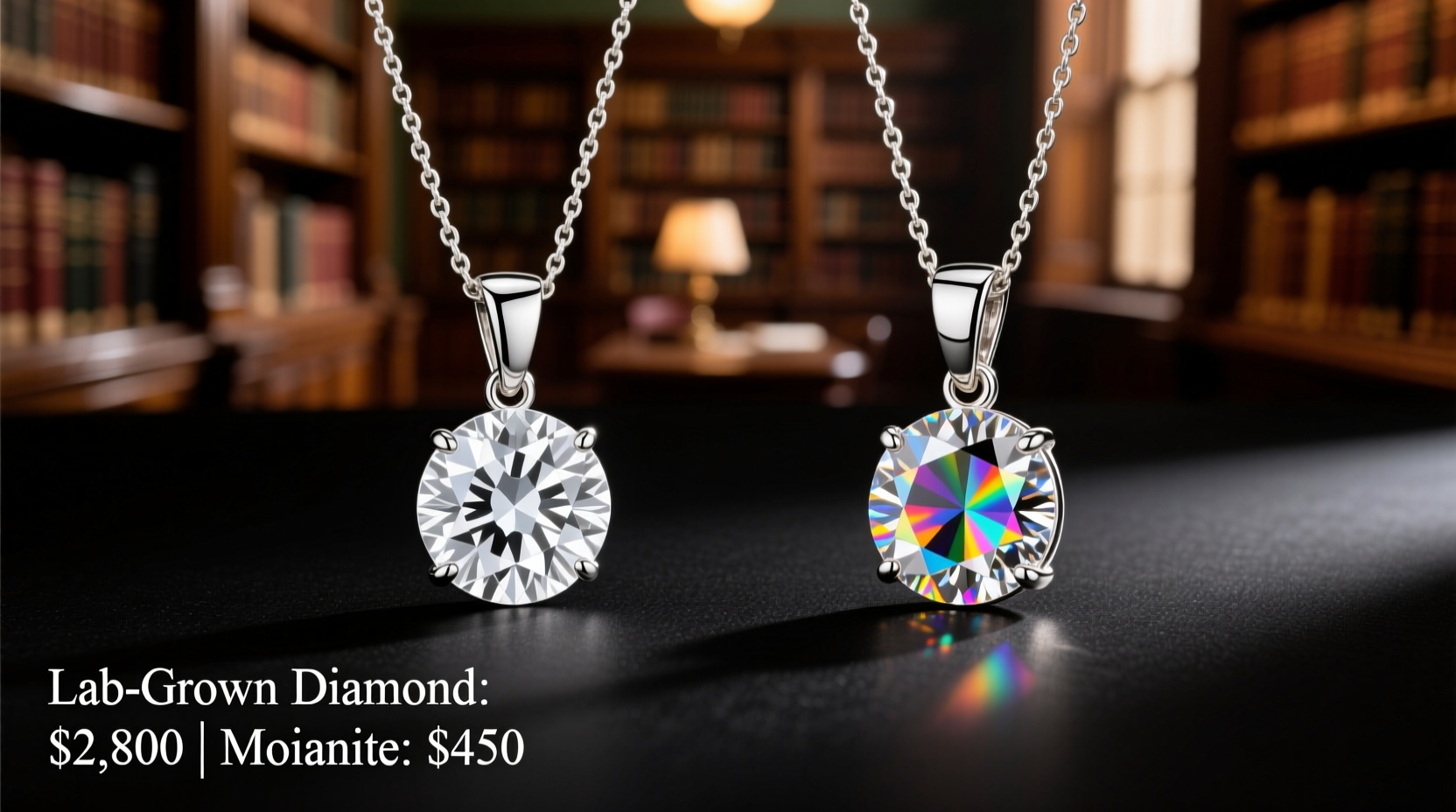
- Brilliance (white light reflection): Lab-grown diamonds closely mimic the brilliance of natural diamonds. Moissanite also reflects white light well but tends to show more colored sparkle, known as “fire.”
- Fire (dispersion of light into colors): Moissanite has nearly double the fire of a diamond, which means it sparkles with vivid rainbow flashes. While some love this effect, others find it too flashy or “disco-ball-like” compared to the subtler shimmer of a diamond.
- Color: High-quality lab-grown diamonds are typically graded D-F (colorless). Moissanite, even in its highest grades, can show faint yellow or gray tints under certain lighting, especially in larger sizes.
Price Comparison: Where Does the Value Lie?
Cost is often the deciding factor. Here's a realistic comparison for a 1-carat round pendant centerpiece:
| Stone Type | Average Price (1 ct) | Durability (Mohs Scale) | Ethical Sourcing |
|---|---|---|---|
| Mined Diamond | $5,000–$8,000 | 10 | Varies (conflict risk possible) |
| Lab-Grown Diamond | $800–$1,500 | 10 | Generally ethical |
| Moissanite | $300–$600 | 9.25 | Fully ethical |
The data shows a clear trend: moissanite offers the lowest upfront cost, while lab-grown diamonds sit in the middle. For many, spending $1,200 instead of $300 might seem excessive unless there’s a tangible benefit.
Longevity and Wearability: Which Stone Lasts Longer?
Diamonds rank 10 on the Mohs hardness scale—the highest possible—making them extremely resistant to scratches and ideal for everyday wear. Moissanite, at 9.25, is still very durable and suitable for daily use, but over decades, micro-scratches may become more apparent, especially on facets.
In practical terms, both stones will withstand normal wear, but lab-grown diamonds have a slight edge in long-term resilience. However, proper setting and care matter more than minor differences in hardness. A poorly set moissanite in a low-quality pendant will degrade faster than a well-crafted lab-diamond piece, regardless of material superiority.
Real Example: Sarah’s Pendant Choice
Sarah, a graphic designer from Portland, wanted a meaningful pendant for her 30th birthday. She loved the idea of an ethical gemstone but was torn between moissanite and a lab-grown diamond. After trying both in-store, she noticed the moissanite caught everyone’s eye with its fiery sparkle—but under office lighting, it looked slightly “too bright.” The lab-grown diamond had a softer, more familiar glow, similar to her grandmother’s engagement ring.
She chose the lab-grown diamond, paying $1,100 versus $450 for a comparable moissanite. “It felt more timeless,” she said. “I’ll wear this every day, and I didn’t want something that looked ‘different’ in certain lights.”
Step-by-Step Guide: How to Choose the Right Pendant for You
Follow this logical sequence to make a confident decision:
- Define your budget. Set a realistic range. If you’re capped at $500, moissanite makes the most sense.
- Consider your lifestyle. Do you work with your hands? Travel frequently? A harder stone (diamond) may be preferable.
- Evaluate visual preferences. Visit a jeweler or order samples. Decide whether you prefer subtle elegance (diamond) or bold sparkle (moissanite).
- Assess long-term value. Lab-grown diamonds currently retain about 30–40% of their value if resold; moissanite holds closer to 10–15%. Neither appreciates like vintage pieces.
- Choose the setting quality. A well-made 14K gold or platinum setting enhances any stone’s beauty and longevity.
Common Misconceptions Debunked
- Myth: Lab-grown diamonds are “fake.” Truth: They are real diamonds with the same atomic structure.
- Myth: Moissanite will get cloudy over time. Truth: High-quality moissanite does not cloud; surface grime can dull shine, but cleaning restores clarity.
- Myth: All lab diamonds are cheaper. Truth: Prices vary by cut, color, and certification. Fancy shapes or high clarity can push costs close to mined diamonds.
FAQ
Can you tell the difference between moissanite and a lab-grown diamond without a tester?
To the untrained eye, it’s difficult—especially in smaller sizes. However, moissanite’s higher fire (rainbow sparkle) is often noticeable in direct sunlight. A professional gem tester or jeweler can confirm the material instantly.
Do lab-grown diamonds come with certifications?
Yes. Reputable vendors provide grading reports from labs like IGI, GIA (for some), or GCAL. Always request a certificate detailing cut, color, clarity, and carat weight.
Is moissanite suitable for heirloom jewelry?
While durable, moissanite lacks the cultural legacy and resale recognition of diamonds. If passing down a family piece matters, a lab-grown diamond may carry more symbolic weight.
Final Verdict: Is the Extra Cost for a Lab-Grown Diamond Worth It?
For many, yes—but not universally. If your priority is authenticity, subtle elegance, and a stone that behaves exactly like a mined diamond, then paying 2–3 times more for a lab-grown diamond is justified. Its superior hardness, lower fire, and closer resemblance to traditional diamonds make it ideal for those seeking understated luxury.
However, if you love dramatic sparkle and are working with a tight budget, moissanite delivers incredible visual impact at a fraction of the cost. It’s an excellent choice for fashion-forward designs or statement pieces where attention-grabbing brilliance is desired.
Tip: Prioritize cut quality over carat size. A well-cut 0.75-carat lab diamond or moissanite will outshine a poorly cut 1.5-carat stone.Conclusion: Make the Choice That Aligns With Your Values
Ultimately, the decision between moissanite and a lab-grown diamond pendant isn’t about which is objectively better—it’s about what resonates with you. Whether you value scientific precision, emotional symbolism, budget efficiency, or visual drama, both options represent responsible, modern alternatives to mined gems.
Don’t let price alone dictate your choice. Consider how you’ll wear it, how it makes you feel, and what story you want your jewelry to tell. With clearer insight and realistic expectations, you can confidently choose a pendant that shines brightly—for years to come.
🚀 Ready to make your choice? Visit a trusted jeweler, compare side-by-side samples, and invest in a piece that reflects your taste and values. Share your journey in the comments below!