In an age where technology infiltrates nearly every aspect of daily life, the wrist remains a battleground between tradition and innovation. On one side: the minimalist watch—sleek, timeless, and stripped down to its essence. On the other: the smartwatch, packed with notifications, health tracking, and connectivity. At first glance, they seem like opposing forces. But rather than choosing one over the other, many discerning individuals are embracing both as complementary pieces in a thoughtfully curated wardrobe.
The modern aesthetic values intentionality. It’s not about having more—it’s about having what matters. And when it comes to personal accessories, especially timepieces, function and form must align with lifestyle, context, and identity. This is where the synergy between minimalist watches and smartwatches becomes not only possible but practical.
The Role of the Minimalist Watch: Timeless Elegance
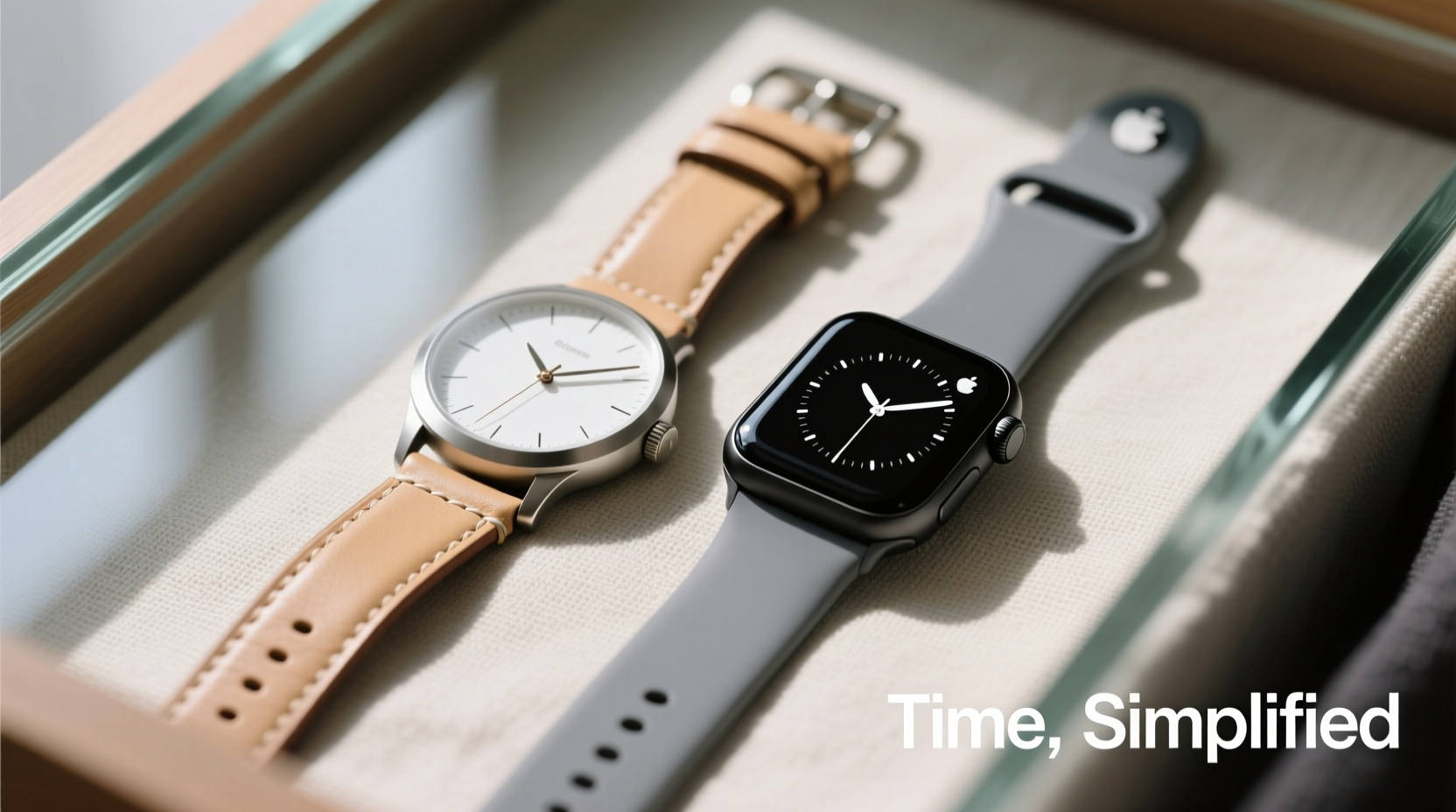
A minimalist watch is defined by clean lines, uncluttered dials, and a focus on craftsmanship. Often featuring analog hands and understated materials like brushed stainless steel or matte leather straps, these watches serve as quiet statements of taste. They don’t shout for attention; instead, they complement a tailored suit, elevate casual wear, or add polish to weekend attire.
Designers like Daniel Wellington, Nomos Glashütte, and Junghans have built reputations on this philosophy—where less is more. These watches appeal to those who value subtlety, symmetry, and enduring design principles that transcend trends.
Beyond aesthetics, wearing a minimalist watch fosters mindfulness. Without digital distractions, checking the time becomes a deliberate act, not a reflexive scroll. In a world saturated with screens, this simplicity offers a small rebellion against constant stimulation.
Tip: Pair your minimalist watch with monochrome outfits to let the watch stand out without overpowering your look.The Rise of the Smartwatch: Function Meets Fitness
Smartwatches, led by brands like Apple, Samsung, and Garmin, represent the convergence of technology and convenience. They track heart rate, monitor sleep, deliver messages, control music, and even support contactless payments. For professionals, athletes, and tech enthusiasts, they’re indispensable tools that integrate seamlessly into digital lifestyles.
What sets smartwatches apart isn’t just utility—they’ve evolved into fashion-forward devices. Interchangeable bands, customizable watch faces, and sleek metallic finishes allow them to transition from gym sessions to boardrooms. The latest models prioritize elegance alongside functionality, blurring the line between gadget and accessory.
Yet, despite their sophistication, smartwatches often carry a utilitarian aura. Their screens glow, buzz, and demand interaction—qualities at odds with the quiet dignity of traditional horology. That doesn’t diminish their value; it simply defines their role.
“Wearing a smartwatch doesn’t mean sacrificing style—but it does require knowing when to step back and let simplicity speak.” — Marcus Lin, Wearable Tech Analyst at GadgetStyle Weekly
Why They Can Coexist: Context Is Everything
The key to integrating both types of watches lies in understanding context. Just as you wouldn’t wear hiking boots to a gala, certain timepieces belong in specific environments. Recognizing these distinctions allows for intentional selection based on occasion, activity, and personal goals.
Consider a typical week:
- Monday morning meeting: A minimalist dress watch with a slim profile and leather strap conveys professionalism and attention to detail.
- Wednesday afternoon run: Swap to a lightweight smartwatch to monitor pace, distance, and recovery metrics.
- Saturday evening dinner: Return to the minimalist piece—no notifications, no distractions, just presence.
- Sunday yoga session: Use the smartwatch’s mindfulness app to guide breathing exercises, then remove it post-class to reset mentally.
This fluidity reflects a broader cultural shift toward hybrid identities. We are both analog and digital, professional and personal, active and reflective. Our accessories should reflect that complexity—not flatten it.
Real-Life Example: Alex, Marketing Executive & Weekend Hiker
Alex owns a titanium-faced minimalist watch from MVMT and an Apple Watch Series 9. During client calls and networking events, he wears the MVMT—its sandblasted finish and navy dial matching his blazers perfectly. “Clients notice,” he says. “It signals I care about details.”
But once he steps into the gym or hits a trail, the Apple Watch takes over. He tracks elevation gain, checks weather alerts mid-hike, and uses fall detection for safety. “I don’t want my nice watch scratched or soaked,” he explains. “Plus, I actually use the data.”
For Alex, switching watches isn’t inconvenient—it’s empowering. Each serves a purpose, and together, they cover more of his life than either could alone.
Comparison Table: Minimalist Watch vs Smartwatch
| Feature | Minimalist Watch | Smartwatch |
|---|---|---|
| Primary Purpose | Timekeeping, style, symbolism | Health tracking, connectivity, productivity |
| Lifespan | Decades (with proper care) | 3–5 years (due to battery & tech obsolescence) |
| Battery Needs | None (mechanical) or 2+ years (quartz) | Daily charging required |
| Fashion Flexibility | High—works across formal and casual settings | Moderate—limited by screen visibility and bulk |
| Distraction Level | Low—no alerts or vibrations | High—notifications pull attention frequently |
| Maintenance | Occasional cleaning, strap replacement | Software updates, screen protection, charging routine |
| Emotional Value | Often heirloom-quality; symbolic of milestones | Functional attachment; tied to performance goals |
How to Build a Dual-Watch Wardrobe: A Step-by-Step Guide
Integrating both styles successfully requires planning and awareness. Follow this timeline to build a balanced collection:
- Week 1: Assess Your Lifestyle
Track how you spend your time: meetings, workouts, social events, travel. Identify patterns where timepiece functionality matters. - Week 2: Define Your Style Identity
Decide whether you lean classic, modern, rugged, or eclectic. Choose a minimalist watch that aligns with your core aesthetic. - Week 3: Evaluate Smartwatch Needs
Determine essential features—fitness tracking? Sleep analysis? Mobile payments? Select a model that meets those needs without excess. - Week 4: Test Transitions
Alternate watches daily for a week. Note comfort, charging logistics, and how each affects your mood and interactions. - Ongoing: Rotate Intentionally
Develop a mental checklist: “Am I presenting, performing, or relaxing?” Match your watch to the answer.
Checklist: Building a Balanced Watch Collection
- ✅ Identify primary use cases (work, fitness, leisure)
- ✅ Choose one minimalist watch in a neutral tone (silver, black, navy)
- ✅ Invest in quality straps for versatility (leather, mesh, NATO)
- ✅ Select a smartwatch with interchangeable bands and elegant default face
- ✅ Establish a nightly ritual: charge smartwatch, wind/clean minimalist if needed
- ✅ Limit smartwatch customization to subtle, professional designs
- ✅ Avoid wearing smartwatches in highly formal settings unless discreet
Expert Insight: The Psychology of Wearing Two Watches
Dr. Lena Patel, behavioral psychologist specializing in consumer habits, notes that dual-watch usage reflects cognitive compartmentalization—a healthy way to manage different roles we play.
“When people switch watches, they’re not just changing accessories—they’re signaling a shift in mindset. The minimalist watch says, ‘I’m present.’ The smartwatch says, ‘I’m prepared.’ Both are valid states to inhabit.” — Dr. Lena Patel, PhD, Consumer Behavior Research Group
This psychological cue helps create boundaries in a world where work bleeds into personal time. Removing the smartwatch after hours can be a ritual akin to shutting down a laptop—symbolic of disengagement and recovery.
FAQ
Isn’t carrying two watches inconvenient?
Not necessarily. Many users keep their smartwatch on during the day for tracking and notifications, then swap to a minimalist watch in the evening. With practice, the transition becomes second nature—like changing shoes for different activities.
Can a smartwatch be stylish enough for formal events?
Some models come close. The Apple Watch Ultra with a Milanese loop or a Samsung Galaxy Watch with a leather band can pass in semi-formal settings. However, for black-tie or business-critical moments, a traditional minimalist watch still commands greater respect and blends more naturally.
Do I need to spend a lot on both types?
No. Excellent minimalist watches start around $100 (e.g., Skagen, CIGA Design), while mid-tier smartwatches like Fitbit Sense or Amazfit GTR offer robust features under $300. Focus on fit, finish, and usability rather than brand prestige.
Conclusion: Harmony Over Hierarchy
The debate between minimalist watches and smartwatches misses a deeper truth: they aren’t rivals. They are allies in a more nuanced approach to self-expression and efficiency. One honors heritage, silence, and elegance. The other embraces progress, insight, and connectivity. Together, they offer a fuller picture of who we are—and who we aim to be.
Just as a well-rounded wardrobe includes both a tailored blazer and a performance jacket, a modern accessory collection benefits from diversity. By welcoming both forms, you gain flexibility, depth, and intentionality. You stop asking which watch is better and start asking which one is right—for this moment, this place, this version of you.
🚀 Ready to refine your wristwear strategy? Start by selecting one minimalist piece and pairing it intentionally with your current smartwatch. Observe how each enhances your day—and share your experience with others building a smarter, more stylish life.








