In an age where personal security and everyday convenience are paramount, something as simple as a wallet can significantly influence both. The debate between minimalist wallets and traditional bifolds is no longer just about style or thickness—it’s about how well each protects your essentials in real-world scenarios. From pickpocket resistance to card access and durability, the choice impacts not only comfort but also safety. This article dives deep into the practical differences, examining how each wallet type handles security, organization, and daily wear.
Design Philosophy: Simplicity vs Tradition
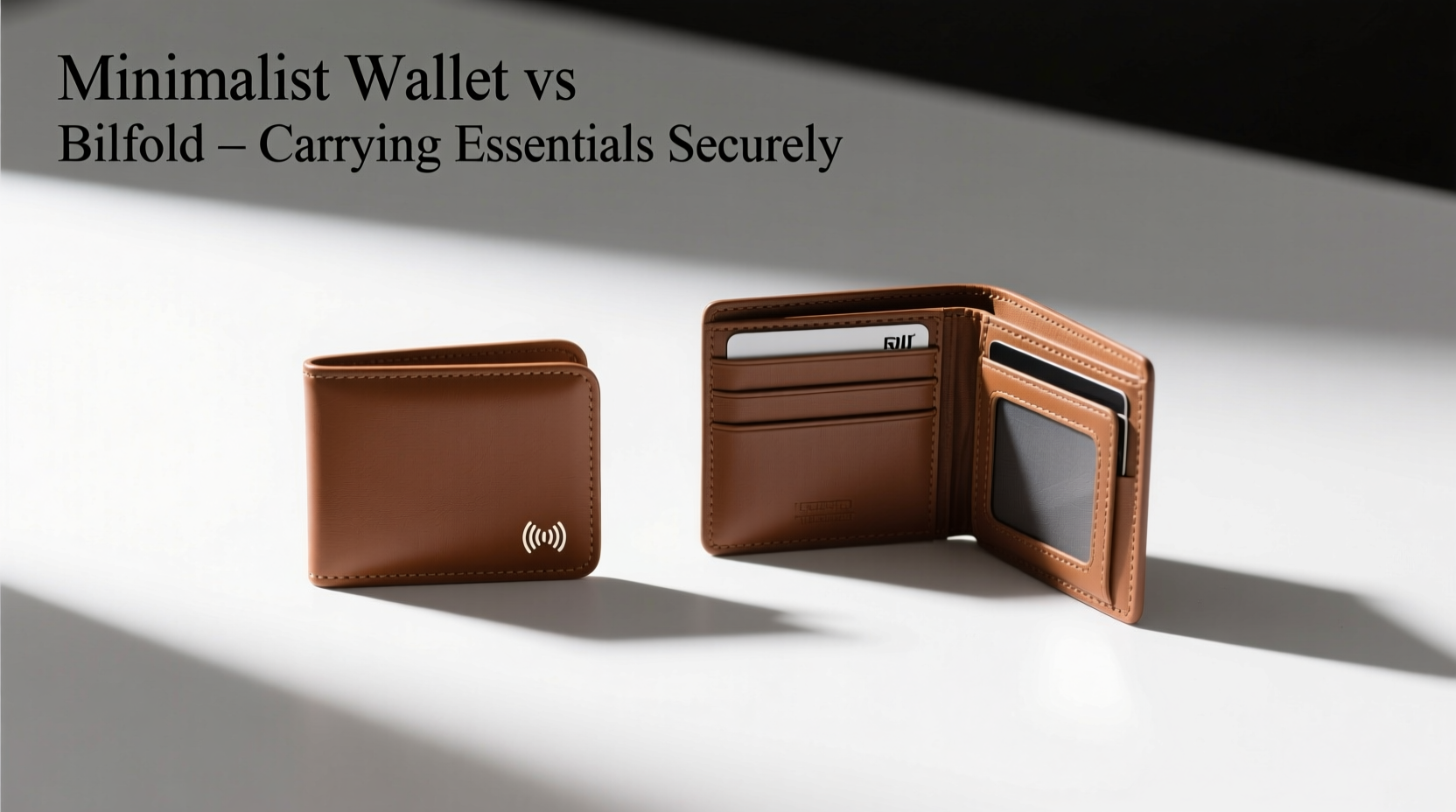
The core difference between minimalist wallets and bifolds lies in their foundational design principles. Minimalist wallets emerged from a desire to reduce bulk, streamline carry, and prioritize only what’s essential: a few cards and some cash. They often use slim profiles, materials like aluminum, titanium, or premium leather, and feature pull-tab mechanisms, slot-based access, or fold-over designs with minimal stitching.
Bifold wallets, on the other hand, follow decades of tradition. Typically made from folded leather or synthetic materials, they offer multiple card slots, bill compartments, coin pockets, and even ID windows. Their thicker profile accommodates more items but increases pocket bulge and potential snag points.
While both serve the same basic function—carrying payment methods and identification—their approach to security diverges sharply. A minimalist wallet reduces exposure by limiting access points and encouraging fewer cards, whereas a bifold may provide more storage but at the cost of increased vulnerability due to open flaps and looser internal organization.
Tip: Fewer cards mean fewer targets for theft and less damage if your wallet is compromised.Security Features Compared
When evaluating which wallet carries essentials more securely, several factors come into play: physical protection, pickpocket resistance, RFID shielding, and structural integrity under stress.
Pickpocket Resistance
Minimalist wallets generally win in this category. Their slim design allows them to sit deeper in front pockets, where they’re harder to reach without detection. Many users report switching to front-pocket carry when adopting a minimalist model, which naturally increases awareness of tampering.
Bifolds, especially when overstuffed, tend to protrude from back or side pockets. This makes them easy targets. A 2019 study by the Urban Security Institute found that over 68% of reported street-level wallet thefts involved rear-pocket bifolds left exposed during commutes or crowded events.
RFID Protection
Radio-frequency identification (RFID) skimming is a growing concern, particularly for contactless credit cards and government IDs. Minimalist wallets are more likely to include built-in RFID blocking, either through metal shells or integrated linings. Brands like Bellroy, Secrid, and SlimFold market this as a standard feature.
Bifolds vary widely. While high-end models may offer RFID shielding, many mass-market versions do not. Without deliberate selection, users risk carrying cards that can be scanned within seconds by proximity devices.
Structural Integrity and Tamper Detection
A minimalist wallet's compact build often means fewer seams and moving parts. This reduces failure points. If a hinge breaks or a snap fails, it’s immediately noticeable. In contrast, bifolds rely on multiple elastic bands, stitching lines, and folding mechanisms that degrade over time—often without obvious signs until contents fall out.
“Wallets with fewer components are inherently more reliable. When every gram counts, so does every stitch.” — Marcus Lin, Product Designer at Carryology
Organization and Access: How You Retrieve Matters
Security isn’t just about keeping things in—it’s also about how you get them out. A wallet that forces fumbling in public spaces increases exposure time and draws attention, making it easier for opportunistic thieves.
Card Accessibility
Minimalist wallets typically use a fan-fold, slide-out tray, or quick-access slot system. These allow users to deploy one card at a time without exposing others. For example, the popular “pull-tab” mechanism lets you eject a single card with your thumb while the rest remain secured inside.
Bifolds require opening the entire flap, often revealing all stored cards simultaneously. In busy environments like transit stations or markets, this momentary exposure raises risks. Additionally, overstuffed bifolds make it difficult to retrieve specific cards quickly, leading to extended handling.
Cash and Receipt Management
This is where bifolds traditionally hold an advantage. Most minimalist models struggle with bulkier bills or receipts. Some offer a hidden cash strap or secondary compartment, but these are limited. Bifolds usually have dedicated bill sections and sometimes even removable receipt holders.
However, carrying large amounts of cash increases risk. Financial experts recommend using digital payments whenever possible and limiting physical currency to small denominations. In this context, the minimalist approach aligns better with modern security practices.
Real-World Example: Commuting in Tokyo
Tokyo’s subway system sees over 8 million riders daily, many navigating tightly packed trains during rush hour. Hiroshi Tanaka, a software engineer in Shinjuku, switched from a leather bifold to a titanium minimalist wallet after having his old wallet stolen twice in two years—both times from his back pocket.
“Now I keep my wallet in my front jeans pocket,” he says. “It’s thinner, doesn’t bend my cards, and I feel it every time someone brushes against me. I haven’t lost anything in 18 months.”
Hiroshi’s experience reflects a broader trend among urban professionals who prioritize situational awareness and low-profile carry. His minimalist wallet holds three cards and folded yen notes—everything he needs, nothing extra.
Material Durability and Long-Term Reliability
A wallet must endure daily friction, moisture, and mechanical stress. How materials respond over time directly affects security.
| Feature | Minimalist Wallet | Bifold Wallet |
|---|---|---|
| Common Materials | Titanium, aluminum, carbon fiber, ultra-slim leather | Folded cowhide, synthetic leather, fabric blends |
| Wear Resistance | High – resists bending, water, and abrasion | Moderate – leather creases; stitching weakens |
| Lifespan (Average) | 5–10 years | 2–5 years |
| Failure Mode | Snap hinge or spring mechanism | Stitching unraveling, seam splitting |
| Repairability | Limited – often replaced rather than repaired | Higher – leather can be re-stitched or conditioned |
Metal-based minimalist wallets excel in resisting environmental damage. Aluminum models won’t warp in rain, and titanium versions withstand extreme temperatures. Leather bifolds, while aesthetically pleasing, absorb moisture, stretch over time, and develop weak spots at stress points like corners and folds.
That said, premium full-grain leather bifolds—when properly maintained—can last for years. But maintenance is key. Regular conditioning, avoiding overstuffing, and rotating usage are necessary to preserve integrity.
Tip: Rotate between two wallets every few months to prevent material fatigue and extend lifespan.Step-by-Step: Choosing the Right Wallet for Security
Selecting between a minimalist wallet and a bifold shouldn’t be based on trends alone. Follow this practical process to ensure your decision enhances security:
- Inventory Your Essentials – List every item you currently carry. Eliminate duplicates, expired cards, and rarely used coupons. Only keep what you use weekly.
- Evaluate Carry Habits – Do you use front or back pockets? Are you frequently in crowded areas? Front-pocket carry favors minimalist designs.
- Assess Payment Methods – If you primarily use mobile payments or contactless cards, you may only need one backup card and some cash—ideal for minimalist models.
- Test for Comfort and Awareness – Try carrying a thin object (like a phone) in your front pocket for a week. Notice how it changes your posture and alertness.
- Check for Security Features – Prioritize wallets with RFID blocking, secure closures, and durable materials. Avoid designs with loose flaps or unsecured compartments.
- Simulate Real Conditions – Walk through a busy mall or train station with your candidate wallet. Does it stay put? Can you access cards smoothly?
Checklist: Secure Wallet Selection Criteria
- ✅ Holds only essential cards (3–4 max)
- ✅ Includes RFID protection
- ✅ Designed for front-pocket carry (slim profile)
- ✅ Made from durable, non-degrading materials
- ✅ Features secure card retention (no accidental slips)
- ✅ Allows one-handed card access
- ✅ Resists water and daily wear
- ✅ Doesn’t distort cards when stored
FAQ
Can a minimalist wallet hold enough for daily use?
Yes, for most people. A well-designed minimalist wallet accommodates 3–4 cards and folded bills. Since financial experts recommend limiting physical cards to reduce fraud risk, this capacity is often ideal. Users who rely heavily on digital payments find they rarely need more.
Are bifold wallets obsolete for security?
Not entirely. High-quality bifolds with RFID lining, reinforced stitching, and compact sizing can still be secure. However, they require disciplined use—avoiding overstuffing and favoring front carry—to mitigate inherent risks. For maximum security, though, minimalist designs are superior.
Do minimalist wallets damage cards?
Poorly designed models can cause microfractures in card chips or magnetic strips due to pressure or sharp edges. Choose wallets with smooth interiors, rounded corners, and proper spacing. Titanium and leather-lined models tend to be gentler than stamped aluminum variants.
Conclusion: Security Starts With Simplicity
The choice between a minimalist wallet and a bifold ultimately comes down to how seriously you take personal security. While bifolds offer familiarity and greater storage, they introduce vulnerabilities through bulk, exposure, and disorganization. Minimalist wallets, by enforcing discipline and reducing attack surface, align better with modern urban life and evolving threats like RFID skimming and pickpocketing.
It’s not about owning less for the sake of minimalism—it’s about carrying only what protects you, not what endangers you. Every additional card, receipt, or loyalty slip increases risk. Every millimeter of thickness invites theft.
If you value control, awareness, and long-term reliability, the minimalist wallet isn’t just a trend. It’s a strategic upgrade. Reassess what you truly need, choose a secure design, and make the shift. Your peace of mind will follow.
💬 Have you made the switch from bifold to minimalist? Share your experience, tips, or concerns in the comments—help others make a safer, smarter choice today.