Fashion trends come and go, but few categories spark as much debate as footwear. In recent years, two opposing styles have dominated the streets and social feeds: minimalist sneakers and chunky trainers. One celebrates simplicity, clean lines, and timeless design; the other embraces volume, bold silhouettes, and statement-making aesthetics. As we move into 2025, a critical question emerges—which of these two trends has the staying power to outlast the other?
The answer isn’t just about what’s popular on Instagram or worn by celebrities this season. It hinges on deeper factors: consumer behavior, material innovation, cultural shifts, and the evolving definition of \"cool.\" To understand where sneaker culture is headed, we need to examine not only how these shoes look but also how they function, how they’re made, and how people actually wear them.
The Rise of Minimalist Sneakers
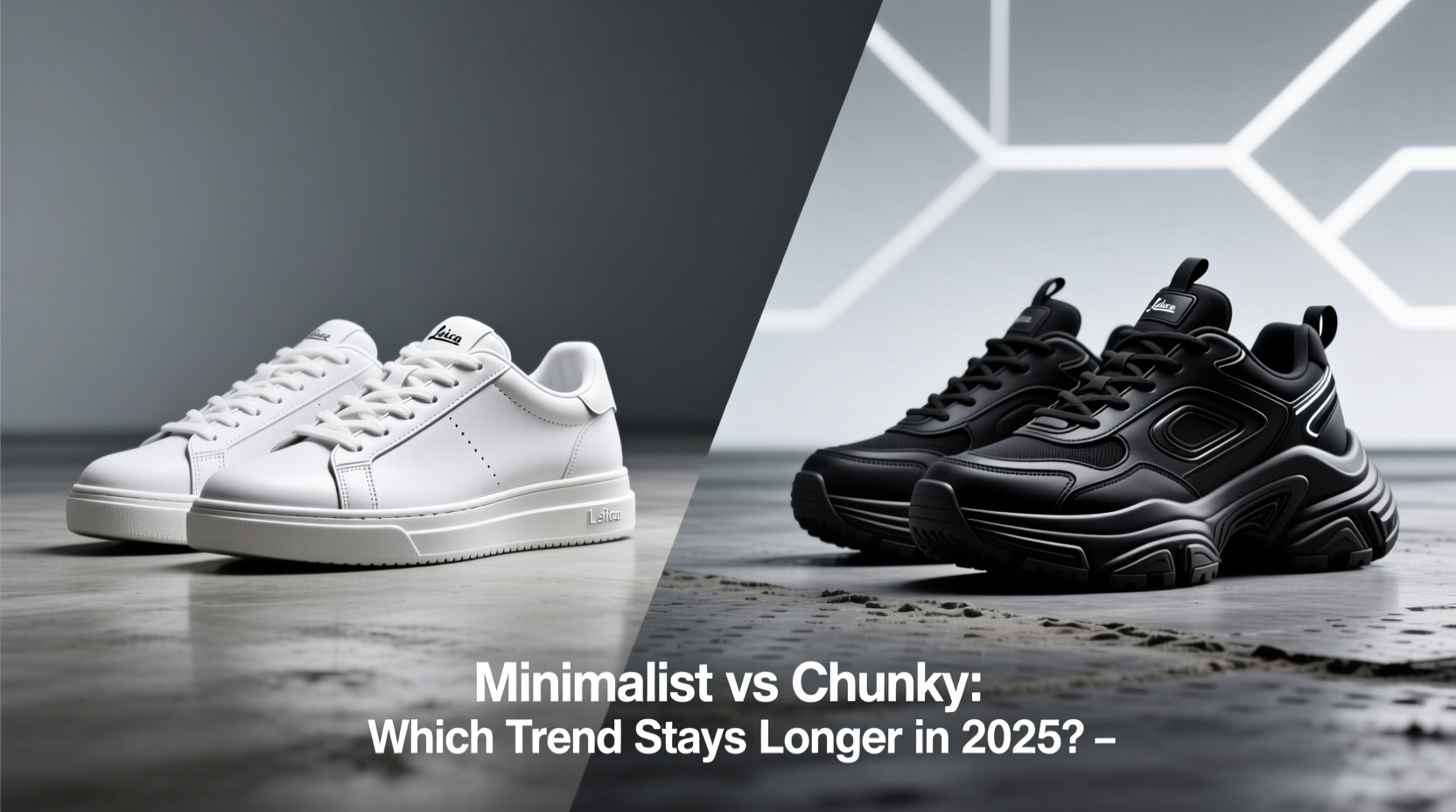
Minimalist sneakers emerged as a reaction to over-designed, logo-heavy athletic wear. Brands like Common Projects, Axel Arigato, and Greats introduced sleek, low-profile silhouettes with premium materials—often calfskin or mesh—and neutral color palettes. These shoes are built for versatility, pairing effortlessly with everything from tailored trousers to relaxed denim.
What sets minimalist sneakers apart is their emphasis on craftsmanship and subtlety. They don’t scream for attention. Instead, they appeal to consumers who value quality over quantity and prefer understated elegance. This aesthetic aligns closely with broader lifestyle movements such as slow fashion, capsule wardrobes, and mindful consumption.
Tip: If you're building a versatile wardrobe, start with one pair of white minimalist sneakers—they work year-round and elevate any casual outfit.In urban environments where walking is common and dressing down is the norm, minimalist sneakers offer both comfort and sophistication. Their lightweight construction and flexible soles make them ideal for all-day wear, especially when compared to heavier, bulkier alternatives.
The Era of Chunky Trainers
Chunky trainers, often referred to as \"dad shoes,\" gained momentum in the late 2010s thanks to brands like Balenciaga, Nike (Air Max 720, React Infinity Run), and New Balance (e.g., 990v5). Characterized by exaggerated soles, layered midsoles, and retro-inspired designs, these shoes prioritize visual impact and technological cushioning.
They were born at the intersection of nostalgia and performance innovation. Many modern chunky trainers incorporate advanced foam technologies, energy-return systems, and orthopedic support—features that cater to active lifestyles and fitness-conscious consumers. But beyond utility, their appeal lies in their ability to stand out. In an age of digital saturation, being seen matters—and chunky trainers deliver visibility.
Still, critics argue that their size and weight can limit versatility. Pairing them with slim-fit clothing risks imbalance in proportions, while more formal settings often render them inappropriate. Yet, their popularity persists, particularly among younger demographics drawn to streetwear culture and hype-driven releases.
Comparative Analysis: Key Factors Shaping Longevity
To predict which trend will endure into 2025 and beyond, it's essential to evaluate both styles across several key dimensions: comfort, sustainability, adaptability, cultural relevance, and production costs.
| Factor | Minimalist Sneakers | Chunky Trainers |
|---|---|---|
| Comfort | Lightweight, flexible, ideal for long walks | Bulky, high cushioning but less agility |
| Sustainability | Often made with fewer materials, easier to recycle | Complex multi-material builds increase waste risk |
| Versatility | Wear with almost any casual or semi-formal outfit | Limited styling options due to visual dominance |
| Cultural Momentum | Tied to minimalism, mindfulness, quiet luxury | Linked to streetwear, celebrity influence, hype cycles |
| Production Cost | Moderate—premium leathers but simpler assembly | Higher—complex molds, multiple foam layers |
This comparison reveals a fundamental divide: minimalist sneakers lean toward timelessness and efficiency, while chunky trainers thrive on spectacle and novelty. The former supports long-term ownership; the latter encourages rotation and replacement.
Expert Insight: What Industry Leaders Are Saying
“Simplicity is becoming the new luxury. Consumers are tired of clutter—both in their closets and their lives. Minimalist footwear reflects a desire for intentionality.” — Lena Torres, Senior Fashion Analyst at StyleLogic Group
“Chunky trainers aren't going anywhere overnight. But their future depends on innovation—not just in design, but in sustainable engineering. If brands can reduce their environmental footprint without sacrificing performance, they’ll survive the next wave.” — Marcus Lee, Footwear Sustainability Consultant
These insights underscore a shift in consumer priorities. While visual impact still sells, durability, ethics, and practicality are rising in importance—especially among Gen Z and millennial buyers who now drive market demand.
Real-World Example: How Two Cities Wear Their Shoes Differently
Consider the case of Copenhagen versus Los Angeles. In Copenhagen, where cycling, walking, and functional fashion dominate, minimalist sneakers are ubiquitous. Locals favor brands like Eytys and Ganni for their balance of style and wearability. Street style photos consistently feature clean white leather sneakers paired with trench coats or oversized knits.
In contrast, Los Angeles embraces boldness. Influencers and creatives frequently opt for chunky New Balances or Nike Air Monarchs—shoes that photograph well and reflect a culture of self-expression. However, even there, a noticeable shift is occurring. More professionals are opting for minimalist styles during work commutes, reserving chunky trainers for gym sessions or weekend outings.
This duality illustrates a broader pattern: chunky trainers excel in expressive contexts, while minimalist sneakers dominate everyday functionality. And since most people spend more time living than performing, the advantage tilts toward minimalism.
Step-by-Step: Building a Future-Proof Sneaker Wardrobe for 2025
Whether you lean toward sleek or sporty, preparing your footwear collection for 2025 means making strategic choices. Follow this timeline to ensure your shoes remain relevant and wearable:
- January–March: Audit Your Current Collection
Identify how often you wear each pair. Discard or donate those worn less than five times in six months. - April–May: Invest in One High-Quality Minimalist Pair
Choose a neutral color (white, black, beige) from a brand known for durability. Prioritize natural materials and replaceable soles if possible. - June–August: Assess Performance Needs
If you run, hike, or train regularly, consider adding one pair of supportive chunky trainers—but only if they serve a real purpose. - September–October: Evaluate Sustainability Claims
Research brands’ recycling programs, carbon offsets, and material sourcing. Support transparency. - November–December: Rotate and Maintain
Alternate shoe use to extend lifespan. Clean regularly and store properly to prevent creasing or odor buildup.
Checklist: Choosing Between Minimalist and Chunky Styles
- ✅ Do I need this shoe for daily wear or occasional use?
- ✅ Can it be styled with at least three different outfits?
- ✅ Is the sole replaceable or repairable?
- ✅ Does the brand offer a take-back or recycling program?
- ✅ Am I buying it because I love it—or because it’s trending?
- ✅ Will I still want to wear it in two years?
This checklist helps filter emotional purchases from functional ones. Minimalist sneakers typically score higher across these criteria, reinforcing their position as long-term staples rather than fleeting fads.
Why Minimalism Has the Edge in 2025
Several macro-trends point to the growing dominance of minimalist sneakers:
- Economic uncertainty makes consumers cautious about spending. A $300 minimalist sneaker that lasts five years offers better value than three $180 chunky trainers replaced every 18 months.
- Climate awareness is pushing brands and buyers toward lower-impact products. Fewer materials, simpler supply chains, and longer lifespans favor minimalist designs.
- Workplace evolution continues blurring dress codes. With hybrid offices and remote work, versatile footwear that transitions from home to meeting rooms gains favor.
- Digital fatigue is fueling a craving for authenticity and calm. The “quiet luxury” movement rewards discretion over loud branding—a perfect fit for minimalist aesthetics.
Meanwhile, chunky trainers face challenges. Their complex construction increases resource use and end-of-life complications. Many models combine rubber, EVA foam, textiles, and adhesives in ways that make recycling nearly impossible. Unless major breakthroughs occur in biodegradable foams or modular design, their environmental cost may eventually outweigh their appeal.
FAQ: Your Questions Answered
Are chunky trainers still fashionable in 2025?
Yes, but selectively. They remain popular in streetwear circles and athletic contexts. However, their dominance in mainstream casual fashion has peaked. Expect them to evolve into niche performance or retro-culture segments rather than everyday essentials.
Can minimalist sneakers be comfortable for all-day wear?
Absolutely—especially newer models with ergonomic insoles and flexible outsoles. Brands like Allbirds, Rothy’s, and Cariuma have merged minimalist design with cloud-like comfort using innovative plant-based foams and knit uppers.
Will minimalist sneakers ever become outdated?
Unlikely. Like the white button-down shirt or the little black dress, minimalist sneakers occupy a foundational place in modern wardrobes. Trends may influence colors or materials, but the core concept of a simple, well-made sneaker is too functional to disappear.
Conclusion: The Future Favors Function and Quiet Confidence
By 2025, the footwear landscape will continue to diversify, but the balance of power is shifting. While chunky trainers will retain a loyal following—especially in sports, entertainment, and youth culture—their reign as a universal trend is waning. In contrast, minimalist sneakers are evolving beyond a mere style choice into a symbol of thoughtful living.
Their staying power lies not in viral moments or influencer endorsements, but in their quiet reliability. They require no explanation. They fit seamlessly into changing lifestyles. And perhaps most importantly, they respect the wearer’s time, wallet, and planet.
That doesn’t mean you should discard your chunky trainers. Keep them for workouts, creative expression, or days when you want your feet to do the talking. But when building a wardrobe meant to last, invest in simplicity. Choose shoes that serve, not just impress.
💬 What’s your go-to sneaker style for 2025? Share your thoughts below and join the conversation on sustainable, stylish footwear.