
Everyday carry choices define more than just style—they shape comfort, efficiency, and even posture. Among the most debated accessories in modern wardrobes is the size of the handbag. On one side: the sleek, minimalist mini tote. On the other: the capacious, utilitarian large shoulder bag. The real question isn’t just about aesthetics or trends, but function. Is that extra space truly valuable, or does it simply add unnecessary weight—literally and metaphorically?
The answer depends on lifestyle, daily demands, and personal priorities. For some, a compact bag streamlines routine; for others, preparedness means carrying everything from a laptop to a gym change. This article breaks down the trade-offs between mini totes and large shoulder bags, offering insight into when each excels—and when it becomes excess.
Functionality vs. Form: What Each Bag Offers
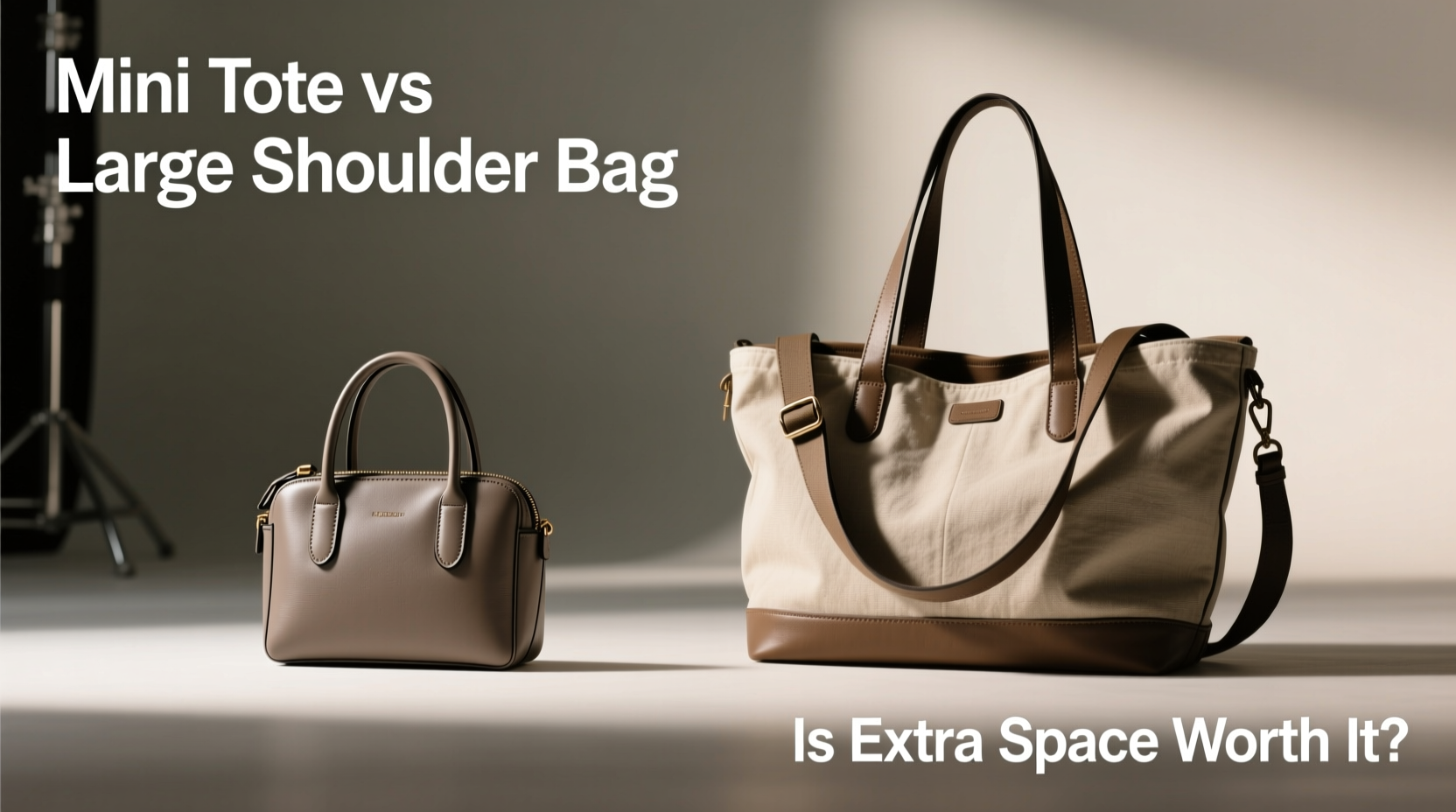
The mini tote has surged in popularity due to its clean lines, lightweight construction, and effortless pairing with casual and professional outfits alike. Typically measuring under 10 inches in width, it’s designed for essentials only: wallet, phone, keys, lipstick, and perhaps a small notebook. Its appeal lies in minimalism—carrying less forces intentionality.
In contrast, the large shoulder bag often exceeds 14 inches in width and features multiple compartments, longer straps, and sturdier materials. It accommodates laptops, water bottles, snacks, books, and even folded jackets. Designed for endurance, it supports users who move across environments—office to errands to evening events—without returning home.
Yet functionality doesn’t always equal necessity. Studies suggest the average person uses only 3–5 items from their bag daily. The rest—old receipts, forgotten chargers, expired coupons—adds clutter without utility.
Tip: Before upgrading bag size, audit what you actually use daily. Eliminate non-essentials first.Weight and Posture: The Hidden Cost of Extra Space
A larger bag may offer room, but that capacity often leads to overpacking. The American Chiropractic Association warns that carrying more than 10% of body weight regularly can strain shoulders, necks, and lower backs. A fully loaded large shoulder bag frequently exceeds this threshold—especially when holding electronics, cosmetics, and bulky items.
Conversely, the mini tote naturally limits load. Its smaller dimensions discourage accumulation, promoting lighter carries. However, if users compensate by wearing heavier bags on one shoulder consistently, even a light load can cause postural imbalance over time.
Ergonomics matter. Shoulder bags distribute weight unevenly compared to crossbody or backpack styles. If choosing a large bag, opt for wide, padded straps and alternate shoulders regularly. For mini totes, consider structured handles that allow hand-carrying when needed.
“Bag size should align with purpose, not impulse. Carrying unnecessary items isn't preparedness—it's procrastination disguised as practicality.” — Lena Torres, Ergonomic Design Consultant
Comparative Breakdown: Mini Tote vs. Large Shoulder Bag
| Feature | Mini Tote | Large Shoulder Bag |
|---|---|---|
| Average Weight (empty) | 0.5 – 1 lb | 1.5 – 3 lbs |
| Capacity | 3–5 essential items | 8+ items, including 13” laptop |
| Best For | Short outings, work commutes, minimalist lifestyles | Full-day use, remote workers, parents, travelers |
| Mobility | High – easy to carry and store | Moderate – bulkier, harder to stow |
| Fashion Versatility | High – pairs well with dresses, blazers, casual wear | Moderate – can overwhelm delicate silhouettes |
| Durability Needs | Lower – less stress on materials | Higher – frequent use and heavy loads demand resilience |
Real-Life Scenario: Two Commuters, Two Choices
Consider Sarah and Marcus, both office workers in a mid-sized city.
Sarah uses a mini tote. Her essentials: phone, wallet, earbuds, lip balm, and a compact umbrella. She walks 15 minutes to the train, works at a desk all day, and rarely shops en route. Her bag fits under her chair, never interferes with transit seating, and matches every outfit. When she forgets something, she buys replacements locally—often cheaper than hauling extras daily.
Marcus opts for a large shoulder bag. He carries a 13-inch laptop, charger, noise-canceling headphones, gym clothes, a water bottle, and meal prep containers. His job requires client visits, and he bikes to work. The bag stays with him all day. While functional, he admits it weighs nearly 8 pounds when full. After six months, he developed mild shoulder tendinitis and now rotates with a backpack on biking days.
Their cases illustrate a core principle: bag size should reflect actual needs, not hypothetical ones. Sarah avoids baggage by design. Marcus gains utility but pays in physical strain and reduced agility.
How to Choose: A Step-by-Step Decision Guide
- Track your carry for one week. Note every item you take out of your bag daily. Identify true essentials vs. deadweight.
- Map your routine. Do you return home midday? Work remotely? Carry tech or fitness gear? Long days away from base favor larger bags.
- Assess comfort. After a full day, do your shoulders ache? Does the bag slip or drag? Discomfort signals mismatched size or poor ergonomics.
- Test downsizing. Try a mini tote for three days. Carry only verified essentials. Notice changes in ease, focus, and posture.
- Upgrade strategically. If you need more space, choose structured mini-totes with interior pockets or medium-sized shoulder bags (10–12”) instead of oversized models.
When More Space Makes Sense—And When It Doesn’t
Extra capacity is justified when it supports necessary tools: laptops for freelancers, medical supplies, parenting essentials, or fieldwork equipment. In these cases, the large shoulder bag isn’t excess—it’s enablement.
But for many, oversized bags become catch-all storage. They turn into mobile junk drawers filled with expired samples, dried pens, and mystery cables. The psychological effect is subtle: because space exists, we fill it. This contradicts the minimalist principle that constraints foster clarity.
Designer Anya Hindmarch once said, “You don’t need a bigger bag—you need fewer things.” That mindset shift can be transformative. Instead of solving disorganization with more volume, solve it with curation.
FAQ
Can I use a mini tote for work?
Yes—if your workplace provides storage for non-essentials like laptops or coats. Pair it with a slim laptop sleeve you can carry separately when needed. Many professionals find this modular approach more efficient than lugging everything at once.
Isn’t a large bag more cost-effective per use?
Not necessarily. Larger bags endure more wear, require sturdier (often pricier) materials, and are more likely to be replaced due to structural damage from overloading. A well-made mini tote can last years with gentler daily use.
What’s the ideal middle ground?
A medium-sized structured shoulder bag (10–12 inches wide) offers balance. It fits a tablet, small wallet, and personal items without encouraging overpacking. Look for designs with a zip-top closure and internal organization to maintain order.
Final Thoughts: Less Bag, More Freedom
The choice between a mini tote and a large shoulder bag isn’t about fashion alone—it’s about philosophy. The mini tote champions simplicity, mobility, and mindfulness. The large shoulder bag stands for readiness, versatility, and self-sufficiency. Neither is universally superior.
But in an era where digital minimalism and ergonomic wellness are gaining traction, reevaluating how much we carry—and why—can lead to meaningful improvements in daily life. Often, the lightest bag isn’t the smallest one, but the one packed with purpose.
Before assuming bigger is better, ask: What am I avoiding by carrying it all? What could I gain by letting go?
🚀 Ready to declutter your carry? Audit your current bag tonight. Remove everything, then return only what you’ve used this week. Experience the difference intentional packing makes.