At first glance, the terms \"mini pendant\" and \"necklace\" might seem interchangeable. After all, both refer to jewelry worn around the neck, often featuring a small decorative element. But as anyone who's shopped for fine jewelry knows, terminology matters—especially when price, design intent, and styling possibilities are involved. Is the distinction between a mini pendant and a necklace meaningful, or is it simply clever branding designed to justify premium pricing? The truth lies somewhere in between.
The confusion stems from overlapping usage. Retailers use “mini pendant” to describe a subset of necklaces, but not every necklace qualifies as a mini pendant. Understanding the nuances helps consumers make informed choices, avoid overpaying, and style their jewelry with greater intention.
Defining the Terms: What Exactly Is a Necklace?
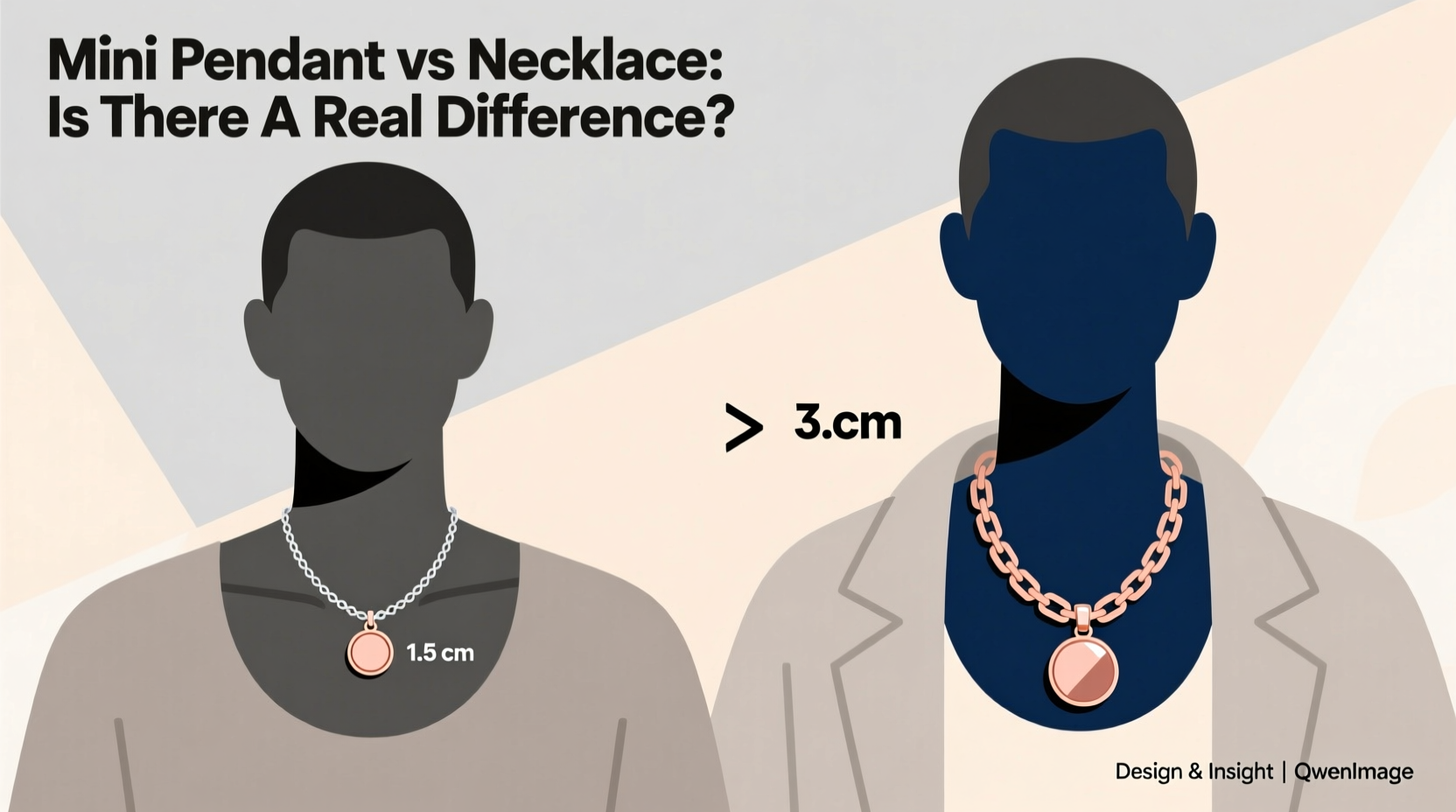
A necklace is a broad category of jewelry designed to be worn around the neck. It typically consists of a chain, cord, or band with or without a central ornament called a pendant. Necklaces vary widely in length, material, weight, and design—from chokers to opera-length strands, from bold statement pieces to delicate chains.
Because \"necklace\" is an umbrella term, it includes everything from chunky gold chains to beaded strands to minimalist solitaires. This breadth makes it less specific than terms like \"pendant\" or \"lariat.\" When shopping, seeing \"necklace\" on a product page tells you little about size, prominence of the centerpiece, or intended aesthetic—only that it’s meant to go around the neck.
What Makes a Pendant a Mini Pendant?
A pendant is the decorative element suspended from a necklace chain. A **mini pendant** refers specifically to a small-scale pendant—typically under 1 inch in height or width—designed for subtlety rather than impact. These are often made from precious metals, feature tiny gemstones, or showcase minimalist symbols like stars, hearts, or initials.
Mini pendants are usually sold as complete sets: a short chain (often 16–18 inches) paired with a dainty focal piece. Their design philosophy emphasizes elegance through restraint. They’re ideal for layering, everyday wear, or adding a quiet personal touch—like a birthstone or engraved detail—without drawing overt attention.
Tip: If the jewelry description highlights “delicate,” “dainty,” or “everyday wear,” it’s likely a mini pendant—even if labeled simply as a necklace.Key Differences: Function, Design, and Intention
The line blurs because all mini pendants are necklaces, but not all necklaces are mini pendants. The distinction becomes clear when examining four core aspects: size, purpose, versatility, and marketing positioning.
| Feature | Mini Pendant | General Necklace |
|---|---|---|
| Size | Small pendant (usually <1\") on a delicate chain | Varies widely—can be large, bold, or intricate |
| Focus | Subtle accent, personal symbolism | Bold statement, fashion-forward design |
| Chain Type | Fine cable, box, or snake chain (14–18\") | Any type—rope, figaro, mesh, etc.—any length |
| Wearability | Daily, layered, understated | Situational—formal, casual, or thematic |
| Price Range | $50–$300 (depending on metal/gem) | $20–$5,000+ (highly variable) |
This comparison shows that while overlap exists, the design intent separates them. A mini pendant isn’t just a small necklace—it’s a curated experience centered on minimalism and intimacy.
Marketing Tactics That Blur the Lines
Luxury and fast-fashion brands alike have capitalized on the emotional appeal of \"mini pendant\" as a standalone concept. By giving a niche category its own name, they elevate perceived value. For example, a simple gold disc on a chain priced at $45 might be labeled \"Everyday Necklace,\" but rebranded as a \"Handcrafted Mini Pendant with Personal Meaning\" it could easily sell for $120.
“Brands use specificity to create exclusivity. Calling something a ‘mini pendant’ implies craftsmanship, intentionality, and trend relevance—even if it’s functionally identical to a basic pendant necklace.” — Lena Torres, Jewelry Industry Analyst
This isn’t always deceptive. Many true mini pendants involve finer materials, hand-finishing, or ethical sourcing. But consumers should recognize that naming conventions can inflate perception. Ask: Is this labeled a mini pendant because of genuine design distinction, or to justify a higher price point?
Real-World Example: Choosing for a Gift
Sarah wanted to buy her sister a meaningful birthday gift. She browsed two nearly identical items: one listed as a “Delicate Gold Initial Necklace” ($68), the other as a “Personalized Mini Pendant in 14K Gold” ($110). Both featured the same 0.75-inch letter on an 18-inch chain, sourced from the same manufacturer.
After comparing descriptions, she noticed the “mini pendant” version emphasized “hand-polished finish” and “luxury packaging,” while the “necklace” option focused on affordability and availability. In reality, the products were indistinguishable. Sarah chose the necklace, saving $42 without sacrificing quality.
This scenario illustrates how branding influences perception. The term “mini pendant” evokes care, uniqueness, and sophistication—even when the physical product doesn’t differ.
How to Choose: Practical Buying Guide
When deciding between a mini pendant and another type of necklace, focus on your needs, not the label. Follow this checklist to make a confident choice:
- Define the occasion: Everyday wear favors mini pendants; events may call for bolder necklaces.
- Check measurements: Look for pendant dimensions and chain length—don’t rely on descriptive terms alone.
- Evaluate materials: Is it solid gold or gold-plated? Real gemstone or cubic zirconia?
- Assess layering potential: Mini pendants work well with others; bulky necklaces dominate.
- Compare prices across categories: Search “initial necklace” and “mini initial pendant” side by side.
- Read return policies: Especially important when buying online without seeing the scale.
FAQ: Common Questions About Mini Pendants and Necklaces
Can I wear a mini pendant every day?
Yes, most mini pendants are designed for daily wear due to their lightweight construction and subtle design. Opt for durable materials like 14K gold or stainless steel if you lead an active lifestyle.
Are mini pendants only for women?
No. While traditionally marketed toward women, unisex mini pendants—such as small geometric shapes, engraved tags, or minimalist crosses—are increasingly popular among men seeking understated accessories.
Do mini pendants lose value over time?
Like all fashion jewelry, resale value depends on material and brand. Solid gold mini pendants retain intrinsic value, while plated versions may tarnish and depreciate faster.
Conclusion: Substance Over Semantics
The difference between a mini pendant and a necklace isn’t purely marketing—but marketing certainly amplifies it. A mini pendant represents a specific aesthetic: intimate, refined, and intentionally understated. It occupies a unique space within the broader necklace category, much like how a coupe is a type of car, but not all cars are coupes.
However, consumers must look beyond labels. Just because a piece is called a “mini pendant” doesn’t guarantee superior quality or design. Conversely, many excellent miniature pendants are sold under generic “necklace” tags at better prices.
Ultimately, the best choice depends on your style, budget, and how you plan to wear it. Whether you call it a mini pendant or a delicate necklace, what matters is how it feels when you put it on—personal, comfortable, and authentically yours.
💬 Found a great mini pendant—or spotted misleading labeling? Share your experience in the comments and help others navigate the fine line between design and marketing.








