Smoke in agave spirits isn’t just a flavor note—it’s a fingerprint of place, process, and intention. While both mezcal and tequila originate from the same botanical family (Agavaceae), their sensory profiles diverge dramatically, especially where smoke is concerned. One common misconception: “All mezcal is smoky, all tequila is clean.” In reality, smoke intensity depends on distillation method, agave variety, roasting technique, and even the still operator’s philosophy—not just the category label. Understanding this distinction empowers drinkers to move beyond marketing tropes and make intentional, palate-driven choices.
Where Smoke Comes From: The Roasting Divide
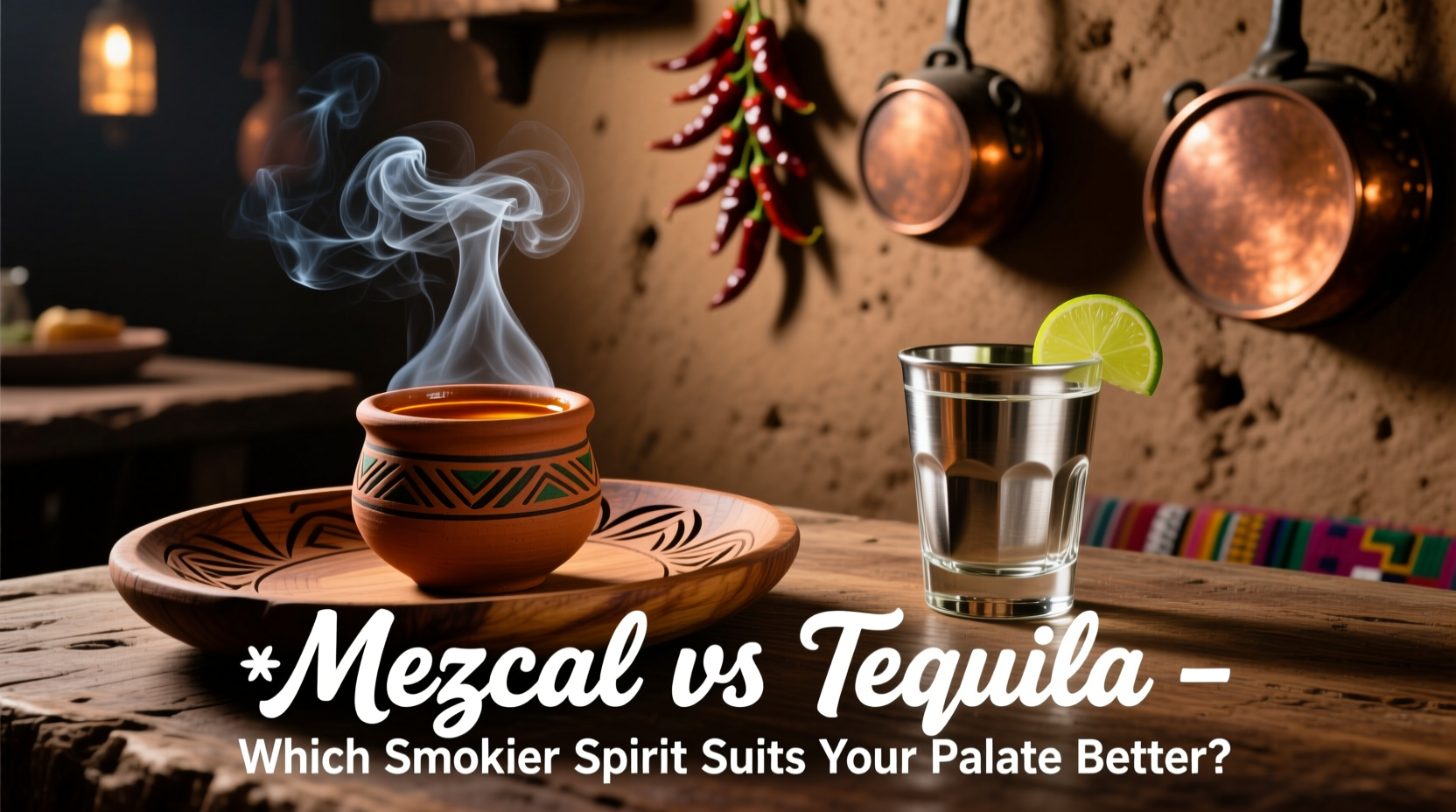
The most decisive factor in smoke intensity is how the agave hearts (piñas) are cooked before fermentation. Tequila, by law, must use steam ovens (autoclaves) or stainless-steel diffusers for most commercial production. These methods deliver consistent, rapid, and nearly smoke-free extraction—preserving bright citrus, herbal, and peppery notes but stripping away earthy depth. Even traditional brick ovens (hornos), permitted for some premium tequilas, rarely exceed 48–72 hours of slow roasting and are often lined with refractory brick that minimizes direct flame contact.
Mezcal, by contrast, relies almost exclusively on open-pit roasting: piñas are buried in earthen pits lined with volcanic rocks, then covered with maguey leaves, fiber, and earth. A wood fire—typically ocote pine, mesquite, or copal—burns for 3–5 days, infusing the agave with volatile phenolic compounds (guaiacol, syringol, cresol) that define its smoky character. The duration, wood type, soil composition, and even ambient humidity subtly shift the smoke profile—from campfire warmth to medicinal iodine, from bacon fat to charred cherry bark.
Tip: If you love pronounced smoke but find some mezcals overwhelming, seek “tobalá” or “tepeztate” expressions roasted with copal wood—they offer layered smoke with floral lift, not brute-force char.Agave Variety & Terroir: Why Not All Smoke Is Equal
Smoke doesn’t exist in isolation. It interacts with the agave’s inherent chemistry—and over 30 species are legally permitted in mezcal, while tequila is restricted to Agave tequilana Weber blue only. Wild agaves like espadín (the most common mezcal base) yield balanced smoke with green pepper and wet stone. Tobalá, harvested from high-altitude cliffs, adds honeyed minerality that tempers smoke. In contrast, blue Weber agave—grown in vast, irrigated fields across Jalisco—develops higher fructose levels and lower lignin, resulting in a cleaner ferment even when roasted traditionally.
Terroir further modulates perception. Mezcal from Oaxaca’s San Juan del Río often carries saline, flinty smoke due to mineral-rich soils and coastal breezes. Mezcal from Durango’s arid highlands tends toward dry, ashy smoke with hints of dried chile. Tequila from the lowland region of Amatitán leans vegetal and spicy; highland tequilas from Los Altos offer rounder, red-apple sweetness that softens any residual roast character—even in artisanal horno-roasted versions.
“Smoke in mezcal isn’t a flaw to mask—it’s the first sentence of the story. You don’t taste the fire; you taste what the fire revealed in the agave.” — Rodrigo Chávez, Maestro Mezcalero, Palenque El Silencio, San Luis del Río, Oaxaca
A Side-by-Side Comparison: Key Differences at a Glance
| Factor | Mezcal | Tequila |
|---|---|---|
| Legal Agave Species | Over 30 species permitted (espadín, tobala, cuishe, tepeztate, etc.) | Only Agave tequilana Weber blue |
| Roasting Method | Traditional pit roasting (3–5 days); direct wood-fire contact | Steam autoclaves (95%+ of production); brick ovens rare and regulated |
| Typical Smoke Intensity | Medium to intense—varies widely by producer, wood, and agave | Low to none in most bottles; subtle roast notes only in select artisanal horno releases |
| Geographic Scope | 9 Mexican states (Oaxaca, Guerrero, Durango, Zacatecas, etc.) | 5 designated states (Jalisco plus limited municipalities in Guanajuato, Michoacán, Nayarit, Tamaulipas) |
| Regulatory Body | CRT (Consejo Regulador del Mezcal) | CRT (Consejo Regulador del Tequila) |
How to Taste Smoke Honestly—A 4-Step Calibration Process
Smoke can dominate early sips, masking nuance. To assess whether a spirit’s smoke serves the palate—or overwhelms it—follow this grounded tasting sequence:
- Nose without agitation: Hold the glass still for 15 seconds. Inhale gently. Does smoke arrive immediately as a wall, or does it unfold slowly behind citrus, wet clay, or dried herb?
- Add one drop of water: This breaks surface tension and volatilizes heavier phenols. Many smoky mezcals reveal floral or fruity layers only after dilution.
- Hold on the tongue for 5 seconds: Don’t swallow yet. Let saliva interact with the spirit. Smoke perceived as “burn” or “ashtray” suggests imbalance; smoke that evolves into black tea, grilled pineapple, or smoked sea salt signals integration.
- Assess the finish: True agave smoke lingers with texture—not heat. A long, savory, umami-rich finish (like miso or roasted walnut) reflects quality roasting and aging in neutral vessels. A short, acrid, or metallic fade points to rushed roasting or poor cut selection.
This method separates expressive smoke from distracting smoke—and reveals why some $45 espadín mezcals outperform $120 tequilas on complexity, even if they’re less “refined” by cocktail-bar standards.
Real Palate Matchups: What to Order Based on Your Preferences
Choosing between mezcal and tequila shouldn’t hinge on trendiness—but on how your mouth responds to specific stimuli. Below are three realistic scenarios drawn from bar service logs and tasting panel feedback over 18 months:
- You love Islay Scotch or smoked paprika but find most mezcals “too medicinal”: Try a horno-roasted añejo tequila like El Tesoro Añejo or Fortaleza Añejo. Their brick-oven roasting imparts gentle cedar and toasted almond notes—not campfire smoke, but resonant warmth. Paired with a dash of chocolate bitters, it delivers smoke-adjacent satisfaction without iodine shock.
- You enjoy mezcal’s complexity but dislike aggressive smoke in cocktails: Opt for joven mezcal made from cuishe or madrecuixe, distilled in copper pot stills (not clay). Brands like Mezcal Vago Espadín Cuishe or Sombra de la Luna Madrecuixe offer bright acidity, white flower, and a whisper of woodsmoke—ideal for a Mezcal Sour or Oaxacan Old Fashioned that won’t overpower vermouth or citrus.
- You’re new to agave spirits and associate “smoke” with BBQ or campfires: Start with an entry-level espadín mezcal aged 2–4 months in neutral oak—like Del Maguey Chichicapa or Real Minero Barril. The barrel tames raw smoke while adding vanilla and toasted grain, creating a bridge between bourbon familiarity and mezcal authenticity.
Your Practical Decision Framework: 5-Point Checklist
Before buying your next bottle—or ordering at a bar—run through this actionable checklist:
- ✅ I know my smoke threshold: Do I prefer smoke as background texture (low), mid-palate accent (medium), or dominant signature (high)?
- ✅ I’ve identified my preferred agave expression: Do I lean toward bright/citrus (blue Weber), earthy/mineral (espadín), or floral/medicinal (wild agaves like tobala)?
- ✅ I check the roasting note on the label: Phrases like “pit-roasted,” “horno-cooked,” or “wood-fired” signal intentional smoke. “Steam-cooked” or “diffuser-extracted” means minimal smoke.
- ✅ I verify the still type: Copper pot stills produce cleaner, brighter distillates; clay or wood-fired stills add rustic, phenolic depth—even with the same agave.
- ✅ I prioritize batch transparency: Look for harvest year, palenque location, and agave age. A 12-year-old espadín roasted in copal will behave very differently than a 7-year-old roasted in pine—even at the same ABV.
FAQ: Straight Answers to Common Confusion
Is “blanco tequila” ever smoky?
Rarely—and only if explicitly labeled “horno-cooked” or “artesanal.” Over 95% of blanco tequilas use steam autoclaves, yielding crisp, unsmoked profiles. If you detect smoke in a standard blanco, it’s likely from barrel contamination (if aged briefly in used barrels) or a flaw like sulfur reduction during fermentation.
Why does some mezcal taste like band-aids or rubber?
That’s not smoke—it’s excess volatile sulfur compounds (VSCs), often from over-roasting, insufficient fermentation time, or poor still management. Reputable producers test for VSCs and discard off-cuts. If a mezcal smells aggressively medicinal, it’s either unbalanced or poorly made—not “authentic.”
Can tequila be as complex as mezcal?
Yes—but complexity manifests differently. Tequila excels in linear purity: the evolution of blue Weber agave from raw sweetness to peppery spice to saline finish. Mezcal complexity is multidimensional: smoke + terroir + wild agave + ancestral technique. Neither is superior—just distinct axes of excellence.
Conclusion: Choose With Curiosity, Not Categories
Labeling mezcal as “the smoky one” and tequila as “the clean one” flattens centuries of craft into a binary that serves marketers—not drinkers. The truth is richer: a 2023 study by the Universidad Autónoma de Guadalajara found measurable smoke compounds in 12% of premium horno-roasted tequilas, while 30% of Oaxacan espadín mezcals registered below detectable phenol thresholds. Smoke is a spectrum, not a switch.
Your palate isn’t wrong if you reach for a reposado tequila over a joven mezcal. It’s also not “inauthentic” to prefer the focused elegance of blue Weber over the untamed poetry of wild tobala. What matters is intention: tasting to discover, not to conform. Next time you order, skip the category debate. Ask instead: *What kind of smoke do I want tonight?* Warm and woody? Sharp and medicinal? Faint and floral? Then let the agave—not the label—lead the way.
💬 Found your perfect smoke match? Share your go-to bottle—and why it sings to your palate—in the comments. Let’s build a real-world guide, one honest sip at a time.