Outdoor enthusiasts are increasingly turning to wearable technology to enhance their experiences in nature. Among the most promising tools are smart glasses—sleek, functional devices that merge augmented reality, hands-free navigation, and biometric tracking into a single wearable platform. Whether you're hiking rugged trails, biking through remote terrain, or navigating urban explorations, smart glasses can transform passive excursions into intelligent, data-rich adventures. The key lies not just in owning the device, but in knowing how to leverage its full potential.
Why Smart Glasses Are Changing Outdoor Exploration
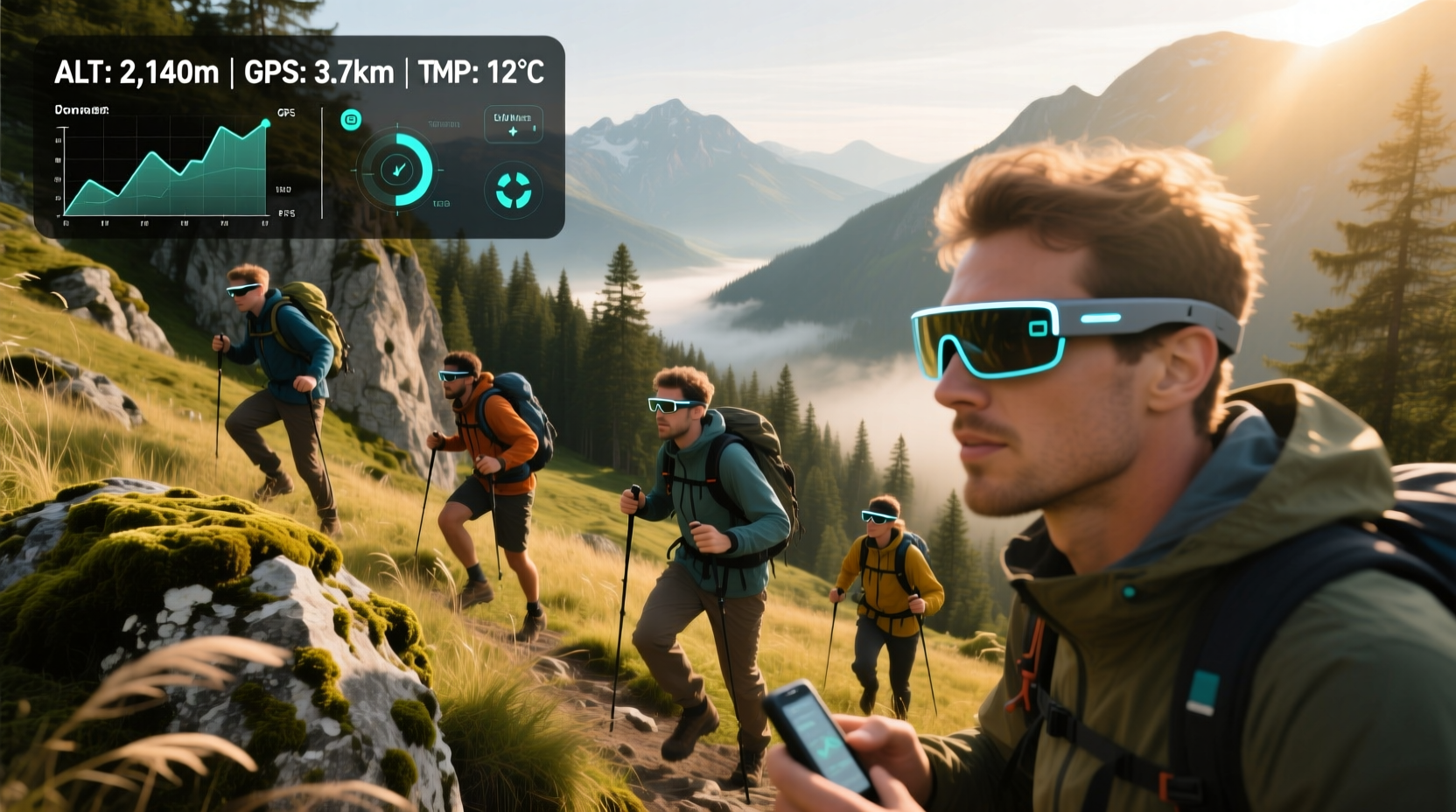
Traditional navigation relies on smartphones or GPS watches, which require constant attention and frequent handling—especially dangerous when traversing steep or technical terrain. Smart glasses eliminate this distraction by projecting essential information directly into your field of vision. Real-time trail maps, altitude readings, weather updates, and even turn-by-turn directions appear as subtle overlays, allowing you to keep your eyes on the path ahead.
Manufacturers like Garmin, XREAL, and Ray-Ban (in collaboration with Meta) have developed models specifically designed for durability, long battery life, and environmental resistance. These glasses often integrate with fitness apps, voice assistants, and heart rate monitors, creating a seamless bridge between physical exertion and digital insight.
“Smart glasses represent the next evolution in experiential tech—they don’t replace the outdoors, they deepen our connection to it.” — Dr. Lena Torres, Human-Computer Interaction Researcher at MIT Media Lab
Key Features That Enhance Active Adventures
To fully benefit from smart glasses in the wild, it's important to understand their core functionalities and how each contributes to a safer, more efficient journey.
- Heads-Up Navigation: Overlay GPS routes onto your view, reducing the need to stop and check a phone.
- Voice Command Support: Issue commands like “Start recording” or “Show elevation” without touching the device.
- Environmental Sensors: Monitor UV index, temperature, and air quality in real time.
- Battery Efficiency: Modern models offer 4–8 hours of continuous use, ideal for day-long treks.
- Integrated Audio: Listen to guided tours, podcasts, or music while maintaining situational awareness.
- Photo & Video Capture: Record immersive first-person footage with simple gestures or voice prompts.
Step-by-Step Guide to Using Smart Glasses in the Field
Getting the most from your smart glasses requires preparation, calibration, and mindful usage. Follow this timeline to optimize performance during any adventure.
- Pre-Trip Setup (24 Hours Before): Sync your glasses with your preferred outdoor app (e.g., AllTrails, Komoot). Download trail maps for offline access and set up emergency contacts.
- Device Calibration (Day Of, Pre-Departure): Charge fully, update firmware, and calibrate sensors. Test audio cues and display brightness in daylight conditions.
- On the Trail: Activate route guidance via voice command. Use glanceable data fields to monitor pace, elevation gain, and remaining battery.
- In Critical Moments: If disoriented, say “Show my location” or “Recalculate route.” Some models support SOS alerts triggered by voice or button hold.
- Post-Adventure Review: Upload recorded metrics and video logs. Analyze performance trends and share highlights securely.
Do’s and Don’ts When Using Smart Glasses Outdoors
| Do’s | Don’ts |
|---|---|
| Adjust display brightness to avoid glare in direct sunlight | Over-rely on AR overlays—always carry a physical map as backup |
| Use bone-conduction audio to stay aware of surroundings | Play loud music that blocks ambient sounds like wildlife or approaching vehicles |
| Secure firmware updates before entering remote zones | Ignore low-battery warnings—conserve power by disabling non-essential features |
| Wear polarized lens attachments to reduce glare on water or snow | Assume all models are waterproof—check IP ratings before exposure to rain or spray |
Real-World Application: A Hiker’s Experience in the Sierra Nevada
Jamal Reyes, an experienced backpacker, recently completed a solo trek along the John Muir Trail using XREAL Air 2 Pro smart glasses. Facing unpredictable weather and limited cell service, he relied on preloaded topographic overlays and voice-guided waypoints. When a sudden storm rolled in near Mather Pass, his glasses alerted him to rapidly dropping temperatures and shifting wind patterns pulled from synced NOAA data.
“I was able to reroute in real time,” Jamal said. “Instead of fumbling with a frozen phone, I just asked, ‘Find nearest shelter,’ and the glasses highlighted a ranger station 1.3 miles east. It wasn’t life-saving, but it definitely prevented a dangerous situation.” His experience underscores how smart glasses serve not as replacements for skill, but as force multipliers for seasoned adventurers.
Maximizing Safety and Awareness
One of the greatest advantages of smart glasses is enhanced situational awareness. Unlike headphones that isolate users, many smart glasses use open-ear audio or haptic feedback to deliver alerts without blocking external noise. This is critical when crossing streams, navigating switchbacks, or sharing trails with wildlife.
Some advanced models include collision detection—for instance, vibrating when a cyclist approaches from behind on a shared path. Others integrate with satellite messengers like Garmin inReach, enabling two-way text communication even in dead zones.
Tip: Pair your smart glasses with a chest-mounted power bank via USB-C for extended off-grid use.Essential Checklist Before You Head Out
Ensure your smart glasses are adventure-ready with this pre-departure checklist:
- ✅ Fully charged battery (and portable charger if needed)
- ✅ Offline maps downloaded and synced
- ✅ Voice commands tested in noisy environment
- ✅ Display brightness optimized for daylight visibility
- ✅ Emergency contact and location sharing enabled
- ✅ Lens clean and scratch-free for optimal clarity
- ✅ Firmware updated to latest version
- ✅ Audio volume tested for safe ambient listening
Frequently Asked Questions
Can smart glasses withstand extreme weather?
Many models are rated IP65 or higher, meaning they’re dust-tight and resistant to water jets. However, submersion or prolonged rain exposure should be avoided unless explicitly rated for it. Always check the manufacturer’s specifications before exposing your device to harsh conditions.
Are smart glasses distracting during intense activities?
When properly configured, they enhance focus rather than detract from it. Minimalist interfaces and customizable data fields allow users to prioritize only the most relevant information—such as distance to summit or hydration reminders—reducing cognitive load.
How do smart glasses impact battery life during long hikes?
Active GPS, AR overlays, and continuous audio can drain batteries in 4–6 hours. To extend usage, disable unnecessary features like social media notifications, lower screen brightness, and use intermittent tracking instead of constant recording.
Conclusion: Elevate Your Exploration with Smarter Vision
Smart glasses are no longer futuristic novelties—they’re practical tools for anyone serious about outdoor exploration. By integrating navigation, safety alerts, and performance tracking into a lightweight, wearable format, they allow adventurers to move faster, safer, and with greater confidence. The technology works best when used intentionally: paired with traditional skills, backed by preparation, and respected as part of a broader safety strategy.
🚀 Ready to see your next trail in a whole new way? Invest in a durable pair of smart glasses, practice using them in familiar environments, and start transforming your outdoor journeys—one augmented step at a time.