In a world saturated with mass-produced apparel, standing out requires more than just fabric and thread—it demands originality, intention, and craftsmanship in design. Custom t-shirts are no longer limited to band merch or promotional giveaways; they’ve evolved into personal statements, brand identities, and wearable art. But creating a truly unique custom t-shirt isn’t just about slapping a logo on cotton. It’s a thoughtful process that blends creativity with strategy. This guide walks you through every stage—from concept to final product—with actionable insights to ensure your design doesn’t just exist, but resonates.
Understanding Your Purpose and Audience
Every great design begins with clarity. Before sketching or selecting fonts, ask: Who is this for? What message do I want to convey? A t-shirt made for a music festival crowd will differ vastly from one designed for a corporate team-building event. Understanding your audience’s values, style preferences, and lifestyle informs everything from color choices to graphic complexity.
For example, minimalist designs often appeal to urban professionals who value clean aesthetics, while bold, illustrative graphics resonate with youth culture and creative communities. Define whether your goal is branding, self-expression, fundraising, or community building. Each objective shapes the tone, imagery, and placement of your design.
Tip: Create a simple audience persona—give them a name, age, job, and favorite brands—to keep your design decisions focused.The Design Process: From Concept to Creation
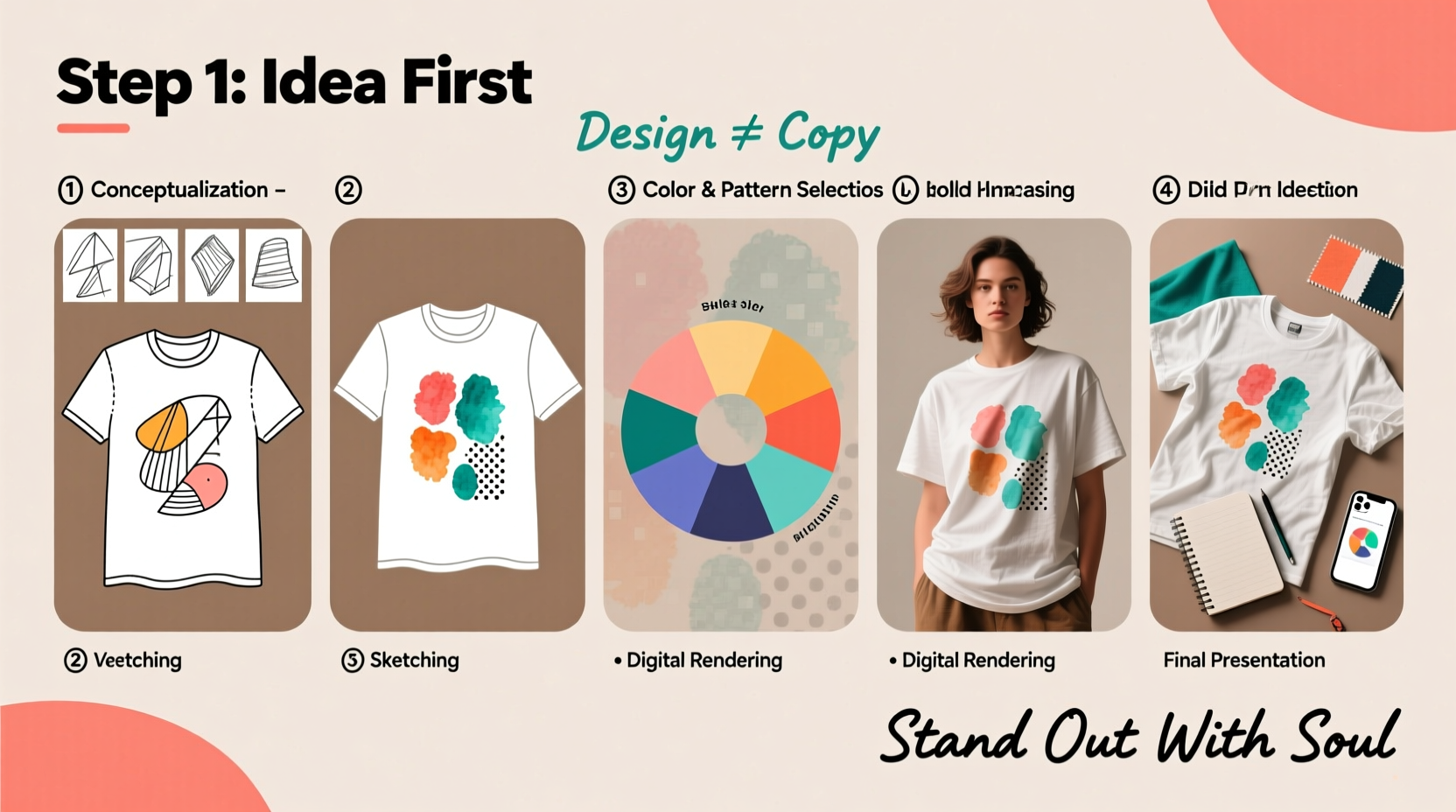
Designing a standout t-shirt involves more than artistic flair—it’s a structured journey. Follow these steps to build a compelling visual narrative:
- Brainstorm ideas: Use mind maps or mood boards to gather inspiration from fashion trends, cultural symbols, typography, or nature.
- Simplify your message: Limit text to one powerful phrase or slogan. Visuals should communicate instantly, even at a glance.
- Choose a focal point: Decide whether the front, back, or sleeve carries the main design. Avoid overcrowding multiple areas unless part of a deliberate storytelling sequence.
- Select complementary colors: Use a maximum of three primary colors. Refer to a color wheel to identify harmonious combinations (e.g., analogous or complementary schemes).
- Test scalability: Ensure your design remains legible and impactful when printed small (like on a pocket) or large (full-back print).
“Great t-shirt design isn’t about complexity—it’s about capturing attention in under three seconds.” — Jordan Lee, Independent Apparel Designer
Avoiding Common Design Pitfalls
Even experienced creators fall into traps that dilute impact. Below is a comparison of common missteps and how to correct them:
| Don’t | Do |
|---|---|
| Use low-resolution images or clipart | Work with vector-based graphics (SVG, AI, EPS) for crisp prints at any size |
| Overload with text or logos | Embrace negative space; let the design breathe |
| Ignore fabric color contrast | Test your design against actual shirt colors—dark text on black fabric disappears |
| Copy current trends exactly | Adapt trends with a personal twist to maintain originality |
| Forget sizing variations | Adjust design proportions for women’s, men’s, and youth fits |
Real-World Example: How a Local Café Built Brand Loyalty Through T-Shirts
When “Brew & Co,” a small coffee shop in Portland, wanted to increase customer engagement, they launched a limited-edition t-shirt line. Instead of using their standard logo, they commissioned a local artist to illustrate a whimsical scene of baristas turning coffee beans into musical notes—a nod to their in-store jazz nights.
The shirts were offered as rewards for repeat customers via a punch card system. Within six weeks, foot traffic increased by 32%, and social media mentions featuring the shirt rose sharply. Customers weren’t just wearing a brand—they were showcasing an experience. The success stemmed not from aggressive marketing, but from emotional resonance built into the design itself.
Tip: Involve your community in the design process—run a contest or poll to generate ownership and excitement.Choosing Materials and Printing Methods Wisely
Your design can only be as strong as the medium it's printed on. The fabric base sets the foundation for comfort, durability, and print quality. Consider these options:
- 100% cotton: Soft and breathable, ideal for vintage looks and water-based inks.
- Blends (cotton-polyester): More durable and wrinkle-resistant, better for athletic or workwear styles.
- Organic or recycled fabrics: Eco-conscious choice that appeals to sustainability-focused audiences.
Printing techniques also affect outcome:
- Screen printing: Best for bold, solid-color designs in bulk. High setup cost but low per-unit price.
- Direct-to-garment (DTG): Excellent for detailed, full-color artwork. Cost-effective for small runs.
- Heat transfer: Suitable for complex gradients but less durable over time.
- Plastisol vs. water-based inks: Plastisol offers vibrant opacity; water-based soaks into fabric for a softer feel.
“Investing in premium fabric and eco-friendly inks may cost more upfront, but it builds trust and repeat buyers.” — Dana Ruiz, Sustainable Fashion Consultant
Checklist: Launch-Ready Custom T-Shirt Design
Before sending your file to print, verify the following:
- ✅ Design resolution is at least 300 DPI (for raster images)
- ✅ Colors are converted to CMYK or specified Pantone codes
- ✅ File format accepted by printer (usually PDF, PNG, or AI)
- ✅ Artwork includes proper bleed (typically 1/8 inch)
- ✅ Text is outlined or embedded to prevent font issues
- ✅ Mockup has been reviewed on multiple shirt colors and sizes
- ✅ Copyright cleared for any third-party elements (fonts, icons, illustrations)
Frequently Asked Questions
How do I protect my t-shirt design from being copied?
While clothing designs are difficult to copyright, you can trademark logos, slogans, or distinctive brand elements. Document your creation process and consider registering intellectual property if the design becomes commercially significant.
Can I design a t-shirt without knowing how to draw?
Absolutely. Many successful designs rely on typography, layout, and curated graphics. Use tools like Adobe Express, Canva, or Inkscape to assemble professional-looking concepts using licensed assets and smart composition.
What’s the best way to preview my design before printing?
Use digital mockup generators (available on platforms like Placeit or Smartmockups) to visualize your design on real shirt models. For accuracy, request a physical sample print from your provider before full production.
Conclusion: Turn Fabric Into a Statement
A custom t-shirt is more than a garment—it’s a canvas for identity, movement, and memory. By grounding your design in purpose, refining execution through proven techniques, and respecting both material and audience, you elevate a simple piece of clothing into something meaningful. Whether you're launching a brand, celebrating a cause, or expressing individuality, the power lies in the details: the balance of color, the weight of the fabric, the precision of the print.
🚀 Start today: Sketch one idea, refine it, and order a single prototype. See how it feels, wear it proudly, and refine again. Mastery comes not from perfection, but from iteration. Share your journey online—your story might inspire the next iconic design.