
In a world overflowing with distractions, demands, and endless to-do lists, simply being busy is no longer enough. What matters is what you accomplish. Mastering the art of getting things done isn’t about working harder—it’s about working smarter, with clarity, focus, and intention. It’s the difference between checking off tasks and achieving meaningful progress. This guide outlines practical, actionable steps grounded in behavioral psychology, time management research, and real-world application to help you consistently move from intention to execution.
The Foundation: Clarity Over Activity
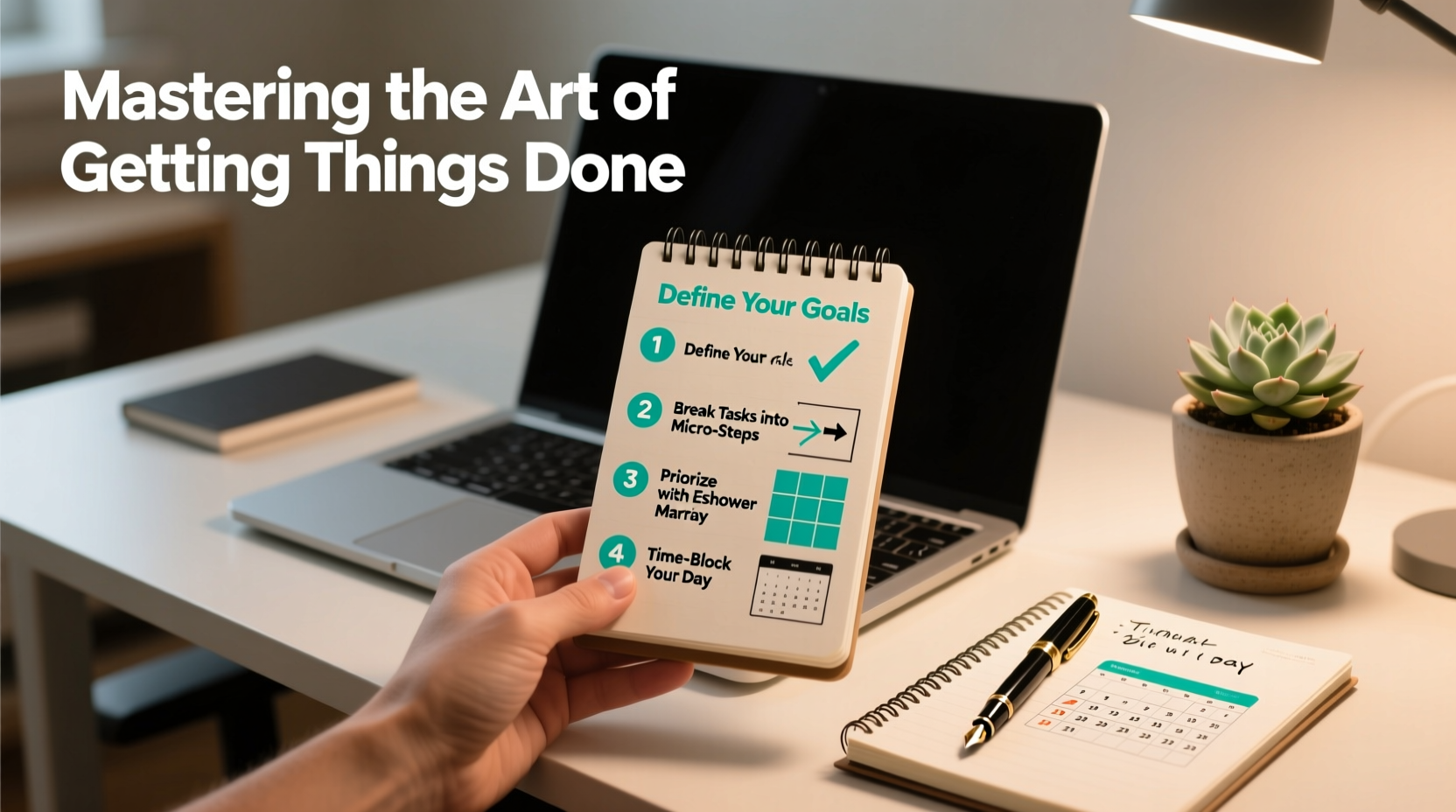
Most people operate from a place of reaction rather than intention. Emails trigger responses, meetings fill calendars, and urgent tasks overshadow important ones. The first step toward true productivity is establishing clarity. Without a clear vision of your goals—both short-term and long-term—your efforts will scatter like dust in the wind.
Start by defining your top three priorities for the week. These should align with larger objectives, whether personal or professional. Ask yourself: “If I accomplish only three things this week, what would make the biggest impact?” Write them down. Keep them visible. Let them guide your decisions when new tasks arise.
Tip: At the end of each day, review what moved the needle. If nothing did, ask why—and adjust tomorrow accordingly.Step-by-Step Guide to Effective Execution
Getting things done isn’t magic; it’s method. Follow this five-step process daily to maintain momentum and avoid overwhelm.
- Capture Everything: Use a trusted system—a notebook, app, or voice memo—to record every task, idea, or commitment as it arises. Don’t rely on memory.
- Clarify Purpose: For each item, ask: “What is the intended outcome?” If it’s vague (“organize files”), define success (“create labeled folders for Q1–Q4 client reports”).
- Organize by Context & Priority: Group tasks by context (e.g., calls, computer, errands) and assign priority using the Eisenhower Matrix (urgent vs. important).
- Review Weekly: Set aside 30 minutes every Sunday to assess progress, update priorities, and plan the week ahead.
- Execute with Focus: Choose one high-priority task each morning and complete it before checking email or messages.
The Power of the First Hour
Your morning sets the tone for the entire day. Most high performers protect their first hour like gold. During this time, they work on their most impactful task—the one that requires deep concentration. By completing it early, they gain momentum and reduce decision fatigue later.
“Success isn’t a result of massive action, but of small actions repeated consistently.” — Robin Sharma, leadership expert
Eliminating Hidden Productivity Killers
Distractions aren’t always obvious. While social media and notifications are common culprits, deeper issues often sabotage progress: unclear goals, fear of failure, perfectionism, and lack of energy management.
Perfectionism, in particular, masquerades as diligence but often leads to procrastination. Waiting for the perfect moment, the ideal conditions, or flawless execution delays action indefinitely. Done is better than perfect—especially when learning and iteration follow.
| Productivity Killer | Why It Hurts | Solution |
|---|---|---|
| Multitasking | Reduces focus, increases errors, and extends completion time | Work in single-task blocks using timeboxing |
| Unplanned Interruptions | Breaks flow state; recovery takes up to 23 minutes | Set “focus hours” and communicate availability |
| Vague Task Descriptions | Leads to avoidance due to uncertainty | Define next physical action (e.g., “Email Sarah about project timeline”) |
| Poor Energy Management | Working when mentally drained reduces output quality | Align demanding tasks with peak energy times |
Real Example: From Overwhelm to Control
Consider Maria, a marketing manager juggling campaigns, team meetings, and client deadlines. She felt constantly behind, answering emails at midnight and skipping workouts. After implementing a structured GTD (Getting Things Done) approach, she began capturing all commitments in a digital task manager, clarifying outcomes, and scheduling focused work blocks. Within two weeks, she reduced overtime by 10 hours per week and delivered her best campaign yet—on time.
Her turning point? Realizing that writing down a task wasn’t the same as planning it. Only when she defined the very next step—such as “Draft subject line options for newsletter”—did action become inevitable.
Actionable Checklist: Build Your Productivity System
Use this checklist weekly to stay on track:
- ✅ Capture all open loops (tasks, ideas, reminders) into a trusted system
- ✅ Clarify each item: Is it actionable? If so, what’s the next step?
- ✅ Organize tasks by context (calls, computer, errands) and deadline
- ✅ Schedule one “deep work” session daily for your highest-leverage task
- ✅ Review your system weekly to reset priorities and close completed loops
- ✅ Limit reactive work (email, messages) to two designated times per day
- ✅ Track completed tasks, not just unfinished ones, to reinforce progress
Frequently Asked Questions
How do I start when everything feels urgent?
Begin by listing all tasks, then categorize them using the Eisenhower Matrix: urgent/important, important/not urgent, urgent/not important, neither. Focus first on important tasks—even if not urgent—as these drive long-term results. Delegate or eliminate the rest.
What if I don’t have control over my schedule?
Even in reactive roles, you can claim small windows of control. Block 25-minute intervals for priority work. Use commute time for planning. Communicate boundaries clearly: “I’m unavailable from 9–10:30 AM for focused work.” Consistency builds respect for your time.
Does multitasking ever work?
Rarely. Cognitive science shows that switching between tasks incurs a “switching cost” that depletes mental energy and increases error rates. True efficiency comes from monotasking—giving full attention to one thing until completion or a natural pause.
Conclusion: Make Execution a Habit
Mastering the art of getting things done isn’t about finding more hours in the day. It’s about making your hours count. Clarity, structure, and consistent action transform intention into achievement. The most productive people aren’t necessarily the busiest—they’re the ones who know what to do, when to do it, and how to protect their focus while doing it.
You don’t need a revolutionary overhaul. Start small: capture one lingering task today, define its next step, and schedule 25 minutes to begin. Repeat tomorrow. Over time, these micro-wins compound into significant results. Productivity isn’t a destination—it’s a practice. And like any skill, it improves with deliberate effort.
🚀 Take action now: Open your notebook or task app and write down the one thing you’ve been avoiding. Define the next physical action. Do it within the next 24 hours. Momentum starts with movement.