Understanding how to determine the area of a space is a fundamental skill applicable in everyday situations—from measuring a room for flooring to calculating garden plots or estimating paint coverage. While formulas from geometry may seem intimidating, breaking down the process into simple, actionable steps makes it accessible to everyone. This guide demystifies area calculation using straightforward techniques, real-world scenarios, and practical tools you can apply immediately—no advanced math required.
What Is Area and Why It Matters
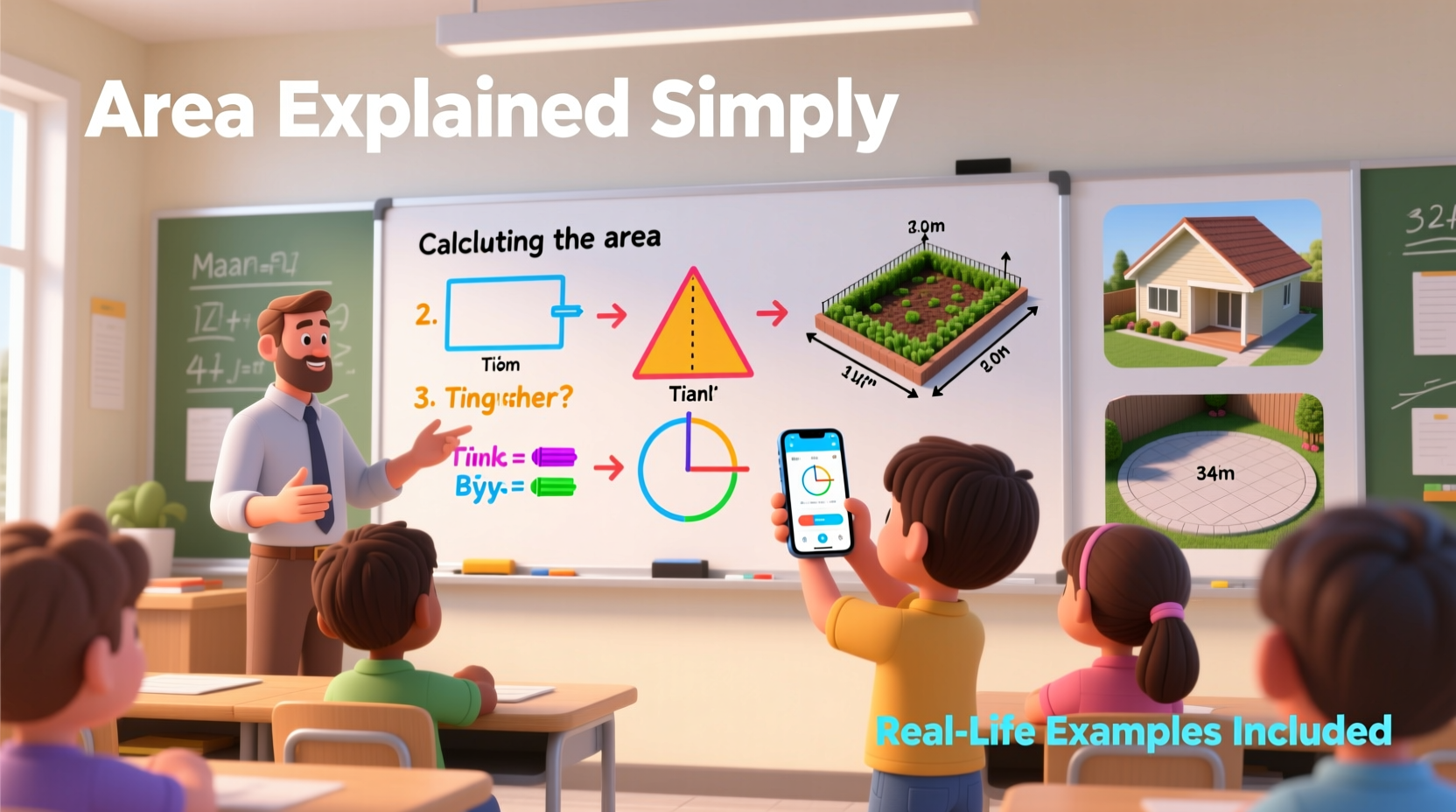
Area measures the amount of surface enclosed within a boundary, typically expressed in square units like square feet (ft²), square meters (m²), or square inches (in²). Unlike perimeter, which measures the distance around a shape, area quantifies how much space lies inside. Accurate area estimation ensures efficient material use, cost savings, and better planning in home improvement, agriculture, construction, and even event setup.
For example, knowing the area of your living room prevents underbuying carpet or over-ordering tiles. Similarly, a farmer must calculate field area to determine seed requirements. Misjudging area leads to wasted resources, delays, and unnecessary expenses.
“Precise area measurement isn’t just about numbers—it’s about smart decision-making.” — Dr. Alan Torres, Civil Engineering Educator
Basic Shapes and Their Area Formulas
The foundation of area calculation lies in recognizing common geometric shapes and applying their respective formulas. Below is a quick-reference table summarizing key equations:
| Shape | Formula | Example Use Case |
|---|---|---|
| Rectangle | Length × Width | Flooring a bedroom |
| Square | Side × Side | Tiling a bathroom wall |
| Triangle | ½ × Base × Height | Roof panel measurement |
| Circle | π × Radius² | Sprinkler coverage in a yard |
| Trapezoid | ½ × (Base₁ + Base₂) × Height | Garden bed with sloped sides |
These formulas are not just theoretical—they’re tools used daily by contractors, designers, and DIYers. The key is identifying the correct shape and measuring its dimensions accurately.
Tip: Always double-check your measurements before multiplying. A small error in length or width can significantly affect total area.Step-by-Step Guide to Measuring Area in Real Life
Follow this five-step process to confidently measure any regular or irregular space:
- Sketch the Space: Draw a rough outline of the area on paper. For rooms, note doors, windows, or alcoves that might affect usable space.
- Gather Tools: Use a tape measure, laser distance measurer, notebook, and calculator. A smartphone app with measurement functions can also help.
- Break Down Complex Areas: If the space isn’t a perfect rectangle (e.g., an L-shaped room), divide it into smaller rectangles or triangles.
- Measure Each Segment: Record all lengths and widths. For circles or curves, measure the diameter and divide by two to get the radius.
- Calculate and Sum: Apply the appropriate formula to each section, then add the results together.
For instance, an L-shaped kitchen can be split into two rectangles. Measure each separately, compute their areas, and sum them for the total floor area.
Real-Life Example: Renovating a Backyard Patio
Consider Maria, a homeowner planning to resurface her backyard patio. The space is irregular: part rectangular, part semicircular. She begins by sketching the layout. The rectangular portion measures 12 ft by 8 ft. Attached to one end is a semicircle with a diameter of 6 ft.
First, she calculates the rectangle: 12 × 8 = 96 ft². Next, the full circle area would be π × (3)² ≈ 3.14 × 9 = 28.26 ft². Since it's a semicircle, she divides by 2: 14.13 ft². Adding both gives a total of 110.13 ft².
With this number, Maria orders pavers with a 10% buffer (about 122 square feet) to account for cuts and waste. Her accurate calculation avoids mid-project shortages and excess spending.
Estimating Area Without Tools: Practical Approximations
Sometimes, precise tools aren’t available. In such cases, use body-based or object-based estimations:
- Pacing Method: An average adult step is about 2.5 to 3 feet. Walk heel-to-toe across a space and multiply steps by average stride to estimate length.
- Hand Span or Arm Length: Useful for small objects. A spread hand is roughly 8 inches; a forearm (elbow to fingertip) is about 18 inches.
- Known Objects as References: A standard sheet of paper is 8.5 x 11 inches (~0.65 ft²); a floor tile is often 12x12 inches (1 ft²). Lay them mentally across a surface to estimate coverage.
While less accurate, these tricks work well for quick decisions—like determining if a rug will fit or whether a bookshelf leaves enough walking space.
Tip: When pacing, take multiple walks and average the counts to reduce error.Common Mistakes and How to Avoid Them
Even experienced individuals make errors when calculating area. Here are frequent pitfalls and corrections:
| Mistake | Why It’s Wrong | How to Fix It |
|---|---|---|
| Using perimeter instead of area | Perimeter doesn’t reflect surface size | Always multiply length × width for rectangles |
| Ignoring irregular sections | Leads to underestimation | Break space into measurable parts |
| Forgetting unit conversion | Measurements in inches vs. feet cause miscalculations | Convert all units to the same system before computing |
| Rounding too early | Accumulated rounding skews final result | Keep decimals until the last step |
“Most renovation budget overruns start with incorrect area assumptions.” — Lena Patel, Interior Project Manager
Checklist: How to Accurately Determine Area
Use this checklist before starting any project involving space measurement:
- ☑ Identify the shape(s) involved
- ☑ Gather measuring tools (tape, paper, pen)
- ☑ Break complex areas into simple shapes
- ☑ Measure all relevant dimensions
- ☑ Confirm units (feet, meters, etc.) are consistent
- ☑ Apply correct formula for each shape
- ☑ Add subtotals for composite areas
- ☑ Add 5–10% extra for waste or adjustments
Frequently Asked Questions
Can I calculate area without knowing all side lengths?
In some cases, yes. For right triangles, if you know two sides, you can use the Pythagorean theorem to find the third. For circles, knowing the circumference allows you to derive the radius and then compute area. However, most practical applications require direct measurement of key dimensions.
How do I measure the area of a sloped roof?
Measure the footprint (ground-level dimensions) and factor in pitch. For example, a roof with a 6:12 pitch increases surface area by about 1.12 times the base. Use a roof pitch multiplier chart or app for accuracy.
Is there a mobile app that helps calculate area?
Yes. Apps like MagicPlan, RoomScan, or Google Measure use your phone’s camera and sensors to map spaces and compute area automatically. They’re ideal for quick indoor estimates but may lack precision for outdoor or large-scale projects.
Final Thoughts: Turn Estimation Into Confidence
Mastering how to tell area isn’t reserved for mathematicians or professionals. With basic tools, logical segmentation, and a few reliable formulas, anyone can estimate space effectively. Whether you're laying mulch, installing lights, or organizing furniture, understanding area transforms guesswork into informed action. Start small—measure your desk, then your kitchen. Practice builds intuition.
🚀 Take charge today: Grab a tape measure and calculate the area of one room in your home. Record it, verify it, and see how confident you feel making decisions based on real data. Share your experience or ask questions in the comments below!