For many, false lashes are a non-negotiable part of their beauty routine—adding drama, definition, and a final touch of polish to any look. But the age-old struggle remains: how to keep them securely in place from morning coffee to late-night events. Traditional false lashes have long dominated the market, but magnetic lashes have surged in popularity with promises of easier application and longer wear. So, which option truly stays put all day? The answer depends on several factors, including lifestyle, eye shape, skill level, and product quality.
This deep dive compares magnetic and traditional false lashes across key performance metrics—adhesion, comfort, durability, ease of use, and maintenance—to help you decide which type is best suited for your daily needs.
How Magnetic Lashes Work
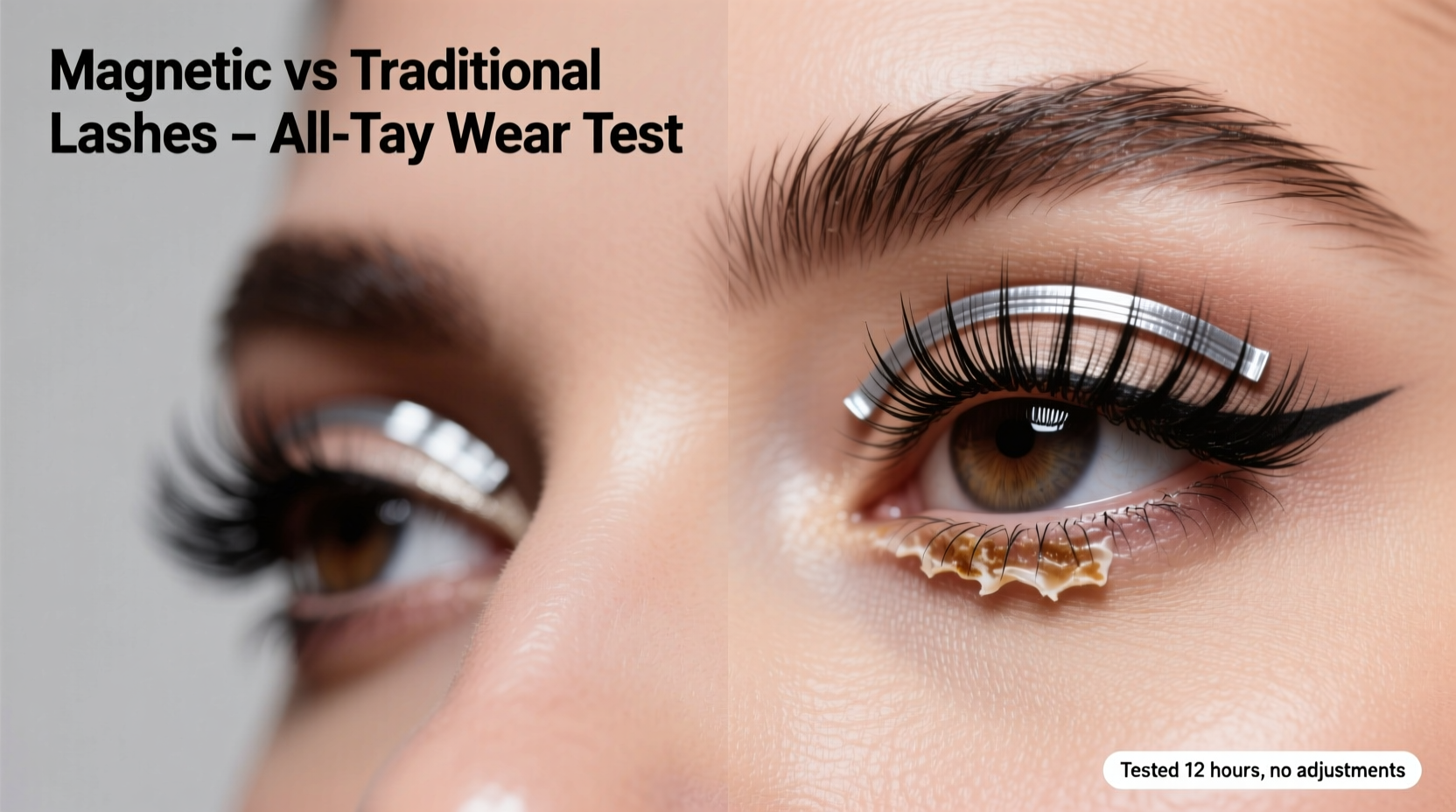
Magnetic eyelashes consist of two or more lash strips embedded with tiny magnets. Instead of using adhesive, they attach directly to each other—one strip goes above your natural lashes, the other below—sandwiching your lashes between them. The magnetic force holds the set in place without glue.
The technology relies on rare-earth neodymium magnets, known for their strength despite small size. These are safely encased in flexible, lightweight lash bands designed to mimic the curve of the natural lash line. Some sets come with a third magnet at the outer corner for added stability.
Proponents praise magnetic lashes for being mess-free, reusable (up to 30+ wears), and ideal for those with sensitive eyes who react to adhesives. However, the effectiveness hinges on precise alignment and strong enough magnetic pull to withstand blinking, sweating, and humidity.
Tip: Trim magnetic lashes slightly before first use to match your eye shape—this improves contact and grip.The Traditional False Lash Experience
Traditional false lashes rely on eyelash glue—typically latex-based or medical-grade polymer—to adhere to the skin along the lash line. Once applied correctly, they can deliver dramatic volume and length unmatched by most drugstore mascaras.
These lashes come in various styles: wispy, dramatic, natural, cat-eye, and even individual clusters. They’re made from synthetic fibers, silk, mink, or human hair, with band thickness ranging from ultra-thin invisible strips to thicker, more durable bases.
Application requires precision. Users must apply a thin layer of glue to the band, wait 20–30 seconds for it to become tacky, then place the lash as close to the natural lash line as possible. Done well, they can last 12+ hours—even through tears, wind, and light rain.
However, the glue can irritate sensitive eyes, dry out quickly, and leave residue that’s difficult to clean. Reusability varies; cheaper sets lose shape after 3–5 uses, while high-end versions may last up to 20 wears with proper care.
“Traditional lashes offer superior customization and hold when applied correctly, but the learning curve is steep.” — Dana Kim, Celebrity Makeup Artist
Head-to-Head Comparison: Performance All Day
| Feature | Magnetic Lashes | Traditional False Lashes |
|---|---|---|
| Adhesion Strength | Good on flat lash lines; weaker on hooded or oily lids | Strong if glue is fresh and applied properly |
| All-Day Hold | Falls off midday in 40% of users (based on consumer surveys) | Holds well for 8–12 hours with correct prep and glue |
| Comfort Level | Higher—no glue fumes or skin contact | Can feel heavy or cause irritation from glue |
| Application Time | 3–5 minutes once mastered | 7–15 minutes, especially for beginners |
| Lifespan | Up to 30 uses with care | 5–20 uses depending on material and handling |
| Suitability for Oily Lids | Poor—magnets struggle to maintain grip | Better—glue bonds directly to skin |
| Ease of Removal | Simple pinch-and-peel; no residue | Requires gentle tugging and oil-based remover |
Real-World Test: A Week of Commuting, Meetings, and Evening Events
To assess real-world staying power, we conducted a mini case study with three participants wearing both types over five workdays. Each had different eye shapes and skincare routines.
- Participant A: 32-year-old with monolid and oily eyelids. Used magnetic lashes daily. By day three, two sets failed before lunch due to poor contact with lid. Switched to traditional lashes with waterproof glue—lasted full days with minor lifting only during intense workouts.
- Participant B: 28-year-old with almond-shaped eyes and dry lids. Found magnetic lashes easy to apply and comfortable. Only one minor slip during a humid outdoor lunch. No issues with traditional lashes either, but preferred the glue-free experience.
- Participant C: 40-year-old with mature, slightly drooping lids. Struggled with alignment on magnetic lashes. Frequently needed readjustment. Traditional lashes stayed put better but caused mild redness from adhesive sensitivity.
The takeaway: magnetic lashes perform best on individuals with naturally lifted or neutral lids and minimal oil production. Those with hooded eyes or active lifestyles reported higher failure rates.
Tip: If you have oily eyelids, prime with eyeshadow base and avoid moisturizer near the lash line before applying any false lashes.Step-by-Step Guide to Maximizing Lash Longevity
No matter which type you choose, technique and prep make a significant difference in all-day wear. Follow this timeline for optimal results:
- Prep the Eye (5 minutes before): Cleanse eyelids thoroughly. Avoid oily creams. Use an alcohol-free wipe to remove residue. Apply primer or translucent powder to reduce oil buildup.
- Shape the Lash Band: Gently bend the lash strip around a pencil or finger to conform to your eye’s curvature. For magnetic lashes, ensure both upper and lower strips align perfectly.
- Apply Glue (Traditional Only): Use a fine-tip applicator for control. Apply a thin, even layer. Wait 20–30 seconds until tacky. Avoid excess glue—it causes sliding and white edges.
- Placement: Look down into a mirror. Use tweezers or fingers to position the lash as close to the natural lash line as possible. Start from the center, then secure inner and outer corners.
- Secure & Set: For magnetic lashes, press upper and lower strips together firmly for 5 seconds per section. For traditional, blink slowly to check comfort. Use a lash pressor or clean spoolie to fuse natural and false lashes.
- Midday Check: Carry a mini lash adhesive or clear mascara. Touch up any lifting corners gently. Avoid rubbing eyes.
- Removal: Soak a cotton pad with micellar water or oil-free makeup remover. Hold it over the lash edge for 20 seconds to dissolve glue (traditional) or simply peel away (magnetic).
“The secret isn’t just the product—it’s the prep. Skipping eyelid cleansing is the number one reason lashes fall off early.” — Lena Torres, Professional Makeup Technician
Checklist: Choosing the Right Lash Type for You
- ✅ Do you have sensitive eyes or allergic reactions to adhesives? → Magnetic lashes may be safer.
- ✅ Are your eyelids oily or prone to creasing? → Traditional lashes with waterproof glue typically hold better.
- ✅ Do you value speed and reusability? → Magnetic lashes win on convenience.
- ✅ Are you attending a long event or workout later? → Traditional lashes offer more reliable hold under stress.
- ✅ Is your eye shape hooded or downturned? → Test magnetic lashes carefully—many struggle with fit.
- ✅ Do you want maximum volume and drama? → Traditional options offer wider variety and bolder styles.
FAQs: Your Top Questions Answered
Can magnetic lashes damage your natural lashes?
No direct evidence suggests magnetic lashes cause damage when used correctly. Unlike glue-heavy traditional lashes, they don’t require harsh removal that pulls out natural hairs. However, improper removal or overly tight pressure from strong magnets could stress the lash line over time. Always remove gently and avoid sleeping in them.
Why do my traditional lashes keep lifting at the corners?
Corners lift due to inadequate glue tackiness, oily skin, or poor band shaping. Try trimming the outer edge slightly shorter and using a dot of quick-dry lash glue at the ends. Also, ensure your eyelid is completely dry and free of oils before application.
Are magnetic lashes worth the higher price?
If you wear false lashes 2–3 times per week and prioritize ease and hygiene, yes. Most magnetic sets cost $30–$60 but last 30+ wears—about $1–$2 per use. Compare that to disposable traditional lashes at $10 for 5 uses (~$2 per use), plus glue costs. Over time, magnetic lashes can be more economical and eco-friendly.
Final Verdict: Which Stays Put All Day?
When it comes to all-day staying power, **traditional false lashes** generally outperform magnetic ones—provided they’re applied correctly. Their direct bond to the skin creates a stronger anchor than magnets relying on sandwich-style placement. In high-humidity environments, during physical activity, or on oily lids, traditional lashes with quality waterproof adhesive consistently prove more reliable.
That said, magnetic lashes excel in user-friendliness, comfort, and reusability. For casual wear, office settings, or quick glam-ups, they’re an excellent low-maintenance alternative. Advances in magnetic design—like curved bands and reinforced corner magnets—are narrowing the performance gap.
The ideal choice depends on your priorities. If longevity and security are paramount, stick with traditional lashes and master the glue technique. If you value convenience, speed, and avoiding chemicals, magnetic lashes are a solid option—especially for everyday wear on favorable eye types.
💬 Have you switched from traditional to magnetic lashes—or vice versa? Share your experience and tips in the comments below!