When it comes to wearing earrings, especially for those with sensitive ears or an active lifestyle, choosing the right backing can make all the difference. Two popular options—lock earrings (also known as screw-back or friction backs with locking mechanisms) and magnetic earrings—are often compared for safety, comfort, and staying power. While both have their advantages, understanding how they work, who benefits most from each, and what risks they carry is essential for making a smart decision.
This guide dives deep into the mechanics, safety profiles, and real-world performance of lock and magnetic earrings. Whether you're shopping for everyday wear, managing allergies, or seeking solutions for children or elderly users, this comparison provides practical insights to help you choose wisely.
How Lock Earrings Work
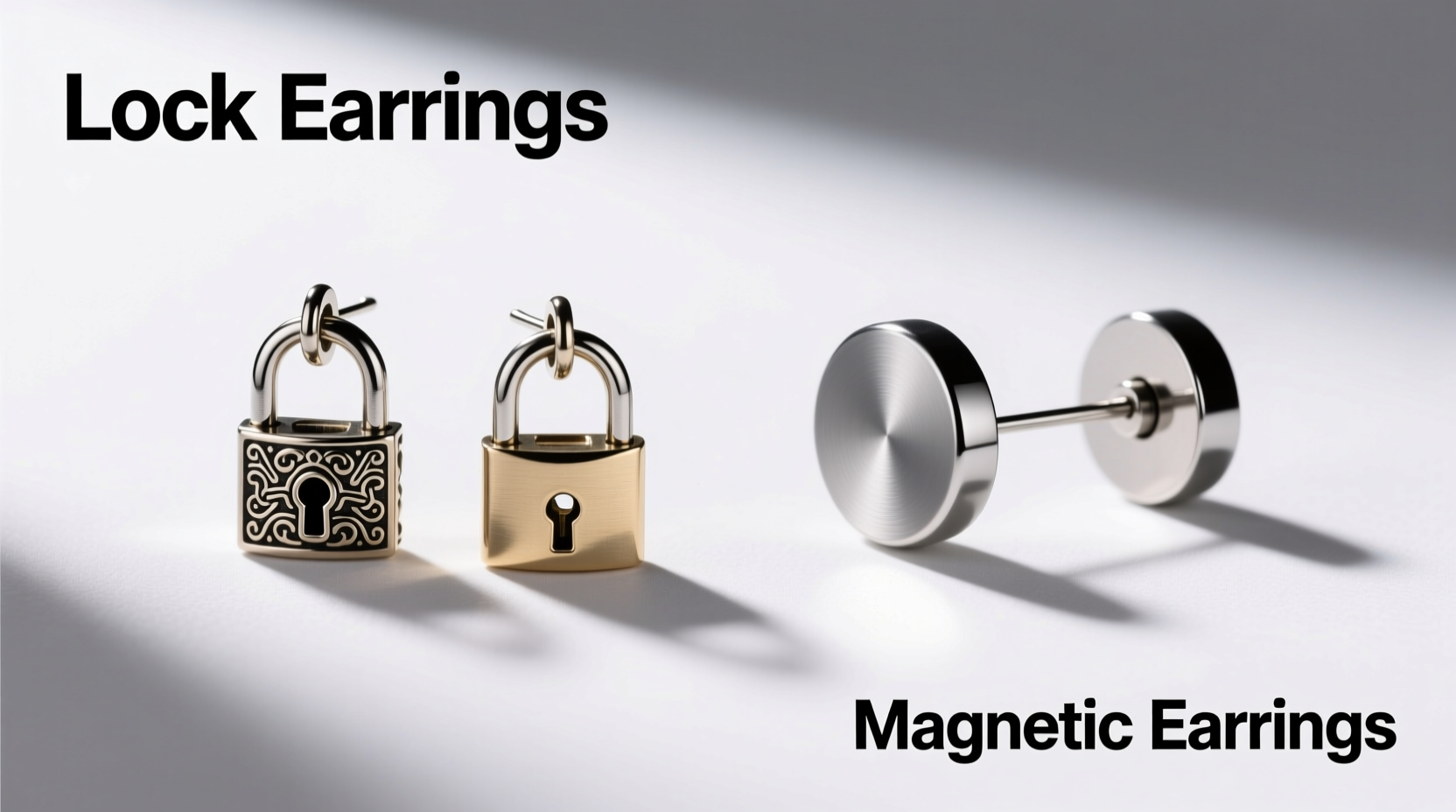
Lock earrings typically consist of a post that passes through the earlobe and a secure backing mechanism designed to prevent accidental loss. Unlike basic friction backs that simply slide onto the post, lock backs feature a threaded screw or a hinged clasp that fastens tightly behind the ear. This design ensures the earring stays in place even during vigorous movement.
They are commonly used in high-end jewelry, body piercings, and for people who lead active lives. Because of their secure fit, lock earrings are often recommended for valuable or heavy pieces that could otherwise pull through the piercing if left unsecured.
Tip: Always check the tightness of your lock back daily—especially after sleeping or exercising—to ensure it hasn’t loosened.The Science Behind Magnetic Earrings
Magnetic earrings use opposing magnetic forces to hold the front and back components together without piercing the skin. The front decorative piece sits on one side of the earlobe, while a magnetized back attaches directly behind it, creating a pinch-like hold. Some designs use very strong neodymium magnets, while others rely on weaker ceramic ones.
These earrings are popular among people who want to avoid piercings altogether, including children, individuals with metal allergies, or those testing earring styles before committing to a permanent hole. However, their effectiveness depends heavily on earlobe thickness and magnet strength.
“Magnetic earrings offer a non-invasive alternative, but their holding power varies significantly based on design and anatomy.” — Dr. Lena Torres, Dermatologist & Skin Health Specialist
Safety Comparison: Lock vs Magnetic Earrings
Safety is a top concern when selecting earring types—particularly for children, seniors, or individuals with sensory sensitivities. Let’s examine the key safety factors for each type.
Allergic Reactions
Traditional lock earrings usually involve metal posts, often made of surgical steel, titanium, or gold. For people with nickel allergies, even hypoallergenic metals can cause irritation over time. In contrast, many magnetic earrings are crafted with nickel-free materials and do not penetrate the skin, reducing exposure and lowering allergy risk.
Risk of Injury
Lock earrings, while secure, pose a small risk of injury if snagged on clothing, hair, or during physical activity. Sudden tugs can tear the piercing or cause bleeding. Magnetic earrings eliminate this risk since there’s no hole involved. However, overly strong magnets may cause discomfort or temporary numbness in sensitive users.
Choking Hazards
For young children or cognitively impaired adults, small parts like lock back screws can be a choking hazard if detached. Magnetic earrings also present risks if the magnets become loose—swallowing small magnets can lead to serious internal injuries. According to the U.S. Consumer Product Safety Commission, ingested magnets require immediate medical attention due to potential intestinal adhesion.
Performance: Which Stays On Better?
Staying power is critical—nobody wants to lose a favorite pair of earrings. Here's how the two types perform under different conditions.
| Criteria | Lock Earrings | Magnetic Earrings |
|---|---|---|
| Holding Strength | Very high – mechanically secured | Variable – depends on magnet strength and ear thickness |
| Active Wear Suitability | Excellent – ideal for sports, dancing, travel | Fair to poor – may slip during intense movement |
| Comfort Over Time | Good – may press slightly if too tight | Good – no piercing, but pressure from magnets |
| Earlobe Thickness Tolerance | High – works on all lobe types | Limited – less effective on thick or cartilage areas |
| Security Against Loss | Superior – rarely fall out when locked | Moderate – can detach with sudden head movements |
In general, lock earrings provide superior staying power. Their mechanical attachment makes them far more reliable for long-term wear, particularly in dynamic environments. Magnetic earrings may shift or fall off if the user shakes their head vigorously or wears hats and headphones frequently.
Real-World Example: Choosing for an Active Lifestyle
Sarah, a fitness instructor in her early 30s, loves wearing statement earrings to class but kept losing her favorite pair during high-intensity workouts. She switched from standard push-back studs to lock-back versions with silicone-coated backs for added comfort. Since then, she hasn’t lost a single earring—even during Zumba sessions and outdoor boot camps.
She tried magnetic earrings briefly but found they slipped during jump rope exercises and caused mild soreness after prolonged wear. “The lock backs take two extra seconds to put on,” she says, “but knowing they won’t fall out lets me focus on teaching instead of checking my ears every five minutes.”
Who Should Use Which Type?
The best choice depends on individual needs, lifestyle, and health considerations. Below is a checklist to help determine the ideal option.
Checklist: Choose Lock Earrings If…- You already have pierced ears
- You wear heavy or expensive earrings
- You’re physically active or work out regularly
- You want maximum security against loss
- You don’t have metal allergies (or can use hypoallergenic posts)
- You prefer non-pierced options
- You have sensitive skin or metal allergies
- You’re buying for a child or someone hesitant about piercing
- You want temporary styling flexibility
- You avoid pain or healing periods associated with new piercings
Step-by-Step Guide to Using Lock Earrings Safely
- Clean your hands and ears before handling earrings to prevent infection.
- Align the post with your piercing hole gently—don’t force it.
- Slide the backing onto the post until snug against the earlobe.
- Engage the lock mechanism—twist the screw or snap the clasp securely.
- Test stability by lightly tugging the front; it should not come loose.
- Check periodically, especially after washing hair or sleeping.
FAQ
Can magnetic earrings damage hearing aids or pacemakers?
Most modern magnetic earrings use low-strength magnets unlikely to interfere with medical devices. However, individuals with pacemakers or implanted hearing aids should consult their doctor before regular use. Strong neodymium magnets may pose risks in rare cases.
Are lock earrings suitable for newly pierced ears?
Yes, many professionals recommend lock or screw-back earrings for fresh piercings because they reduce the chance of the earring falling out during healing. Just ensure the material is surgical-grade stainless steel or titanium to minimize infection risk.
Do magnetic earrings work on thick earlobes?
Effectiveness decreases with thicker lobes. If the magnet isn't strong enough, the earring may feel loose or fall off. Look for models specifically labeled for \"thick ears\" or adjustable tension.
Final Thoughts: Making the Right Choice
When weighing lock earrings against magnetic ones, safety and staying power favor lock designs—especially for pierced individuals seeking durability and peace of mind. They remain the gold standard for securing valuable or frequently worn jewelry. That said, magnetic earrings fill an important niche for non-pierced wearers, allergy sufferers, and those exploring style without commitment.
No single solution fits everyone. Consider your daily routine, ear sensitivity, and personal preferences. If you value reliability above convenience, go with lock earrings. If you prioritize accessibility and skin safety over absolute security, magnetic styles may serve you better.
💬 Have experience with both types? Share your story in the comments and help others decide which earring style suits their life best!