When the mercury rises, choosing the right fabric for your summer wardrobe becomes more than a style decision—it's about staying cool, comfortable, and presentable. Among breathable fabrics, linen and cotton are top contenders. Both are natural fibers celebrated for their softness and ventilation, but they behave differently under summer conditions—especially when it comes to wrinkling. Understanding how linen and cotton respond to heat, humidity, and movement can help you make smarter clothing choices during the hottest months.
The common belief that “linen always wrinkles” is only part of the story. While linen does crease easily, its performance in high temperatures may actually make it more practical than cotton in certain contexts. Conversely, cotton resists wrinkles better initially but may lose its crispness faster when exposed to sweat and prolonged wear. This article breaks down the science, structure, and real-world behavior of both fabrics to answer one critical question: which fabric holds up better in the summer heat?
Fiber Structure and Breathability: Why It Matters in Summer
The foundation of any fabric’s performance lies in its fiber composition. Linen is made from flax plant fibers, while cotton comes from the seed pods of the cotton plant. These botanical origins result in distinct physical properties that influence how each fabric handles heat, moisture, and mechanical stress.
Linen fibers are longer, stronger, and more rigid than cotton. This gives linen superior tensile strength and makes it highly resistant to pilling. More importantly, linen has a hollow core structure that enhances airflow and allows for rapid moisture wicking. As a result, linen dries quickly and feels cooler against the skin—ideal for humid environments where sweat lingers.
Cotton, on the other hand, is softer due to shorter, finer fibers that create a plush texture. It absorbs moisture well—up to 27% of its weight—making it comfortable when you're sweating. However, this absorbency also means cotton retains dampness longer, which can lead to clinging and discomfort during extended outdoor exposure.
Tip: In extremely hot climates, prioritize quick-drying fabrics like linen over moisture-retaining ones—even if they wrinkle more initially.Wrinkle Resistance Compared: The Real-World Test
Wrinkles form when fabric fibers bend and fail to return to their original alignment. Factors such as fiber rigidity, weave tightness, garment cut, and external pressure (like sitting or packing) all contribute. Let’s compare linen and cotton directly across key wrinkle-related criteria:
| Factor | Linen | Cotton |
|---|---|---|
| Natural Wrinkle Tendency | High – fibers lack elasticity and crease easily | Moderate – more flexible fibers resist minor folds |
| Recovery After Wrinkling | Poor – once creased, lines remain unless steamed | Fair – smoother recovery, especially with combed cotton |
| Effect of Heat & Humidity | Minimal – dries fast, doesn’t soften with moisture | Significant – absorbs sweat, loses shape, sags |
| Post-Wash Appearance | Crinkled by design; often worn intentionally | Smooth finish expected; wrinkles look unkept |
| Ironing Needs | High – benefits from steaming or light ironing | Moderate – can go unworn between washes |
The data shows a paradox: while linen wrinkles more readily, those wrinkles are often considered part of its aesthetic charm. Cotton, though smoother at first, begins to sag and develop unsightly folds after hours of wear in hot conditions—especially when wet with perspiration.
“Linen’s ‘lived-in’ look isn’t a flaw—it’s a feature. In tropical climates, people choose linen not despite the wrinkles, but because the fabric keeps them cool even when rumpled.” — Dr. Lena Torres, Textile Scientist, University of Lisbon
Real-Life Scenario: A Day in the City Heat
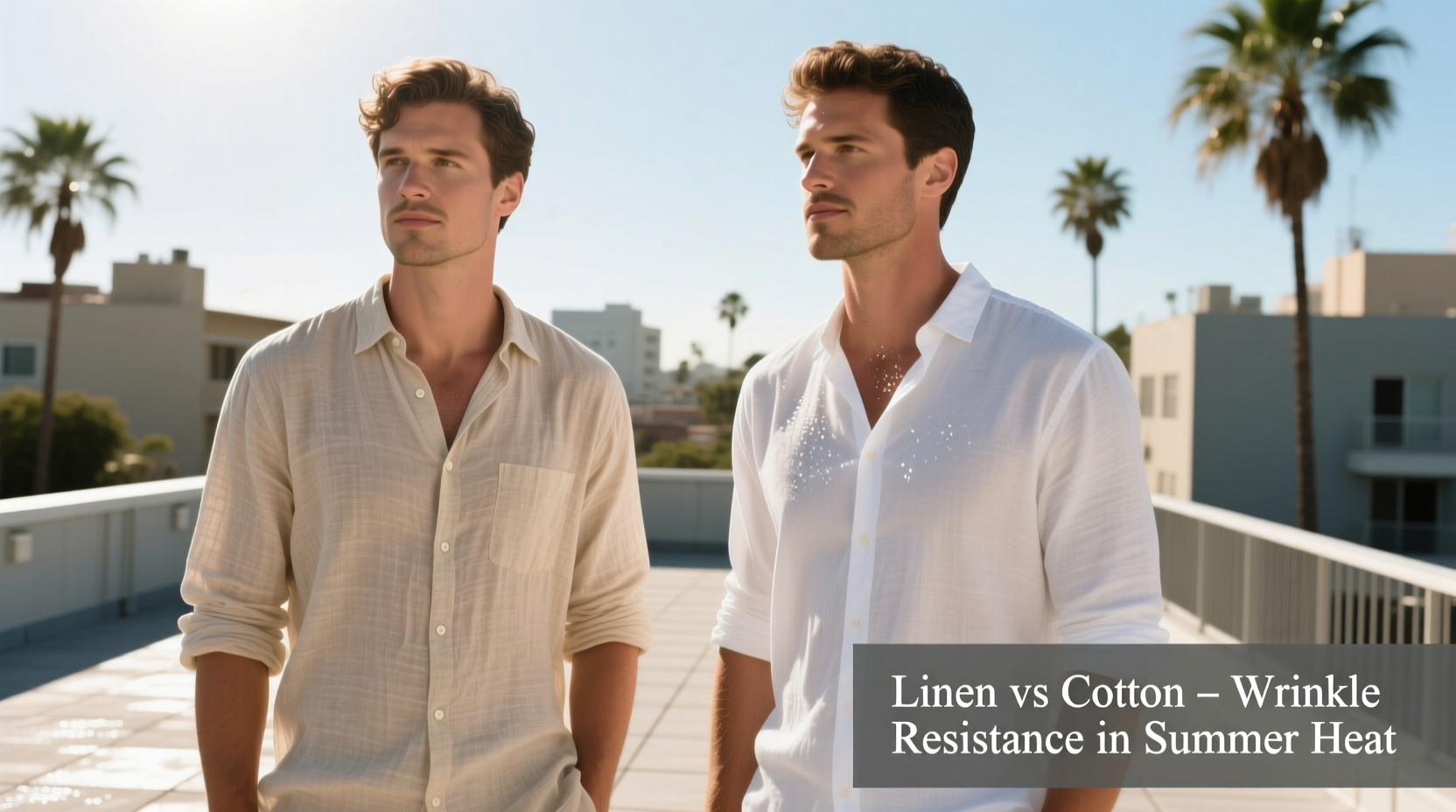
Consider Marco, a marketing consultant living in Miami. He has back-to-back meetings from 9 a.m. to 5 p.m., some indoors, others outdoors walking between offices. He owns two similar button-down shirts: one 100% linen, the other 100% cotton.
In the morning, both shirts look sharp. By 11 a.m., after commuting and a short walk, the cotton shirt starts clinging slightly under the arms due to absorbed sweat. The linen shirt, though lightly creased from sitting, remains dry and airy. By lunchtime, the cotton shirt has developed shoulder wrinkles and a slight droop around the collar. The linen shirt has deeper creases but still breathes well and maintains its shape.
At 3 p.m., after an outdoor coffee meeting, the cotton shirt looks tired and needs changing. The linen shirt? Still functional, comfortably loose, and visually acceptable—even admired by a colleague for its relaxed elegance.
This example illustrates a crucial point: **initial smoothness doesn’t equal long-term performance**. In sustained summer heat, cotton may start crisp but ends up compromised. Linen accepts early wrinkling but delivers consistent comfort and structural integrity throughout the day.
How Fabric Weave and Garment Construction Influence Wrinkling
Not all linen or cotton shirts behave the same. The way the fabric is woven and the shirt constructed plays a major role in wrinkle resistance.
Weave Types:
- Plain Weave (Balanced): Common in lightweight linen, prone to crosswise creasing but very breathable.
- Twill Weave: Diagonal pattern found in some cotton dress shirts; offers moderate wrinkle resistance and durability.
- Oxford Weave: Slightly textured cotton fabric used in casual button-downs; hides minor wrinkles better than poplin.
- Ramie-Blend Linen: Sometimes blended with ramie or silk to improve drape and reduce stiffness without sacrificing breathability.
Shirts made from tightly woven cotton (like broadcloth) resist wrinkles better than loosely woven linen. However, tighter weaves reduce airflow, counteracting the cooling benefit essential in summer. Looser weaves enhance ventilation but increase fold formation.
Construction details matter too. Shirts with minimal interfacing, curved hems, and gusseted side seams move better and resist deformation. Conversely, stiff collars and heavy lining trap heat and encourage localized wrinkling.
Tip: Look for linen shirts with a touch of spandex (under 5%) for improved recovery and reduced deep creasing—without sacrificing breathability.Practical Care Tips to Minimize Wrinkles in Summer Wear
You don’t have to sacrifice comfort for neatness. With proper handling, both linen and cotton can perform well—even in extreme heat. Here’s how to keep your shirts looking fresh longer:
- Wear Immediately After Drying: Remove linen shirts from the dryer while slightly damp and put them on. Body heat helps relax creases naturally.
- Hang Properly: Use padded or wide hangers to prevent shoulder dimples, especially for cotton shirts that lose shape when overloaded.
- Steam Instead of Iron: A handheld steamer removes wrinkles from linen without flattening its texture. Cotton responds well to steam too, especially between washes.
- Avoid Over-Packing: If traveling, roll linen garments loosely or pack them on top. Never compress cotton shirts for long periods.
- Choose Wash-and-Wear Blends: Some modern blends mix cotton with polyester or linen with rayon to enhance wrinkle resistance while maintaining softness.
Detergent choice also impacts longevity. Harsh chemicals degrade natural fibers over time, making them more brittle and prone to permanent creasing. Opt for pH-neutral, biodegradable detergents designed for delicates.
Checklist: Summer Shirt Maintenance Routine
- ✅ Wash in cold water with gentle detergent
- ✅ Air dry whenever possible (tumble drying weakens fibers)
- ✅ Steam before wearing, not just for appearance but to sanitize
- ✅ Rotate shirts daily to reduce fatigue on individual garments
- ✅ Store in breathable cotton garment bags, not plastic
FAQ: Common Questions About Linen, Cotton, and Summer Wrinkling
Does 100% cotton wrinkle less than linen?
Initially, yes—cotton tends to hold its shape better right out of the closet. But over several hours of summer wear, especially with movement and sweat, cotton develops sagging wrinkles and loses its crispness faster than linen, which maintains its structure despite visible creases.
Can I prevent linen from wrinkling completely?
No—not without compromising its natural qualities. Linen’s low elasticity means it will crease with use. However, you can minimize deep wrinkles by steaming after washing, avoiding tight folding, and choosing garments with a relaxed fit that moves with your body.
Are there wrinkle-resistant linen blends worth trying?
Yes. Blends with small amounts of elastane (2–4%) improve recovery and reduce sharp creasing. Linen-cotton mixes (55/45) offer a middle ground: more softness than pure linen, better breathability than pure cotton, and moderate wrinkle resistance. These are excellent transitional options for office environments requiring polished looks.
Final Verdict: Which Is Better for Hot Weather?
If your priority is maintaining a perfectly pressed appearance all day, cotton—especially high-thread-count, tightly woven varieties—may seem superior. But in real-world summer conditions, that advantage fades quickly. Cotton absorbs moisture, clings to the body, and sags under heat, leading to a disheveled look by midday.
Linen, while undeniably prone to creasing, excels where it matters most: thermoregulation, durability, and long-term wearability. Its wrinkles are part of its character, not a defect. In fact, many fashion experts argue that a softly rumpled linen shirt projects confidence and ease—qualities highly valued in warm-weather dressing.
Ultimately, the best fabric depends on context:
- For formal events or air-conditioned offices: Choose fine cotton or a cotton-linen blend for balance.
- For outdoor activities, travel, or humid climates: Go 100% linen for unmatched comfort and resilience.
- For everyday versatility: Rotate between both, using care practices to extend wear cycles.
“The goal isn’t to eliminate wrinkles entirely—it’s to stay cool, confident, and comfortable. In that race, linen usually wins, even if it arrives with a few creases.” — Samuel Reed, Menswear Editor at *Style Climate Review*
Take Action: Upgrade Your Summer Wardrobe Smarter
Don’t let outdated assumptions dictate your summer style. Reassess your shirt collection not just by how it looks in the mirror at 8 a.m., but by how it performs at 4 p.m. Try wearing a quality linen shirt through a full day in the heat. Notice how it feels compared to your cotton alternatives. Track comfort, odor resistance, and overall appearance.
Experiment with blends, test steaming routines, and adjust your laundry habits. Small changes can dramatically extend the life and usability of your favorite summer pieces. And if you’ve been avoiding linen because of its reputation for wrinkling, give it another chance—you might find that those creases tell a story of resilience, not neglect.
💬 Have a favorite summer shirt that defies the heat? Share your go-to fabric, brand, or care tip in the comments below—we’d love to hear what works for you!