As temperatures rise, professionals face a common wardrobe dilemma: how to stay cool without sacrificing professionalism. Linen pants and chinos are two of the most popular options for warm-weather office attire. Both promise comfort and versatility, but they differ significantly in fabric behavior, appearance, and long-term suitability. Choosing between them isn't just about personal preference—it's about understanding context, climate, company culture, and career image.
This guide breaks down the key differences between linen pants and chinos for summer office wear, evaluating their performance across comfort, aesthetics, maintenance, and appropriateness. Whether you work in a corporate law firm or a creative startup, this comparison will help you decide which option supports both your comfort and credibility.
Fabric Fundamentals: Linen vs Cotton Twill
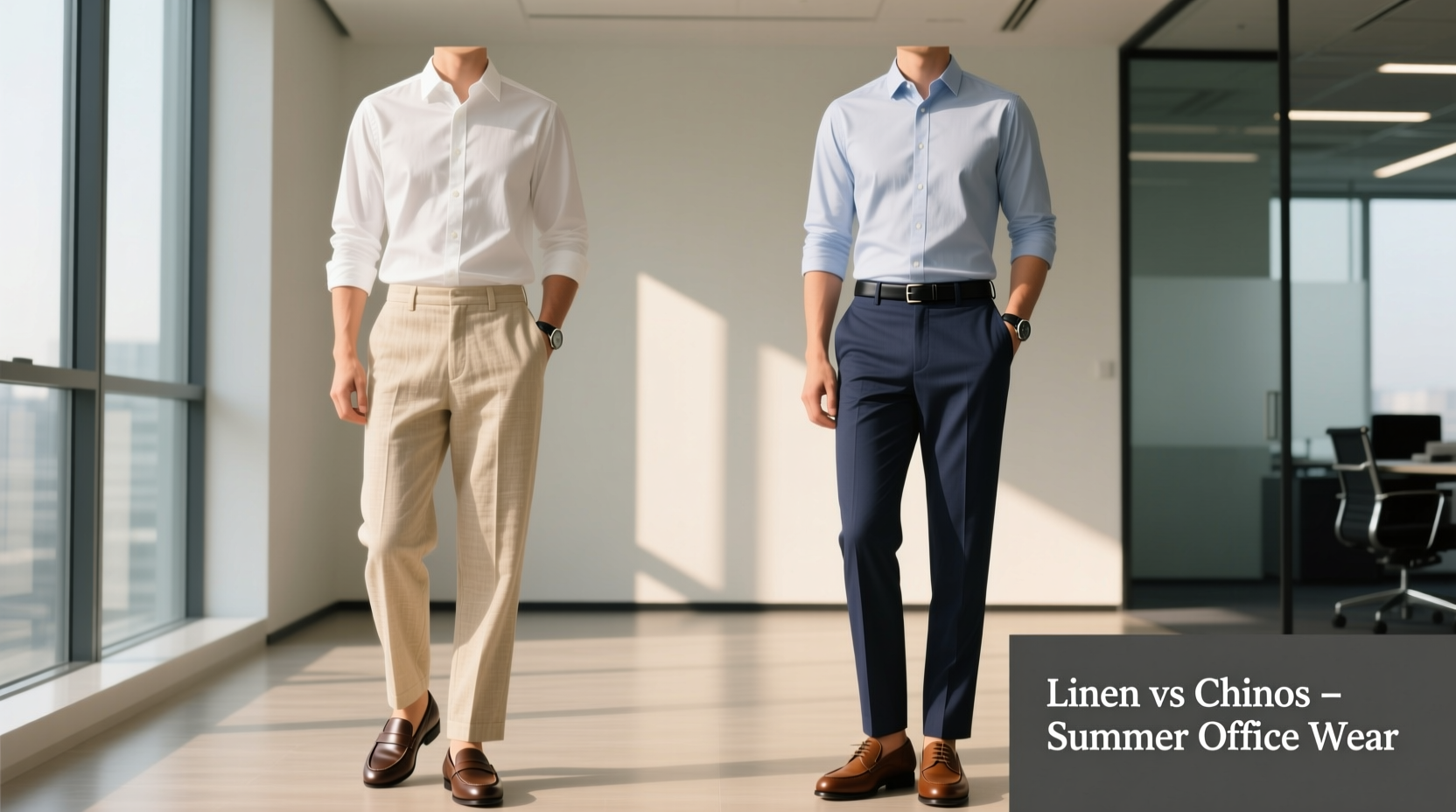
The core distinction between linen pants and chinos lies in their fabric composition. Linen is made from flax fibers, known for exceptional breathability and moisture-wicking properties. It’s one of the oldest textiles used in clothing and remains a favorite in hot climates due to its ability to keep the body cool. However, linen wrinkles easily—often within minutes of being worn—and has a naturally textured, slightly rustic appearance.
Chinos, on the other hand, are typically made from cotton twill—a tightly woven fabric with a subtle diagonal rib pattern. While not as breathable as linen, cotton twill offers greater durability and resists wrinkling far better. Chinos are often lightly treated with finishes that enhance softness and reduce creasing, making them more resilient under daily office conditions.
From a tactile standpoint, linen feels crisp and airy against the skin, especially when new. Over time, it softens with each wash, becoming even more comfortable. Chinos start softer than linen and maintain a consistent texture, though heavier cotton blends may trap heat in extreme humidity.
Tip: If you live in a humid climate, opt for lightweight cotton chinos with a touch of stretch—they offer breathability without sacrificing structure.Professional Appearance: Which Looks More Polished?
In traditional office environments, first impressions matter. Clothing communicates attention to detail, discipline, and respect for workplace norms. Here, chinos generally have the edge over linen pants when it comes to perceived professionalism.
Chinos maintain clean lines and sharp creases throughout the day. They pair seamlessly with dress shirts, blazers, and leather shoes, fitting comfortably into business casual and smart casual dress codes. Their uniform color and smooth finish project consistency and control—qualities highly valued in client-facing roles.
Linen pants, while elegant in the right setting, carry an inherent informality. The fabric’s tendency to wrinkle gives off a relaxed, almost bohemian vibe that can clash with conservative expectations. Even high-end linen trousers develop creases after sitting at a desk or riding public transit, which some managers may interpret as carelessness—even if unwarranted.
That said, in creative industries—such as design, media, or architecture—linen’s natural texture and eco-friendly appeal can be seen as a sign of intentional style. A well-tailored beige or stone-colored linen pant paired with a crisp white shirt and loafers can project confidence and individuality.
“Linen commands attention through its authenticity, not its perfection. In progressive workplaces, that authenticity reads as sophistication.” — Daniel Reeves, Menswear Stylist & Consultant
Comfort and Climate Performance
When the mercury climbs, comfort becomes non-negotiable. Prolonged discomfort affects concentration, mood, and productivity. In terms of thermoregulation, linen outperforms chinos decisively.
Linen fibers are hollow, allowing air to circulate freely around the skin. This structure makes linen up to 30% more breathable than cotton. It also absorbs moisture quickly and dries faster, reducing sweat buildup and odor. On a 90°F (32°C) day with moderate humidity, linen pants feel noticeably lighter and cooler than even the lightest-weight chinos.
Chinos, particularly those made from 100% cotton, retain more heat. While modern versions often include elastane (2–5%) for stretch and improved airflow, they still lack linen’s innate cooling capacity. Some premium chino lines now use moisture-wicking treatments or open-weave constructions, but these remain exceptions rather than standards.
However, comfort isn’t only about temperature. Linen’s stiffness can cause chafing during extended walks or commutes, especially before the fabric breaks in. Chinos, by contrast, mold to the body over time and offer superior flexibility—particularly important for professionals who move frequently between meetings, desks, and conference rooms.
Heat Resistance Comparison
| Feature | Linen Pants | Chinos |
|---|---|---|
| Breathability | Excellent | Moderate to Good |
| Moisture Wicking | High | Low to Moderate |
| Drying Speed | Fast | Slow to Moderate |
| Heat Retention | Very Low | Moderate |
| Comfort in Humidity | Superior | Average |
Wrinkle Resistance and Maintenance
One of the biggest practical drawbacks of linen is its poor wrinkle resistance. Unlike chinos, which can go all day looking tidy with minimal effort, linen demands constant upkeep. Sitting for 20 minutes often results in deep creases across the thighs and seat. Folding the pants improperly during storage leads to stubborn lines that require steaming or ironing.
For professionals without access to garment steamers at work—or those rushing from commute to meeting—this can be a dealbreaker. Frequent laundering is also necessary, as linen shows sweat marks and odors more readily than treated cotton.
Chinos, especially those labeled “wrinkle-resistant” or “performance,” require little maintenance. Many can be machine washed and tumble dried with minimal ironing. Even basic cotton chinos recover well from light wrinkling with brief hanging or light steaming.
Tip: To reduce linen wrinkling, hang your pants immediately after wearing and use a handheld steamer before important meetings.Laundry & Longevity Guide
- Linen: Hand wash or gentle cycle; air dry to prevent shrinkage; iron on medium-high heat while damp.
- Chinos: Machine wash cold; tumble dry low; spot clean stains promptly to avoid set-in marks.
- Linen lasts 3–5 years with proper care; chinos often last 4–7 years due to stronger fiber integrity.
Real-World Scenario: Two Professionals, Two Choices
Consider two colleagues in the same financial advisory firm: James and Amir. Both live in Miami, where summers are hot and humid. Their office follows a business casual dress code.
James opts for navy chinos year-round. He values consistency and rarely receives comments on his attire—positive or negative. His pants look fresh every day, survive back-to-back client calls, and transition smoothly from desk to dinner. He spends less than five minutes a week on garment care.
Amir chooses light taupe linen pants during summer months. He appreciates how cool they keep him and enjoys the elevated aesthetic. However, by mid-afternoon, his pants show visible creases. Once, a senior partner remarked, “You look like you’ve been gardening,” after a morning meeting. Amir began pairing his linen with structured jackets to offset the casual impression and now carries a travel steamer in his briefcase.
Neither approach is wrong—but their outcomes reflect different priorities. James prioritizes reliability; Amir embraces seasonal style at the cost of extra maintenance.
Choosing Based on Office Culture
The best choice depends heavily on workplace norms. Use the following checklist to assess your environment:
📋 **Office Attire Decision Checklist**- Observe what senior leaders wear—do they favor structured or relaxed fabrics?
- Note reactions to others in linen—are they complimented or questioned?
- Check if your role involves frequent travel or standing—mobility matters.
- Evaluate laundry access—can you steam or press clothes daily?
- Assess climate control—do you work in an overheated building or a freezing AC zone?
In rigid corporate settings—law firms, banking institutions, government agencies—chinos are the safer bet. They align with unspoken rules about neatness and formality. Linen, even in neutral tones, risks appearing too casual unless perfectly maintained.
In tech startups, advertising agencies, or design studios, linen may be welcomed as part of a curated, fashion-forward identity. These environments often reward personal expression, provided it remains tasteful.
Hybrid Solution: Performance Linen and Technical Chinos
Recent innovations have blurred the line between these two categories. Several brands now offer “performance linen”—a blend of linen with polyester or elastane—that reduces wrinkling and improves durability while retaining breathability. Similarly, technical chinos incorporate cooling technologies, four-way stretch, and UV protection, making them viable for extreme heat.
For example, brands like Ministry of Supply, Mizzen + Main, and Bonobos offer chinos with moisture-wicking linings and anti-odor finishes, ideal for hybrid workweeks. Meanwhile, Orslow and Todd Snyder produce linen-cotton blends that resist deep creasing without sacrificing texture.
If you're torn between comfort and polish, explore these hybrid options. They represent the best of both worlds: the coolness of linen with the resilience of modern chino construction.
Frequently Asked Questions
Can I wear linen pants to a job interview in summer?
Yes, but only if they’re impeccably pressed and paired with polished footwear and a tailored shirt. Choose a darker shade like charcoal or olive to minimize the casual impression. Avoid off-white or ecru, which highlight wrinkles more visibly.
Do chinos breathe enough for hot climates?
Standard cotton chinos don’t breathe as well as linen, but lightweight, unlined, or stretch-infused versions do. Look for labels indicating “summer weight,” “tropical wool blend,” or “cool cotton.” Pair them with breathable shoes like suede loafers to improve overall airflow.
Are linen pants worth the upkeep?
For many, yes—but only if you enjoy the ritual of garment care and value seasonal variety. Linen offers unmatched comfort and a distinctive aesthetic. If you're willing to steam, fold carefully, and accept minor imperfections, it can become a signature piece in your summer rotation.
Final Verdict: Chinos Edge Ahead for Most Office Settings
While linen excels in comfort and natural elegance, chinos deliver superior consistency, longevity, and professional presentation. For the majority of office environments—especially those with formal expectations or limited laundry convenience—chinos are the more reliable choice for summer wear.
Linen shines in specific contexts: creative fields, outdoor meetings, or offices with lenient dress codes. But unless you're prepared to invest time in maintenance and styling, it may send unintended signals about your attention to detail.
The ideal strategy might be balance: reserve linen for Fridays, client-free days, or offsite events, while relying on high-quality chinos for core workdays. This way, you enjoy seasonal comfort without compromising professionalism.
🚀 **Take Action Today** Evaluate your next workweek schedule. How many meetings do you have? What’s the office AC level? Are you commuting by bike or car? Based on real needs—not trends—choose your summer bottom accordingly. Try one pair of performance chinos and one blended linen pant for side-by-side testing. Your comfort and credibility depend on the details. 💬 What’s your go-to summer office pant? Share your experience with linen or chinos and help others navigate the heat with style and professionalism.








