In schoolyards across the country, a quiet revolution is underway—one carried on the backs of children in the form of a single, unmistakable blue alien with big ears and an even bigger personality. The Lilo & Stitch backpack has surged past other beloved cartoon character gear to become the most sought-after accessory among elementary and middle schoolers. It’s not just popular; it’s ubiquitous. But what makes this particular backpack stand out in a market flooded with Disney, Pokémon, and superhero-themed alternatives? The answer lies in a blend of nostalgia, emotional resonance, smart design, and cultural relevance that other cartoon backpacks struggle to match.
The Emotional Pull: Why Stitch Resonates More Than Most Characters
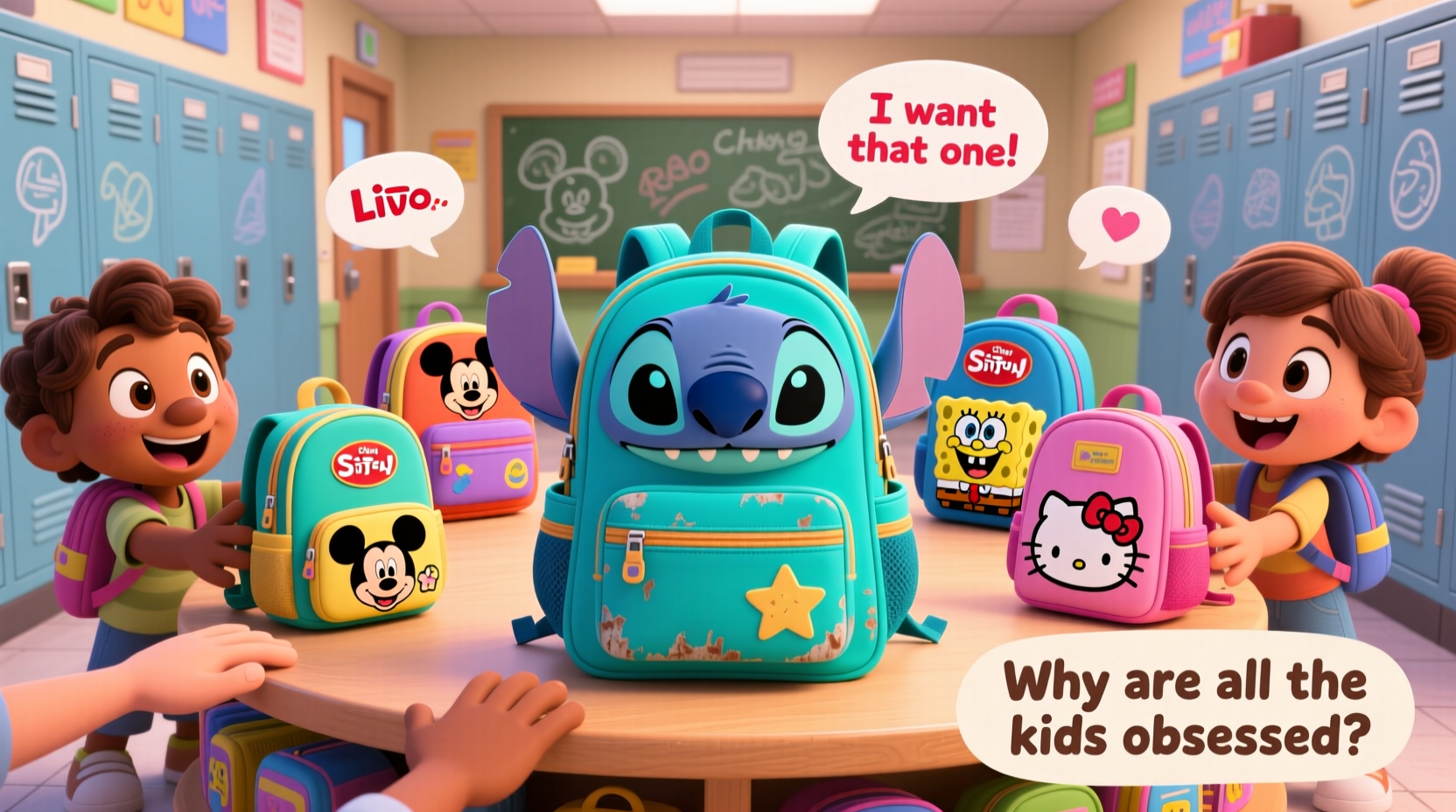
While many cartoon characters are fun or funny, few carry the emotional depth of Stitch. Created as a destructive genetic experiment, he is adopted by Lilo, a young Hawaiian girl dealing with grief and loneliness. Their bond—built on the idea that \"ohana means family, and family means nobody gets left behind\"—strikes a chord not only with children but with parents who appreciate the underlying message of acceptance and belonging.
This emotional core translates into real-world appeal. A backpack featuring Stitch isn’t just a carrier for books—it becomes a symbol of loyalty, resilience, and found family. In contrast, many other cartoon backpacks feature characters defined primarily by action (e.g., superheroes) or humor (e.g., SpongeBob), which may entertain but don’t offer the same psychological comfort.
“Children gravitate toward characters they can identify with emotionally. Stitch represents transformation—from chaos to connection—which mirrors a child’s own journey.” — Dr. Naomi Reyes, Child Psychologist and Media Researcher
Design and Durability: How the Lilo & Stitch Backpack Wins on Function
Beyond sentiment, the Lilo & Stitch backpack excels in practical design. Most official versions are made from water-resistant polyester with reinforced stitching, multiple compartments, padded straps, and reflective strips for safety. These features are standard in mid-to-high-end kids' backpacks, but the Lilo & Stitch model often includes subtle touches—like Stitch peeking out from the side pocket or his paw print subtly patterned across the fabric—that elevate it from generic to collectible.
Compared to other cartoon backpacks, which sometimes rely on loud, chaotic prints or flimsy materials to attract attention, the Stitch design balances whimsy with sophistication. Parents appreciate that it doesn’t look “too babyish” for older kids, while younger ones love the playful details.
Tip: Look for backpacks with ergonomic shoulder straps and a chest clip to reduce strain on growing spines—many Lilo & Stitch models include these features.Comparison Table: Lilo & Stitch vs. Other Popular Cartoon Backpacks
| Backpack Type | Emotional Appeal | Design Quality | Durability | Parent Approval |
|---|---|---|---|---|
| Lilo & Stitch | High – themes of family, belonging, redemption | Excellent – cohesive theme, subtle branding | Very Good – reinforced seams, water-resistant | High – positive messaging, age-appropriate |
| Pokémon (Pikachu) | Moderate – excitement, adventure | Good – bright colors, recognizable character | Fair – often thinner material, less structure | Moderate – some find designs too flashy |
| Disney Princess | Low-Moderate – fantasy, romance | Variable – glitter and sequins wear off | Fair – decorative elements degrade quickly | Mixed – seen as gender-stereotyped by some |
| Superhero (Spider-Man, etc.) | Moderate – power, heroism | Good – dynamic graphics | Good – usually durable material | High – widely accepted, neutral theme |
| SpongeBob SquarePants | Low – slapstick humor | Fair – busy, cluttered design | Fair – average construction | Low-Moderate – often perceived as silly or immature |
Case Study: The Backpack That Changed a School Year
In a suburban elementary school in Oregon, a shy fourth-grader named Maya struggled to make friends after moving from another state. Her mother, noticing her withdrawal, bought her a Lilo & Stitch backpack she’d mentioned liking. Within days, classmates began asking about it. “My mom says Stitch was bad but learned how to be good,” one boy said. Another shared that he had the movie on DVD.
The backpack became a conversation starter. Kids bonded over their favorite scenes, quoted lines (“This is my family. I don’t care if it’s weird.”), and even started an informal “Ohana Club” at recess. Maya’s teacher reported noticeable improvement in her participation and confidence. While the backpack didn’t solve everything, it served as a social bridge—a tangible, relatable entry point into peer relationships.
This example illustrates a broader trend: the Lilo & Stitch backpack functions not just as a utility item but as a social tool. In a world where children navigate complex emotions and social hierarchies, having a symbol of acceptance on their back can be quietly empowering.
Nostalgia Meets New Generations
One factor often overlooked is the role of parents. Many millennials who grew up with the original *Lilo & Stitch* film (2002) are now buying backpacks for their own children. For them, the character evokes warm memories of childhood, making the purchase feel nostalgic and meaningful. This intergenerational appeal gives the Stitch backpack an edge over newer franchises that lack deep roots.
Meanwhile, Disney’s strategic re-releases, merchandise revivals, and inclusion of Stitch in theme parks and streaming playlists have kept the character visible. Unlike some cartoon icons that fade into obscurity, Stitch remains culturally present—showing up in TikTok trends, meme formats, and viral plushie unboxings.
Checklist: What to Look for in a High-Quality Cartoon Backpack
- Emotional resonance: Does the character convey positive values like kindness, courage, or inclusivity?
- Ergonomic design: Padded straps, weight distribution, and adjustable fit for comfort.
- Durable materials: Water-resistant fabric, reinforced stitching, and quality zippers.
- Age appropriateness: Design should grow with the child, not feel “too young” by fifth grade.
- Safety features: Reflective strips, sturdy construction, and non-toxic dyes.
- Parent-friendly messaging: Avoids excessive branding, violence, or gender stereotypes.
Why Other Cartoon Backpacks Fall Short
Many competitors fail because they prioritize novelty over substance. A Pikachu backpack might light up or play sounds, but those features break easily and lose charm within weeks. Similarly, backpacks based on short-lived viral cartoons (e.g., *Bluey* knockoffs or obscure YouTube animations) lack staying power.
Franchises like *Miraculous Ladybug* or *PJ Masks* have strong followings but are often seen as “trendy” rather than timeless. Their designs can feel overly commercial, with characters plastered across every inch of fabric. In contrast, the best Lilo & Stitch backpacks use minimalist storytelling—Stitch hiding in a pocket, a tiny UFO on the zipper pull—inviting discovery and personal connection.
FAQ: Common Questions About Cartoon Backpacks
Is the Lilo & Stitch backpack suitable for older kids?
Yes. While marketed to ages 5–12, the emotional maturity of the *Lilo & Stitch* story and the sleek design of many models make it appropriate for tweens and even early teens. It avoids the cutesy or overly childish aesthetic of many cartoon packs.
Are there eco-friendly versions of the Lilo & Stitch backpack?
Some third-party manufacturers offer sustainable options made from recycled plastics or organic cotton. Official Disney versions are increasingly using eco-conscious packaging, though material sustainability varies by retailer.
Why do schools sometimes ban certain cartoon backpacks?
Schools may restrict backpacks with large hanging toys, loud embellishments, or distracting lights. The Lilo & Stitch backpack typically complies with regulations due to its streamlined design and lack of accessories that could be disruptive in class.
Conclusion: More Than Just a Trend
The obsession with the Lilo & Stitch backpack isn’t fleeting. It reflects a deeper shift in what children—and parents—value in everyday items. It’s not enough for a backpack to hold notebooks; it must also hold meaning. Stitch’s journey from outcast to beloved family member mirrors the universal desire to belong, making the backpack more than a fashion statement—it’s a quiet declaration of identity.
When compared to other cartoon backpacks, the Lilo & Stitch model stands out through emotional intelligence, thoughtful design, and lasting cultural relevance. It proves that in a saturated market, authenticity wins. As long as kids continue to seek connection, acceptance, and a little mischief on their shoulders, Stitch isn’t going anywhere.
💬 What does your child’s backpack say about them? Share your story or thoughts on why certain characters resonate more than others—we’d love to hear from you.