When shopping for a meaningful ring—whether for an engagement, anniversary, or personal milestone—the choice between light luxury and fine jewelry can feel overwhelming. Light luxury brands like Mejuri, Monica Vinader, and AUrate have surged in popularity with their minimalist designs, accessible price points, and social media appeal. Meanwhile, fine jewelry from heritage houses or independent artisans commands significantly higher prices based on materials, craftsmanship, and provenance. But does that premium price tag translate into real value? The answer depends on what you’re looking for: aesthetic impact, emotional significance, investment potential, or everyday wearability.
Understanding the Categories: What Defines Each Tier?
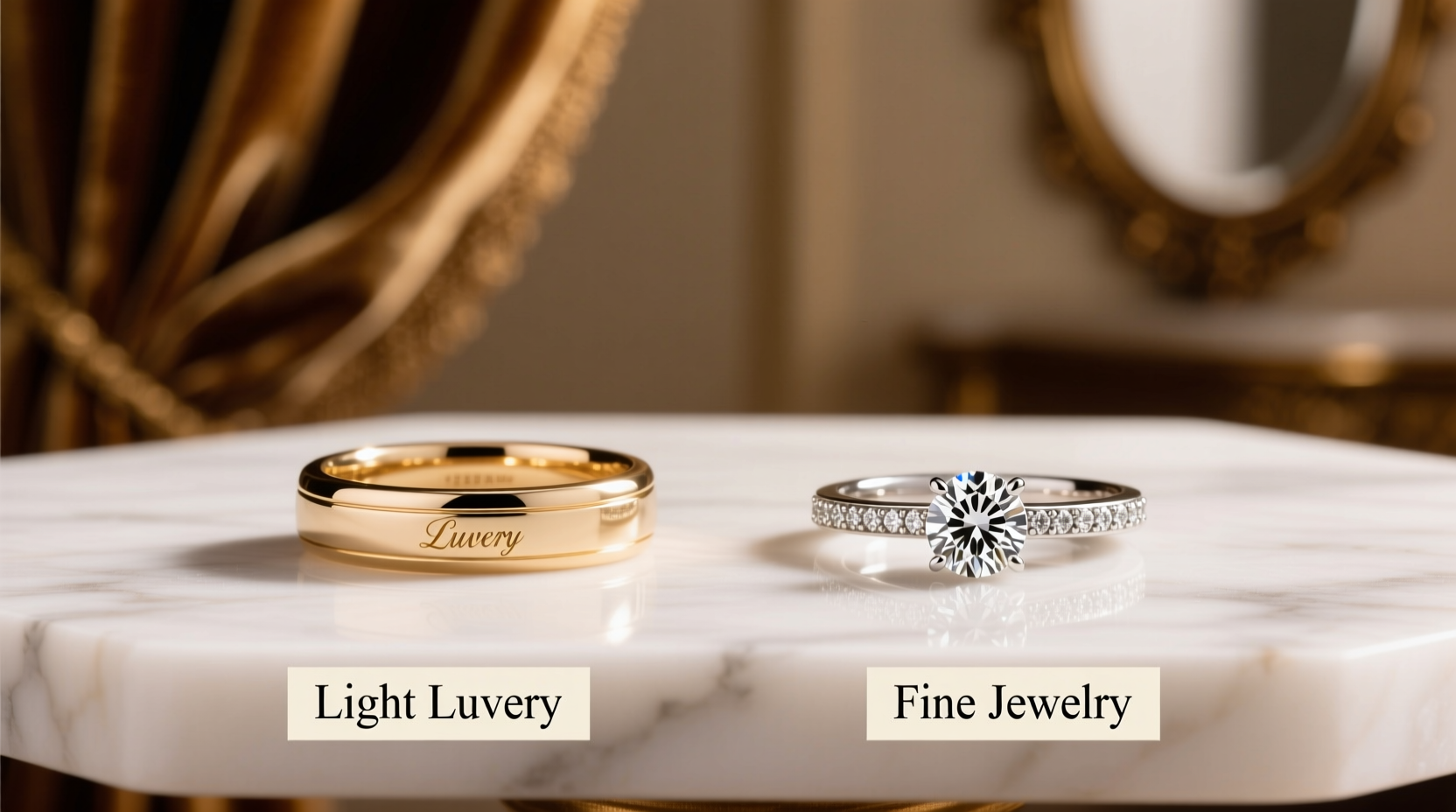
Before comparing value, it’s essential to clarify what separates light luxury from fine jewelry.
Light luxury jewelry occupies the space between fast fashion and high-end pieces. These are typically made with solid gold (often 14k), lab-grown diamonds or moissanite, and ethically sourced materials. While not costume jewelry, they prioritize design and accessibility over rarity or heirloom quality. Price ranges usually fall between $300 and $2,000 for a statement ring.
Fine jewelry, by contrast, emphasizes rarity, craftsmanship, and material integrity. This includes natural gemstones, higher karat gold (18k+), platinum settings, and hand-finished details. Pieces are often custom-made or limited editions, with prices starting around $2,000 and climbing into the tens of thousands.
Tip: Always check metal stamps—14K, 18K, or Pt—for authenticity. If it's not stamped, ask for certification.Material Quality & Longevity: Will It Last?
The durability of a ring hinges on three factors: metal type, stone quality, and construction method. Fine jewelry typically excels across all three.
Most fine rings use 18-karat gold or platinum, both denser and more durable than the 14-karat gold common in light luxury. While 14k holds up well for daily wear, it contains more alloy metals, making it slightly more prone to tarnish or discoloration over decades. Platinum, though heavier and pricier, resists wear far better and develops a desirable patina rather than thinning.
Stones tell a similar story. Light luxury brands often use lab-grown diamonds or moissanite—both brilliant and ethical alternatives—but they differ fundamentally from naturally mined stones. Natural diamonds form over billions of years under extreme pressure; their scarcity contributes to long-term value. Lab-grown diamonds share the same chemical structure but lack market rarity, meaning they depreciate quickly after purchase.
“Fine jewelry isn’t just about beauty—it’s about permanence. A well-crafted piece should survive generations.” — Lena Park, GIA-Certified Gemologist
Comparative Breakdown: Light Luxury vs Fine Jewelry
| Feature | Light Luxury Rings | Fine Jewelry |
|---|---|---|
| Price Range | $300 – $2,500 | $2,000 – $25,000+ |
| Metal Purity | Commonly 14k gold | 18k gold or platinum |
| Stone Type | Lab diamonds, moissanite, CZ | Natural diamonds, colored gemstones |
| Craftsmanship | Machine-assisted production | Hand-set, artisanal techniques |
| Lifespan | 10–15 years with care | Generational (50+ years) |
| Resale Value | Low (20–30% return) | Moderate to high (40–70% return) |
| Ethical Transparency | High (traceable sourcing) | Varies (depends on brand) |
A Real-Life Scenario: Two Rings, Ten Years Apart
Consider Sarah, who bought a 14k gold solitaire ring with a 0.5-carat lab diamond from a light luxury brand for $1,200 in 2014. She wore it daily. By 2022, the prongs had weakened, requiring re-tipping twice. The band showed visible wear, and when she tried to sell it, local jewelers offered no more than $300—less than 25% of her original investment.
In contrast, her sister Emma purchased a nearly identical-looking ring from a fine jeweler for $6,800. It featured a natural 0.5-carat G-color VS2 diamond in platinum. After ten years of regular wear, the ring needed only one polishing. When appraised in 2023, it retained 65% of its value and could be passed down as part of her estate.
This example doesn’t suggest one choice is universally better—but it highlights how material decisions compound over time.
When Light Luxury Makes Sense
Light luxury shines in scenarios where jewelry serves as wearable art rather than a legacy object. It’s ideal for:
- Building a rotating collection of stackable rings
- Testing styles before committing to a major purchase
- Gifts for milestones that don’t require heirloom status
- Consumers prioritizing ethics, sustainability, and modern design
These brands also tend to offer inclusive sizing, gender-neutral designs, and direct-to-consumer models that cut markup without sacrificing aesthetics. For many, this represents a smarter, more democratic approach to adornment.
Tip: Use light luxury rings as “style prototypes.” Wear them for six months to confirm your preferred metal, setting, and carat size before investing in fine jewelry.When Fine Jewelry Is Worth the Splurge
The true value of fine jewelry emerges over time. It becomes worth the splurge when:
- You seek a lifelong piece—especially for engagements or inheritances.
- Material authenticity matters: natural stones carry geological and emotional weight.
- Artisan craftsmanship ensures precision, balance, and comfort.
- You want a piece that may appreciate or at least hold value.
Fine jewelers often provide lifetime maintenance, resizing, and refurbishment services. Some even allow trade-ins toward future purchases, adding long-term flexibility.
Step-by-Step: How to Decide Which Path Fits Your Needs
- Define the purpose: Is this a daily wearer, occasional statement, or symbolic commitment?
- Set a realistic budget: Can you afford maintenance or insurance for fine pieces?
- Research materials: Understand the difference between 14k and 18k, lab-grown and natural stones.
- Try before you buy: Visit showrooms or order samples to assess comfort and scale.
- Ask about aftercare: Does the brand offer cleaning, repairs, or appraisal services?
- Consider resale: Will you want to recoup value later?
Expert Insight: Beyond the Sparkle
“People underestimate how much a ring interacts with life. It hits door frames, sinks, keyboards. Only robust materials and secure settings survive that abuse gracefully.” — Daniel Ruiz, Master Bench Jeweler with 28 years of experience
Ruiz notes that many customers return to fine jewelers after realizing their light luxury rings can’t withstand years of active lifestyles. “A well-made ring feels balanced on the finger, not too heavy, not too flimsy. That takes skill—not just expensive materials.”
FAQ: Common Questions Answered
Can I mix light luxury and fine jewelry in a stack?
Absolutely. Many designers encourage mixing metals and tiers for personalized looks. Just ensure similar widths and profiles so the rings sit flush and don’t rub against each other.
Do light luxury brands offer warranties?
Yes, most offer 1–2 year warranties covering manufacturing defects. Some extend coverage for a fee. However, these rarely include loss, damage, or routine wear.
Will my fine jewelry increase in value?
While most jewelry doesn’t “appreciate” like stocks, high-quality pieces with rare stones or designer signatures often retain 50–70% of value. Exceptional items—like vintage Cartier or signed Van Cleef—can exceed original prices at auction.
Final Verdict: Is the Splurge Worth It?
The answer depends on your definition of worth. If you value immediate beauty, versatility, and ethical transparency, light luxury offers exceptional value. You can own multiple thoughtfully designed pieces without financial strain. But if you seek permanence, emotional resonance, and a tangible legacy, fine jewelry justifies its cost through durability, craftsmanship, and enduring significance.
Ultimately, the best choice aligns with your lifestyle, values, and long-term vision. There’s no universal rule—only personal truth. Whether you choose a $900 rose gold ring from a direct-to-consumer brand or a $12,000 platinum eternity band, what matters is how it makes you feel every time you look at your hand.
💬 Your jewelry tells a story. Are you building a fleeting chapter or a lasting legacy? Share your journey in the comments below—what’s your go-to ring, and why?








