
Every morning begins with a decision: what to carry, how much to pack, and—most importantly—which bag will survive the grind of your daily commute. Whether you're navigating subway platforms, biking through city streets, or walking from parking garages to office lobbies, your choice of bag affects more than just your look. It influences posture, accessibility, safety, and long-term comfort. Among premium options, leather stands out for durability and timeless style. But when it comes to choosing between a leather crossbody and a leather backpack, the real question isn’t about fashion—it’s about function.
Both styles have loyal followings, but they serve different needs. One excels in agility and theft resistance; the other wins in load distribution and storage capacity. Understanding the trade-offs helps you make a smarter, more sustainable choice—one that aligns with your lifestyle, not just your wardrobe.
The Crossbody Advantage: Lightweight Security and Speed
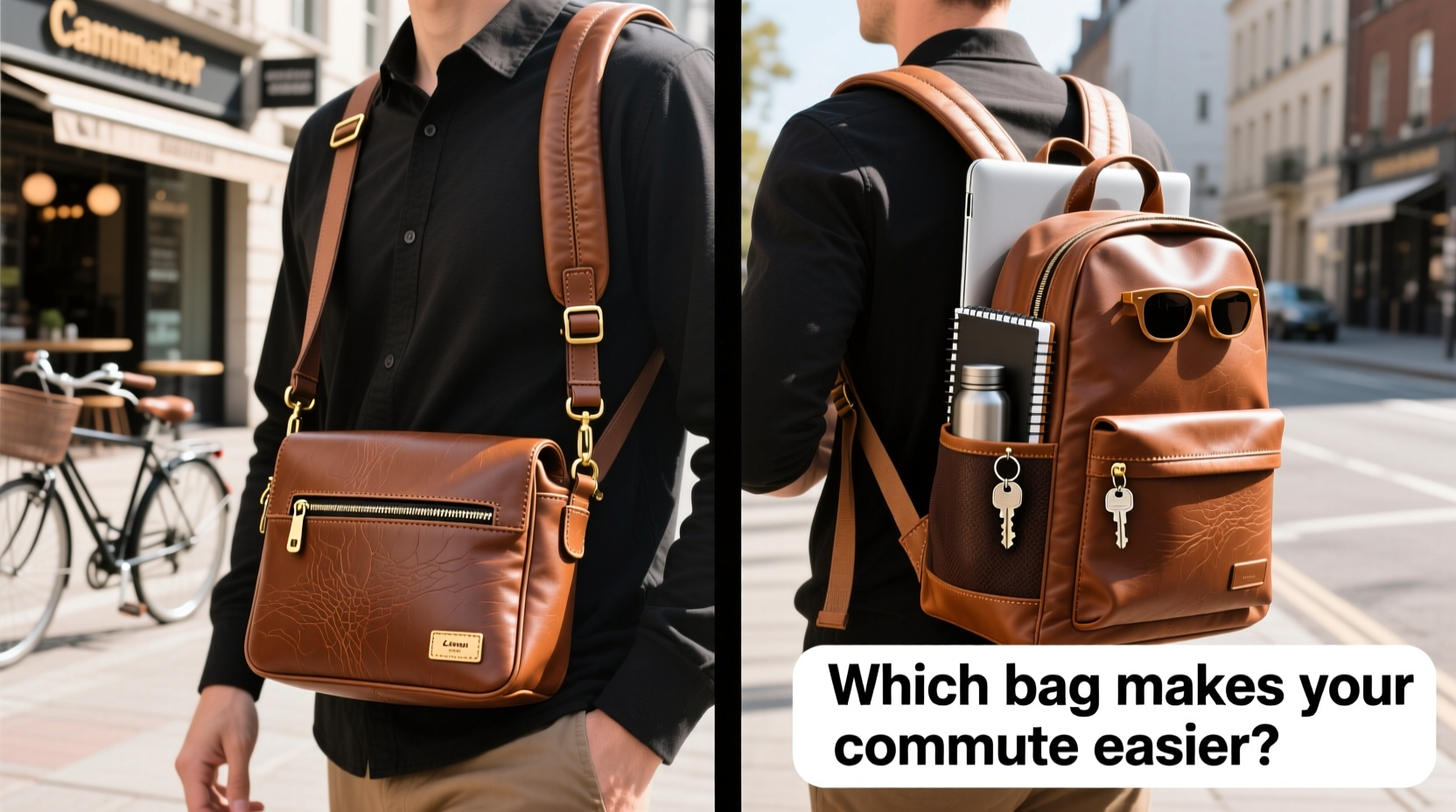
A leather crossbody bag is designed for efficiency. Worn diagonally across the torso, it keeps essentials close to your body, making it harder for pickpockets to access. This positioning also allows quick access to items like transit cards, phones, or keys without removing the bag.
Crossbodies typically feature compact compartments, encouraging minimalism. Most hold only a wallet, phone, sunglasses, small notebook, and maybe a power bank. That limitation becomes a strength during commutes where speed and awareness matter most.
Tip: Opt for a crossbody with an adjustable strap and RFID-blocking pockets if you frequently use public transit in crowded areas.High-quality full-grain leather crossbodies age beautifully, developing a natural patina over time. They resist light rain and abrasion better than synthetic materials. However, because weight rests on one shoulder, uneven strain can build up over long walks or extended wear—especially if overloaded.
The Backpack Edge: Ergonomics and Capacity
Backpacks distribute weight evenly across both shoulders, reducing pressure on any single point. This makes them ideal for carrying heavier loads—laptops, extra layers, gym clothes, or groceries—without compromising spinal alignment.
A well-constructed leather backpack offers rugged elegance and structural integrity. Many models include padded laptop sleeves (up to 15 inches), hidden zippers, and internal organization panels. Unlike canvas or nylon packs, leather resists scuffing and develops character rather than showing wear as damage.
But there are drawbacks. Backpacks are less accessible while worn—reaching inside requires stopping or taking the bag off. On crowded trains or buses, they can be targets for opportunistic theft, especially if worn loosely at the back.
“From an ergonomic standpoint, backpacks win for loads over 5 pounds. But situational awareness matters just as much as comfort.” — Dr. Lena Torres, Occupational Therapist & Urban Mobility Consultant
Comparing Key Factors: A Practical Breakdown
| Factor | Crossbody Pros | Backpack Pros |
|---|---|---|
| Weight Distribution | Uneven (single shoulder) | Balanced (dual straps) |
| Security | High (front-facing, hard to reach unnoticed) | Moderate (rear placement increases risk) |
| Capacity | Limited (~3–7L) | Generous (~10–20L) |
| Access Speed | Fast (open front pocket in seconds) | Slower (must remove or rotate bag) |
| Ease of Movement | Excellent (hands-free, low swing) | Good (but bulkier in tight spaces) |
| Durability | High (if full-grain leather) | Very High (structured design + reinforcement) |
Real Commute Scenarios: Who Wins Where?
Let’s consider two common urban commuters:
- Sophia, a graphic designer, bikes 20 minutes to work. She carries her laptop, sketchbook, water bottle, and lunch. Her route includes a bike lock-up zone and a short walk through a busy downtown corridor.
- Jamal, a sales executive, takes the subway daily. He travels light—phone, wallet, earbuds, and occasionally a tablet. His commute involves standing in packed cars and transferring lines twice.
In Sophia’s case, a sturdy leather backpack with weather-resistant lining and secure closures provides the support she needs. The even weight distribution prevents fatigue after a full day. Though slightly bulkier, its top handle allows quick grab-and-go when locking her bike.
For Jamal, a slim leather crossbody offers superior convenience. He avoids fumbling in crowds, keeps his belongings visible, and slips through turnstiles smoothly. Theft is a bigger concern than load—he values peace of mind over cargo space.
Tip: If using a backpack in high-theft zones, wear it on your front when boarding transit or in dense crowds.How to Choose Based on Your Routine
Ask yourself these questions before deciding:
- Do I carry more than 5 lbs regularly? → Lean toward backpack.
- Am I often in crowded spaces (subways, festivals, airports)? → Crossbody may offer better control.
- Do I walk or bike longer than 15 minutes each way? → Consider posture and strain.
- Is quick access to my phone/wallet essential? → Crossbody has the edge.
- Do I value aesthetics equally with utility? → Both can deliver, but leather backpacks tend to look more professional.
Checklist: Picking the Right Bag for Your Commute
- ✅ Assess average load weight
- ✅ Evaluate transportation mode (walking, cycling, transit)
- ✅ Identify primary pain points (back pain, theft anxiety, slow access)
- ✅ Confirm compatibility with weather conditions
- ✅ Test fit with typical clothing (coats, dresses, business attire)
- ✅ Check interior layout for tech cords, documents, personal items
- ✅ Prioritize hardware quality—zippers, stitching, strap attachments
Maintenance Matters: Caring for Leather on the Move
No matter which style you choose, leather requires care to maintain performance and appearance. Daily exposure to moisture, friction, and UV rays accelerates aging. Without proper upkeep, even premium hides crack or discolor within months.
Wipe down your bag weekly with a dry, soft cloth. For stains, use a leather-specific cleaner and conditioner every 6–8 weeks. Store it away from heaters and direct sunlight when not in use. Stuffed with tissue paper, it retains shape and prevents creasing.
“Conditioning leather every two months preserves flexibility and prevents micro-tears caused by constant bending during commutes.” — Marcus Reed, Artisan Leather Craftsman
Frequently Asked Questions
Can a leather crossbody hold a laptop?
Some larger crossbodies accommodate tablets or ultralight laptops (up to 13”), but they’re not ideal for regular laptop transport. Without padding and balanced support, the device risks damage and the wearer risks discomfort.
Are leather backpacks too formal for casual commutes?
Not necessarily. Modern leather backpacks come in minimalist, unstructured designs that pair well with jeans and sneakers. Look for matte finishes and subtle branding to keep the vibe relaxed yet refined.
Which lasts longer: leather crossbody or backpack?
Backpacks generally endure longer due to reinforced stress points and even wear distribution. However, a well-maintained crossbody made from full-grain leather can last a decade or more with moderate use.
Make the Choice That Serves You—Not Just the Trend
The best bag for your commute isn’t the one everyone’s wearing. It’s the one that aligns with your movement, protects your belongings, and feels effortless by the end of the day. A leather crossbody shines when agility and visibility matter most. A leather backpack earns its place when load, posture, and protection take priority.
You don’t have to choose forever. Many people rotate bags seasonally or based on purpose—crossbody for errands, backpack for workdays. What matters is intentionality. Invest in craftsmanship, prioritize fit, and treat your bag as a tool, not just an accessory.
💬 What’s your go-to commuter bag? Share your experience and help others find their perfect match.