
In today’s evolving work culture, the line between casual and professional attire has blurred. Remote work, hybrid offices, and creative industries have normalized relaxed dress codes—so much so that a knitted cardigan paired with track pants might seem like a viable alternative to a traditional blazer and tailored trousers. But when it comes to projecting professionalism, not all outfits are created equal. Understanding the subtle yet significant differences in construction, material, cultural perception, and context can help you make smarter wardrobe decisions—especially when appearances matter.
The Anatomy of Professionalism in Clothing
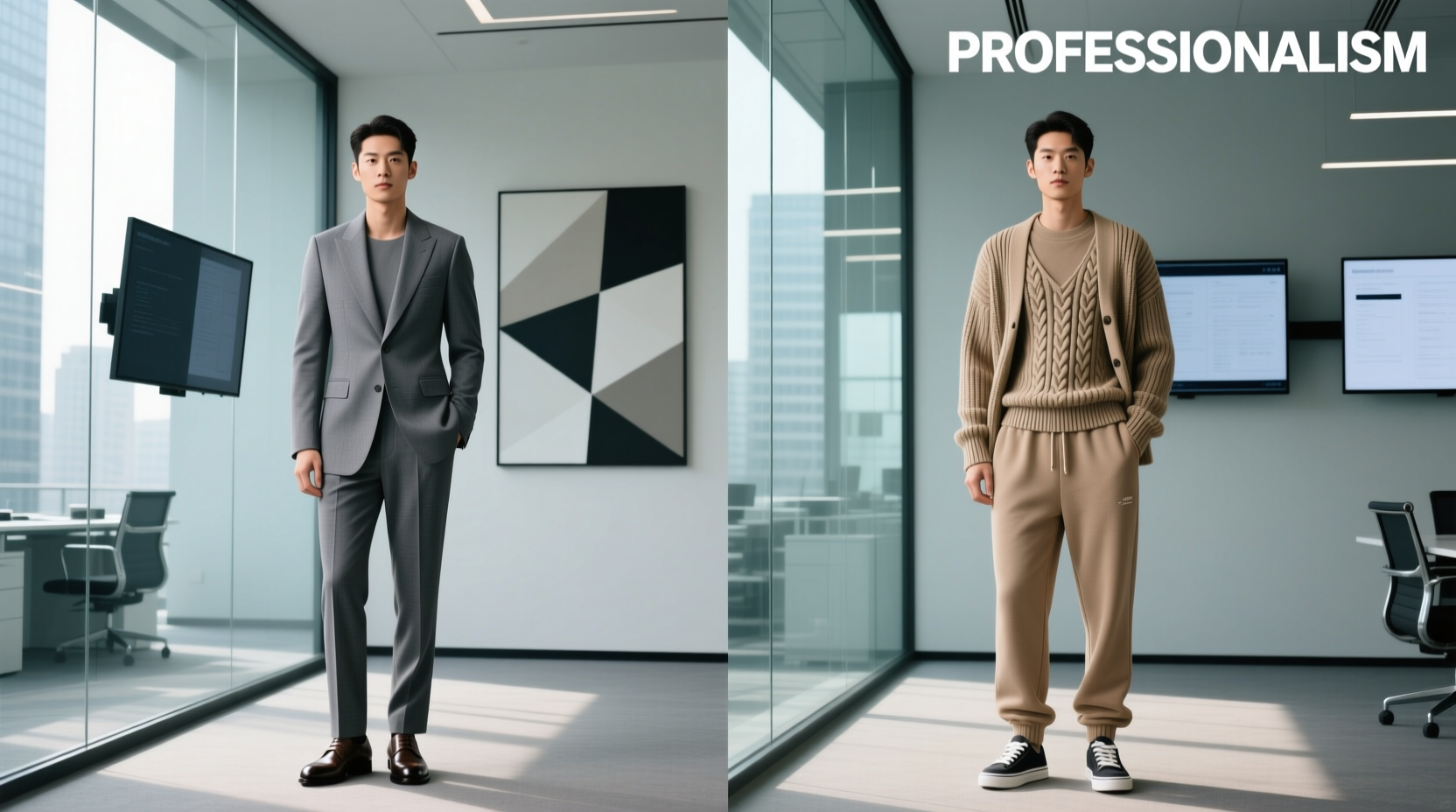
Professionalism in clothing isn’t just about formality—it’s about intentionality. It reflects respect for your role, your audience, and the environment you're in. Key elements include fit, fabric quality, color coordination, and how well an outfit aligns with industry norms.
A blazer and tailored pants are rooted in formal tailoring traditions. They signal structure, attention to detail, and readiness for business engagement. In contrast, a knitted cardigan paired with a matching tracksuit leans into comfort-first design, often prioritizing ease of movement over visual polish.
Fabric plays a critical role. Blazers are typically made from wool, cotton blends, or structured synthetics designed to hold shape and resist wrinkles. Tracksuits, even high-end ones, usually use soft knits, fleece, or jersey materials meant for lounging or athletic activity. These fabrics drape differently and rarely convey authority.
Tip: When evaluating an outfit’s professionalism, ask: Does it look intentional, or does it resemble sleepwear?Context Matters: Industry, Role, and Setting
No single outfit is universally “professional.” The acceptability of a knitted cardigan tracksuit versus a blazer and pants depends heavily on context.
- Corporate Finance or Law: A blazer and tailored pants are expected. Even in hybrid settings, full suits or smart separates dominate. A tracksuit would be seen as inappropriate.
- Creative Agencies or Tech Startups: Dress codes are looser. A well-styled cardigan tracksuit in neutral tones (like charcoal or navy) from a premium brand might pass in casual office days—but still falls short in client meetings.
- Remote Work: Camera framing matters. Wearing a tailored blazer on top with comfortable bottoms works for video calls. A full tracksuit may appear too informal if the full outfit is visible.
Even within flexible environments, perception shifts during key moments—presentations, investor pitches, or performance reviews. In those instances, the blazer and pants combo consistently outperforms the tracksuit in conveying preparedness and credibility.
Real Example: The Hybrid Office Dilemma
Sophia, a UX designer at a mid-sized tech firm, embraced the relaxed dress code by wearing a cream knitted cardigan tracksuit two days a week. Her team appreciated her comfort-focused style, and she felt productive. However, during a quarterly review with executives, she noticed her manager—wearing a navy blazer and chinos—was perceived as more polished and authoritative. After receiving feedback that she \"could project more leadership,\" Sophia began reserving the tracksuit for internal brainstorming days and switched to structured separates for strategic meetings. Within months, she was invited to lead a cross-functional initiative—a shift she attributes partly to her updated presentation.
“Clothing doesn’t define your competence, but it shapes first impressions. In uncertain moments, people rely on visual cues. Make sure yours support your goals.” — Marcus Reed, Executive Image Consultant
Comparative Breakdown: Cardigan Tracksuit vs Blazer and Pants
| Feature | Knitted Cardigan Tracksuit | Blazer and Tailored Pants |
|---|---|---|
| Fabric Structure | Soft, stretchy knits; prone to pilling | Wool, twill, or structured blends; holds shape |
| Silhouette | Loose, relaxed fit | Defined shoulders, tapered legs |
| Perceived Formality | Casual to smart-casual | Business casual to formal |
| Appropriate For | Remote work, creative studios, off-hours | Meetings, presentations, corporate settings |
| Longevity & Care | May lose shape after frequent washing | Durable; dry clean or steam for best results |
| Style Flexibility | Can be dressed up slightly with accessories | Easily adapted with ties, shirts, or turtlenecks |
When the Tracksuit Might Work—And How to Wear It Right
While the blazer and pants remain the gold standard for professionalism, there are limited scenarios where a knitted cardigan tracksuit can function as acceptable office wear—provided it’s executed with care.
Choose pieces in elevated fabrics: think merino wool blends, ribbed knits with minimal texture, and monochromatic sets. Avoid logos, drawstrings, or overly baggy cuts. Pair the top with tailored trousers instead of matching joggers to create a hybrid look that balances comfort and polish.
This approach—often called “loungewear tailoring”—has gained traction in fashion-forward workplaces. But even then, it's a niche aesthetic, not a replacement for true professional attire.
Tip: If you’re unsure whether a tracksuit is appropriate, err on the side of formality. You can always remove a blazer later—but you can’t add one retroactively.Step-by-Step Guide: Choosing the Right Outfit for Professional Settings
- Assess the occasion: Is this a client meeting, internal check-in, or casual Friday? Match your outfit to the stakes.
- Consider visibility: Will you be on camera? From what angle? A blazer alone can elevate a remote appearance.
- Evaluate fabric and fit: Wrinkled, stretched-out knits undermine credibility. Opt for structured, well-fitting garments.
- Layer strategically: A blazer over a sweater or shirt instantly increases formality. A cardigan over a hoodie does not.
- Check grooming details: Footwear, grooming, and accessories complete the picture. Loafers > sneakers; clean shoes > scuffed ones.
FAQ
Can I wear a knitted cardigan to a job interview?
Only if paired with tailored trousers, a collared shirt, and polished shoes—and only in creative or tech roles. In traditional industries, a blazer is safer and more effective.
Is a tracksuit ever appropriate in a corporate office?
Rarely. Even on casual days, most corporate offices expect business casual standards. A tracksuit may be acceptable only during wellness events or designated comfort days.
What if my company promotes “comfortable” dressing?
Comfort and professionalism aren’t mutually exclusive. Choose stretch-woven trousers, soft-shell blazers, or premium knit polos—garments designed for ease without sacrificing appearance.
Final Verdict: Which Is More Professional?
The answer is clear: a blazer and tailored pants are objectively more professional than a knitted cardigan tracksuit. This isn’t about elitism or outdated norms—it’s about alignment with established expectations of business conduct. The blazer conveys preparation, structure, and seriousness. The tracksuit, regardless of brand or price point, originates from leisurewear and carries that association.
That said, the rise of comfort-driven fashion signals a cultural shift. The future of professional dressing may include hybrid pieces—blazer-cut cardigans, dress-track hybrids, or technical fabrics with formal silhouettes. But until these become standardized, the traditional blazer and pants remain the most reliable choice for projecting competence and confidence.
Key Checklist for Professional Attire
- ✅ Fit is tailored, not baggy or tight
- ✅ Fabric looks crisp and durable
- ✅ Color palette is neutral or conservative
- ✅ Outfit matches industry standards
- ✅ Shoes and grooming are polished
- ✅ No visible wear, pilling, or stains
- ✅ Appropriate for the specific event or meeting