
Virtual reality (VR) gaming has captured imaginations since its consumer debut over a decade ago. From early headsets like the Oculus Rift to modern all-in-one devices such as the Meta Quest 3 and PlayStation VR2, the technology has evolved rapidly. Yet many remain skeptical: is VR gaming still just a flashy gimmick, or has it matured into a worthwhile investment for players, developers, and even investors? The answer isn't binary—it depends on expectations, use cases, and how one defines \"value.\" Beyond the initial thrill of immersion, VR offers tangible benefits in gameplay depth, physical engagement, and social connectivity. But it also faces persistent hurdles in accessibility, content volume, and hardware limitations.
The Evolution of VR Gaming: From Hype to Substance
When VR first entered mainstream awareness around 2016, much of the excitement was driven by novelty. Users marveled at being \"inside\" games—looking around cockpit interiors, ducking behind cover in shooters, or simply waving at their digital hands. These experiences were impressive but often shallow. Many early titles were tech demos rather than full-fledged games. Over time, however, developers have learned how to design specifically for VR, not just port existing concepts into 3D space.
Today’s standout VR titles—such as Half-Life: Alyx, Boneworks, and Resident Evil 4 VR—are built with mechanics that leverage motion controls, spatial awareness, and player embodiment. These aren’t flat adaptations; they require rethinking combat, inventory management, and environmental interaction from the ground up. This shift marks a transition from novelty-driven experiences to deeply engaging gameplay loops that only work in VR.
“VR isn’t about replacing traditional gaming—it’s about offering a different kind of engagement. When done right, it creates emotional resonance you can’t get from a screen.” — Sarah Chen, Lead Designer at Cloudrift Studios
Measurable Benefits Beyond Entertainment
While entertainment remains VR’s primary market, its applications extend into fitness, cognitive training, and mental wellness—all accessible through gaming platforms. Titles like Beat Saber, Supernatural, and BoxVR have proven effective for cardiovascular exercise, with users burning 300–600 calories per hour depending on intensity. Unlike traditional workouts, these games make exertion enjoyable, increasing adherence rates among users who struggle with gym routines.
Additionally, VR games are increasingly used in therapeutic settings. Exposure therapy simulations help individuals manage phobias or PTSD, while puzzle-based VR titles improve spatial reasoning and hand-eye coordination. A 2023 study published in *Frontiers in Psychology* found that participants who played immersive problem-solving games in VR showed a 27% improvement in executive function compared to those using desktop interfaces.
Tip: Use VR sessions as part of an active lifestyle—set weekly playtime goals that double as workout targets.Challenges That Still Limit Mass Adoption
Despite progress, VR gaming hasn’t reached the ubiquity of console or mobile gaming. Several interrelated barriers prevent broader adoption:
- Cost: High-end setups (PC + headset + controllers) can exceed $1,500. Even standalone units like the Quest 3 start at $500, which is steep for casual gamers.
- Content scarcity: While growing, the library of polished, long-form VR titles remains small compared to AAA releases on Steam or PlayStation.
- Social isolation: Many VR experiences are single-player, and multiplayer options often suffer from fragmented user bases across platforms.
- Physical constraints: Motion sickness affects up to 40% of new users, and extended play can cause eye strain or discomfort.
- Space requirements: Room-scale VR demands dedicated physical space, limiting usability in apartments or shared homes.
These issues don’t negate VR’s potential—but they do suggest that widespread investment should be strategic, not impulsive.
Investment Value: Who Gains the Most?
Not all investments are financial. Time, money, and attention are all forms of capital. Evaluating whether VR is \"worth it\" depends on the investor’s profile.
| User Type | Potential ROI | Risks |
|---|---|---|
| Casual Gamers | Moderate – limited compelling content for short sessions | High cost-to-play ratio; quick novelty fade |
| Fitness Enthusiasts | High – consistent health benefits from active titles | Requires motivation to maintain routine |
| Hardcore Immersion Seekers | Very High – deep narrative and mechanical engagement | Long development cycles mean fewer major releases |
| Developers & Creators | Potential High – lower competition, passionate niche audience | Steep learning curve; platform fragmentation |
| Educators / Therapists | High – validated applications in training and treatment | Regulatory and equipment access hurdles |
For example, a fitness-focused individual may find great return in a $300 Beat Saber subscription and 30-minute daily play, effectively replacing a gym membership. Meanwhile, a developer skilled in Unity or Unreal Engine might see opportunity in creating custom training simulations for corporate clients—a growing B2B market projected to reach $8.7 billion by 2027 (Statista, 2023).
Mini Case Study: Alex, the Home Fitness Convert
Alex, a 34-year-old software engineer from Portland, struggled with consistency in his fitness routine. After buying a Meta Quest 2 during the pandemic, he started playing OhShape and Cyber Boxing three times a week. Within four months, he lost 18 pounds and improved his resting heart rate by 12%. “I didn’t think I’d stick with it,” he said. “But when your workout feels like dancing through a sci-fi music video, you actually look forward to it.” Today, Alex considers his $400 investment one of the best health decisions he’s made—and he still plays two years later.
Future Outlook: Where VR Is Headed
The next five years will likely determine whether VR transitions from niche to mainstream. Key developments already underway include:
- Improved optics: Pancake lenses and varifocal displays reduce bulk and eliminate screen-door effect.
- AI integration: Dynamic NPCs that react to player behavior in real time, enhancing immersion.
- Haptic feedback evolution: Full-body suits and gloves (like those from bHaptics) deepen sensory realism.
- Cloud streaming: Services like Xbox Cloud Gaming entering VR could eliminate the need for expensive local hardware.
- Social metaverse platforms: While the term is overused, persistent virtual worlds like VRChat and NeosVR are building real communities.
Apple’s Vision Pro, though positioned as a productivity device, signals that high-end mixed reality is gaining traction. As major tech companies continue investing billions into spatial computing, game developers are incentivized to build richer, longer-lasting experiences.
Tip: Watch for cross-platform compatibility—invest in ecosystems (like Meta’s) that support backward compatibility and frequent software updates.Step-by-Step Guide: How to Evaluate a VR Investment
Before spending hundreds on a headset or game, follow this evaluation process:
- Define your goal: Are you seeking fitness, escapism, social connection, or creative expression?
- Assess your space: Measure a 6' x 6' clear area for room-scale VR. If unavailable, consider seated/standing experiences only.
- Test before you buy: Visit a store with demo units or borrow from a friend. Pay attention to comfort and motion sickness.
- Research content: Check if your desired games are available and well-reviewed on the platform you’re considering.
- Calculate total cost: Include accessories (charging docks, wrist straps), replacement facial interfaces, and premium subscriptions.
- Start small: Begin with a mid-tier standalone headset before upgrading to PCVR or enterprise systems.
Expert Insight: Designing for Embodiment
One reason VR succeeds where other formats fail is its ability to create presence—the feeling of truly \"being there.\" According to Dr. Thomas Park, neuroscientist and VR researcher at Stanford’s Virtual Human Interaction Lab:
“When you move your hand and see it mirrored in VR, your brain begins to accept that avatar as part of your body. That’s powerful—not just for fun, but for empathy, learning, and rehabilitation.”
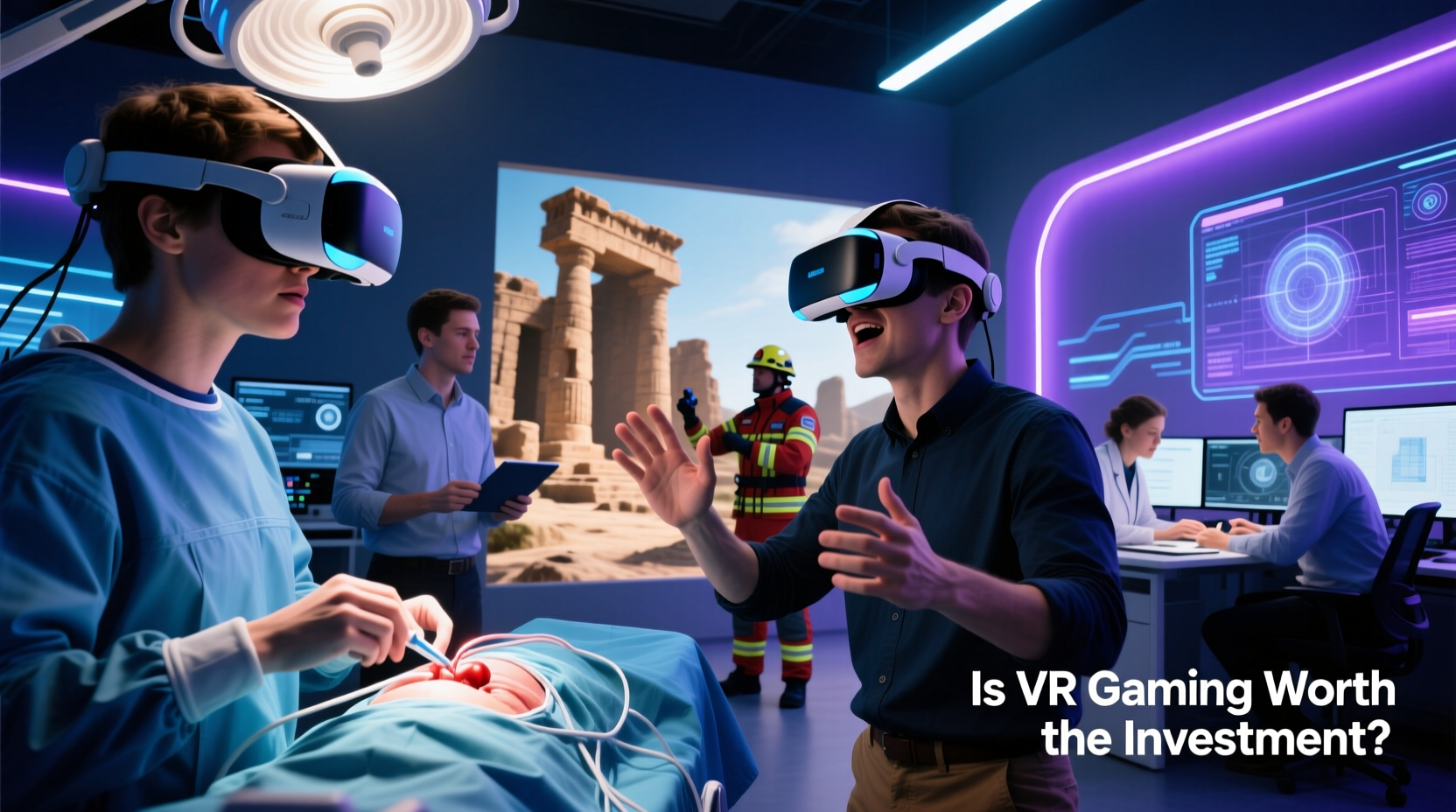
This sense of embodiment explains why VR training programs for surgeons, firefighters, and pilots are now standard in some institutions. The same principle applies to gaming: when players feel responsible for their virtual actions, stakes rise naturally.
FAQ
Can VR gaming cause long-term eye damage?
No conclusive evidence shows permanent eye damage from VR use. However, prolonged sessions may cause temporary eye strain or fatigue, especially in children under 12. Experts recommend taking a 10–15 minute break every 30 minutes and maintaining proper headset fit to minimize discomfort.
Are there enough games to justify the cost?
It depends on your preferences. If you enjoy immersive sims, rhythm games, or experimental indie titles, yes. If you’re expecting annual franchises like Call of Duty or FIFA, VR currently lacks equivalent volume. However, curated libraries on Quest, SteamVR, and PSVR2 offer 50+ high-quality titles each, with new releases monthly.
Will my VR headset become obsolete quickly?
Pace of innovation is rapid, but most platforms support backward compatibility. Meta, for instance, continues supporting older Quest models with updates. Investing in established ecosystems reduces obsolescence risk. Avoid low-cost, unsupported brands with no update roadmap.
Checklist: Is VR Right for You?
Answer these questions honestly before purchasing:
- ✅ Do I have a dedicated play space of at least 6x6 feet?
- ✅ Am I interested in immersive, physically engaging experiences over passive viewing?
- ✅ Am I willing to spend $400–$800 upfront, including accessories?
- ✅ Do I experience motion sickness easily? (If yes, try demos first.)
- ✅ Am I excited by emerging tech, even if it’s imperfect?
- ✅ Will I use it at least twice a week to maximize value?
If you answered “yes” to four or more, VR is likely a sound investment.
Conclusion
Virtual reality gaming has moved decisively beyond novelty. It won’t replace traditional gaming, nor should it. Instead, it occupies a unique space—one defined by presence, physicality, and deep immersion. For certain users—fitness seekers, story-driven explorers, and tech enthusiasts—the return on investment is already clear. For others, waiting for lower prices, better ergonomics, or more AAA titles may be wise.
The future of VR isn’t guaranteed, but its trajectory is promising. With continued advancements in hardware, AI-driven content, and cross-industry applications, today’s early adopters may soon become tomorrow’s mainstream majority. Whether you're a player, creator, or observer, now is the time to understand VR’s true potential—not as a toy, but as a transformative medium.
🚀 Ready to take the plunge? Start by trying a demo, researching top-rated games, and defining what “value” means to you. Share your VR journey or questions in the comments below—your insights could help someone else decide.