Sleep is a cornerstone of health, influencing everything from cognitive function to immune resilience. As wearable technology advances, consumers are increasingly relying on devices like the Oura Ring, Fitbit, and Apple Watch to monitor their sleep patterns. But how accurate are these tools—particularly the Oura Ring—when stacked against more mainstream options? This question isn’t just academic; it affects how people interpret their rest, adjust routines, and make health decisions.
The Oura Ring has built a reputation among biohackers, athletes, and wellness enthusiasts for its detailed sleep staging and recovery metrics. However, with Fitbit offering comprehensive health dashboards and Apple Watch integrating deeply with the iOS ecosystem, the comparison becomes complex. Accuracy depends not only on hardware but also on algorithms, sensor placement, and user behavior. This article examines the scientific validity, practical performance, and nuanced differences between these three leading wearables in sleep tracking.
Sensor Technology and Placement: Why It Matters
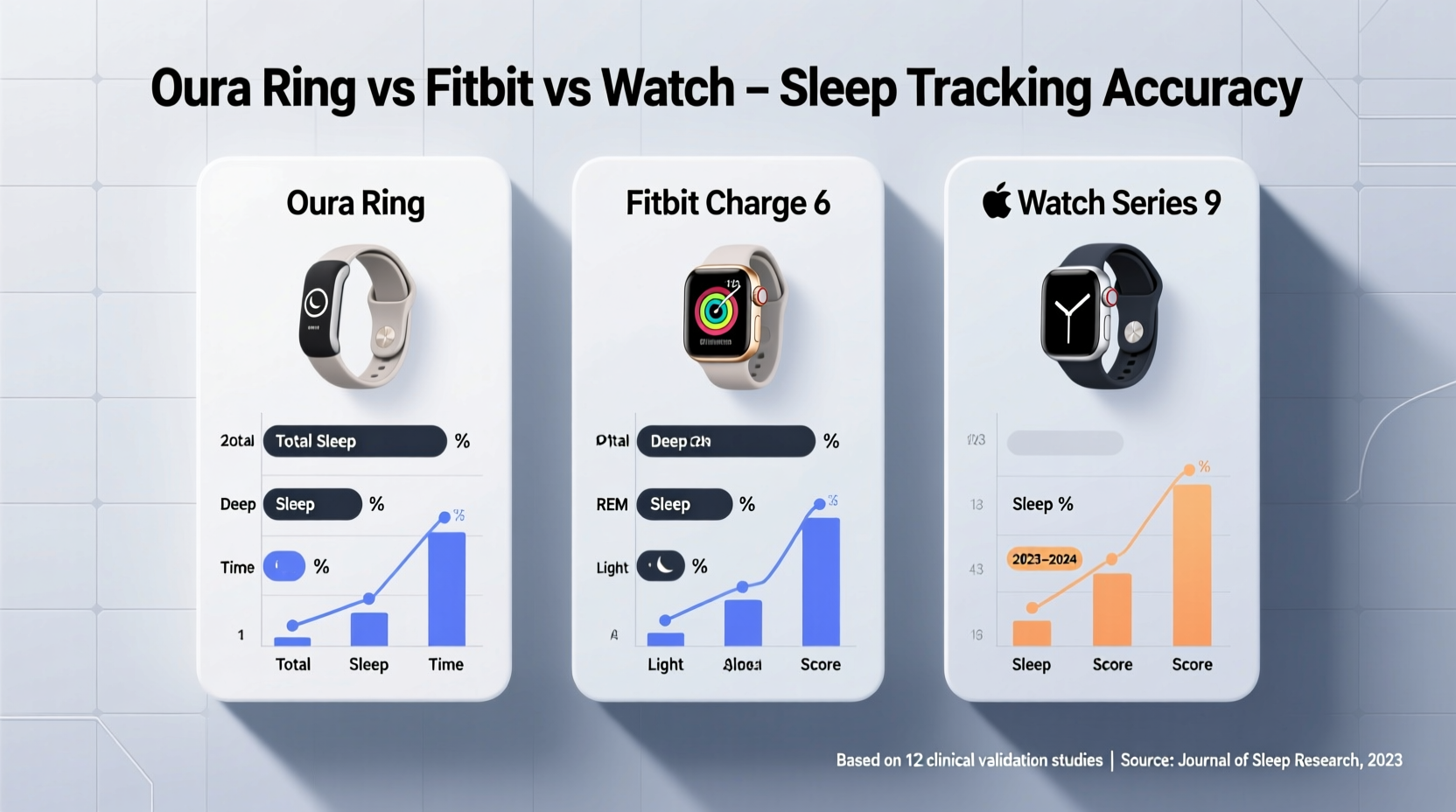
The foundation of any wearable’s accuracy lies in its sensors and where they’re positioned on the body. The Oura Ring uses infrared photoplethysmography (PPG) sensors located on the underside of the ring, measuring blood flow from the finger. Because fingers have dense capillary networks and are less prone to motion artifacts during sleep than wrists, this location can offer stable readings for heart rate and heart rate variability (HRV).
In contrast, both Fitbit and Apple Watch rely on wrist-based PPG sensors. While convenient, the wrist moves more during sleep—especially during REM cycles—and blood perfusion can vary based on hand position or ambient temperature. These factors may introduce noise into the data, particularly for HRV and respiratory rate measurements.
Oura also includes a 3D accelerometer and gyroscope to detect movement and estimate sleep stages. Combined with skin temperature sensors, which track subtle nightly fluctuations linked to circadian rhythm and illness onset, the ring collects a broader physiological dataset than most competitors. Fitbit and Apple Watch now include skin temperature sensing in select models (e.g., Fitbit Sense 2, Apple Watch Series 8+), but they sample less frequently—typically once per hour versus Oura’s continuous monitoring.
“Peripheral temperature trends, especially when measured continuously, provide meaningful insights into autonomic nervous system activity and sleep efficiency.” — Dr. Andrew Huberman, Neuroscientist, Stanford UniversityTip: For best results, wear your Oura Ring snugly but comfortably—one size tighter than a fashion ring—to ensure consistent contact with the skin.
Accuracy in Sleep Stage Detection: How Do They Compare?
Sleep is divided into stages: light, deep, and REM (rapid eye movement). Accurate staging helps users understand sleep quality beyond just duration. Clinical gold standard measurement uses polysomnography (PSG), which involves EEGs, EOGs, and EMGs in a lab setting. Wearables estimate these stages using heart rate, HRV, movement, and breathing patterns.
Multiple studies have evaluated consumer wearables against PSG. A 2021 study published in *npj Digital Medicine* found that the Oura Ring (Gen 2) demonstrated high agreement with PSG for total sleep time (within 10 minutes on average) and moderate-to-high accuracy in detecting sleep onset and wake times. Its ability to identify deep sleep was notably strong, outperforming several wrist-worn trackers.
Fitbit uses a proprietary algorithm called PurePulse 2.0 and later versions to infer sleep stages. Independent validations show Fitbit performs well in estimating total sleep time and distinguishing asleep vs. awake states but tends to overestimate REM sleep by 10–15% in some populations. The Apple Watch, while powerful, does not natively report detailed sleep stages in its default Health app. Third-party apps like AutoSleep or SleepWatch use Watch-collected data to estimate stages, but their accuracy varies widely due to inconsistent data access and sampling rates.
A key differentiator is Oura’s use of respiratory rate and body temperature alongside cardiac data. This multimodal approach allows for better differentiation between light and deep sleep, particularly during transitions. Fitbit incorporates respiration rate as well, but its temperature sampling frequency limits its sensitivity to micro-trends.
Comparative Analysis: Oura vs. Fitbit vs. Apple Watch
| Feature | Oura Ring | Fitbit (e.g., Sense 2) | Apple Watch (e.g., Series 9) |
|---|---|---|---|
| Sleep Stages Reported | Yes (Light, Deep, REM) | Yes (Light, Deep, REM) | Limited (via third-party apps) |
| Heart Rate Variability (HRV) | Yes (continuous, overnight) | Yes (overnight average) | Yes (segmented, variable) |
| Skin Temperature Monitoring | Yes (continuous) | Yes (nightly trend) | Yes (core temp estimation) |
| Respiratory Rate | Yes (minute-by-minute) | Yes (average per hour) | Yes (during sleep) |
| Battery Life | 4–7 days | 6–12 days | 18–36 hours |
| Charging Frequency | Weekly | Weekly | Daily |
| Clinical Validation | Multiple peer-reviewed studies | Moderate validation | Limited independent validation |
| Best For | Sleep optimization, recovery, biofeedback | General wellness, fitness integration | iOS users, active lifestyles |
This table highlights that while all three devices offer valuable insights, their strengths differ. The Oura Ring excels in passive, high-resolution sleep and recovery tracking with minimal user intervention. Fitbit balances breadth of features with reasonable accuracy across health domains. The Apple Watch shines in real-time notifications and activity tracking but lags in native sleep analytics.
Real-World Example: An Athlete’s Experience
Consider Mark, a 34-year-old endurance cyclist training for an ultramarathon. He used an Apple Watch daily for workouts but felt fatigued despite logging eight hours of sleep. After switching to the Oura Ring, he discovered his deep sleep averaged only 38 minutes per night—well below optimal for recovery. His body temperature was consistently elevated, suggesting low-grade inflammation or insufficient cooldown after training.
Using this data, Mark adjusted his evening routine: he stopped caffeine after noon, began cold exposure therapy post-workout, and prioritized bedtime consistency. Within two weeks, his deep sleep increased to 60+ minutes, and his readiness score (a composite metric from Oura combining HRV, resting heart rate, and temperature) improved from 67 to 82.
He later cross-checked one night’s data with a home sleep test device calibrated to clinical standards. The results aligned closely: Oura detected his REM latency within five minutes of the medical device and estimated total sleep time within seven minutes. Fitbit, worn simultaneously, overestimated REM by 18 minutes and missed a brief nocturnal awakening that Oura flagged.
This case illustrates how nuanced differences in accuracy can translate into actionable health outcomes—especially for individuals pushing physical limits.
Expert Recommendations and Practical Tips
While no consumer wearable replaces clinical diagnostics, their value lies in trend analysis over time. Consistency matters more than absolute precision. Here are evidence-based recommendations for maximizing accuracy across devices:
- Wear the device correctly: The Oura Ring should be on the middle or index finger of the non-dominant hand. Avoid wearing it too loose, which causes signal dropout.
- Charge before bed: Ensure at least 30% battery before sleeping. Low power can reduce sensor sampling rates.
- Sync regularly: Delayed syncing may affect long-term trend visibility, especially with Oura’s cloud-based analytics.
- Avoid alcohol before tracking: Alcohol suppresses REM sleep and distorts HRV, making data less reliable for baseline comparisons.
- Use one primary device: Switching frequently between trackers introduces variability. Pick one and stick with it for at least four weeks to establish patterns.
Frequently Asked Questions
Can the Oura Ring detect sleep apnea?
No, the Oura Ring cannot diagnose sleep apnea. However, it may flag indicators such as frequent nighttime awakenings, elevated resting heart rate, and irregular breathing patterns that warrant further evaluation by a physician. Some users have reported discovering potential breathing issues through prolonged Oura data trends, prompting them to seek formal testing.
Why does my Fitbit say I’m in REM sleep when I don’t remember dreaming?
REM sleep doesn’t always correlate with dream recall. Fitbit estimates REM based on heart rate variability and movement, not brainwave activity. Brief REM episodes may occur without conscious memory. Overestimation can also happen if the algorithm misinterprets light sleep with high HRV as REM.
Does the Apple Watch drain battery too fast for full-night tracking?
Yes, the Apple Watch typically lasts 18–36 hours depending on usage. To track sleep, you must charge it before bed, which interrupts daytime continuity. Users often resort to charging midday, reducing the amount of uninterrupted biometric data collected. Third-party solutions like Smart Battery Case help but add bulk.
Step-by-Step Guide: Choosing the Right Device for Your Needs
- Define your primary goal: Are you focused on sleep quality, fitness tracking, or general wellness? If sleep is the priority, Oura offers superior granularity.
- Assess your lifestyle: Frequent travelers may prefer longer battery life (Oura or Fitbit). iPhone users invested in the Apple ecosystem might favor seamless Health app integration.
- Check medical compatibility: If you have arrhythmias, pacemakers, or poor peripheral circulation, wrist-based devices may perform better than finger rings.
- Test wearability: Rings are discreet and comfortable for side sleepers, whereas watches may cause discomfort or pressure on the ulnar nerve.
- Evaluate cost and subscription model: Oura requires a $5.99/month membership for full insights. Fitbit Premium is optional but enhances reports. Apple Watch has no subscription fee, though third-party apps may charge.
- Review data export options: Researchers or quantified-self enthusiasts should confirm whether the device allows raw data downloads (Oura offers limited CSV exports; Apple Health enables broad sharing).
Final Verdict: Which One Should You Choose?
If sleep tracking accuracy is your top priority, the Oura Ring stands out. Its combination of continuous temperature monitoring, high-frequency HRV sampling, and advanced algorithms delivers clinically relevant insights unmatched by most wrist-worn devices. Peer-reviewed studies support its reliability in measuring total sleep time, sleep efficiency, and deep sleep duration.
Fitbit offers a balanced alternative with strong overall health tracking, including stress management and female health features. It’s ideal for users who want a single device for fitness, sleep, and heart health without subscribing to multiple services.
The Apple Watch remains the best choice for those embedded in the Apple ecosystem who prioritize notifications, GPS workouts, and ECG functionality. However, its limitations in native sleep staging and short battery life make it a secondary option for dedicated sleep analysis.
Ultimately, the “most accurate” device depends on your definition of accuracy. For raw physiological fidelity during sleep, Oura leads. For convenience and integration, Fitbit and Apple Watch hold advantages. The smartest approach is to treat these tools as complementary rather than competitive—using them to inform habits, not replace professional care.
“Our wearables won’t replace sleep labs, but they empower individuals to recognize deviations from their personal baselines—often months before symptoms escalate.” — Dr. Cathy Goldstein, Sleep Specialist, University of Michigan
Take Action Today
Your sleep shapes your energy, focus, and long-term health. Whether you choose the Oura Ring, Fitbit, or Apple Watch, the key is consistency and context. Don’t obsess over nightly fluctuations; instead, look for trends over weeks. Pair your data with journaling—note caffeine intake, stress levels, and bedtime routines—to uncover what truly impacts your rest.
💬 Have experience comparing these devices? Share your story in the comments—your insights could help others find their ideal sleep tracker.