Your iPhone is likely one of your most used—and most expensive—personal devices. It handles everything from communication and work to navigation and entertainment. So when it comes to protecting it, the question isn’t whether you need a case, but what kind of case is truly worth your money. With options ranging from $5 no-name brands to $60+ premium models from OtterBox, Spigen, or Apple itself, the decision can feel overwhelming. Are high-end cases really better, or are budget options just as effective?
The answer depends on how you use your phone, where you take it, and what you’re willing to risk. Let’s break down the real differences between premium and budget iPhone cases—beyond marketing hype.
Protection: What’s at Stake?
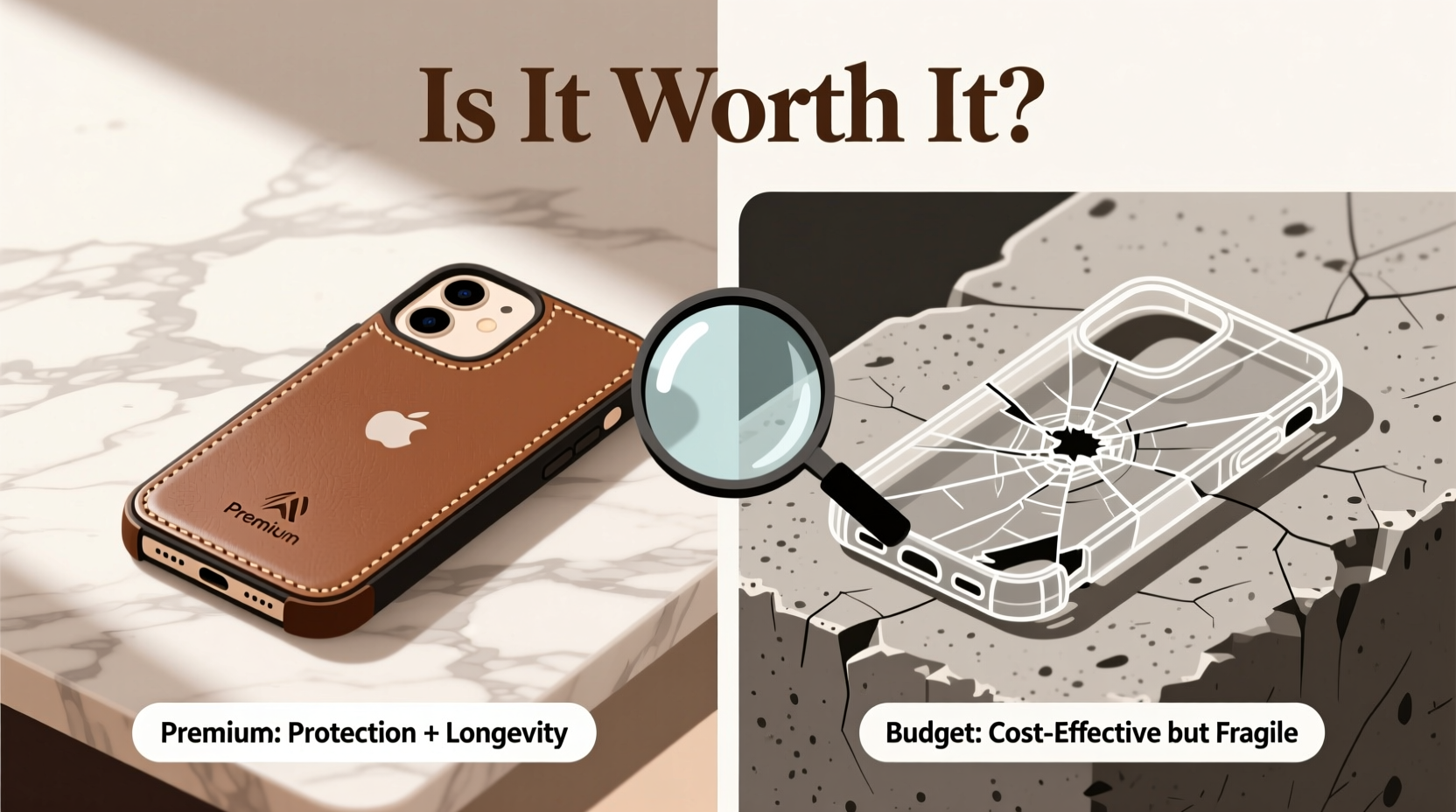
The primary function of any phone case is protection. But not all cases protect equally. Budget cases often prioritize aesthetics over impact resistance. Many are made from thin TPU (thermoplastic polyurethane) or flimsy plastic that may resist minor scratches but offers little in the event of a drop.
Premium cases, on the other hand, typically undergo rigorous testing. Brands like OtterBox and UAG (Urban Armor Gear) subject their products to MIL-STD-810G military drop tests—meaning they’re tested to survive multiple drops from 4–6 feet onto concrete. These cases usually feature multi-layer construction: a rigid outer shell, shock-absorbing inner liner, and raised bezels around the screen and camera to prevent direct contact with surfaces.
Tip: Look for cases with air-cushion technology or corner reinforcement—these features significantly improve impact absorption.A 2023 study by SquareTrade Labs found that while 78% of budget cases failed after three 4-foot drops, only 22% of premium cases showed functional damage under the same conditions. This doesn’t mean every cheap case will fail, but statistically, your odds of surviving a fall improve dramatically with a higher-tier model.
Build Quality and Longevity
Cheap cases often degrade quickly. The material yellows within months due to UV exposure and skin oils. Seams loosen, buttons wear out or become unresponsive, and the case may start to creak or crack after minimal use.
Premium cases use higher-grade materials and precision engineering. Polycarbonate shells resist warping, and rubberized coatings maintain grip without becoming sticky. Buttons are typically metal-reinforced rather than molded plastic, ensuring tactile feedback remains consistent over time.
Consider this: a $5 case might last six months before needing replacement. A $45 OtterBox could last three years. That breaks down to roughly $15 per year versus $0.83 per month—making the premium option more cost-effective over time if durability is your priority.
“Most people replace their phones every 2–3 years. A well-made case should last that entire lifecycle without losing functionality.” — David Lin, Mobile Product Engineer
Comparison: Premium vs. Budget Cases
| Feature | Premium Cases (e.g., OtterBox, Apple, Spigen) | Budget Cases (e.g., Amazon Basics, generic brands) |
|---|---|---|
| Drop Protection | MIL-STD tested; multi-layer shock absorption | Limited; often fails after first major drop |
| Material Quality | Durable polycarbonate, reinforced corners, scratch-resistant coating | Thin TPU; prone to yellowing and cracking |
| Button Responsiveness | Metal-plated or precision-cut for tactile feedback | Molded plastic; may feel mushy or unresponsive |
| Lifespan | 2–4 years with regular use | 6–12 months before degradation |
| Price Range | $35–$70 | $3–$15 |
| Warranty & Support | Often includes lifetime or 1-year warranty | Rarely offered |
Real-World Example: The Commuter’s Dilemma
Take Sarah, a nurse who commutes via subway and uses her iPhone constantly during shifts. She initially bought a $7 glitter case from a discount store. Within two weeks, the corners cracked after slipping out of her scrubs pocket. She replaced it with a second cheap case, which yellowed and attracted lint by month three.
Frustrated, she invested $49 in an OtterBox Symmetry case. Two years later, it still protects her phone through daily drops, pocket friction, and disinfectant wipes. “It’s bulky,” she admits, “but I’ve dropped my phone at least ten times—never a crack. That peace of mind was worth the extra $40.”
Sarah’s experience reflects a common pattern: users with active lifestyles or high phone dependency benefit most from premium protection. For them, the initial cost is offset by avoiding screen repairs, data loss, or early device replacement.
When Cheap Cases Make Sense
Not everyone needs a tank-like case. If you primarily use your phone at home, keep it on a desk, or have a very light usage pattern, a budget case may suffice. They’re also ideal for temporary use—like travel backups or seasonal styles.
Additionally, some budget brands have improved. Companies like ESR and Supcase offer mid-tier options ($15–$25) that blend decent protection with affordability. These aren’t luxury-grade, but they outperform the cheapest no-name models.
Tip: Read verified customer reviews focusing on long-term durability and drop performance—not just appearance.Step-by-Step: Choosing the Right Case for You
- Assess your lifestyle: Do you frequently drop your phone? Work in high-risk environments (kitchens, construction, healthcare)? If yes, prioritize rugged protection.
- Check compatibility: Ensure the case supports your exact iPhone model and any accessories (MagSafe, wireless charging).
- Test the fit: Buttons should be easy to press, ports unobstructed, and the camera cutout precise.
- Research independent testing: Look for drop test videos or lab results from trusted tech reviewers.
- Consider long-term cost: Divide the price by estimated lifespan to compare value per year.
FAQ
Do premium cases really prevent screen cracks?
While no case can guarantee a screen will never crack, premium models significantly reduce the risk. Features like raised edges, internal bumpers, and energy-dissipating materials absorb impact that would otherwise transfer to the glass.
Are Apple’s official cases worth the price?
Apple’s silicone and leather cases ($49–$59) aren’t the most rugged, but they offer seamless MagSafe integration, precise fit, and excellent build quality. They’re best for users who value design and ecosystem compatibility over extreme drop protection.
Can a cheap case damage my phone?
Yes. Poorly fitting cases can trap dust and debris near ports, interfere with cooling, or even cause overheating by blocking ventilation. Low-quality plastics may also react with screen protectors or leave residue.
Final Verdict: Is Splurging Worth It?
For most users, especially those with active lifestyles or a history of dropping their phones, investing in a premium case pays off. The enhanced protection, longer lifespan, and superior materials justify the higher upfront cost. When you consider that a single screen repair can cost $100–$300, spending an extra $30–$50 on a case that prevents damage is a smart financial move.
That said, budget cases have their place—particularly for low-risk users or as short-term solutions. The key is aligning your purchase with your actual usage, not just aesthetics or price alone.
💬 What’s your go-to iPhone case? Have you learned the hard way whether cheap cases are worth it? Share your story in the comments—your experience could save someone else a shattered screen.