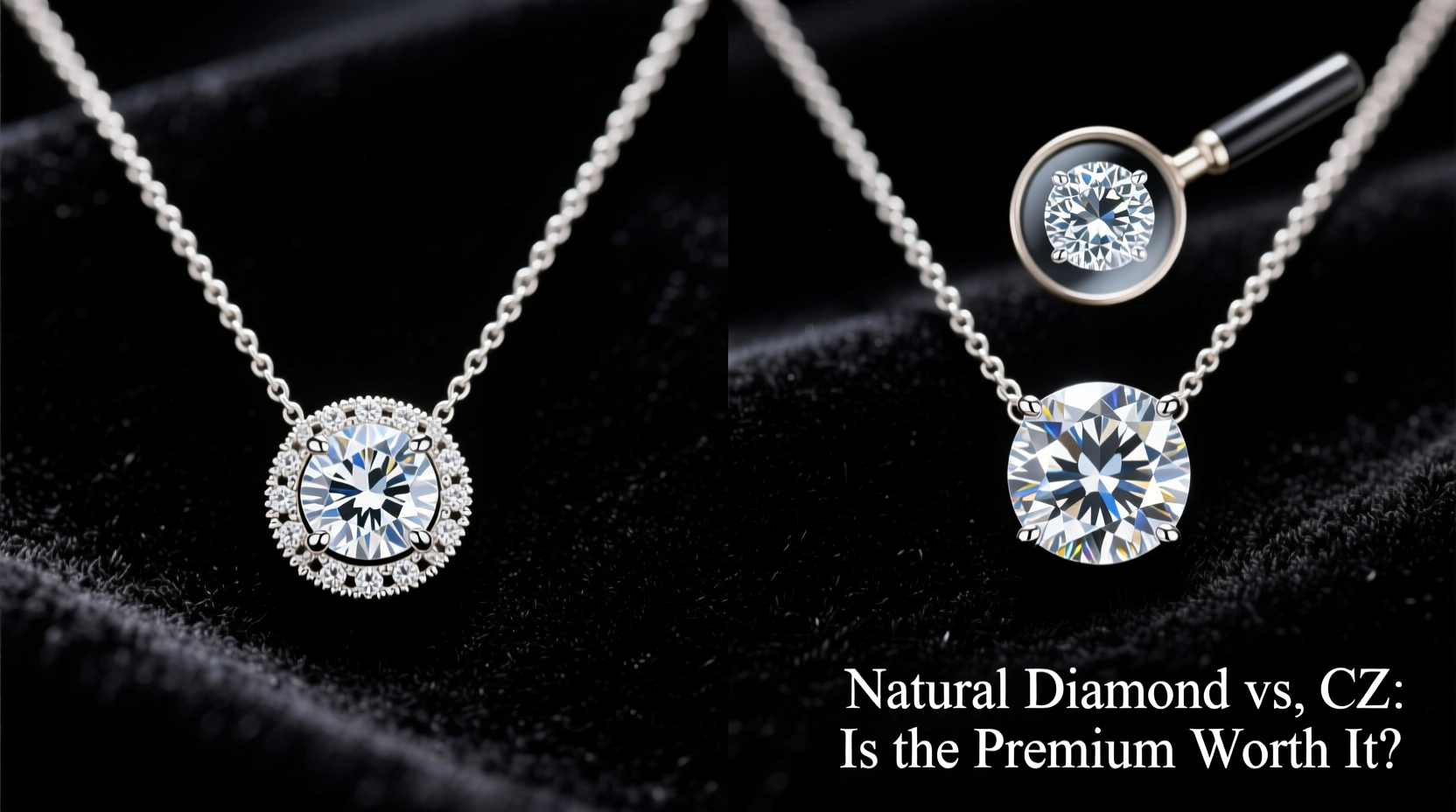
Diamond necklaces have long symbolized elegance, commitment, and timeless beauty. But as lab-grown diamonds and high-quality simulants like cubic zirconia (CZ) become more prevalent, many consumers are questioning whether natural diamonds still justify their premium price. The decision isn’t just about sparkle—it’s about value retention, emotional significance, durability, and personal priorities. Understanding the real differences helps determine if that extra cost is truly worth it.
Understanding the Basics: Natural Diamonds vs. Cubic Zirconia
Natural diamonds form deep within the Earth over billions of years under intense heat and pressure. They are composed of pure carbon arranged in a crystal lattice, making them one of the hardest substances known—ranking 10 on the Mohs scale of mineral hardness. Their rarity, geological origin, and enduring appeal contribute to their high market value.
Cubic zirconia, by contrast, is a man-made crystalline material designed to mimic the appearance of a diamond. It’s not a diamond substitute in composition but rather a visual stand-in. While CZ can look remarkably similar to the untrained eye, especially when well-cut, it lacks the physical and chemical properties that define a true diamond.
The initial cost difference is stark. A one-carat natural diamond necklace might range from $3,000 to $15,000 or more depending on cut, clarity, color, and setting, while a comparable CZ necklace rarely exceeds $200. This gap raises the central question: does the higher price translate into proportionally higher value?
Long-Term Durability and Wearability
Durability plays a critical role in jewelry decisions, especially for pieces worn daily. Natural diamonds are exceptionally resistant to scratching and chipping, which means they retain their brilliance and polish over decades with minimal maintenance. Even under regular wear, a diamond necklace will maintain its fire and luster for generations.
CZ, while hard (around 8–8.5 on the Mohs scale), is significantly softer than diamond. Over time, CZ stones develop surface scratches and micro-abrasions, especially when exposed to everyday elements like lotions, soaps, and friction from clothing. These tiny imperfections scatter light, causing the stone to appear cloudy or dull after a few years of use.
Tip: If you plan to wear your necklace daily, natural diamonds offer far better long-term resilience than CZ.Real Example: Two Necklaces, Five Years Later
Sarah purchased a modest 0.75-carat natural diamond pendant for her 25th birthday, spending $4,200. Her sister, Lisa, bought a nearly identical-looking CZ piece for $180. Both wore their necklaces regularly. After five years, Sarah’s diamond still sparkles brilliantly, needing only an annual professional cleaning. Lisa’s CZ has developed a hazy film, visible scratches around the girdle, and noticeably less brilliance. She now feels it looks “cheap” and avoids wearing it.
This scenario illustrates how material quality impacts longevity—not just functionally, but emotionally. Jewelry often carries sentimental weight; when a piece deteriorates quickly, that meaning can feel diminished.
Value Retention and Investment Potential
One of the most compelling arguments for natural diamonds is their ability to retain value. While diamonds don’t always appreciate like stocks, high-quality stones—especially those with excellent cut, color, and clarity—can hold significant resale value. Estate jewelry markets regularly trade pre-owned natural diamond pieces at 30% to 70% of original retail, depending on condition and certification.
In contrast, CZ has virtually no resale market. Because it’s mass-produced and not rare, there’s no secondary demand. Once purchased, its financial value drops to near zero. As jewelry appraiser Marcus Reed explains:
“Diamonds are evaluated based on scarcity and quality. Even secondhand, they carry intrinsic value. Cubic zirconia is decorative, not valuable in the collector or investment sense.” — Marcus Reed, GIA-Certified Gemologist
| Feature | Natural Diamond Necklace | CZ Diamond Necklace |
|---|---|---|
| Average Initial Cost | $3,000 – $20,000+ | $50 – $300 |
| Durability (Mohs Hardness) | 10 (highest) | 8–8.5 |
| Lifespan with Daily Wear | Generations | 3–7 years before noticeable wear |
| Resale Value | Moderate to high (certified stones) | Negligible |
| Brilliance Over Time | Maintained with care | Deteriorates due to scratching |
| Eco & Ethical Sourcing Options | Available (lab-grown, recycled, conflict-free) | Always ethical (synthetic) |
Emotional and Symbolic Value
Jewelry often transcends practicality. A natural diamond necklace may represent a milestone—engagement, anniversary, inheritance, or self-purchase achievement. That symbolic weight is deeply personal. For many, knowing a stone formed over eons and survived geological upheaval adds to its allure. It becomes more than an accessory; it’s a legacy object.
CZ, while beautiful and accessible, doesn’t carry the same narrative depth for most people. However, this doesn’t diminish its worth entirely. For fashion-focused buyers who enjoy rotating styles, CZ offers affordability and versatility without emotional compromise. It’s ideal for statement pieces meant to be worn occasionally or updated frequently.
Tip: Choose natural diamonds for heirloom pieces and CZ for trendy, seasonal jewelry.How to Decide What’s Right for You: A Step-by-Step Guide
Choosing between natural diamond and CZ shouldn’t be driven by price alone. Consider your lifestyle, values, and long-term goals with the piece.
- Define the purpose: Is this a gift, an heirloom, a fashion accessory, or a symbol of commitment? Purpose shapes material importance.
- Assess your budget realistically: Can you afford a natural diamond without financial strain? If not, CZ is a responsible alternative.
- Consider frequency of wear: Daily wear demands durability. Opt for natural diamond if worn often.
- Evaluate resale or inheritance plans: Will you pass it down? Natural diamonds are better suited for generational transfer.
- Research sourcing ethics: Not all natural diamonds are created equal. Look for GIA-certified stones, recycled metals, or lab-grown options if ethics are a priority.
- Try both in person: Visit a jeweler to compare sparkle, weight, and feel. CZ is lighter and may lack the “fire” of a well-cut diamond.
Frequently Asked Questions
Can people tell the difference between a natural diamond and CZ?
To the untrained eye, high-quality CZ can look very similar, especially in smaller sizes. However, under magnification or bright light, CZ tends to show more colored flashes (dispersion) and may appear glassy. Experts can easily identify CZ due to its lower thermal conductivity—a diamond tester will distinguish them instantly.
Are lab-grown diamonds a better alternative to CZ?
Yes. Lab-grown diamonds are chemically, physically, and optically identical to natural diamonds—just created in weeks instead of millennia. They cost 30–40% less than mined diamonds and offer the same durability and brilliance. Unlike CZ, they also retain some resale value and are graded using the same standards (cut, color, clarity, carat).
Does insurance cover CZ jewelry?
Most insurers will cover CZ pieces, but it’s often not cost-effective. Premiums may exceed the replacement value. Natural diamond necklaces, especially those valued over $1,000, are commonly insured for loss, theft, or damage at a reasonable rate.
Final Thoughts: Worth the Extra Cost?
The answer depends on what you value. If you prioritize lasting beauty, emotional significance, durability, and potential legacy, a natural diamond necklace is absolutely worth the extra cost. It’s an investment in quality and memory—one that can endure for decades with proper care.
However, if your goal is affordable elegance, variety, or low-risk accessorizing, CZ remains a smart, stylish choice. It democratizes luxury, allowing more people to enjoy the look of diamonds without financial burden.
The modern jewelry landscape offers room for both. You don’t have to choose one forever. Many savvy buyers own both: a natural diamond for milestones and CZ for everyday flair.
💬 What kind of diamond necklace fits your life? Whether you lean toward tradition or practicality, your choice should reflect your values. Share your thoughts or experiences in the comments—your insight could help others make a confident decision.








