
As 5G networks expand into homes and neighborhoods, a wave of concern has followed. Headlines questioning the safety of 5G technology have fueled anxiety about potential health risks, especially regarding prolonged exposure to radiofrequency (RF) radiation. While skepticism is natural with emerging technologies, it’s essential to separate speculation from science. This article examines the real-world implications of having 5G near or inside your home, using data from international health organizations, peer-reviewed research, and engineering principles to provide clarity.
Understanding What 5G Actually Is
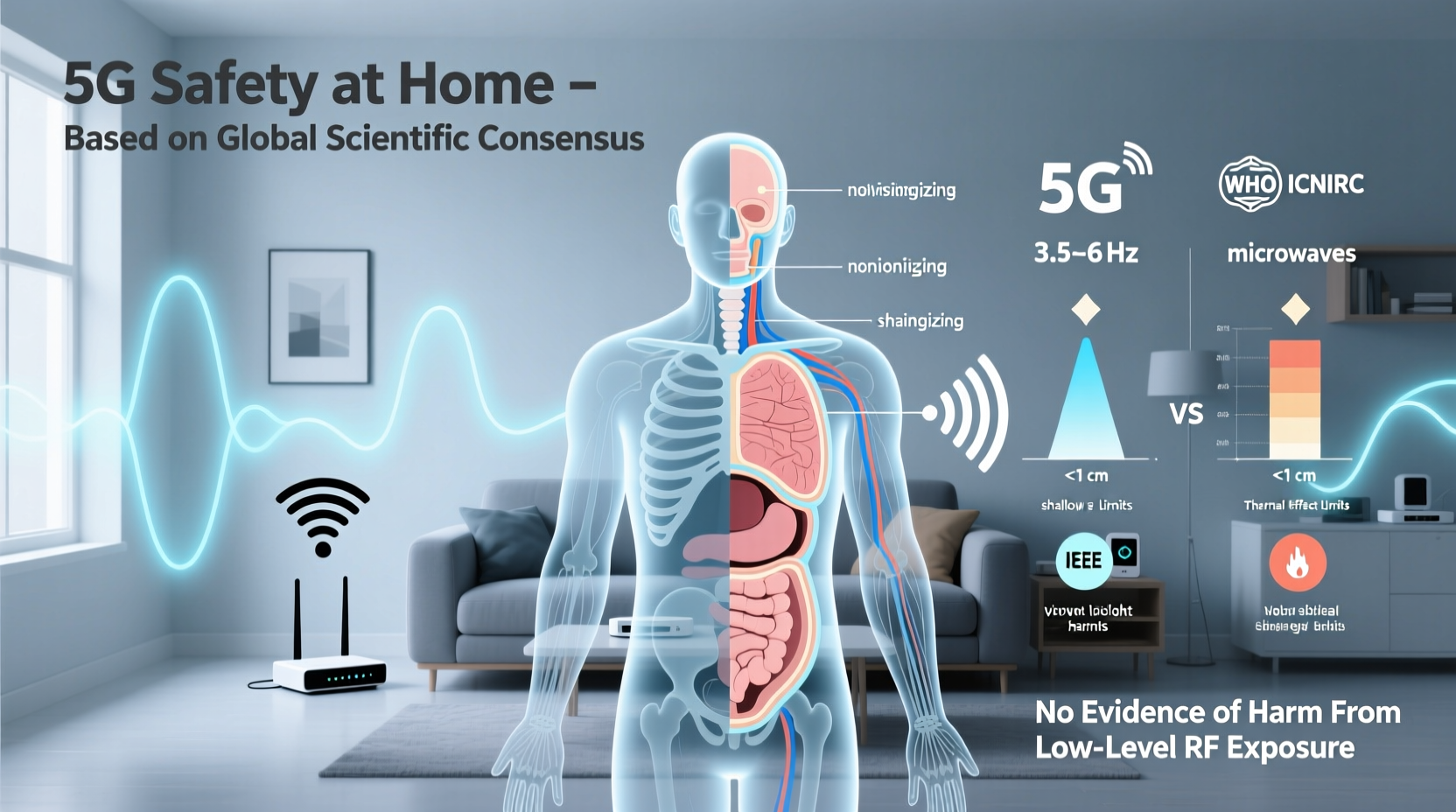
5G stands for fifth-generation wireless technology. It represents a significant leap in mobile network speed, latency, and capacity compared to its predecessors (4G/LTE). Unlike earlier generations, 5G operates across three frequency bands:
- Low-band (below 1 GHz): Offers wide coverage and good wall penetration but speeds only slightly better than 4G.
- Mid-band (1–6 GHz): Balances speed and coverage, forming the backbone of most urban 5G deployments.
- High-band or mmWave (24–47 GHz): Delivers ultra-fast speeds but has limited range and poor penetration through walls and glass.
Most home 5G services—especially fixed wireless internet—use low- or mid-band frequencies. The high-frequency mmWave signals are typically deployed in dense city centers and stadiums, not residential areas, due to their short reach and inability to penetrate building materials effectively.
Tip: If you're concerned about signal strength or radiation exposure, know that higher frequency doesn’t mean more danger—it often means weaker indoor penetration and lower actual exposure.How 5G Exposure Compares to Everyday Sources
All wireless communication relies on electromagnetic fields (EMFs), which exist on a spectrum ranging from extremely low-frequency waves (like power lines) to high-energy ionizing radiation (like X-rays and gamma rays). 5G falls within the non-ionizing part of this spectrum, meaning it lacks sufficient energy to break chemical bonds or damage DNA directly—a critical distinction.
To put exposure levels into perspective, consider typical RF sources found in a household:
| Source | Average Power Density (μW/cm²) | Distance from Body |
|---|---|---|
| Wi-Fi Router (2.4 GHz) | 10–50 | 1–3 meters |
| Smartphone (during call) | 50–200 | 0–2 cm |
| 5G Small Cell (outdoor, 30m away) | 0.1–2 | 30+ meters |
| Microwave Oven (leakage, front surface) | 500–1000 | 0–50 cm |
| Natural Background Radiation (sunlight UV component) | N/A – Ionizing | Direct exposure |
Note that even standing near a microwave oven exposes you to significantly more RF energy than being near a 5G antenna. Moreover, regulatory limits set by bodies like the FCC and ICNIRP include large safety margins—often 50 times below levels where any biological effect begins to appear.
“We have been monitoring scientific literature for decades. To date, there is no confirmed evidence that exposure to low-level electromagnetic fields from wireless networks causes adverse health effects.” — Dr. Sarah Loughran, Bioelectromagnetics Researcher, Australian Centre for Electromagnetic Bioeffects Research
Evaluating Health Claims: What Does Science Say?
Fears about 5G often stem from assumptions that increased bandwidth or new frequencies must equate to greater risk. However, scientific consensus, based on thousands of studies over the past 30 years, consistently shows that non-ionizing radiation at regulated levels does not pose a public health threat.
Cancer Risk and Long-Term Studies
The World Health Organization’s International Agency for Research on Cancer (IARC) classified RF radiation as “possibly carcinogenic to humans” (Group 2B) in 2011. This classification was primarily based on limited evidence linking heavy cell phone use to glioma, a type of brain tumor. Importantly, Group 2B also includes substances like pickled vegetables and aloe vera extract—indicating a low level of certainty, not proven risk.
Subsequent large-scale studies have failed to confirm this link. For example:
- The UK Million Women Study (2022) found no association between mobile phone use and brain tumors.
- The COSMOS cohort study, tracking over 250,000 users across Europe since 2010, has shown no increased incidence of cancer related to RF exposure after more than a decade of follow-up.
Additionally, 5G’s infrastructure reduces individual device emissions. Because 5G allows faster data transfer and lower latency, phones spend less time transmitting signals, thereby reducing overall user exposure.
Thermal vs. Non-Thermal Effects
Regulatory standards are designed to prevent thermal effects—the heating of tissue—which only occur at very high exposure levels, far beyond what 5G emits. Some critics argue about “non-thermal” biological effects, such as oxidative stress or changes in cell signaling. While isolated lab studies report such findings, they often involve exposure conditions not reflective of real-world scenarios (e.g., continuous maximum-power transmission close to cells).
Reputable reviews, including those by the European Commission’s Scientific Committee on Health, Environmental and Emerging Risks (SCHEER), conclude that current evidence does not support harmful non-thermal effects below international limits.
Addressing Common Misconceptions
Misinformation spreads quickly when complex science meets public fear. Below are several myths frequently associated with 5G, clarified with factual context.
Tip: When evaluating claims about 5G, check whether the source cites peer-reviewed studies or relies on anecdotal reports and fear-based narratives.Myth: 5G Uses “Millimeter Waves” That Are Dangerous
While mmWave is part of the 5G standard, it's rarely used in residential settings. Even when deployed, these signals cannot penetrate skin deeply—most energy is absorbed within the top 1–2 millimeters. This shallow absorption makes systemic harm biologically implausible.
Myth: 5G Caused or Spread COVID-19
This claim has been thoroughly debunked. Viruses cannot travel on radio waves, and outbreaks occurred widely in regions without 5G infrastructure. The WHO and numerous scientific bodies have dismissed this idea as baseless.
Myth: More Antennas Mean More Radiation
In reality, more antennas can mean less exposure. 5G uses small cells placed closer together, allowing devices to communicate at lower power. In contrast, distant 4G towers require phones to emit stronger signals, increasing personal exposure.
Practical Steps for Concerned Households
If you’re still uneasy about RF exposure—even in light of scientific reassurance—you can take reasonable, non-disruptive steps to minimize it without rejecting modern connectivity.
📋 **Checklist: Reducing RF Exposure at Home**- Use wired connections where possible: Ethernet cables eliminate Wi-Fi exposure entirely for desktops, smart TVs, and gaming consoles.
- Enable airplane mode at night: Turn off wireless functions on phones and tablets when not needed, especially in bedrooms.
- Keep routers away from desks and beds: Place Wi-Fi equipment in central, less-frequented areas like hallways or utility rooms.
- Limit children’s screen time: Encourages healthy habits and naturally reduces cumulative exposure.
- Choose low-emission devices: Look for phones and gadgets with lower Specific Absorption Rate (SAR) values.
Real Example: A Family’s Balanced Approach
The Thompson family lives in a suburban neighborhood recently upgraded to 5G. Initially worried after reading alarming social media posts, they consulted their local university’s environmental health department. After reviewing official data and measuring RF levels in their home (which were 0.3% of the FCC limit), they decided against removing their Wi-Fi but made small adjustments: moving the router from the living room couch area to a closet, using speakerphone instead of holding phones to the ear, and setting digital curfews for their kids. These actions gave them peace of mind without sacrificing convenience.
Frequently Asked Questions
Can 5G affect sleep or cause headaches?
Some individuals report symptoms they attribute to EMF exposure, a condition sometimes referred to as “electromagnetic hypersensitivity” (EHS). However, double-blind studies show people cannot reliably detect RF fields, and symptoms don’t correlate with actual exposure. The WHO recommends addressing such cases through medical evaluation, as symptoms may stem from stress, lighting, or other environmental factors.
Are babies and children more vulnerable to 5G?
Children do absorb slightly more RF energy in certain tissues (like brain marrow) due to thinner skulls and smaller heads. However, exposure levels remain far below thresholds for harm. Precautionary measures like limiting tablet use or encouraging hands-free calling are reasonable but not urgent. Major pediatric associations, including the American Academy of Pediatrics, support current safety standards while advocating continued research.
Should I install a 5G-blocking shield or paint?
Products claiming to block 5G radiation are largely ineffective or counterproductive. Metallic shielding can interfere with signals, forcing your phone or router to boost power to compensate—potentially increasing localized exposure. They also block emergency calls and GPS. Experts advise against them unless medically necessary and professionally installed.
Conclusion: Making Informed Decisions Without Fear
The rollout of 5G brings undeniable benefits: faster downloads, improved telehealth access, smarter homes, and enhanced remote work capabilities. While vigilance toward new technologies is healthy, fear should not override facts. Over decades, extensive research has found no reproducible evidence that 5G or similar wireless systems cause harm when operating within established safety limits.
Regulatory agencies continue to monitor the science, and transparency from telecom providers is improving. Rather than retreating from connectivity, focus on practical, balanced choices—like optimizing device placement and managing screen time—that enhance well-being without feeding into unfounded fears.
💬 Have questions about your home’s 5G setup? Share your thoughts or experiences in the comments. Let’s build a conversation grounded in science, not speculation.








