When choosing a ring—especially one meant to last a lifetime—design details matter. Two popular aesthetic techniques, inlaying and engraving, offer distinct visual appeal and structural characteristics. While both can elevate a ring’s elegance, they differ significantly in longevity, craftsmanship, and daily wear resilience. Understanding these differences helps you make an informed decision based on lifestyle, taste, and long-term value.
What Are Inlaid and Engraved Rings?
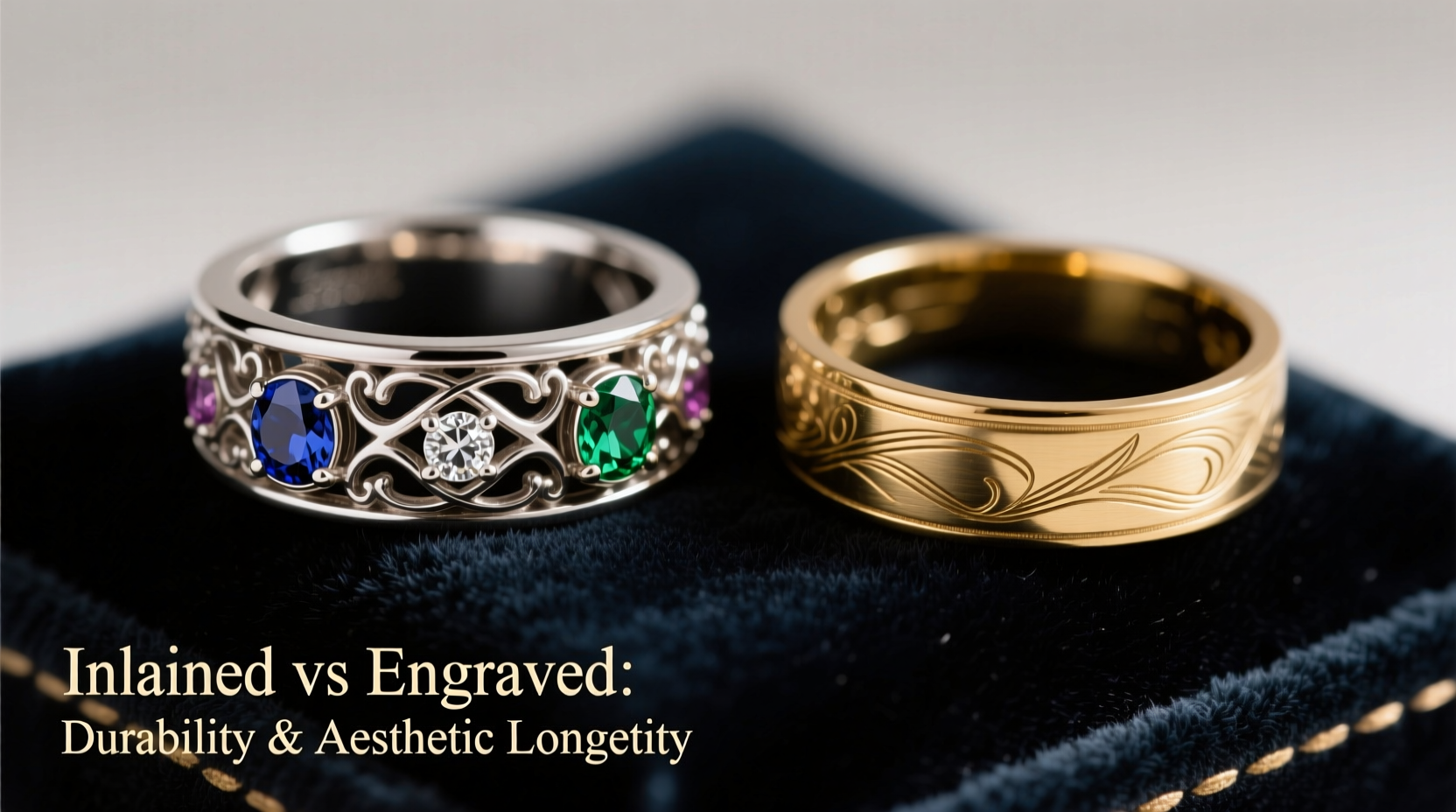
Inlaid and engraved rings achieve decorative effects through fundamentally different methods. Each technique involves skilled metalwork but results in contrasting textures, depths, and material compositions.
Inlaid rings feature materials embedded into grooves cut into the band’s surface. These inserts can be wood, carbon fiber, gemstones, or alternative metals like black ceramic or tungsten. The inlay sits flush with the ring’s surface, creating a smooth, seamless transition between materials.
Engraved rings, by contrast, involve carving designs directly into the metal. Whether it's a name, date, geometric pattern, or intricate filigree, engraving removes material to create recessed artwork. This method preserves a single-material construction but introduces texture and depth.
Tip: If you work with your hands regularly, avoid high-relief engravings—they can catch on fabric and wear down faster.Durability: Which Style Lasts Longer?
Durability depends on how each technique interacts with daily stressors like friction, impact, and exposure to chemicals. Let’s break it down.
Inlaid rings are strong but vulnerable at the interface between materials. Over time, especially with softer inlays like wood or resin, micro-gaps can form due to differential expansion from temperature or moisture. High-impact activities may cause chipping or delamination, particularly if the inlay is brittle. However, modern inlay techniques use durable bonding agents and protective coatings (like resin sealants) that extend lifespan significantly.
Engraved rings maintain structural integrity because they’re carved from a single piece of metal. There’s no secondary material to degrade. However, the engraved lines themselves can accumulate dirt and may gradually soften with polishing over decades. Deep engravings hold up better than shallow ones, but any recessed area will eventually show wear from repeated contact.
“Engraving is inherently more stable because it doesn’t introduce foreign materials. But precision matters—poorly executed inlays with weak adhesives fail within years.” — Daniel Reyes, Master Goldsmith & Jewelry Conservator
Aesthetic Comparison: Visual Appeal and Design Flexibility
Appearance plays a major role in personal preference, and each technique offers unique advantages.
- Inlaid rings provide bold contrast and color variation. A zirconium inlay on platinum or a dark meteorite strip in gold creates striking visual interest. They’re ideal for those who want a distinctive, modern look.
- Engraved rings exude tradition and subtlety. Their charm lies in fine detail—think Celtic knots, family crests, or personalized messages hidden along the band. Light plays across the grooves, adding dimension without color.
In terms of customization, engraving allows for highly detailed, intricate patterns limited only by tool precision. Inlay offers broader artistic expression through material combinations but requires more planning due to compatibility constraints (e.g., thermal expansion rates).
Comparative Table: Inlaid vs Engraved Rings
| Feature | Inlaid Rings | Engraved Rings |
|---|---|---|
| Construction | Multimaterial: base metal + inlay | Single-material: carved from one metal |
| Lifespan (with care) | 15–30 years (depends on inlay type) | 50+ years |
| Scratch Resistance | Varies; mismatched hardness causes uneven wear | Uniform; consistent with base metal |
| Maintenance Needs | Moderate to high (sealing, cleaning joints) | Low (occasional polish) |
| Design Options | Broad (color, texture, mixed media) | Fine detail, traditional motifs |
| Repairability | Complex; may require re-inlaying | Simple; can be re-engraved |
Maintenance and Care Tips
To maximize longevity, both styles require specific care routines tailored to their construction.
- For inlaid rings: Avoid prolonged exposure to water, especially chlorinated or saltwater. Remove during swimming, cleaning, or heavy labor.
- Clean gently with a soft cloth and mild soap. Never use ultrasonic cleaners unless confirmed safe for the inlay material.
- Have the inlay inspected annually by a jeweler. Re-sealing may be needed every 3–5 years depending on usage.
- For engraved rings: Use a soft toothbrush and lukewarm soapy water to clean debris from grooves.
- Limit professional polishing—over-polishing can erase fine engravings after multiple sessions.
- Consider laser re-engraving if details fade significantly over decades.
Real-World Example: Choosing for a Wedding Band
Take Mark, a mechanical engineer who wanted a wedding band that reflected his love for nature and innovation. He chose a titanium ring with a stabilized oak inlay—a meaningful blend of organic warmth and industrial strength. After five years of daily wear, including frequent tool use, the inlay remained intact thanks to a protective epoxy coating. However, minor edge wear appeared where the wood met the metal. A jeweler resealed and buffed the edges, restoring its finish. His partner opted for a deep floral engraving on a palladium band, which still looks crisp after eight years with only routine cleaning.
This case illustrates how lifestyle impacts performance: Mark’s ring required modest upkeep, while his partner’s needed almost none. Both remain cherished, but their maintenance paths diverged based on construction.
Expert Recommendations: What to Consider Before Buying
Jewelers emphasize several key factors when advising clients on inlaid versus engraved options:
- Lifestyle: Manual workers or active individuals should lean toward engraved or low-profile inlays.
- Climate: Humid or extreme temperature environments challenge wood and resin inlays.
- Heirloom potential: Engraved rings are easier to pass down intact. Inlaid rings may need restoration after generations.
- Budget: High-quality inlays often cost more due to material sourcing and labor intensity.
“An engraved ring from 1920 can still bear legible script today. An inlaid ring from the same era? Often missing its original insert.” — Clara Nguyen, Antique Jewelry Appraiser
FAQ
Can inlaid rings be resized?
Resizing is difficult and risky. Expanding or compressing the band can crack or dislodge the inlay. Most jewelers recommend selecting the correct size upfront or replacing the ring entirely.
Do engraved rings lose their design over time?
Yes, but slowly. Shallow engravings may fade after decades of polishing. Deep engravings retain definition much longer. Many people choose to have them refreshed professionally when needed.
Are there hybrid styles combining inlay and engraving?
Yes. Some designers incorporate both—for example, engraving around an inlaid centerpiece. These require expert craftsmanship and higher maintenance but offer unparalleled uniqueness.
Final Thoughts: Balancing Beauty and Longevity
The choice between inlaid and engraved rings ultimately balances personal style against practical endurance. Inlaid rings dazzle with color and texture, offering a contemporary flair that stands out. Engraved rings embody timelessness, relying on craftsmanship and subtlety to convey meaning.
If longevity is your top priority, engraving wins—its single-material construction withstands decades of wear with minimal intervention. But if visual impact and individuality matter most, a well-made inlaid ring can still deliver lasting satisfaction with proper care.
Regardless of style, invest in quality craftsmanship. A poorly executed engraving lacks clarity; a weak inlay bond will fail prematurely. Consult experienced jewelers, ask about materials and warranties, and consider how your daily life will interact with your ring.
💬 Which style speaks to you—bold inlay or classic engraving? Share your thoughts or experiences with ring choices below. Your insight could help others make a confident, lasting decision.