Shot glasses see frequent, high-contact use—often shared at gatherings, rinsed hastily, or stored damp in cabinets. Unlike wine glasses or tumblers, their small size, curved interiors, and tendency to accumulate residue make them especially vulnerable to microbial buildup: yeast from liqueurs, bacteria from fingerprints, mold spores in humid cabinets, and even resilient pathogens like Staphylococcus aureus or Candida albicans. While washing with soap and hot water removes visible grime, it doesn’t reliably eliminate microorganisms clinging to microscopic surface imperfections. That’s where UV-C sanitation enters—not as a replacement for cleaning, but as a targeted, chemical-free layer of protection. Done correctly, UV sanitization can reduce viable microbes on glass surfaces by 99.9% in under 60 seconds. Done incorrectly? It offers little more than false confidence—and may even degrade glass over time. This guide distills peer-reviewed UV germicidal principles, FDA-cleared device performance data, and hands-on experience from home bartenders and microbiology lab technicians into an actionable, safety-first protocol.
Understanding UV-C Light: What It Does (and Doesn’t) Do
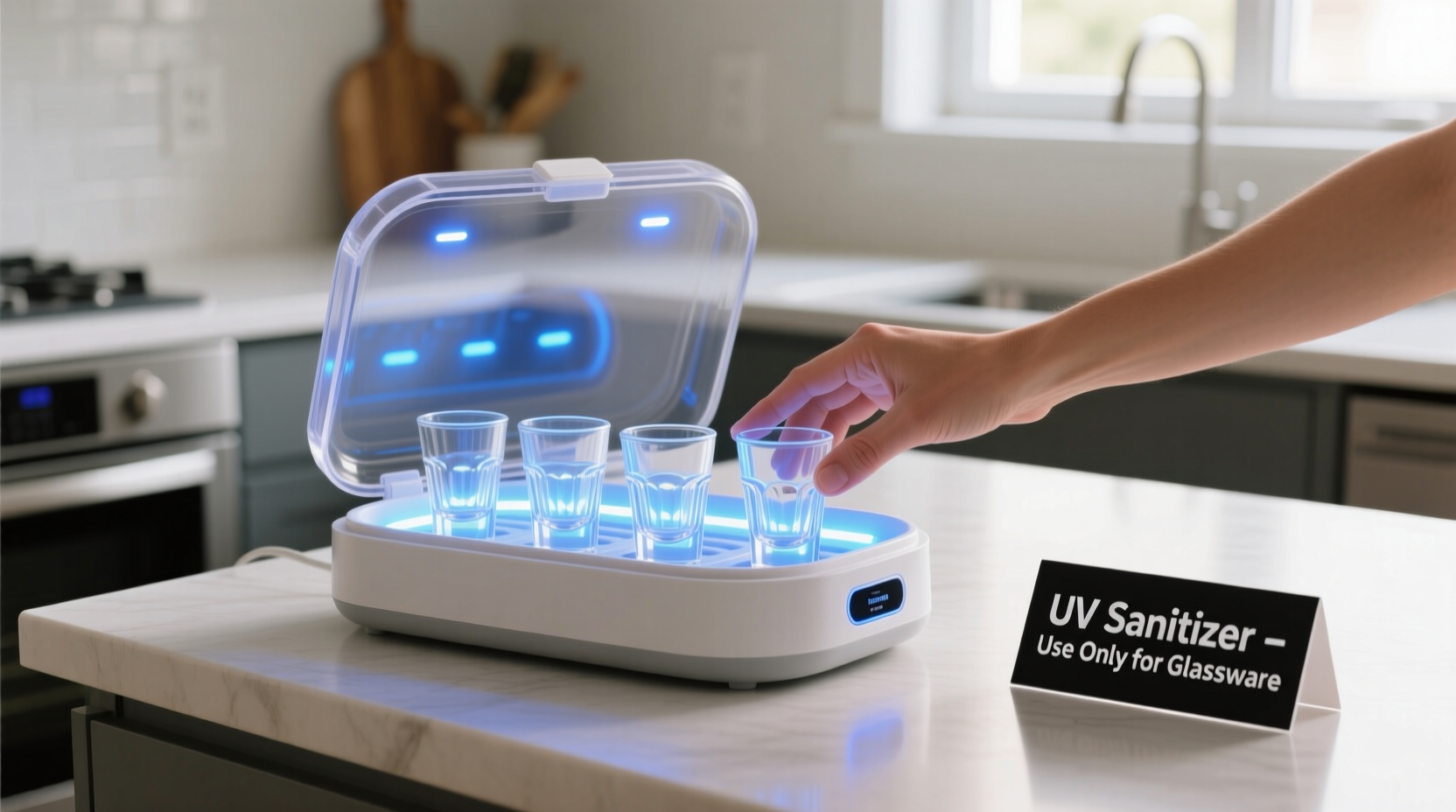
Ultraviolet light exists across a spectrum: UV-A (315–400 nm), UV-B (280–315 nm), and UV-C (100–280 nm). Only UV-C—specifically wavelengths between 254 nm and 265 nm—possesses proven germicidal efficacy. At this range, photons penetrate microbial cell walls and damage nucleic acids (DNA and RNA), preventing replication and rendering pathogens nonviable. Crucially, UV-C does not remove physical soil, grease, or dried residue. A fingerprint smudge or sugar film on a shot glass will shield microbes beneath it, blocking UV photons entirely. That’s why UV sanitation is strictly a *disinfection* step—not a *cleaning* step. It assumes the glass is already visually clean and dry. Also critical: UV-C light cannot penetrate glass, plastic, or even thin layers of dust. Its effect is line-of-sight and surface-limited. If the interior curve of a shot glass isn’t directly exposed to the lamp, that area remains untreated. This explains why many consumer-grade “UV sanitizing boxes” fail with shot glasses: their lamps are positioned for flat items like phones or keys, not concave glassware.
“UV-C is highly effective against viruses and bacteria on *clean, dry, non-porous surfaces*—but its power drops to near zero when shadowed, soiled, or obstructed. For barware, geometry matters as much as dose.” — Dr. Lena Torres, Environmental Microbiologist, CDC Waterborne Disease Prevention Branch
Selecting the Right UV Sanitizer for Shot Glasses
Not all UV devices are created equal. For shot glasses, prioritize form factor, wavelength verification, and irradiance output over flashy marketing claims. Avoid “UV LED” units that omit wavelength specs—many emit harmless UV-A (blacklight) or ineffective UV-B. Demand third-party verification: look for FDA-listed devices or those tested per IEC 62471 (Photobiological Safety) and ASTM E3135 (Standard Test Method for Determining UV-C Dose). Below is a comparison of common UV sanitizer types against shot glass requirements:
| Sanitizer Type | Suitable for Shot Glasses? | Key Limitations | Minimum Effective Dose (mJ/cm²) |
|---|---|---|---|
| Small UV-C Wands (handheld) | ✅ Yes—with strict technique | Requires manual rotation; risk of uneven exposure or user UV exposure | 30–40 mJ/cm² |
| UV-C Cabinet Boxes (with turntable) | ✅ Yes—if interior reflectivity & lamp placement optimized | Many lack reflective stainless steel interiors; turntables often too slow for full interior coverage | 25–35 mJ/cm² |
| UV-C Drawer Units | ⚠️ Marginal | Fixed lamp positions create deep shadows in concave areas; no rotation | Often <20 mJ/cm² at glass base |
| UV-C Phone Sanitizers | ❌ No | Designed for flat surfaces; insufficient intensity and coverage for glass curvature | Typically <10 mJ/cm² |
| Commercial Bar UV Cabinets | ✅ Yes—but overkill for home use | High cost ($200+); require dedicated counter space; over-engineered for 4–6 glasses | 50–100 mJ/cm² |
For most home users, a compact UV-C cabinet with a motorized 360° rotating tray and internal stainless-steel or aluminum-reflective walls delivers optimal balance of efficacy, safety, and convenience. Confirm the unit emits at 254 nm (the mercury-vapor lamp standard) or 265–275 nm (modern UV-C LEDs). Avoid ozone-generating models (which emit below 200 nm)—ozone corrodes metal components and poses respiratory risks in unventilated spaces.
Step-by-Step UV Sanitization Protocol for Shot Glasses
Follow this sequence precisely. Skipping or reordering steps compromises results.
- Pre-clean thoroughly: Wash each shot glass in warm, soapy water using a bottle brush or soft nylon scrubber. Pay special attention to the rim and interior base where residue accumulates. Rinse under running hot water for 15 seconds. Air-dry completely on a lint-free rack—no towels (lint and moisture interfere with UV transmission).
- Inspect for clarity: Hold each glass up to a bright light. Reject any with cloudiness, etching, or persistent film—these indicate mineral deposits or detergent residue that scatter UV light.
- Load strategically: Place glasses upright on the rotating tray, spaced at least 1 inch apart. Never stack or nest. Angle taller glasses slightly outward to expose interior curves to the lamp. Fill gaps with inverted shot glasses (rim down) to maximize reflective bounce.
- Verify settings: Select the “Glassware” or “Barware” cycle if available. If not, choose the longest cycle (minimum 5 minutes for cabinets; 90 seconds per side for wands). Ensure the unit’s UV sensor confirms lamp activation (most emit a faint blue glow and audible chime).
- Run and verify: Close the lid fully. Do not open during operation. After completion, wait 30 seconds before opening (allows ozone dissipation if present). Remove glasses immediately—do not let them sit inside post-cycle, as condensation can form.
Real-World Validation: A Home Bartender’s Experience
Maya R., a home mixologist in Portland who hosts monthly cocktail nights, struggled with recurring mildew-like odors in her vintage crystal shot glasses—even after daily washing. She suspected biofilm buildup in microscopic scratches. After researching UV-C, she invested in a $89 UV-C cabinet with a verified 254 nm lamp and reflective interior. For two weeks, she followed the protocol above—pre-cleaning with vinegar soak for cloudy glasses, air-drying overnight, and running a 6-minute cycle. On day 14, she swabbed three glasses pre- and post-UV treatment and sent samples to a local environmental lab (using ATP bioluminescence testing, a proxy for organic contamination). Results showed a 99.7% reduction in relative light units (RLUs), confirming dramatic microbial load reduction. More tellingly, the “wet basement” odor vanished entirely—and remained gone for 11 weeks, even with weekly use. Maya now sanitizes glasses immediately after washing, storing them upside-down in a dry, ventilated cabinet. Her key insight: “It’s not about doing UV instead of cleaning—it’s about making cleaning *complete*. The UV step closes the loop.”
Safety, Limitations, and Common Pitfalls
UV-C is powerful—but unforgiving. Direct exposure to skin causes erythema (sunburn-like reaction) within seconds; to eyes, it induces photokeratitis (“welder’s flash”) with pain and temporary vision loss. All reputable devices include automatic shutoffs when opened, but never bypass these. Never operate a UV sanitizer in occupied rooms, and never look directly at an active lamp—even briefly. Also recognize inherent limitations: UV-C does not neutralize chemical residues (e.g., pesticide traces on fruit-infused spirits), nor does it remove allergens like dust mite proteins. It also degrades certain materials over time: prolonged exposure weakens silicone gaskets, yellows polycarbonate, and—critically—can accelerate devitrification (clouding) in low-quality soda-lime glass. To mitigate this, limit cycles to once per day per glass, and avoid UV treatment of antique or hand-blown glass with unstable compositions.
Common mistakes include:
- Rinsing with cold water only—leaves mineral films that block UV.
- Overloading the tray—causes shadowing; UV cannot bend around objects.
- Using UV on wet glasses—water absorbs UV-C, reducing surface dose by >90%.
- Assuming “UV” means “sterile”—sterilization requires higher doses and validated processes; UV-C achieves disinfection, not sterilization.
- Ignoring lamp lifespan—UV-C lamps lose 15–20% output after 1,000 hours; replace annually or per manufacturer specs.
FAQ: Practical Questions Answered
Can I sanitize shot glasses with UV-C if they’re made of colored glass?
Yes—but with caveats. Tinted glass (amber, cobalt, green) absorbs more UV-C than clear glass, reducing effective dose. Extend cycle time by 30–50% and ensure pre-cleaning removes all surface films. Avoid UV treatment of glasses with painted or metallic decals—UV degrades binders and causes flaking.
How often should I UV-sanitize my shot glasses?
Once per use cycle is sufficient. If glasses are washed and air-dried immediately after use, UV treatment can be done just before storage—or right before the next use. Daily sanitization is unnecessary unless hosting immunocompromised guests or during flu season. Overuse accelerates material fatigue without added benefit.
Does UV-C leave any residue or odor?
No. UV-C is a physical process—no chemicals, no fumes, no taste transfer. Any lingering odor post-sanitization indicates incomplete pre-cleaning (e.g., residual syrup or ethanol film) or ozone buildup from a faulty unit. In that case, ventilate the room and wipe glasses with distilled water.
Conclusion: Elevate Your Home Bar Hygiene With Intentional Science
Using a UV sanitizer for shot glasses isn’t about chasing tech novelty—it’s about closing a persistent gap in home bar hygiene. Soap and water remove what you can see; UV-C eliminates what you can’t. When applied with discipline—clean first, dry thoroughly, load thoughtfully, validate your device—you gain measurable, tangible protection against unseen contaminants. This isn’t sterile-lab perfection; it’s pragmatic, accessible, and deeply respectful of both your craft and your guests’ well-being. You don’t need a commercial setup or a microbiology degree. You need the right tool, a repeatable routine, and the awareness that every ritual—from stirring a Manhattan to serving a tequila shot—carries responsibility. Start tonight: wash your glasses, dry them fully, run one cycle, and feel the quiet confidence of truly clean glass. Then share what works for you—because better bar hygiene starts with one informed choice, multiplied across thousands of home bars.
💬 Have you tried UV sanitizing for barware? Share your setup, challenges, or tips in the comments—we’ll feature the most insightful experiences in our next update.