Perfume is more than a fragrance—it's a personal signature. But like any luxury product, it doesn’t last forever. Over time, even the most cherished scents can degrade, losing their complexity or turning sour. Knowing when your perfume has expired isn’t always obvious, especially since there’s rarely an expiration date printed on the bottle. Understanding the signs of spoilage, shelf life variables, and proper storage techniques ensures you get the most from every drop—and avoid applying a scent that could irritate your skin or disappoint your senses.
How Long Does Perfume Last?
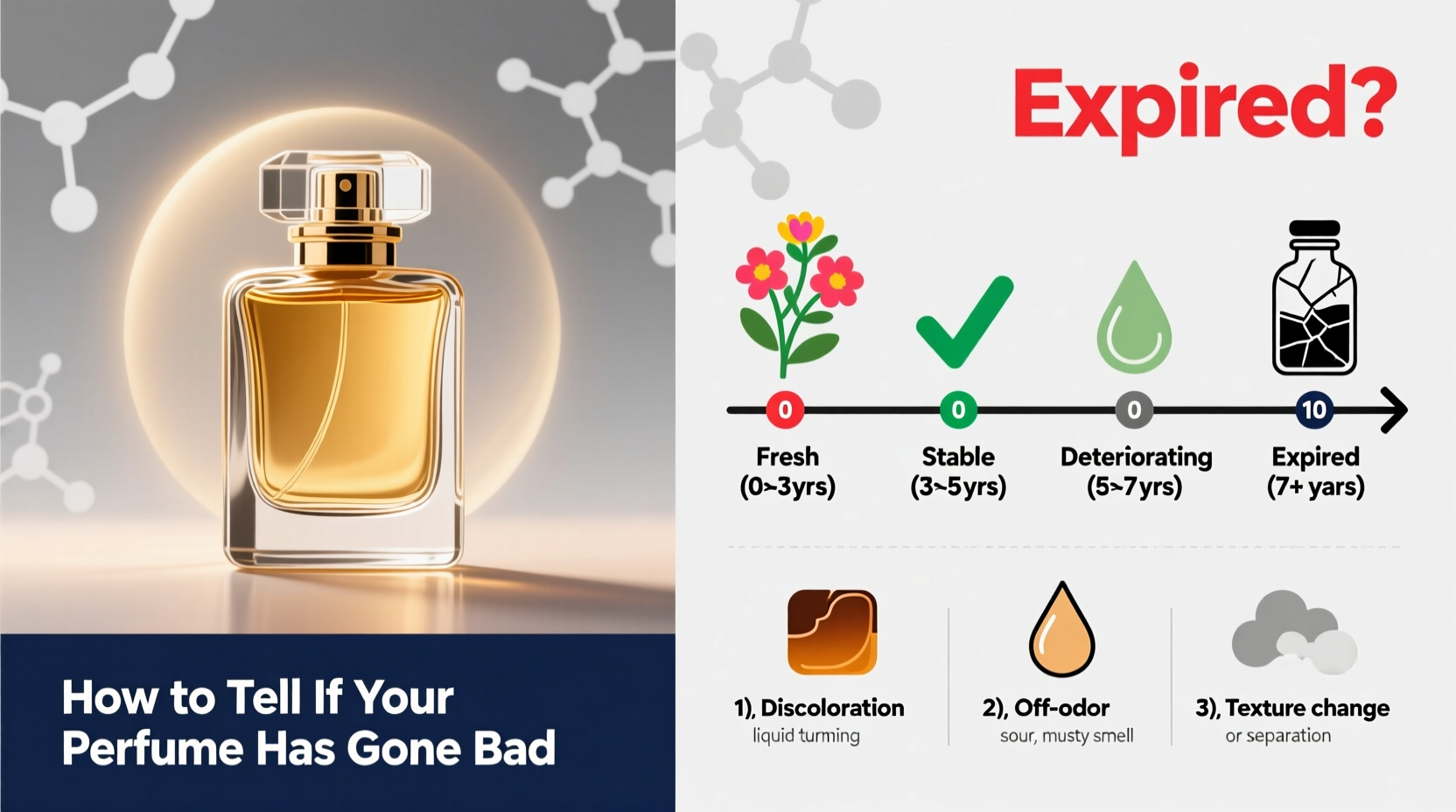
The lifespan of a perfume depends on its chemical composition, packaging, and how it’s stored. On average:
- Eau de Parfum (EDP): 3–5 years unopened, 1–3 years after opening
- Eau de Toilette (EDT): 2–4 years unopened, 1–2 years after opening
- Parfum (Extrait): 4–6 years unopened, 2–4 years after opening
- Eau de Cologne: 1–2 years unopened, 6 months to 1 year after opening
These ranges aren’t fixed. Some vintage perfumes from the early 20th century remain wearable due to ideal storage conditions. Others degrade within months under poor handling. The key factor isn’t just time—it’s exposure to environmental stressors.
Tip: Unopened bottles last significantly longer because they’re sealed from air, light, and temperature changes.Signs Your Perfume Has Gone Bad
You don’t need a chemistry degree to detect spoiled perfume. Your senses—especially smell and sight—are powerful tools. Here are the most common indicators that your fragrance has deteriorated:
1. Change in Scent Profile
The most telling sign is a shift in aroma. If your perfume smells sharp, vinegary, metallic, or overly alcoholic, oxidation has likely altered its compounds. Top notes may vanish entirely, leaving only a flat or harsh base.
2. Color Changes
Compare the current color to when you first bought it. Perfumes often darken over time, especially citrus or floral ones. A once-clear liquid turning amber or brown suggests degradation. However, some perfumes are naturally dark; check the original hue if possible.
3. Separation or Cloudiness
If the liquid appears cloudy or you see visible separation (oil droplets floating), the ingredients have destabilized. Gently swirl the bottle—if it doesn’t recombine smoothly, the emulsion is broken.
4. Weak or No Sillage
A perfume that used to linger now fades within minutes? Its volatile top and middle notes may have evaporated or degraded, leaving behind an ineffective residue.
5. Skin Irritation
Expired perfume can cause redness, itching, or burning upon application. This occurs when aldehydes and alcohols break down into irritants. Discontinue use immediately if this happens.
“Fragrance is a delicate balance of volatile molecules. Once oxidation sets in, the scent pyramid collapses.” — Dr. Lena Moretti, Cosmetic Chemist & Perfume Stability Researcher
What Causes Perfume to Spoil?
Several factors accelerate perfume degradation. Awareness helps prevent premature spoilage.
Light Exposure
UV rays from sunlight or artificial lighting break down aromatic compounds. Clear glass bottles are especially vulnerable. Amber or opaque bottles offer better protection.
Heat and Temperature Fluctuations
Storing perfume in a hot bathroom or near a radiator speeds up chemical reactions. Ideal storage is between 12°C and 20°C (54°F–68°F). Avoid places with frequent temperature swings.
Air and Oxygen
Each time you spray, oxygen enters the bottle. Over time, this causes oxidation, altering scent molecules. Larger bottles with infrequent use are at higher risk.
Humidity
Bathrooms are among the worst places to store perfume. High humidity promotes bacterial growth and label deterioration, which can indirectly affect the seal and contents.
Poor Sealing or Damaged Atomizers
A cracked cap or malfunctioning sprayer allows constant air exposure. Inspect your bottle regularly for leaks or loose fittings.
Tip: Keep the original box. It shields the bottle from light and provides a buffer against temperature changes.Step-by-Step Guide: How to Check Your Perfume’s Condition
Follow this practical timeline to assess whether your perfume is still viable:
- Step 1: Visual Inspection (Day 1)
Hold the bottle against a white background under natural light. Look for cloudiness, particles, or significant darkening compared to its original state. - Step 2: Smell Test (Day 1)
Spray a small amount on a blotter or your wrist. Wait 30 seconds. Does the scent unfold in layers? Or does it smell one-dimensional, sour, or harsh? - Step 3: Performance Test (Over 2 Hours)
Apply to clean skin and monitor longevity and sillage. A good perfume should evolve through top, heart, and base notes over several hours. - Step 4: Patch Test (If Concerned)
Apply a tiny amount to the inside of your elbow. Wait 24 hours. Any redness or irritation indicates the fragrance may be compromised. - Step 5: Decision (After Evaluation)
If two or more warning signs are present, consider retiring the bottle. Don’t mix old and new perfumes to “refresh” them—they won’t blend properly.
Do’s and Don’ts of Perfume Storage
| Do’s | Don’ts |
|---|---|
| Store in a cool, dark place like a drawer or closet | Leave in direct sunlight or near windows |
| Keep in original box to block light and stabilize temperature | Store in the bathroom due to humidity and heat |
| Keep bottles upright to prevent leakage and seal damage | Lay bottles on their side for extended periods |
| Use smaller bottles for travel to limit air exposure in main bottle | Open multiple bottles simultaneously and alternate frequently |
| Rotate your collection—use older bottles first | Forget about niche or gift bottles tucked away for years |
Real Example: The Forgotten Gift
Sophie received a limited-edition floral oriental perfume as a birthday gift. Excited, she displayed it on her bathroom vanity. For six months, she used it occasionally, but mostly admired it. After moving apartments, she packed it loosely in a suitcase exposed to summer heat. When she rediscovered it a year later, the scent was sharp and medicinal. The once-lush jasmine note had vanished, replaced by a bitter almond odor. Despite loving the original fragrance, she had to discard it. A simple change—storing it in a drawer instead of the steamy bathroom and keeping it boxed—could have preserved it.
Maximizing Shelf Life: Practical Tips
Extend your perfume’s life with these proven strategies:
- Buy in Moderation: Limited editions are tempting, but only purchase what you’ll use within 1–2 years unless you plan to store properly.
- Use Travel Sprays: Decant small amounts into sterile, opaque containers for daily use. Keep the main bottle sealed.
- Avoid Pumping the Sprayer: This forces air into the bottle. Prime only when necessary.
- Label Your Collection: Use a discreet sticker to mark purchase and opening dates. Rotate based on age.
- Refrigerate Rarely Used Perfumes: For collectors, storing vintage or backup bottles in a dedicated fridge (not kitchen) slows aging. Bring to room temperature before use.
Frequently Asked Questions
Can I still use a perfume that has changed color but smells fine?
If the scent remains balanced and pleasant, mild darkening—especially in citrus-based perfumes—is normal and not harmful. However, monitor closely. Color change often precedes scent degradation.
Does alcohol-free perfume expire faster?
Yes. Alcohol acts as a preservative and solvent. Alcohol-free or oil-based perfumes (like attars) are more prone to microbial growth and oxidation. They typically last 1–2 years and require refrigeration after opening.
Is it safe to mix old and new batches of the same perfume?
No. Mixing introduces oxygen and inconsistent concentrations, accelerating spoilage. It also alters the scent profile unpredictably. Always use one bottle at a time.
Final Thoughts: Respect the Fragrance
Perfume is both art and science—a harmony of fleeting notes that demands care. Recognizing when it’s past its prime protects your experience and your skin. With proper storage, mindful usage, and regular evaluation, your favorite scents can remain vibrant for years. Don’t let sentimentality override sensory truth. If a fragrance no longer delights, it’s time to let it go.
💬 Have a perfume that surprised you by lasting decades—or one that spoiled too soon? Share your story in the comments and help others learn from real experiences.