
High neck tops—turtlenecks, mocknecks, or cowl necks—are wardrobe staples that offer warmth, sophistication, and versatility. Yet, pairing them with jewelry can be tricky. The snug neckline often competes with necklaces for visual space, increasing the risk of tangling, discomfort, and clashing styles. Many abandon layering altogether, missing an opportunity to elevate their look. But with thoughtful selection, intentional layering, and smart maintenance habits, you can wear multiple necklaces over a high neck top seamlessly. This guide reveals proven techniques to achieve balanced, tangle-free elegance every time.
Understanding the Challenge: Why High Necks Complicate Layering
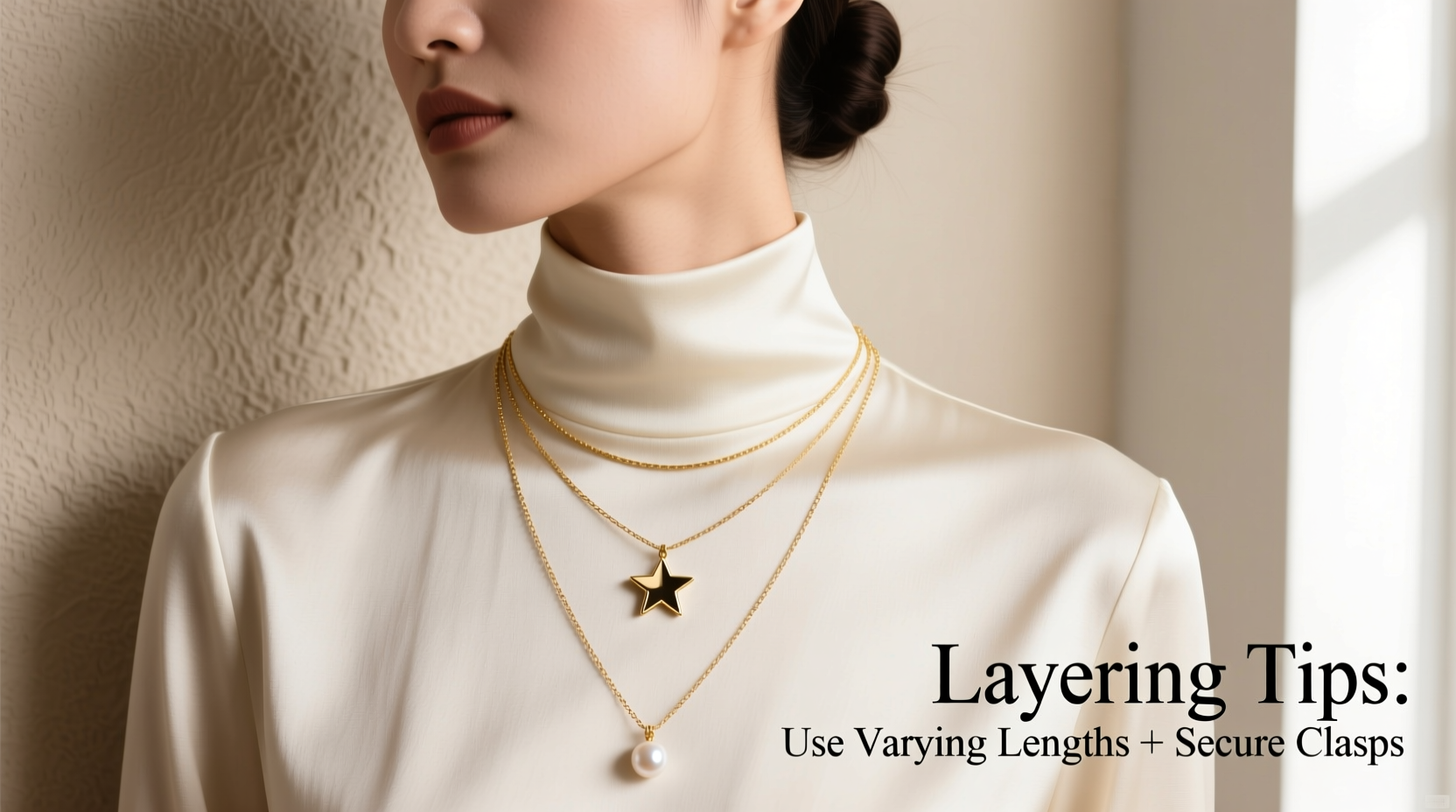
The structure of a high neck top limits the natural drape and movement of necklaces. When fabric rises above the collarbone, it crowds the area where most necklaces rest, causing chains to bunch up, twist, or catch on seams. Additionally, the lack of open skin reduces visual breathing room, making layered pieces appear cluttered rather than curated.
Tangling is not just a nuisance—it can damage delicate chains, weaken clasps, and shorten the lifespan of your jewelry. Fine-link chains like cable or box styles are especially prone to knotting when compressed between fabric and skin. The issue intensifies when combining different lengths and textures without a strategic approach.
“Layering with high necklines requires precision. It’s not about avoiding jewelry—it’s about choosing the right pieces and placing them intentionally.” — Lila Monroe, Fashion Stylist & Jewelry Consultant
Choosing the Right Necklaces for Layering Over High Necks
The foundation of tangle-free layering begins with selection. Not all necklaces are suited for high neck combinations. Prioritize lightweight, flexible chains with smooth surfaces and secure closures. Avoid bulky pendants or rigid designs that press against the fabric and restrict movement.
Consider these attributes when selecting pieces:
- Chain Type: Opt for snake, figaro, or ball chains—they resist twisting better than delicate trace or rope chains.
- Length: Choose longer chains (18 inches and beyond) so they fall below the neckline and avoid fabric friction.
- Metal Weight: Lighter metals like sterling silver or gold-filled reduce strain and tangling risk.
- Closure Type: Lobster clasps are more secure than spring rings; magnetic clasps should be avoided as they can attract and knot other chains.
Step-by-Step Guide to Tangle-Free Layering
Follow this methodical process to style multiple necklaces over a high neck top safely and stylishly.
- Start with the longest chain. Put on the deepest layer first—typically 20–24 inches—so it rests low on the chest, away from the neckline.
- Add mid-length next (16–18 inches). Ensure it sits just below the collarbone, creating a visible tier without overlapping the top chain too closely.
- Finish with shorter or choker-style pieces (14–16 inches), if desired. Only use these if they sit comfortably above the garment’s edge without pressing into the fabric.
- Secure each clasp carefully. Fasten one at a time, holding the chain taut to prevent loops from forming.
- Adjust while standing in front of a mirror. Gently pull each chain into place, ensuring even spacing and natural drape.
- Move your head and shoulders slightly. Simulate natural motion to check for snags or tension points.
This sequence prevents chains from crossing prematurely during dressing, which is a primary cause of knots. Always put on your top before adding necklaces to avoid catching chains on knit fibers.
Do’s and Don’ts: Best Practices for Layered Necklace Wear
| Do | Don’t |
|---|---|
| Use necklaces with varying lengths (at least 2-inch increments) | Wear three or more very short chains together |
| Choose one statement pendant and keep others minimal | Combine multiple large pendants that compete visually |
| Apply anti-tarnish solution weekly to reduce friction | Store necklaces loose in a drawer or bag |
| Fasten chains while seated to maintain control | Hurry through the process while multitasking |
| Use a necklace spacer bar for consistent alignment | Wear silk tops with textured chains (increases snag risk) |
Consistency in length variation ensures each piece has its own visual zone. A 2- to 3-inch gap between layers allows room for movement and prevents nesting, where chains slip inside one another and twist.
Real Example: Styling for a Winter Office Look
Sophie, a marketing executive in Chicago, loves wearing black turtleneck sweaters during winter but used to skip jewelry to avoid messiness. After a frustrating morning untying a knotted gold chain from her favorite sweater, she decided to rethink her approach.
She invested in three complementary pieces: a 24-inch rope chain, an 18-inch geometric pendant, and a 16-inch delicate curb link. Before getting dressed, she laid them out in order of length. She put on her fitted merino wool turtleneck, then began layering from longest to shortest. To keep alignment consistent, she attached a small brass spacer bar to the two shorter chains, clipping it behind her neck. The result? A polished, professional look with zero tangling—even after a full day of presentations and commutes.
Her routine now includes wiping each chain with a polishing cloth before storage and using individual pouches. What once felt impractical is now a signature part of her personal style.
Prevention Strategies: How to Store and Maintain Layered Sets
Tangles often begin long before you wear your jewelry. Improper storage is a leading cause of knots and breakage. When layering necklaces regularly, treat them as a coordinated set rather than isolated items.
- Use individual fabric-lined compartments in a jewelry roll or organizer.
- Hang necklaces on a stand with separate hooks to prevent contact.
- Clip S-clasps or paper clips to each end to keep chains open and separated.
- Apply a light coat of jewelry lubricant (available at specialty stores) to reduce metal-on-metal friction.
If you frequently wear the same combination, consider linking compatible chains with a tiny jump ring or storing them pre-threaded on a soft cord. This preserves the intended layering order and minimizes handling.
Tip: Keep a mini repair kit in your work bag with needle-nose tweezers and a safety pin—useful for gently untangling minor knots on the go.Expert Tips for Long-Term Wearability
Durability plays a crucial role in tangle prevention. Well-made jewelry resists warping and kinking, maintaining its shape over time. Pay attention to craftsmanship indicators:
- Soldered joints instead of glued connections
- Uniform link sizing and smooth finishes
- Reinforced clasps with safety latches
“Invest in quality over quantity. One well-constructed chain lasts longer and performs better in layering than three flimsy ones.” — Rafael Kim, Master Goldsmith & Jewelry Designer
Regular maintenance extends functionality. Clean your necklaces monthly with a mild soap solution and dry thoroughly. Inspect clasps and links for wear every six weeks. Address weak points early to avoid sudden breaks that lead to tangles.
Frequently Asked Questions
Can I wear a choker with a high neck top?
You can, but only if the choker sits entirely above the neckline of the top without pressing into the fabric. Elastic or velvet chokers are less likely to tangle than metal chains. For comfort and safety, ensure you can fit two fingers between the choker and your neck.
How many necklaces can I layer over a turtleneck?
Most stylists recommend no more than three layers for high necks. Focus on contrast in length and texture rather than quantity. Two well-chosen pieces often make a stronger statement than three crowded ones.
What should I do if my necklaces keep tangling despite precautions?
First, examine your routine: Are you putting them on in the correct order? Are they stored properly? If problems persist, switch to a single bold piece or use a necklace extender to increase drape. You might also try a “layering bar”—a discreet accessory that holds multiple chains at fixed intervals.
Final Checklist: Your Tangle-Free Layering Routine
- Choose 2–3 necklaces with at least 2-inch length differences.
- Inspect each chain for damage or weak clasps before wearing.
- Put on your high neck top first.
- Begin layering with the longest necklace, fastening securely.
- Add mid-length, then short pieces in sequence.
- Adjust positioning in front of a mirror.
- Test mobility by turning your head and shrugging shoulders.
- At night, remove necklaces in reverse order and store separately.
- Wipe clean and store in individual compartments or on a stand.
- Repeat monthly inspection and cleaning schedule.
Conclusion: Elevate Your Style with Confidence
Styling layered necklaces with a high neck top doesn’t have to mean sacrificing elegance for practicality. With deliberate choices in design, careful application, and consistent care, you can create striking, tangle-free looks that enhance your outfit and express your personality. The key lies in preparation, patience, and respect for both fabric and metal. Whether you're dressing for the office, a dinner out, or a casual weekend, these techniques empower you to wear your favorite pieces without compromise.
💬 Ready to master your jewelry game? Try the step-by-step method this week and share your layered look in the comments—inspire others to wear their necklaces boldly and without fear of tangles!