A satin slip dress is one of the most versatile pieces in modern wardrobes—elegant, timeless, and effortlessly chic. But while it’s often associated with evening glamour or intimate moments, many overlook its potential as a daytime office staple. With thoughtful styling and strategic adjustments, you can wear the same satin slip dress from your 9-to-5 desk job straight into a romantic dinner or rooftop cocktail hour—without looking out of place at either.
The key lies not in owning two separate wardrobes, but in mastering the art of transformation. By understanding fabric behavior, workplace appropriateness, and the psychology of accessories, you can elevate (or tone down) your look with precision. This guide breaks down exactly how to make that shift smooth, stylish, and socially appropriate—without carrying extra clothes or sacrificing comfort.
Understand the Dress Code Spectrum
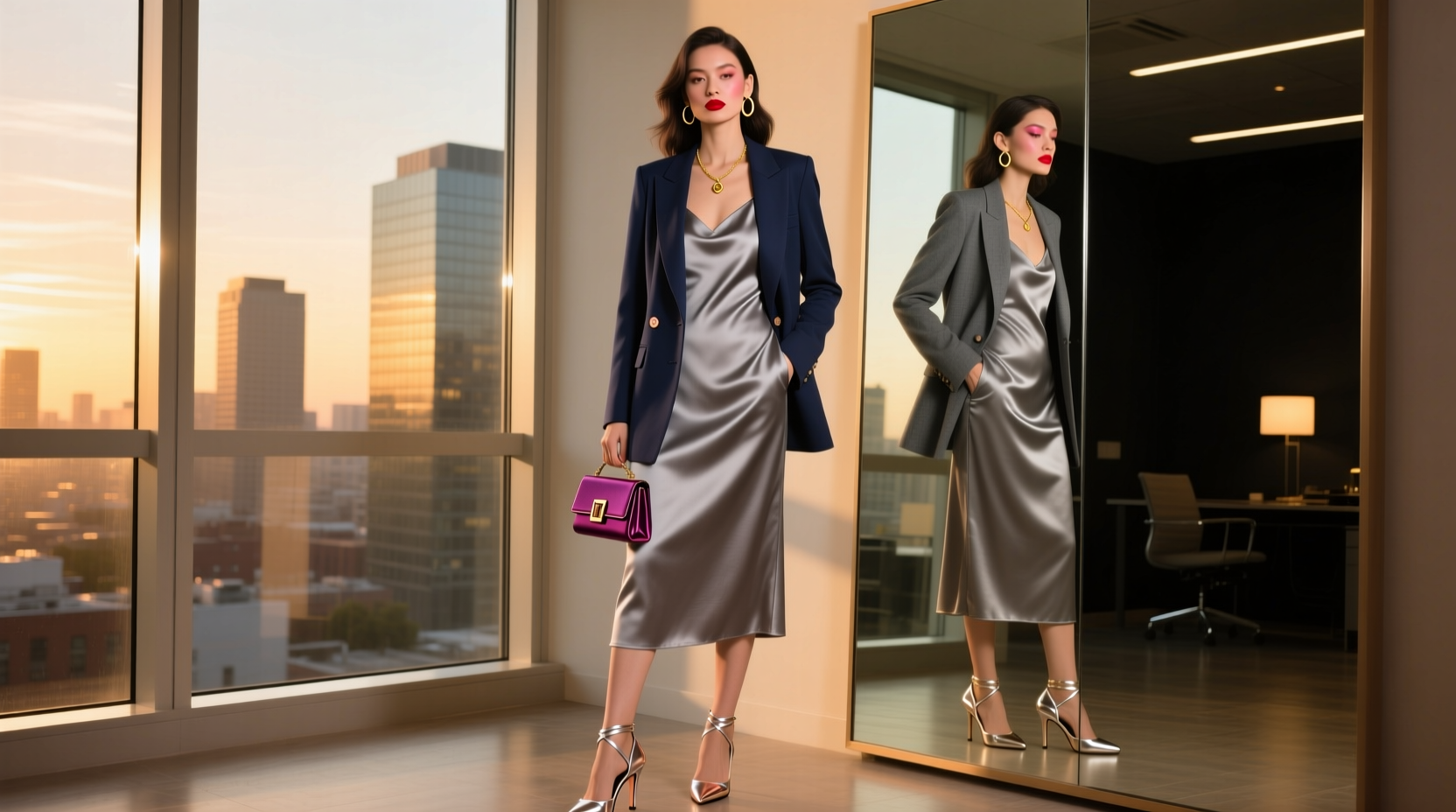
Satin has long been misunderstood in professional settings. Its sheen and drape naturally draw attention, which makes it ideal for evening wear but potentially risky in conservative offices. However, in creative industries, tech startups, or fashion-forward workplaces, a well-styled slip dress can signal confidence and personal flair.
The first step in transitioning your dress successfully is assessing where your office falls on the dress code spectrum:
| Dress Code Type | Slip Dress Viability | Key Adjustments Needed |
|---|---|---|
| Corporate/Formal | Limited | Layer heavily; pair with blazers, opaque tights, closed-toe shoes |
| Buisness Casual | High | Add structured outerwear and minimal jewelry |
| Casual/Creative | Very High | Style freely; focus on subtle shifts for evening |
| Remote/Hybrid | Flexible | Optimize for video calls, then enhance post-work |
In more formal environments, the slip dress should be treated as a base layer rather than the centerpiece. In relaxed settings, it becomes the star—requiring only minor tweaks after hours.
Tip: If unsure about office appropriateness, wear the dress once with full coverage layers and observe reactions before going bolder.Step-by-Step Transformation Timeline
Transitioning your look doesn’t require a complete wardrobe change. A seamless evolution happens over five deliberate steps, ideally completed during a quick restroom visit or while commuting.
- Remove Outer Layers (5:00 PM)
Take off your tailored blazer, cardigan, or denim jacket. This instantly softens the silhouette and introduces the satin’s natural luster. - Swap Shoes (5:10 PM)
Trade flats or loafers for heels—strappy sandals or pointed pumps add instant evening energy. - Adjust Hair and Makeup (5:15 PM)
Loosen your hairstyle into soft waves or a low chignon. Add a swipe of bold lipstick or glossy finish to lips, and deepen eyeliner slightly. - Update Jewelry (5:20 PM)
Switch from small studs or pearls to statement earrings or layered necklaces. Consider adding a delicate chain belt to accentuate the waist. - Refresh the Scent (5:25 PM)
Apply a warmer, more sensual fragrance—amber, vanilla, or musk-based notes work well for nighttime.
This entire process takes under 30 minutes and requires no additional clothing changes. The result? A polished yet sultry version of your earlier self—same dress, new narrative.
Layering Strategies for Daytime Modesty
Wearing a satin slip dress to the office hinges on smart layering. Without it, the dress may appear too revealing or informal. The goal is to maintain professionalism while preserving the dress’s integrity beneath.
- Structured Blazers: Choose neutral-toned wool or cotton-blend blazers in black, navy, or beige. Ensure the fit is sharp but not tight—shoulders aligned, sleeves ending at the wrist bone.
- Longline Vests: Ideal for cooler offices or minimalist aesthetics. A sleeveless, knee-length vest in charcoal gray adds authority without hiding the dress’s shape.
- Cardigans and Knits: For softer environments, an oversized cashmere cardigan in camel or ivory provides warmth and texture contrast.
- Tights and Hosiery: Opaque black or nude tights in winter, sheer 20-denier in spring/summer. Avoid fishnets or patterned styles in professional contexts.
- Shirts Underneath: A crisp white button-down worn open over the dress adds modesty and intellectual gravitas—especially effective in academic or editorial roles.
These layers serve dual purposes: they meet workplace expectations and act as removable elements for later transformation. Think of them as “professional armor” you shed when the clock strikes evening.
“Clothing communicates context. A satin slip under a blazer reads ‘capable’; the same dress bare reads ‘confident.’ Knowing when to switch signals emotional intelligence.” — Lena Park, Image Consultant & Author of *Style Shift*
Essential Accessories Checklist
To pull off the transition smoothly, keep these items in your work bag or locker. They’re compact, non-perishable, and high-impact.
Checklist: Office-to-Evening Kit- Compact mirror and blotting papers
- Travel-sized perfume or rollerball scent
- Strappy heels or foldable evening sandals
- Statement earrings (lightweight, easy to swap)
- Mini makeup pouch: lipstick, gloss, concealer
- Waist chain or thin metallic belt
- Clutch or crossbody bag (replaces tote or backpack)
- Hairpins or scrunchie for updo
Invest in multi-functional pieces. For example, a metallic clutch can double as a phone holder during the day and an elegant evening accessory. Similarly, magnetic earrings allow quick changes without fumbling with backs.
Real-Life Example: From Boardroom to Bar
Consider Sarah, a marketing strategist at a mid-sized design agency. Her office leans business casual, allowing personality in attire as long as it remains polished. On Thursdays, she has client meetings followed by drinks with friends.
She wears a blush-pink satin slip dress (midi length, spaghetti straps) paired with a cropped black blazer, nude pumps, and pearl studs. Her hair is in a neat half-up style, and her makeup is fresh with pink tones. During the workday, she carries a structured tote and keeps notes on her tablet.
At 5:30 PM, she heads to the restroom:
- Removes the blazer and stores it in a garment bag.
- Swaps pumps for gold strappy sandals from her bag.
- Releases her hair into loose waves and applies rose-gold highlighter.
- Changes earrings to dangling gold hoops and clips on a slim chain belt.
- Switches her tote for a gold-accented clutch.
By the time she arrives at the bar, she looks like she planned the entire outfit around the evening—when in reality, she transformed her workwear in under 15 minutes. No one suspects she wore the same dress all day.
Do’s and Don’ts When Styling Satin
Satin demands respect. It wrinkles easily, shows every imperfection, and reacts dramatically to lighting. Follow these guidelines to maintain elegance throughout the day and night.
| Action | Do | Don't |
|---|---|---|
| Fabric Care | Hang immediately after wear; use padded hangers | Fold tightly or leave crumpled overnight |
| Fit | Ensure straps are secure but not digging | Wear if slipping or constantly adjusting |
| Undergarments | Use nude seamless shapewear or strapless bra | Wear visible seams or dark-colored underwear |
| Lighting Awareness | Test appearance under fluorescent and warm light | Assume it looks the same indoors and outdoors |
| Seating | Smooth fabric before sitting; cross legs gracefully | Slouch or let material bunch at hips |
One overlooked factor is static cling—common in dry office environments. Keep a travel-sized anti-static spray or lightly run a dryer sheet over the inside of the dress before heading out.
FAQ: Common Concerns Addressed
Can I wear a satin slip dress to a conservative office?
Yes, but only with significant layering. Pair it with a long blazer, opaque tights, and a collared shirt underneath. Stick to muted colors like black, navy, or charcoal. Avoid high slits or ultra-thin straps in strict environments.
How do I prevent the dress from looking “too sexy” at work?
Control perception through coverage and posture. Add structured layers, keep movements deliberate, and avoid deep necklines. Opt for midi or maxi lengths instead of mini. Confidence—not exposure—defines professionalism.
What if I don’t have time to change between work and dinner?
Focus on portable upgrades. Even changing your bag, shoes, and lipstick can redefine your look. If stuck in flats, wrap a silk scarf around your handbag strap or tie one in your hair for instant elevation.
Final Thoughts: Embrace the Power of One Dress
The satin slip dress is more than a garment—it’s a symbol of adaptability. In a world that often demands we compartmentalize our identities, this piece reminds us that we can be both competent and captivating, serious and sensual, all within the span of a single day.
Mastering its transition isn’t just about fashion logistics; it’s about intentionality. Every choice—from the blazer you remove to the lipstick you apply—becomes a ritual of transformation. You’re not changing who you are; you’re revealing another dimension.
Start small. Try the office-to-evening shift once a week. Refine your kit, test combinations, and observe how people respond. Over time, you’ll develop a rhythm so natural it feels instinctive.
💬 Ready to redefine versatility? Pull that satin slip dress from your closet tomorrow—style it for work, then transform it for the night. Share your journey, your wins, your tricks. The most powerful fashion statements begin with a single, seamless step.








