Thick hair is often celebrated for its volume, strength, and luxurious appearance. Yet, managing it comes with unique challenges—especially when it’s prone to tangles. For many with dense, coarse, or curly textures, detangling isn’t just a routine step; it’s a critical ritual that, if done incorrectly, can lead to split ends, breakage, and long-term damage. The key lies not in brute force but in strategy: understanding your hair’s behavior, choosing the right products, and following a methodical process that respects its natural structure.
Dry, tangled thick hair is particularly vulnerable. Without proper preparation, combing through knots can snap strands mid-shaft, weakening overall integrity. This guide breaks down the science-backed steps and real-world practices to detangle thick hair effectively—without sacrificing strength or shine.
The Science Behind Hair Breakage During Detangling
Hair breakage occurs when mechanical stress exceeds the tensile strength of the strand. Thick hair, while strong at the root, often has varying diameters along the shaft and may be more porous due to styling history or environmental exposure. When dry, these strands become brittle and less elastic, making them susceptible to snapping under tension.
Tangles form when individual hairs twist around each other, especially in areas where friction is high—like the nape of the neck or behind the ears. In thick hair, the density increases the likelihood of interlocking. Attempting to pull a brush through without lubrication multiplies shear forces, increasing the risk of fracture.
Moisture plays a pivotal role. Hydrated hair can stretch up to 30% of its length before breaking; dry hair loses this elasticity. That’s why detangling on dry hair—particularly with a fine-toothed comb or stiff brush—is one of the leading causes of avoidable damage.
“Detangling should never feel like a battle. If you're pulling or wincing, you're doing it wrong.” — Dr. Linette Williams, Trichologist and Hair Health Researcher
Step-by-Step Guide to Safe Detangling
Effective detangling isn't about speed—it's about patience and precision. Follow this sequence to minimize stress on your hair while removing tangles efficiently.
- Start with damp, conditioned hair: Wash your hair with a sulfate-free shampoo and apply a generous amount of conditioner. Let it sit for 3–5 minutes to soften the cuticle and hydrate the cortex.
- Rinse partially, leaving conditioner in: Don’t fully rinse out the conditioner. A slippery coating reduces friction and allows fingers or wide-tooth combs to glide through.
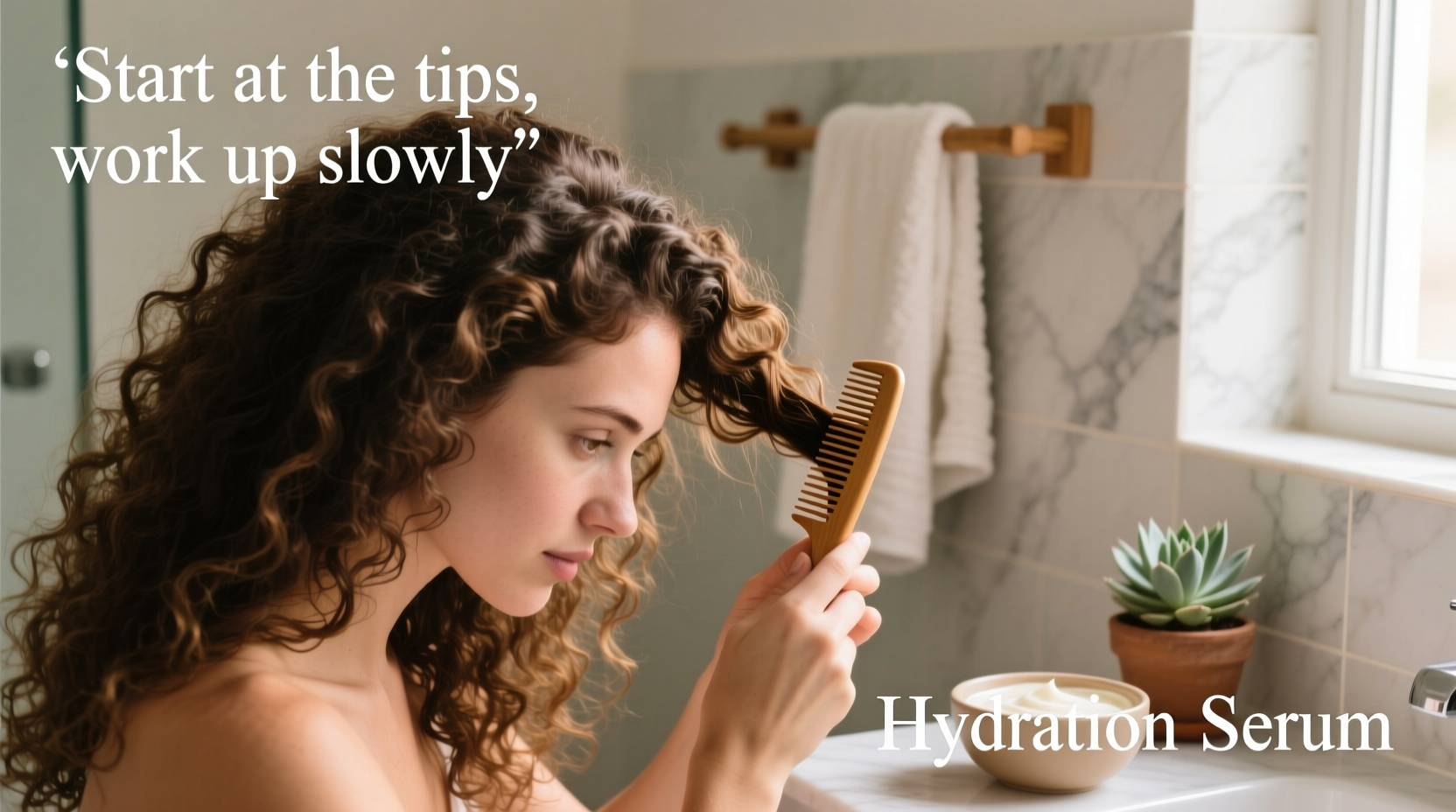
- Use your fingers first: Begin by gently separating large knots with your fingertips. Work from the ends upward, never starting at the roots.
- Switch to a wide-tooth comb: Once major tangles are loosened, use a wide-tooth comb (preferably seamless or made of wood/plastic) to continue working from the bottom up.
- Section your hair: Divide thick hair into 4–6 sections using clips. This ensures even attention and prevents missed spots.
- Work in small subsections: Within each section, take thin strands (about 1 inch wide) and carefully comb through. This reduces strain on individual hairs.
- Rinse and repeat if necessary: If tangles persist, reapply leave-in conditioner and repeat the process.
- Air-dry or diffuse gently: Avoid brushing wet hair post-detangling. Let it dry naturally or use a diffuser on low heat.
Essential Tools and Products for Thick Hair
Using the right tools makes a significant difference in preventing breakage. Not all combs and brushes are created equal—some increase tension, while others promote smooth gliding.
| Tool/Product | Best For | Why It Works | Avoid If… |
|---|---|---|---|
| Wide-tooth comb | Wet detangling | Lowers friction, minimizes snagging | You’re using it on dry, tangled hair |
| Finger detangling | All hair types, especially curls | Gentle control over pressure and direction | You have very short nails (can catch) |
| Denman brush (with flexible pins) | Curly, coily textures | Pins flex on resistance, reducing pull | You press too hard or use on dry hair |
| Leave-in conditioner | Daily maintenance | Provides ongoing slip and moisture | It contains silicones that build up over time |
| Microfiber towel or cotton T-shirt | Drying hair post-wash | Less friction than terrycloth towels | You rub vigorously instead of blotting |
When selecting products, prioritize those free from drying alcohols, sulfates, and heavy mineral oils. Look for ingredients like shea butter, glycerin, aloe vera, and hydrolyzed proteins, which support hydration and resilience.
Real-Life Example: Maria’s Transition to Low-Manipulation Care
Maria, a 32-year-old teacher with 4C/4A mixed texture hair, struggled with chronic breakage for years. She’d wake up with matted ends and would instinctively grab a paddle brush to “fix” her hair while dry. Within months, her length stalled despite minimal trimming.
After consulting a stylist specializing in textured hair, she changed her approach: she began washing weekly with a moisturizing shampoo, applied deep conditioner under a steamer, and only detangled in the shower with diluted conditioner. She switched to finger detangling followed by a Denman brush on soaking wet hair, section by section.
Within three months, shedding decreased dramatically. Her hair felt stronger, and she regained visible length. “I used to think detangling meant fighting the knots,” she said. “Now I know it’s about cooperation—with my hair, not against it.”
Common Mistakes That Lead to Breakage
Even with good intentions, certain habits undermine safe detangling. Awareness is the first step toward correction.
- Starting from the roots: This pushes tangles downward, tightening them and increasing pull on fragile ends.
- Using a fine-tooth comb on wet hair: Wet hair stretches and is more fragile. Fine teeth can catch and snap strands.
- Skipping pre-detangling moisture: Dry detangling creates unnecessary friction, especially in thick or curly hair.
- Brushing too aggressively: Speed doesn’t equal efficiency. Forceful strokes cause micro-tears in the cuticle.
- Ignoring nighttime protection: Sleeping on cotton pillowcases leads to friction and matting overnight.
Checklist for Safe Weekly Detangling Routine
Follow this checklist every time you wash and detangle to ensure consistency and protection:
- Wash hair with sulfate-free shampoo
- Apply deep conditioner or mask; cover with a plastic cap for 10–15 minutes
- Rinse partially, leaving product in for slip
- Divide hair into 4–6 sections with clips
- Begin detangling from the ends using fingers
- Progress upward using a wide-tooth comb or Denman brush
- Reapply leave-in conditioner if needed
- Rinse out remaining conditioner
- Apply leave-in product and seal with oil (e.g., jojoba or argan)
- Allow to air-dry or diffuse gently
- Store in a loose braid or pineapple style if not fully dry
FAQ: Common Questions About Detangling Thick Hair
How often should I detangle thick hair?
Detangle only when necessary—typically once per wash cycle. Over-manipulating hair, even gently, can lead to cumulative stress. If your hair stays moisturized and protected at night, you may only need to detangle every 7–10 days.
Can I detangle thick hair when it’s dry?
Only if absolutely necessary—and even then, proceed with caution. Use a leave-in conditioner or detangling spray with slip agents (like cetyl alcohol or behentrimonium chloride), and work in tiny sections with fingers or a soft-bristle brush. Avoid combing dry, tangled hair without hydration.
Why does my thick hair tangle so easily?
Several factors contribute: lack of moisture, infrequent conditioning, sleeping without protection, excessive manipulation, or using products that don’t suit your porosity. Curly and coily textures naturally tangle more due to their spiral shape, which causes strands to loop around each other. Regular moisturizing and protective styling reduce tangling over time.
Expert Insight: The Role of Hair Porosity
Understanding your hair’s porosity—its ability to absorb and retain moisture—can transform your detangling experience. Low-porosity hair resists moisture absorption and benefits from lightweight, liquid-based conditioners. High-porosity hair absorbs quickly but loses moisture fast, requiring richer creams and sealing oils.
“Matching your detangling products to your hair’s porosity prevents dryness and reduces friction. It’s not just about what tool you use—it’s about preparing the hair properly.” — Jasmine Reed, Master Stylist & Texture Specialist
For example, someone with high-porosity thick hair might benefit from a pre-wash oil treatment (like coconut oil) to temporarily fill gaps in the cuticle, reducing snagging during combing.
Conclusion: Treat Thick Hair with Respect, Not Force
Detangling thick hair shouldn’t be an ordeal. With the right knowledge, tools, and rhythm, it becomes a nurturing part of your hair care ritual—one that preserves length, enhances health, and builds trust between you and your strands. The goal isn’t to eliminate tangles overnight but to create conditions where they occur less frequently and resolve more gently.
Breakage isn’t inevitable. It’s a sign that something in your routine needs adjustment—whether it’s timing, technique, or product choice. Start small: commit to damp detangling with a wide-tooth comb this week. Notice how your hair responds. Gradually integrate protective habits like nighttime satin coverage and regular deep conditioning.
💬 Have a tip that transformed your detangling routine? Share your story in the comments—your insight could help someone finally break free from breakage.