Suede jackets are timeless pieces that add texture, sophistication, and warmth to any wardrobe. But when caught in the rain, they’re especially vulnerable. Water doesn’t just soak into suede—it leaves behind unsightly spots, stiff patches, and sometimes permanent discoloration. The good news: with prompt action and the right technique, most water stains can be reversed without damaging the delicate nap of the fabric.
Unlike smooth leather, suede is made from the underside of animal hides, giving it a soft, napped surface that’s highly absorbent. This makes it particularly sensitive to moisture, oils, and dirt. However, treating rain spots correctly—without rushing or using harsh methods—can restore your jacket to its original condition. This guide provides a comprehensive, science-backed approach to cleaning and preserving suede after water exposure.
Understanding Suede and Why Water Damages It
Suede’s unique texture comes from its brushed surface, which creates thousands of tiny fibers. When water hits this surface, it causes those fibers to swell and clump together. As the moisture evaporates, mineral deposits from tap water or atmospheric impurities may remain, leaving behind visible rings or cloudy marks. Additionally, rapid drying—especially near heat sources—can cause the leather underneath to contract, leading to stiffness and cracking over time.
The key to successful restoration lies in controlling the drying process and gently lifting stains without flattening the nap. Rushing this process is the most common mistake. Patience is not just recommended—it’s essential.
“Suede isn’t ruined by water alone—it’s ruined by panic. The moment you react too quickly, you risk permanent damage.” — Marcus Reed, Textile Restoration Specialist, 15+ years in luxury garment care
Immediate Actions to Take When Your Suede Jacket Gets Wet
The first 30 minutes after water exposure determine whether your jacket can be fully restored. Follow these steps immediately:
- Shake off excess water: Gently flick the jacket to remove droplets. Avoid rubbing, as this pushes moisture deeper into the fibers.
- Blot with a microfiber cloth: Use a clean, dry, lint-free towel to absorb surface moisture. Press lightly—do not wipe.
- Air-dry at room temperature: Hang the jacket on a padded hanger in a well-ventilated area away from direct sunlight, radiators, or hairdryers. Allow 24–48 hours for complete drying.
- Do not apply heat: Heat sets stains and hardens the leather, making recovery nearly impossible.
Step-by-Step Guide to Removing Rain Spots from Suede
Once the jacket is completely dry, assess the damage. Rain spots typically appear as darker rings or flat, dull patches. Follow this methodical cleaning process:
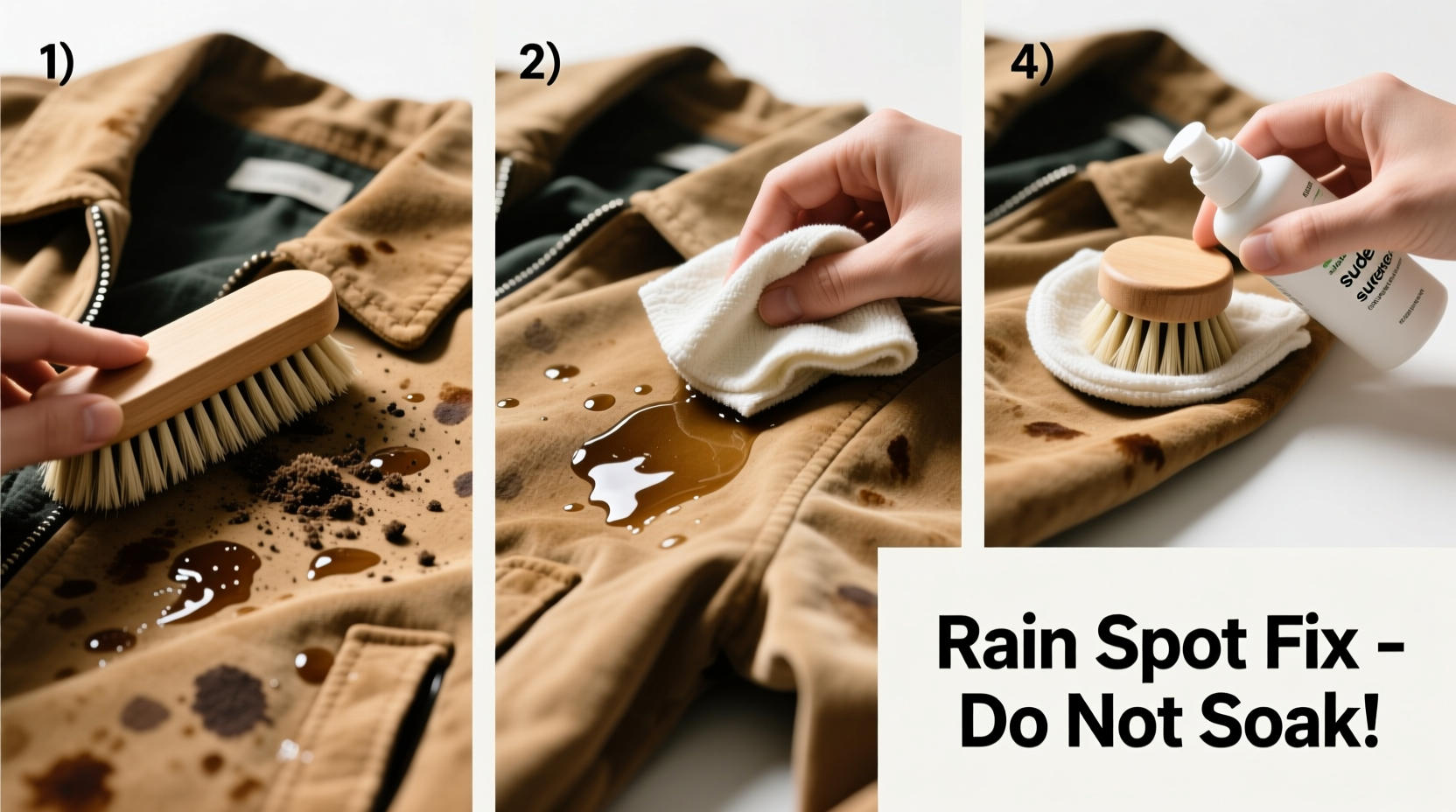
Step 1: Brush the Surface
Use a suede brush (or soft-bristled toothbrush) to gently lift the nap. Work in one direction, then reverse to restore texture. This often reduces the visibility of minor spots by realigning fibers.
Step 2: Apply a Suede Eraser
Rub a specialized suede eraser (often made of rubber or pumice) over stained areas using short, firm strokes. This lifts surface residue and breaks up mineral deposits left by evaporated water.
Step 3: Spot Clean with White Vinegar Solution (if needed)
If stains persist, mix one part distilled white vinegar with two parts cool water. Dampen a cotton ball—never saturate—and dab the affected area. Vinegar helps dissolve mineral buildup without harming dye. Let it air-dry again before proceeding.
Step 4: Re-Brush Thoroughly
After drying, brush the area again to restore the nap. Use circular motions followed by directional strokes to blend the cleaned section with surrounding fabric.
Step 5: Use a Steamer for Stubborn Stiffness
If the leather feels stiff, hold a garment steamer 6–8 inches away from the fabric. Pass steam evenly across the area, then immediately brush while warm. This relaxes fibers and reactivates natural oils.
Tip: Always test any liquid cleaner on an inconspicuous area (like an inside seam) before full application.Do’s and Don’ts of Suede Care After Water Exposure
| Do’s | Don’ts |
|---|---|
| Blot gently with a microfiber cloth | Wipe or scrub the wet area |
| Air-dry naturally in a ventilated space | Use a hairdryer, radiator, or heater |
| Brush with a suede-specific tool | Use wire brushes or abrasive materials |
| Apply a suede protector spray after cleaning | Apply waterproofing sprays to wet or damp fabric |
| Store on a wide, padded hanger | Fold or compress in a drawer or tight space |
Real Example: Recovering a Vintage Suede Bomber Jacket
Jamie, a vintage clothing collector in Portland, Oregon, wore her 1970s brown suede bomber jacket during an unexpected downpour. By the time she got home, the shoulders and back were soaked. She immediately removed the jacket, blotted it with a towel, and hung it in her guest room with a fan nearby (not blowing directly on it).
After 36 hours of slow drying, she noticed faint circular marks along the shoulders—classic rain spots. Using a suede brush and eraser from a local shoe repair shop, she worked the surface carefully. One particularly stubborn spot responded only after a light vinegar solution was applied. Two rounds of brushing restored the nap almost entirely. A week later, she applied a silicone-free suede protector spray, and the jacket looked better than before the incident.
“I thought it was ruined,” Jamie said. “But taking it slow made all the difference. Now I keep a travel-sized suede brush in my bag.”
Essential Tools for Suede Maintenance
Proper care starts with having the right tools on hand. Invest in these items to maintain your suede garments long-term:
- Suede brush: Brass or nylon bristles help lift and align fibers.
- Suede eraser: Removes scuffs, salt marks, and water residue.
- Microfiber cloths: Ideal for blotting and polishing without lint.
- Distilled white vinegar: A safe, natural cleaner for spot treatment.
- Suede protector spray: Creates a breathable barrier against moisture and stains.
- Padded hangers: Prevent shoulder distortion during storage.
Preventing Future Damage: Proactive Protection Strategies
While accidents happen, you can significantly reduce the risk of water damage by pre-treating your suede jacket. A high-quality protector spray forms an invisible shield that repels moisture and dirt without altering appearance.
Apply the spray in a well-ventilated area, holding the can 6–8 inches from the fabric. Cover the entire jacket evenly, paying extra attention to shoulders and cuffs—common contact points with rain. Reapply every 4–6 weeks with regular wear, or after cleaning.
Note: Not all sprays are created equal. Choose products labeled “suede-safe” and free from silicones or waxes, which can clog pores and darken the material.
“A single application of proper protector can prevent dozens of emergency cleanings. It’s the cheapest insurance you’ll ever buy for a luxury garment.” — Lena Torres, Sustainable Fashion Consultant
Frequently Asked Questions
Can I use a regular leather cleaner on suede?
No. Most leather cleaners are formulated for smooth finishes and contain oils or solvents that can stain or stiffen suede. Always use products specifically designed for napped leathers.
What if the color has changed after drying?
Uneven drying can cause temporary darkening. Try brushing and steaming first. If the color remains patchy, consult a professional restorer—home dyes can worsen the issue.
Is it safe to wash a suede jacket in water?
Never immerse suede in water. Full submersion destroys the structure of the fibers and leads to shrinkage, warping, and irreversible damage. Spot cleaning and professional dry cleaning are the only safe options.
Checklist: How to Safely Clean a Suede Jacket Stained by Rain Spots
- Shake off excess water gently
- Blot with a dry microfiber cloth (no rubbing)
- Hang on a padded hanger in a dry, ventilated room
- Air-dry for 24–48 hours—no heat!
- Brush the surface with a suede brush to lift the nap
- Use a suede eraser on visible spots
- For stubborn stains, dab with a vinegar-water solution (1:2 ratio)
- Allow to dry completely again
- Re-brush thoroughly to restore texture
- Steam lightly if fabric feels stiff
- Apply suede protector spray once fully restored
Conclusion: Preserve Your Investment with Smart Care
A suede jacket is more than a piece of clothing—it’s a statement of style and craftsmanship. Rain spots don’t have to mean the end of its life. With careful handling, the right tools, and a calm approach, most water damage can be reversed at home. The key is understanding the material’s sensitivity and respecting the process.
Start today by assembling a basic suede care kit and applying a protective spray to all your napped leather items. Small habits lead to long-lasting results. Whether your jacket is brand new or a cherished vintage find, proper maintenance ensures it continues turning heads for years to come.
💬 Have a suede rescue story or tip? Share your experience in the comments and help others protect their favorite jackets!