Mud season is the great equalizer. No matter how carefully you step, your white sneakers will eventually meet a puddle, a patch of sludge, or a rain-soaked sidewalk. And once they do, the battle begins: how to restore them without resorting to bleach, which can degrade materials, yellow synthetics, and weaken adhesives over time. The good news? Keeping your whites bright through the muddiest months is entirely possible—with the right tools, timing, and techniques.
This guide outlines a comprehensive, bleach-free strategy for protecting, cleaning, and maintaining white sneakers during high-moisture seasons. From preventive measures to deep-cleaning routines, every step is designed to extend the life of your shoes while preserving their appearance and structural integrity.
Why Avoid Bleach on White Sneakers?
Bleach has long been associated with restoring white fabrics, but its use on sneakers comes with serious drawbacks. Most modern sneakers combine synthetic uppers (like mesh, nylon, or polyurethane), rubber soles, foam midsoles, and textile linings. Chlorine bleach breaks down these materials over time:
- Fabric degradation: Bleach weakens fibers, causing premature fraying or tearing.
- Yellowing: Contrary to myth, bleach can actually cause white synthetics to yellow due to oxidation.
- Glue deterioration: Many sneaker constructions rely on adhesives that bleach can compromise, leading to sole separation.
- Sole damage: EVA foam midsoles become brittle and crack when exposed to harsh chemicals.
“Using bleach on performance footwear is one of the fastest ways to shorten its lifespan. There are gentler, more effective alternatives.” — Marcus Lin, Footwear Restoration Technician, Urban Sole Care
Prevention: Your First Line of Defense
The best way to keep sneakers clean is to prevent dirt from setting in. Mud is not just water and soil—it often contains organic matter, tannins from leaves, and pollutants that stain if left untreated.
Tip: Apply a water- and stain-repellent spray before mud season begins. Reapply monthly for continued protection.Choose a silicone- or fluoropolymer-based protector formulated for textiles. These create an invisible barrier that causes water and mud to bead up and roll off rather than soak in. Brands like Coleman’s UV Protector, Scotchgard Suede & Nubuck Shield, or Jason Markk Repel work well across materials.
Apply in a well-ventilated area, holding the can 6–8 inches from the shoe. Cover laces and insoles or remove them first. Allow 24 hours to dry fully before wearing.
When to Treat: Timing Matters
If your sneakers get muddy, don’t wait. Dried mud is harder to remove and increases scrubbing—which leads to wear. As soon as you’re indoors:
- Remove laces and insoles to clean separately.
- Tap shoes together gently over a trash can to dislodge loose debris.
- Use a soft brush (like a toothbrush) to loosen dried clumps.
- Wipe with a damp microfiber cloth—never soak.
Let them air-dry at room temperature, away from radiators or direct sunlight, which can warp glue and fade materials.
Safe, Effective Cleaning Methods (No Bleach Needed)
For routine maintenance and spot treatment, several household and specialty products deliver excellent results without compromising shoe integrity.
1. Baking Soda and Hydrogen Peroxide Paste
A popular DIY solution, this paste lifts stains and deodorizes naturally.
- Mix 1 tablespoon baking soda, 1 tablespoon hydrogen peroxide (3%), and 1 teaspoon water into a thick paste.
- Apply with a soft-bristled brush to stained areas only.
- Let sit for 15–20 minutes (do not exceed 30).
- Wipe clean with a damp cloth; rinse thoroughly.
- Air-dry away from heat.
Hydrogen peroxide is a mild oxidizing agent but far less aggressive than bleach. It breaks down into water and oxygen, leaving no residue.
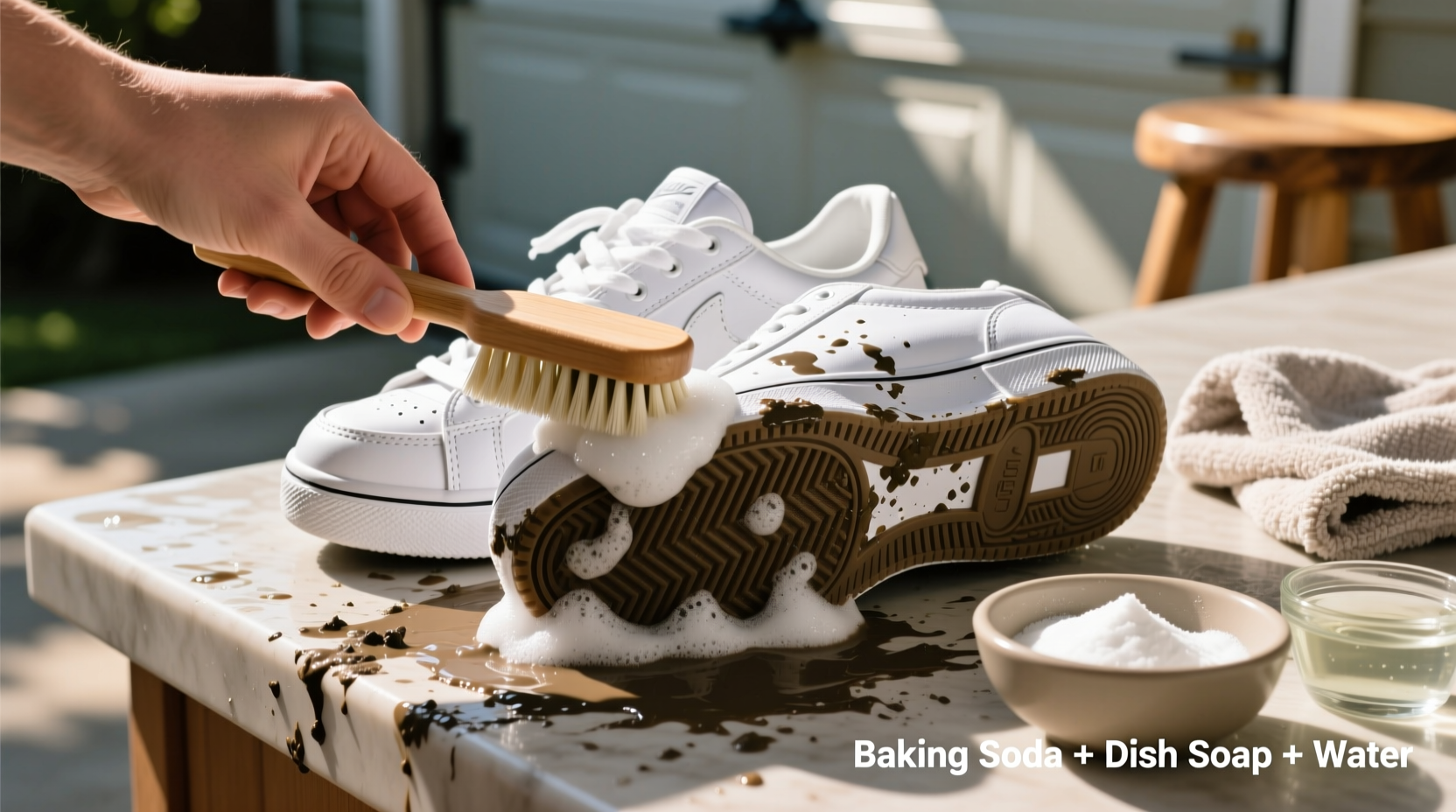
2. Mild Dish Soap and Water
For light grime, a drop of fragrance-free dish soap (like Dawn or Seventh Generation) in a cup of lukewarm water works wonders.
- Dip a microfiber cloth or soft brush into the solution.
- Gently scrub in circular motions.
- Rinse the cloth frequently.
- Wipe with clean water afterward to remove soap residue.
This method is ideal for rubber soles, sidewalls, and synthetic uppers. Avoid soaking knit or canvas sections.
3. Specialized Sneaker Cleaners
Products like Jason Markk Essential Cleaner, Sneaker LAB Formula Pro, or Reshoevn8r Brightening Foam are pH-balanced and tested on premium footwear.
They lift dirt without stripping finishes or damaging dyes. Most come with applicator brushes and require only a small amount per use. Follow label instructions carefully—some are not suitable for suede or nubuck.
Tip: Always test any cleaner on a small, inconspicuous area first—like the heel tag or inside tongue.Cleaning by Material: A Practical Guide
Not all white sneakers are created equal. The cleaning method depends heavily on the upper material. Using the wrong technique can cause irreversible damage.
| Material | Safe Cleaning Methods | Avoid |
|---|---|---|
| Mesh/Nylon | Baking soda paste, mild soap, specialized cleaners | Soaking, bleach, stiff brushes |
| Leather/Synthetic Leather | Damp cloth + mild soap, leather wipes, conditioner after drying | Bleach, abrasive scrubbing, oil-based cleaners |
| Canvas | Spot clean with soap paste, gentle machine wash (if label allows) | Hot water, dryer, bleach |
| Suede/Nubuck | Suede eraser, brass-bristle brush, dedicated suede cleaner | Water saturation, regular soap, baking soda paste |
| Knit (e.g., Flyknit, Primeknit) | Light spot cleaning, avoid immersion | Machine washing, scrubbing, soaking |
For mixed-material shoes (common in athletic models), treat each section according to its material. Use cotton swabs for precision around seams and logos.
Step-by-Step Deep Clean Routine (Monthly Maintenance)
Even with daily care, sneakers accumulate grime over time. A monthly deep clean keeps them looking fresh and prevents odor buildup.
- Remove laces and insoles. Soak laces in warm, soapy water. Hand-wash insoles with mild detergent; air-dry flat.
- Dry brush entire shoe. Use a soft brush to remove surface dust and debris from crevices.
- Apply cleaner. Use a specialized sneaker cleaner or DIY paste on stained areas. Focus on collars, toe boxes, and sidewalls.
- Scrub gently. Use circular motions with a soft toothbrush. Do not press hard—let the cleaner do the work.
- Wipe and rinse. Dampen a microfiber cloth with clean water and wipe off residue. Repeat until no suds remain.
- Air-dry completely. Stuff shoes with paper towels to maintain shape and absorb moisture. Keep away from direct heat.
- Reapply protector. Once fully dry, re-spray with a water-repellent formula.
This process takes about 30 minutes and significantly extends the visual lifespan of your sneakers.
Real Example: How Sarah Maintained Her All-White Runners Through Spring
Sarah, a teacher in Portland, Oregon, walks 45 minutes to work each day—often through rain and mud. Last year, her white running shoes turned gray by March. This year, she changed her approach.
Before winter ended, she applied a fluoropolymer protector to her mesh-and-rubber sneakers. She kept a small travel kit in her backpack: a microfiber cloth, baby wipes (alcohol-free), and a mini sneaker cleaner pen. After rainy commutes, she wiped down her shoes immediately and let them dry overnight at home.
Every four weeks, she performed a full cleaning using the baking soda-hydrogen peroxide method. She avoided the washing machine, knowing it could damage the midsole cushioning.
The result? Her sneakers remained visibly clean through May. “I got compliments on my shoes in April,” she said. “And I didn’t even use bleach.”
Do’s and Don’ts: Quick Reference Checklist
Checklist: Keep this list handy for quick reference.- ✅ Do apply a protective spray before mud season.
- ✅ Do clean mud within 24 hours of exposure.
- ✅ Do use soft brushes and non-abrasive cloths.
- ✅ Do air-dry shoes at room temperature.
- ✅ Do rotate between multiple pairs to reduce wear.
- ❌ Don’t use bleach or ammonia-based cleaners.
- ❌ Don’t machine-wash unless explicitly recommended.
- ❌ Don’t expose wet shoes to direct heat or sunlight.
- ❌ Don’t scrub aggressively—gentle pressure is more effective.
- ❌ Don’t store dirty shoes long-term; clean before storage.
FAQ: Common Questions About Bleach-Free Sneaker Care
Can I use vinegar to clean white sneakers?
Vinegar is acidic and can break down certain adhesives and dyes over time. While diluted vinegar (1:1 with water) may help with odor, it’s not recommended for routine cleaning. Stick to pH-neutral options like specialized sneaker cleaners.
How often should I clean my white sneakers during mud season?
Wipe down after every muddy exposure. Perform a thorough cleaning every 2–4 weeks, depending on usage. Daily commuters may need weekly touch-ups.
What if my sneakers already have yellowed?
Yellowing is often caused by oxidation, UV exposure, or residual bleach. Try a paste of baking soda and hydrogen peroxide on affected areas, leave for 20 minutes, then rinse. For severe yellowing, consider a whitening product specifically designed for footwear, like Sole Bright. Avoid sun-bleaching, which accelerates material breakdown.
Conclusion: Consistency Beats Intensity
Keeping white sneakers clean through mud season isn’t about finding a magic solution—it’s about consistent, thoughtful care. By avoiding bleach, choosing the right cleaners, and acting quickly after exposure, you protect both the look and longevity of your shoes.
Start now: inspect your current pair, gather a few basic supplies, and establish a simple routine. Small habits—like wiping shoes after a walk or storing them properly—add up to big results over time.
💬 Have a favorite bleach-free cleaning hack? Share your tip in the comments and help others keep their kicks fresh through the wettest months of the year.