Finding a signature scent is more than just selecting a perfume you like—it’s about discovering an olfactory extension of who you are. The right fragrance doesn’t just smell good; it feels like home when you wear it. Yet, many people cycle through bottles without ever landing on “the one.” The secret lies in going beyond surface preferences. By aligning your scent choices with both your personality and the season, you create a harmony between self-expression and environment. This approach transforms fragrance from a fleeting indulgence into a consistent part of your identity.
Why Personality Matters in Scent Selection
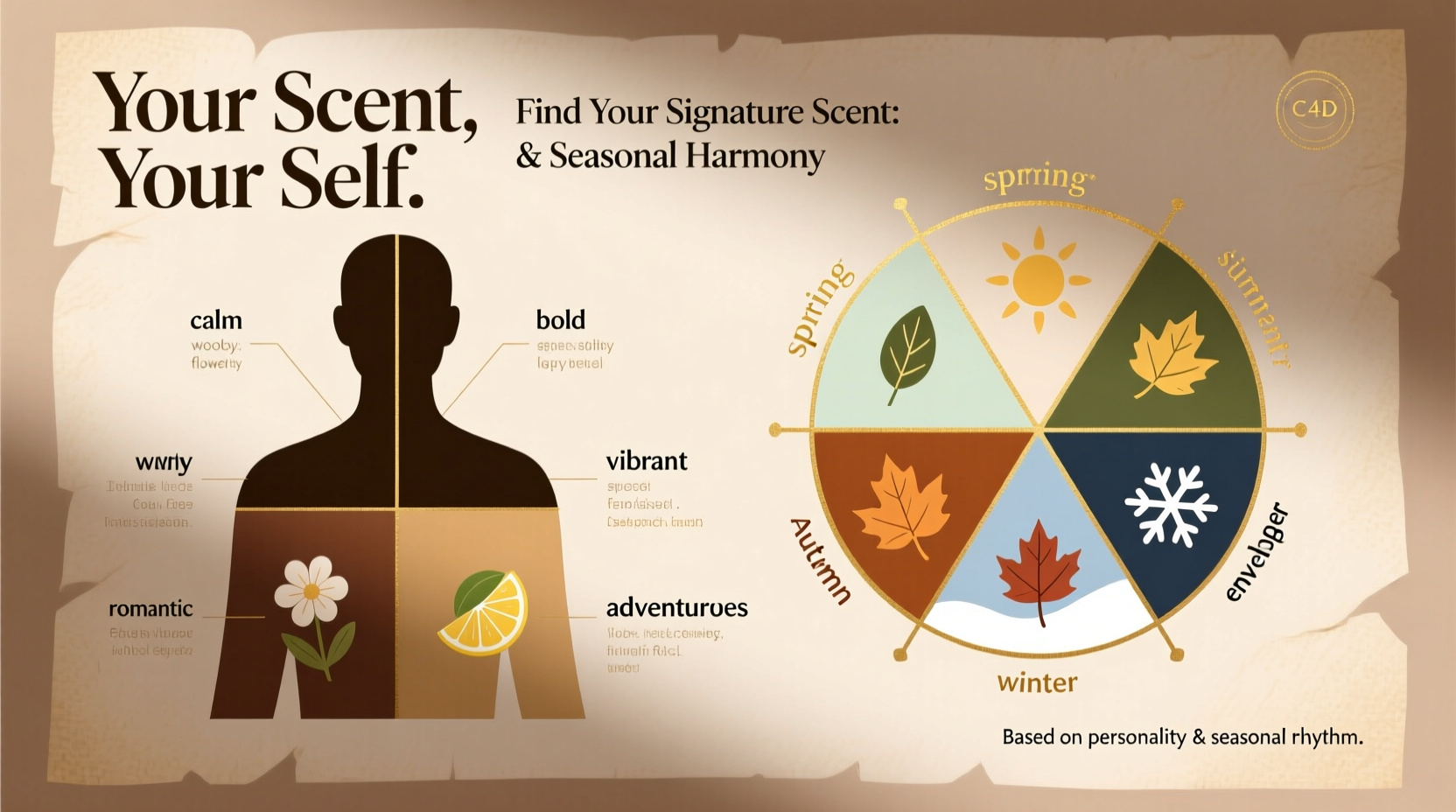
Fragrance is deeply psychological. Studies in aromachology—the study of how scents affect behavior—show that people are naturally drawn to smells that reflect their temperament and emotional state. A bold, outgoing individual may gravitate toward intense, spicy notes, while someone introspective might prefer soft musks or green accords. These inclinations aren’t random; they’re rooted in how we perceive ourselves and want to be perceived by others.
Perfumers often design fragrances with archetypes in mind: the romantic, the rebel, the minimalist, the nurturer. Understanding where you fall within these categories can streamline your search. For instance, if you're energized by social gatherings and thrive on attention, you likely lean toward bold sillage and projection—scents that announce your presence. Conversely, if you value subtlety and intimacy, a skin-close scent with warmth and depth may resonate more.
Tip: Before testing perfumes, take a moment to reflect: Do I want my scent to blend in or stand out? Am I drawn to comfort or contrast?The Four Main Personality-Aroma Profiles
While everyone is unique, most personalities align closely with one of four primary fragrance profiles. Use this as a starting point to narrow down your options.
- The Classic (Traditionalist): Values elegance, routine, and refinement. Drawn to timeless florals, aldehydes, and powdery accords. Think Chanel No. 5 or Guerlain L'Instant.
- The Free Spirit (Adventurer): Craves novelty, movement, and sensory exploration. Attracted to earthy patchouli, smoky woods, or unexpected gourmands. Examples include Comme des Garçons Series or Maison Margiela Replica Wild Rose.
- The Minimalist (Calm & Collected): Prefers simplicity, clarity, and intentionality. Favors clean citrus, sheer musks, and aquatic notes. Scents like Diptyque Philosykos or Le Labo Santal 33 fit this profile.
- The Intense (Passionate): Operates with emotion, depth, and magnetism. Loves rich ambers, leathers, and animalic tones. Consider Tom Ford Black Orchid or Amouage Interlude Man.
“Your personality isn't fixed—and neither should your fragrance be. But understanding your core tendencies helps you choose scents that feel authentic, not performative.” — Dr. Lena Moreau, Aromachologist & Scent Consultant
How Seasons Shape Your Scent Identity
Temperature, humidity, and even daylight influence how a fragrance behaves on the skin. What lingers beautifully in winter can turn cloying in summer heat. That’s why seasonal adaptation isn’t optional—it’s essential for maintaining balance and wearability.
Cooler months allow heavier molecules to evaporate slowly, releasing base notes like vanilla, sandalwood, and resins over hours. In contrast, warm weather accelerates evaporation, making top notes dominant and short-lived. A citrus cologne that feels refreshing at noon may vanish by lunchtime in July.
Seasonal shifts also affect our emotional needs. We seek warmth and comfort in autumn and winter, while spring and summer invite freshness and vibrancy. Aligning your scent with these rhythms enhances not only longevity but mood congruence.
Seasonal Fragrance Guidelines
| Season | Best Notes | Avoid If Sensitive | Recommended Use |
|---|---|---|---|
| Spring | Green tea, narcissus, bergamot, violet leaf | Heavy musk, smoke | Daytime, outdoor events |
| Summer | Sea salt, lime, coconut, mint, white flowers | Dense amber, leather | Beach, travel, casual wear |
| Autumn | Patchouli, clove, apple, oud, dried fruit | Sharp citrus overload | Evening, work, layered wear |
| Winter | Vanilla, tonka bean, incense, pine, tobacco | Light aquatic notes | Night outs, formal settings, cold days |
Step-by-Step Guide: Finding Your Signature Scent
This process takes time and mindfulness. Rushing leads to impulse buys and forgotten bottles. Follow these steps deliberately over several weeks.
- Assess Your Daily Lifestyle
Track your routine for a week: Where do you go? Who do you interact with? Are you mostly indoors or active outdoors? This reveals practical constraints—e.g., office-friendly vs. night-out intensity. - Identify Emotional Triggers
List three adjectives that describe how you want to feel when wearing your scent (e.g., confident, calm, mysterious). Then match them to fragrance families: woody = grounded, floral = graceful, citrus = energized. - Sample Strategically by Season
Purchase discovery sets during seasonal transitions (March, June, September, December). Test no more than two per day, applying to different pulse points. - Wear and Observe Over 24 Hours
Don’t judge after ten minutes. Wait for the dry-down phase (6–8 hours later) when base notes emerge. Does it still feel like “you”? - Rotate and Refine
Keep a scent journal. Note reactions from others, longevity, and emotional response. After three months, eliminate those that don’t consistently resonate. - Commit to One Bottle—Then Adapt
Choose a year-round anchor scent if possible, but allow seasonal alternates. True signature status means it feels inseparable from your presence.
Real Example: Maya’s Journey to Her Signature Scent
Maya, a 34-year-old architect, spent years collecting perfumes she never finished. She loved the idea of having a signature scent but felt overwhelmed by choice. After taking a personality-based fragrance quiz and consulting a niche perfumer, she realized her core identity leaned toward the Minimalist profile—she valued precision, quiet confidence, and clean lines, much like her design aesthetic.
She began sampling transparent, structured scents: vetiver-heavy colognes, rice milk accords, and mineral-inspired compositions. During summer, she wore Atelier Cologne Orange Sanguine for its bright yet restrained citrus. In winter, she transitioned to Byredo Gypsy Water for its subtle campfire-and-pine undertone.
After six months, she settled on Glossier You—a skin-musk scent with pink pepper and iris root. It didn’t shout, but people often leaned in closer, asking what she was wearing. “It doesn’t mask me,” she said. “It amplifies me.” That became her benchmark: a scent that enhances rather than replaces.
Essential Checklist: Building Your Scent Wardrobe
Think of your fragrance collection like a capsule wardrobe—curated, functional, and expressive. Use this checklist to ensure balance.
- ✅ One all-season signature scent (light projection, universal appeal)
- ✅ One bold evening/occasion fragrance (high sillage, memorable)
- ✅ One fresh daytime option (citrus, aquatic, or herbal)
- ✅ One seasonal favorite per quarter (aligned with temperature and mood)
- ✅ One “comfort” scent (worn when stressed or tired—often warm and familiar)
- ✅ A rotation system (avoid nose blindness by alternating every 2–3 days)
“The best signature scents aren’t chosen—they’re recognized. You know it when it feels less like something you put on and more like something you become.” — Rafael Navarro, Perfumer at Osmothèque Paris
Frequently Asked Questions
Can I have more than one signature scent?
Absolutely. Many people maintain a primary signature scent and secondary variants for different contexts. As long as each aligns with your personality and adapts to the season, multiple signatures can coexist. Think of them as different expressions of the same self.
How long does it take to find a signature scent?
There’s no fixed timeline. Some discover it in weeks; others take years. The key is patience and repeated exposure. Allow at least three wears under real conditions before dismissing a fragrance. True familiarity develops over time, especially as your nose adjusts and memories form around the scent.
Should I stick to one fragrance house or brand?
Not necessarily. While some brands offer cohesive aesthetics (like Diptyque’s botanical elegance or Creed’s regal classics), limiting yourself can prevent discovery. Explore widely, then refine. Loyalty should emerge from resonance, not habit.
Final Thoughts: Let Your Scent Evolve With You
Your signature scent isn’t set in stone—it evolves as you do. A fragrance that suited your twenties may feel misaligned in your thirties. That’s not failure; it’s growth. The goal isn’t permanence, but authenticity. When your scent mirrors your inner world and harmonizes with the seasons around you, it becomes invisible in the best way: present, powerful, and perfectly yours.
Start small. Reassess seasonally. Listen to your instincts. And remember: the right scent won’t just smell good. It will feel like recognition.
🚀 Ready to begin? Pull out your current perfume collection and ask: Does this reflect who I am today? If not, start sampling with intention. Share your journey or ask for recommendations in the comments below.








