Finding the ideal fit in a women’s knit T-shirt may seem simple, but it’s one of the most overlooked aspects of building a comfortable, flattering wardrobe. Unlike structured garments, knits have stretch, drape, and recovery properties that make standard sizing unreliable. A shirt that fits perfectly on one brand can feel too tight or too loose on another—even if both are labeled “medium.” The key lies not in the number on the tag, but in understanding your body measurements, fabric behavior, and design details. With the right approach, you can consistently choose T-shirts that look polished, feel comfortable, and last longer.
Understand Your Body Measurements
The foundation of any well-fitting garment starts with accurate body measurements. For knit T-shirts, three key areas matter most: bust, waist, and hip. Use a soft measuring tape and wear form-fitting clothing (or undergarments) while measuring. Stand straight, breathe normally, and don’t pull the tape too tight.
- Bust: Measure around the fullest part of your chest, keeping the tape parallel to the floor.
- Waist: Find your natural waistline—usually just above the belly button—and wrap the tape around it.
- Hips: Measure around the widest part of your hips and buttocks.
Record these numbers and refer to them every time you shop. Many brands provide size charts online, often including garment measurements (e.g., chest width laid flat). Compare your body measurements to the garment’s dimensions, not just the size label. Remember: a 36-inch bust doesn’t always mean a size small—it depends on the brand’s cut and intended fit.
Tip: Always check the garment’s flat measurements—not just the model’s size—when shopping online.Evaluate Fabric Composition and Stretch
Not all knit fabrics behave the same. A T-shirt made from 100% cotton will drape differently than one blended with spandex or modal. The fiber content affects stretch, recovery, breathability, and long-term shape retention.
Cotton knits are breathable and soft but tend to lose shape after repeated washing. Blends with 2–5% elastane or spandex offer better stretch and recovery, helping the shirt maintain its form throughout the day. Rayon or modal blends drape more fluidly and feel silky against the skin but may require more delicate care.
| Fabric Type | Stretch Level | Recovery | Best For |
|---|---|---|---|
| 100% Cotton | Moderate | Low | Casual wear, warm climates |
| Cotton + 3% Spandex | High | High | All-day comfort, active lifestyles |
| Rayon/Modal Blend | Very High | Moderate | Draped styles, layering |
| Linen Knit | Low | Low | Breathable summer wear |
When trying on a knit T-shirt, move your arms, bend forward, and sit down to test real-world performance. If the fabric pulls across the shoulders or rides up at the back, it lacks sufficient stretch or recovery. A well-balanced knit should return to its original shape after movement.
“Fit isn’t just about measurements—it’s about how the fabric interacts with your body in motion.” — Lena Park, Apparel Designer & Fit Consultant
Consider the Cut and Silhouette
A T-shirt’s cut determines how it drapes over your frame. Common silhouettes include slim fit, regular fit, relaxed, oversized, and tailored. Each serves a different purpose and flatters different body types.
- Slim fit: Close to the body without constriction. Ideal for layering or a polished casual look.
- Regular fit: Balanced ease through the torso. Most versatile for everyday wear.
- Relaxed/Oversized: Generous room through chest and sleeves. Offers comfort and trend-driven style but can overwhelm petite frames.
- Tailored: Structured seams and shaping. Often includes side darts or curved hems for a refined silhouette.
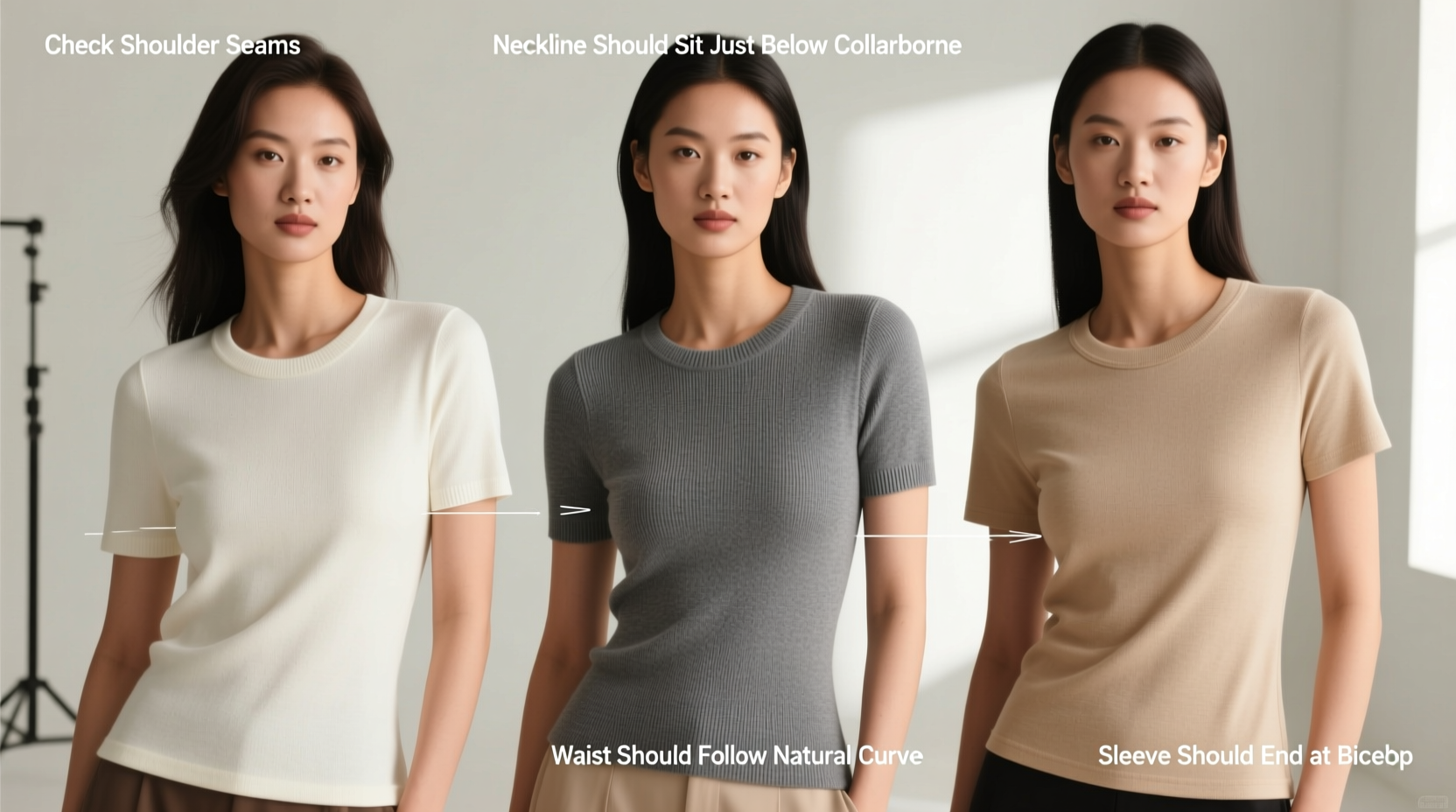
Pay attention to design elements like shoulder seams, sleeve length, and hemline. The shoulder seam should align with the edge of your shoulder bone. Sleeves that extend past the elbow can visually shorten arms, while cropped hems work best with high-waisted bottoms.
Tip: Try on T-shirts with the bra you plan to wear daily—fit changes significantly with different undergarments.Step-by-Step Guide to Finding Your Perfect Fit
Follow this practical sequence whether shopping in-store or online:
- Measure yourself using a soft tape. Record bust, waist, and hip.
- Check the brand’s size chart and compare your measurements to the garment’s flat dimensions.
- Assess fabric content—look for 2–5% elastane for optimal stretch and recovery.
- Try before you buy (if possible): Move around, raise your arms, sit down.
- Examine the shoulder seam—it should rest exactly where your shoulder meets your arm.
- Check sleeve and body length—sleeves should end mid-bicep; hem should cover the waistband of your pants.
- Wash test (for online purchases): Wash the first shirt gently and assess shrinkage or distortion.
Real-World Example: Choosing the Right Tee for Work and Weekend
Sophia, a marketing professional who splits her week between office meetings and weekend errands, struggled with T-shirts that looked great at home but sagged by noon. She measured herself and discovered she was between sizes—bust in a medium, hips closer to a large. After researching, she chose a cotton-modal blend with 3% spandex in a tailored cut. The fabric offered stretch without losing shape, and the slightly curved hem stayed tucked into her trousers. By prioritizing structure and material over the size tag, she found a go-to shirt that transitioned seamlessly from conference rooms to coffee runs.
Common Sizing Mistakes to Avoid
- Trusting vanity sizing: Some brands label larger cuts as smaller sizes to appeal emotionally. Always verify with measurements.
- Ignoring fabric recovery: A soft, stretchy shirt may feel great initially but bag out after an hour.
- Overlooking sleeve width: Tight sleeves restrict movement; overly wide ones create bulk.
- Buying oversized for comfort: Too much excess fabric can look sloppy and hide your shape.
FAQ
Should I size up in knit T-shirts for comfort?
Only if the brand runs small or you prefer an oversized look. In most cases, sizing up sacrifices structure and proportion. Instead, look for styles with added elastane or a relaxed cut in your true size.
Do knit T-shirts shrink after washing?
Yes, especially those with high cotton content. To minimize shrinkage, wash in cold water and air dry. Pre-shrunk fabrics reduce this risk, but always check care labels.
How do I know if a T-shirt is too tight across the back?
If horizontal wrinkles appear between the shoulder blades or the shirt lifts when you raise your arms, it’s too tight. There should be enough ease for full range of motion without excess fabric pooling.
Final Checklist Before You Buy
- ✅ Accurate body measurements recorded?
- Compare them directly to the garment’s flat chest, length, and sleeve specs.
- ✅ Fabric contains 2–5% spandex for recovery?
- This ensures the shirt retains its shape throughout the day.
- ✅ Shoulder seam aligns with shoulder bone?
- Proper shoulder placement is critical for overall fit.
- ✅ Shirt allows full arm movement without riding up?
- Test by reaching overhead or checking your phone.
- ✅ Hem length complements your usual bottoms?
- It should sit at or just below the hip for balance.
Conclusion
Selecting the perfect women’s knit T-shirt isn’t about chasing trends or relying on familiar size labels. It’s a thoughtful process grounded in measurement, material knowledge, and personal lifestyle needs. When you invest time in understanding how fabrics behave and how cuts affect your silhouette, you build a wardrobe of pieces that feel effortless and look intentional. Stop guessing. Start measuring. Choose wisely—and wear confidently.
🚀 Ready to refresh your closet? Pull out three T-shirts you own, measure them, and compare to your body stats. You might discover what truly fits—and what’s been misleading you all along.








