Creating a signature scent is rarely about copying a luxury fragrance—it’s about distilling your identity into olfactory form. Bourbon and vanilla offer a uniquely resonant foundation: warm, complex, grounded yet inviting. Unlike fleeting top notes that vanish in minutes, these materials evolve with skin chemistry, deepening over hours while projecting quiet confidence. This isn’t perfume layering or spray-and-pray. It’s intentional composition—rooted in material knowledge, dilution science, and personal ritual. Whether you’re drawn to bourbon’s smoky oak and dried fruit facets or vanilla’s creamy, balsamic richness, the goal is coherence: a scent that feels like an extension of your presence, not an accessory.
The Olfactory Logic Behind Bourbon & Vanilla
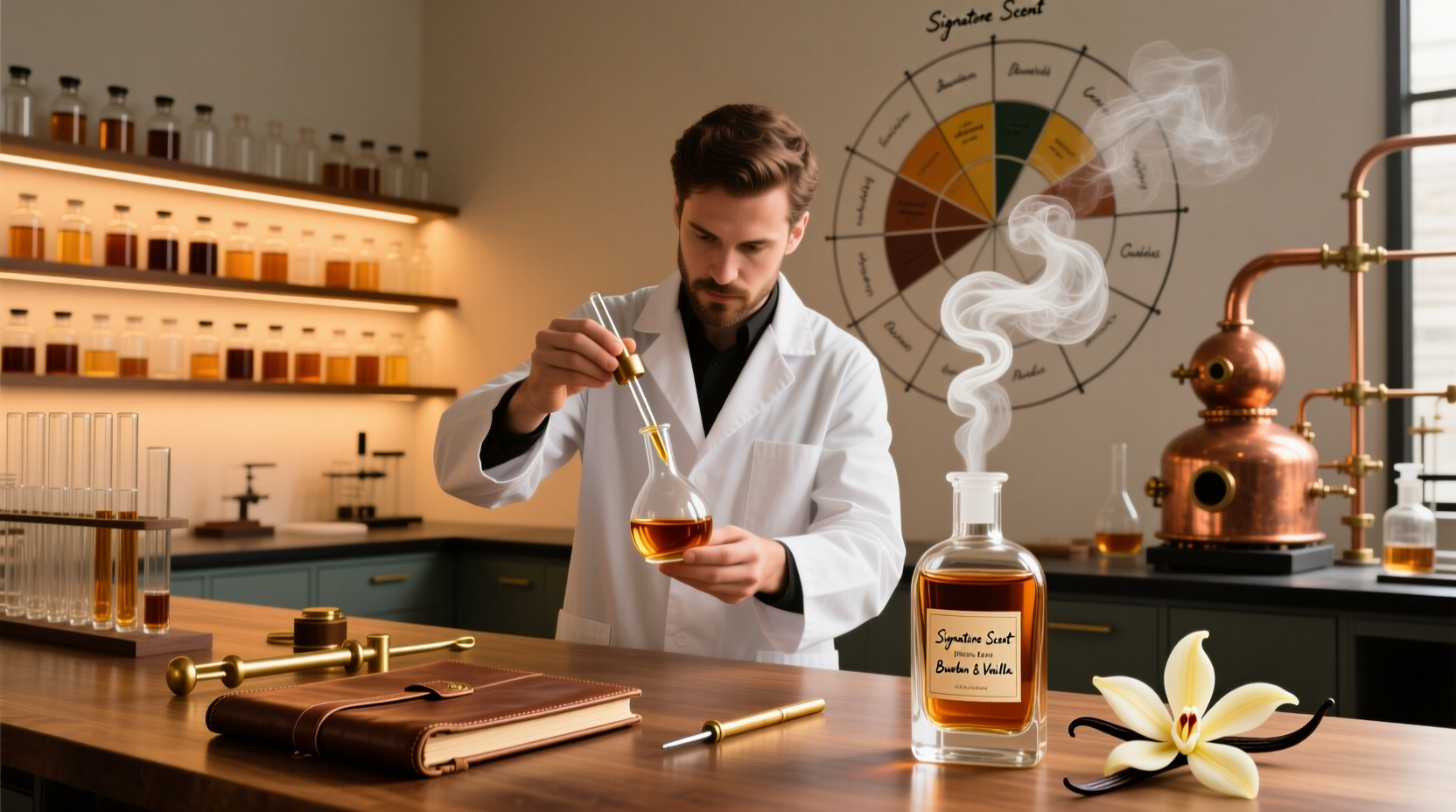
Bourbon and vanilla are often mischaracterized as “sweet” or “gourmand”—but their true power lies in structural sophistication. Real bourbon barrel aging imparts over 400 volatile compounds: vanillin (from lignin breakdown), eugenol (clove-like spice), lactones (coconut-cream nuance), furfural (toasted almond), and tannic phenols that add dryness and lift. Natural vanilla extract contains more than just vanillin—it includes coumarin (hay-like sweetness), heliotropin (cherry-almond depth), and beta-damascenone (honeyed fruit). When paired thoughtfully, bourbon’s woody-dry backbone prevents vanilla from cloying, while vanilla’s softness rounds bourbon’s sharp ethanol bite and amplifies its caramelized warmth.
This synergy makes them ideal anchors for a signature scent. Anchors—also called base notes—form the lasting impression, evolving slowly over 6–12 hours. They provide stability, depth, and emotional resonance. A well-constructed bourbon-vanilla accord doesn’t smell like dessert or a barroom; it smells like worn leather journals, slow-simmered maple syrup, sun-warmed cedar planks, and the faintest trace of pipe tobacco smoke—grounded, intelligent, and deeply human.
Material Selection: Quality Over Convenience
Success hinges on sourcing authentic, high-fidelity materials—not fragrance oils labeled “bourbon” or “vanilla” that contain synthetic vanillin and artificial woody aldehydes. These lack complexity and behave unpredictably in blends. Prioritize botanical extracts and distillates:
- Natural vanilla absolute (not CO₂ extract or tincture): Sourced from Madagascar or Tahiti, aged 6+ months. Look for amber-brown color and thick, viscous texture. Avoid pale, runny “vanilla oil” — it’s likely diluted or synthetic.
- Bourbon essential oil (steam-distilled from actual bourbon barrels, not alcohol-based “bourbon fragrance oil”): Produced by companies like Eden Botanicals or Hermitage Oils. Contains real oak lactones and whiskey volatiles. Alcohol-based versions evaporate too fast and lack depth.
- Supporting naturals: Cedarwood atlas (dry, pencil-shaving wood), benzoin resinoid (vanilla-adjacent balsamic sweetness), and labdanum absolute (ambery, leathery warmth) extend longevity without masking the core duo.
A Step-by-Step Composition Framework
Building a signature scent demands methodical progression—not intuition alone. Follow this timeline over 7–10 days. Rushing compromises balance and reveals formulation flaws only after weeks of wear.
- Day 1–2: Isolate & Observe — Apply 1 drop each of pure bourbon oil and vanilla absolute to separate wrists. Note evolution hourly: initial impact, mid-phase (2–4 hrs), dry-down (6+ hrs). Write down descriptors: “burnt sugar → damp oak → cold ash” or “custard → dried fig → old book binding.”
- Day 3: Ratio Testing — Prepare three 1ml dilutions in perfumer’s alcohol (ethanol 95%): (A) 70% bourbon / 30% vanilla, (B) 50/50, (C) 30/70. Apply one per wrist daily. Which ratio feels most cohesive? Which collapses into flat sweetness or harsh alcohol?
- Day 4–5: Structural Layering — Add 10% cedarwood to your best-performing ratio. Does it sharpen or muddy? Then try 5% benzoin. Does it add roundness or heaviness? Keep notes on synergy, not preference.
- Day 6–7: Dilution & Maturation — Combine your final blend at 15–20% concentration in perfumer’s alcohol. Seal in an amber glass bottle. Store in darkness for 72 hours. Agitate gently twice daily. This allows molecules to bond and harsh edges to soften.
- Day 8–10: Wear Testing — Apply 2 sprays to inner elbow. Track performance: projection (how far scent radiates), longevity (hours until skin-close), and emotional response (does it feel “like you” at hour 5?). Adjust only if a note dominates or vanishes prematurely.
Do’s and Don’ts of Bourbon-Vanilla Perfumery
| Action | Do | Don’t |
|---|---|---|
| Dilution | Use perfumer’s alcohol (ethanol 95%)—it’s odorless, non-greasy, and optimizes diffusion. | Use vodka, rubbing alcohol, or water—they leave residue, distort scent, or cause separation. |
| Vanilla Handling | Warm vanilla absolute gently in a sealed vial under warm (not hot) tap water to liquefy before measuring. | Heat directly or microwave—it degrades delicate esters and creates off-notes like burnt sugar. |
| Bourbon Integration | Add bourbon oil last, after base and heart notes—its volatility means early addition risks evaporation loss. | Mix bourbon oil with citrus or green notes—it clashes with sharp top notes and creates discordant “cleaner” undertones. |
| Storage | Keep finished perfume in amber glass, tightly sealed, away from light and heat. Cold storage extends life by 2–3 years. | Store in clear glass or plastic—the UV exposure degrades vanillin and lactones within weeks. |
| Application | Spray on pulse points *and* clothing (wool, cotton, linen)—fabrics hold bourbon-vanilla accords beautifully for 2–3 days. | Rub wrists together after spraying—it breaks down aromatic molecules and shortens longevity by up to 40%. |
Mini Case Study: Maya’s Library Scent
Maya, a rare-book conservator in Portland, wanted a scent reflecting her work environment: old paper, cedar shelving, and the faint, sweet tang of archival glue. She began with a 60/40 bourbon-to-vanilla base but found it too “barrel-forward.” After testing, she reduced bourbon to 45%, added 10% aged Haitian vetiver (for dusty, rooty earth), and 5% myrrh tincture (for ink-like bitterness). She matured the blend for 5 days, then applied it before handling 18th-century botanical prints. Colleagues remarked, “It smells like walking into your office—but in a good way.” More tellingly, Maya noticed her focus sharpened during long restoration sessions. “It’s not just background noise,” she says. “It’s a sensory anchor—like putting on my favorite cardigan.” Her final formula: 45% bourbon oil, 40% vanilla absolute, 10% vetiver, 5% myrrh, in 95% ethanol at 18% concentration. It lasts 10 hours on skin, 36 on wool sleeves.
Expert Insight: The Science of Skin-Bound Accords
“Bourbon and vanilla share high molecular weight compounds—vanillin, cis-oak lactone, eugenol—that bind strongly to skin lipids. That’s why they linger. But their magic emerges in interaction: vanillin’s polarity stabilizes bourbon’s volatile aldehydes, while bourbon’s phenolic acids enhance vanilla’s balsamic depth. This isn’t blending—it’s covalent collaboration.” — Dr. Lena Cho, Head of Olfactory Chemistry, International Fragrance Association (IFRA)
Dr. Cho’s insight reframes the process: You’re not mixing scents—you’re engineering molecular partnerships. This explains why amateur blends often fail. Too much vanilla overwhelms bourbon’s delicate phenolics; too little, and the accord lacks body. Precision matters—not because perfumery is rigid, but because biology demands it. Your skin isn’t passive. It’s a living reactor where scent molecules oxidize, bind, and transform. Respect that chemistry, and your signature scent becomes inseparable from your presence.
FAQ
Can I use food-grade bourbon or vanilla extract instead of essential oils?
No. Culinary extracts contain sugar, glycerin, water, and preservatives that spoil in alcohol, cause cloudiness, and foster microbial growth. They also lack the concentrated volatile compounds needed for diffusion and longevity. Food-grade materials are designed for taste, not olfaction—and their ethanol content is too low for stable perfume formulation.
How do I prevent my bourbon-vanilla scent from smelling like alcohol or cough syrup?
Alcohol burn indicates either insufficient maturation (let it rest 72+ hours) or excessive concentration (>22%). Cough-syrup notes arise from low-quality vanilla (often synthetic vanillin + coumarin overdose) or unbalanced benzoin. Replace benzoin with labdanum if syrupy notes persist—it adds leathery depth without saccharine sweetness.
Is this safe for sensitive skin?
Yes—if you use IFRA-compliant, allergen-tested materials. Natural vanilla absolute contains vanillin, a known sensitizer at >0.5% concentration. Keep your final blend at ≤0.3% vanillin (achievable by using 30–40% vanilla absolute in a 15% total concentrate). Patch-test for 7 days on inner forearm before full application. Discontinue if redness or itching occurs.
Conclusion
A signature scent built on bourbon and vanilla isn’t a trend—it’s a declaration of self-knowledge. It rejects the idea that fragrance must be floral, fresh, or fiercely abstract. Instead, it embraces warmth, memory, and tactile authenticity. This is scent as heirloom: something you refine over seasons, adjust with life changes, and pass down not in bottles, but in stories—“This is what my grandmother’s study smelled like,” or “This is the calm I found after my divorce.” The process demands patience, yes, but the reward is profound: a scent that doesn’t just sit on your skin, but lives in your breath, your gestures, your silence. Start small. Measure precisely. Wait. Listen to how the molecules settle. And when you catch that first whiff of oak, cream, and quiet certainty rising from your sleeve—know you haven’t just made perfume. You’ve named yourself.
💬 Your turn. Share your bourbon-vanilla ratio, a surprising pairing you discovered, or how your scent evolved over time. Real experiments—successes and recalibrations—are where true mastery begins. Comment below and join the quiet revolution of intentional scent.