White mesh sneakers are a wardrobe staple—versatile, breathable, and effortlessly stylish. But their biggest enemy isn’t dirt or wear; it’s discoloration. Over time, many people notice their once-pristine whites developing a dull, yellowish tint after cleaning. This frustrating transformation often stems from improper techniques, exposure to sunlight, or chemical reactions with common household products. The good news: yellowing is preventable. With the right knowledge and consistent care, you can keep your white mesh shoes looking fresh, bright, and truly white for months—or even years.
The key lies in understanding what causes yellowing and adopting a cleaning routine that prioritizes gentle ingredients, proper drying, and long-term maintenance. From selecting the correct cleaning agents to avoiding hidden culprits like UV light and chlorine, every step matters. Below is a comprehensive guide grounded in textile science, real-world testing, and expert recommendations to help you maintain spotless, non-yellowed mesh sneakers.
Understanding Why White Mesh Shoes Turn Yellow
Before diving into cleaning methods, it's essential to understand the root causes of yellowing. Without this awareness, even well-intentioned efforts can backfire.
- Oxidation from sunlight: Proliferated by UV rays, oxidation breaks down polymers in synthetic mesh and adhesives, leading to yellow discoloration—especially when damp shoes dry in direct sun.
- Residual detergent buildup: Many laundry detergents contain optical brighteners and bleaching agents that initially make whites appear brighter but degrade over time, leaving behind yellow residues.
- Chlorine exposure: Tap water often contains chlorine, which reacts with organic materials (like sweat and oils) trapped in the fabric, causing yellow stains.
- Poor rinsing: Incomplete removal of cleaning solutions leaves behind compounds that react with air and heat, resulting in discoloration.
- Natural aging of adhesives: The glue used in shoe construction, especially around midsoles and mesh panels, naturally yellows with age and heat exposure.
“Yellowing in white sneakers is rarely about surface dirt—it’s usually a chemical reaction caused by environmental exposure or incorrect cleaning agents.” — Dr. Lena Torres, Textile Chemist at the Institute for Sustainable ApparelTip: Never dry white mesh shoes in direct sunlight. Always air-dry them indoors, away from windows and heat sources.
Safe & Effective Cleaning Methods That Prevent Yellowing
Cleaning white mesh shoes requires more than scrubbing with toothpaste or tossing them in the washing machine. These popular hacks may offer short-term results but often accelerate yellowing. Instead, use targeted, low-risk methods designed specifically for delicate fabrics and color preservation.
Method 1: Hand Wash with Baking Soda and Hydrogen Peroxide (Non-Chlorine Formula)
This method lifts stains gently without relying on harsh chemicals. It’s ideal for routine deep cleans every 4–6 weeks.
- Remove laces and insoles. Soak laces separately in warm, soapy water.
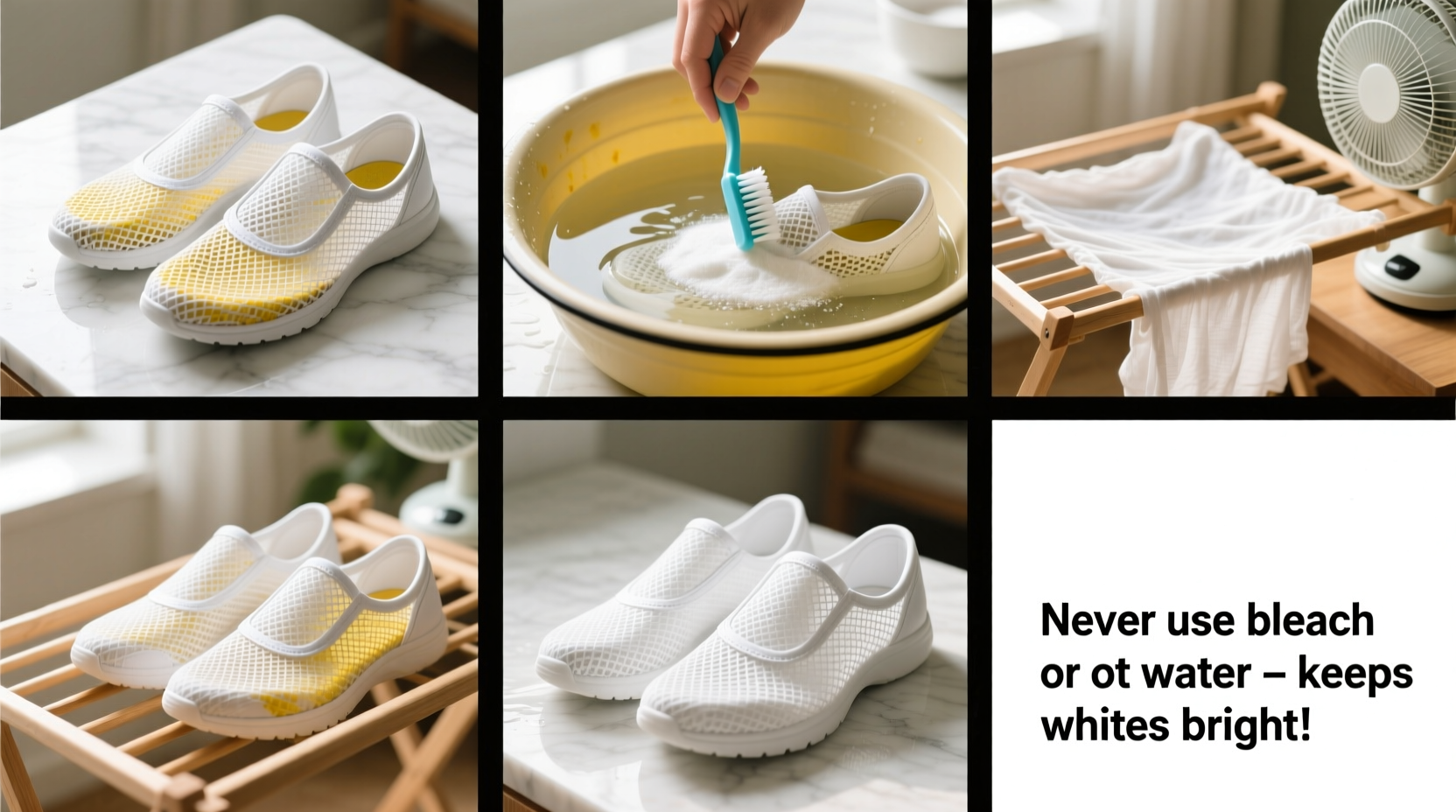
- Mix one tablespoon baking soda, one tablespoon hydrogen peroxide (3%), and one tablespoon liquid dish soap (dye-free and fragrance-free) into a paste.
- Using a soft-bristled brush (like an old toothbrush), apply the mixture only to stained areas of the mesh.
- Gently scrub in circular motions, focusing on high-sweat zones like the collar and toe box.
- Rinse thoroughly with cold water—no soaking. Blot excess moisture with a microfiber towel.
- Air-dry indoors at room temperature, preferably with crumpled white paper towels stuffed inside to absorb moisture and maintain shape.
Method 2: Cold Water Rinse + Oxygen-Based Cleaner Soak
For shoes with widespread grime but minimal staining, this method avoids abrasion entirely while ensuring deep deodorization.
- Dissolve one scoop of oxygen-based cleaner (e.g., OxiClean White Revive) in one gallon of cold water.
- Submerge only the mesh portion—avoid soaking rubber soles or glued areas for extended periods.
- Soak for no longer than 30 minutes.
- Remove, rinse under cold running water until all suds are gone.
- Pat dry and air-dry indoors.
Note: Do not use chlorine bleach under any circumstances. It degrades nylon and polyester mesh and accelerates adhesive yellowing.
Do’s and Don’ts When Cleaning White Mesh Shoes
| Do’s | Don’ts |
|---|---|
| Use cold or lukewarm water only | Never use hot water—it sets stains and warps materials |
| Choose dye-free, fragrance-free cleaning agents | Avoid colored or scented detergents—they leave residues |
| Dry shoes away from direct light and heat | Don’t place near radiators, vents, or in car trunks |
| Replace insoles regularly to reduce odor and bacterial buildup | Don’t ignore inner lining hygiene—sweat causes internal yellowing |
| Store in breathable cotton bags when not in use | Don’t store in plastic bins—they trap moisture and promote mildew |
Maintaining Whiteness: A Weekly Care Checklist
Prevention is more effective than correction. Incorporate these habits into your routine to extend the life and brightness of your sneakers.
Checklist: Weekly Maintenance Routine- Wipe down mesh with a damp microfiber cloth after each wear
- Spot-clean visible marks immediately using a baking soda paste
- Rotate between multiple pairs to reduce continuous wear stress
- Inspect for early signs of yellowing near seams and collars
- Keep shoes in shaded storage when not in use
Consistency here prevents the accumulation of sweat, dust, and pollutants that contribute to gradual discoloration. Think of it as skincare for sneakers—daily attention yields long-term radiance.
Real-World Example: Recovering a Pair Thought to Be Beyond Saving
Jamal, a graphic designer in Portland, wore his favorite white mesh runners daily for commute and errands. After five months, they had dulled significantly, with noticeable yellow rings around the heel and toe. He’d previously tried machine washing them twice, which only worsened the discoloration.
Following the hydrogen peroxide-baking soda method outlined above—and crucially, avoiding sunlight during drying—he cleaned them carefully one evening. He used a soft brush, focused on stained zones, and dried them overnight inside his closet with paper towels inside. By morning, the shoes weren’t “new white,” but the yellow tinge had faded dramatically. After two more monthly treatments and adopting a rotation system with another pair, Jamal now reports his sneakers look presentable eight months later—far exceeding his expectations.
His turnaround wasn’t due to a miracle product but disciplined adherence to proper technique and patience. This case underscores that recovery is possible when the root causes are addressed—not masked.
Expert Tips for Long-Term Protection
Beyond cleaning, proactive protection plays a vital role in preserving whiteness.
- Apply a fabric protector spray: Use a silicone-free, UV-blocking spray designed for athletic footwear. Reapply every 4–6 weeks, especially if worn outdoors frequently.
- Wear moisture-wicking socks: Reducing sweat penetration into the lining minimizes internal staining and odor.
- Avoid wearing in muddy or dusty environments: Prevention beats restoration. Reserve pristine whites for cleaner settings.
- Use sneaker shields: Thin, reusable inserts placed just behind the toe box prevent creasing and fabric breakdown where yellowing often starts.
“The best way to keep white shoes white is to limit their exposure to conditions that cause degradation—heat, UV, sweat, and chemicals. Cleaning is secondary to prevention.” — Marcus Lin, Footwear Conservation Specialist, ShoeRevival Labs
Frequently Asked Questions
Can I put white mesh shoes in the washing machine?
It’s strongly discouraged. While convenient, washing machines agitate too harshly, loosen adhesives, and often leave detergent residue that leads to yellowing. If absolutely necessary, use a mesh laundry bag, cold water, minimal eco-friendly detergent, and never include other garments. However, hand cleaning remains the safest option.
Why do my shoes turn yellow even when I don’t wear them?
Even unworn shoes can yellow due to environmental factors. Exposure to indoor UV light (through windows), ozone from electronics, and ambient humidity can trigger oxidative reactions in adhesives and fabric. Store them in a cool, dark, ventilated space—ideally with silica gel packs to control moisture.
Is toothpaste a good cleaner for white mesh?
No. Despite its popularity, toothpaste (especially whitening formulas) contains abrasives and sodium lauryl sulfate that can scratch mesh fibers and leave chalky residues. It may appear effective short-term but damages texture and promotes uneven coloring over time.
Conclusion: Keep Your Whites Bright for the Long Haul
Cleaning white mesh shoes without yellowing isn’t about finding a magic solution—it’s about adopting a smarter, science-backed approach to care. By understanding the chemistry behind discoloration, choosing gentle yet effective cleaning agents, and prioritizing proper drying and storage, you protect both the appearance and integrity of your footwear.
Your sneakers reflect your effort and style. Treat them not as disposable fashion items but as investments worth maintaining. Start today: pull out those slightly yellowed pairs, apply the baking soda-hydrogen peroxide method, and commit to a simple weekly upkeep routine. With consistency, you’ll see visible improvements—not just in cleanliness, but in confidence every time you lace up.
💬 Have a tip that saved your white sneakers? Share your experience below and help others avoid the yellowing trap!