Selecting the right pair of sunglasses often feels like a game of personal taste—color, brand, frame thickness, or celebrity influence. But beneath the surface of fashion lies a more strategic decision: facial geometry. The shape of your face plays a critical role in determining which frames will enhance your features, provide balanced proportions, and feel comfortable over time. Choosing sunglasses based solely on trendiness can result in unflattering silhouettes, visual imbalance, or even discomfort from ill-fitting designs. Understanding your face shape and how different frames interact with it transforms sunglasses from mere accessories into precision tools of personal expression.
This guide breaks down the science and aesthetics behind matching sunglasses to face shapes, offering practical advice, expert insights, and real-world examples to help you make informed choices that elevate both confidence and function.
Understanding Face Shapes: The Foundation of Frame Selection
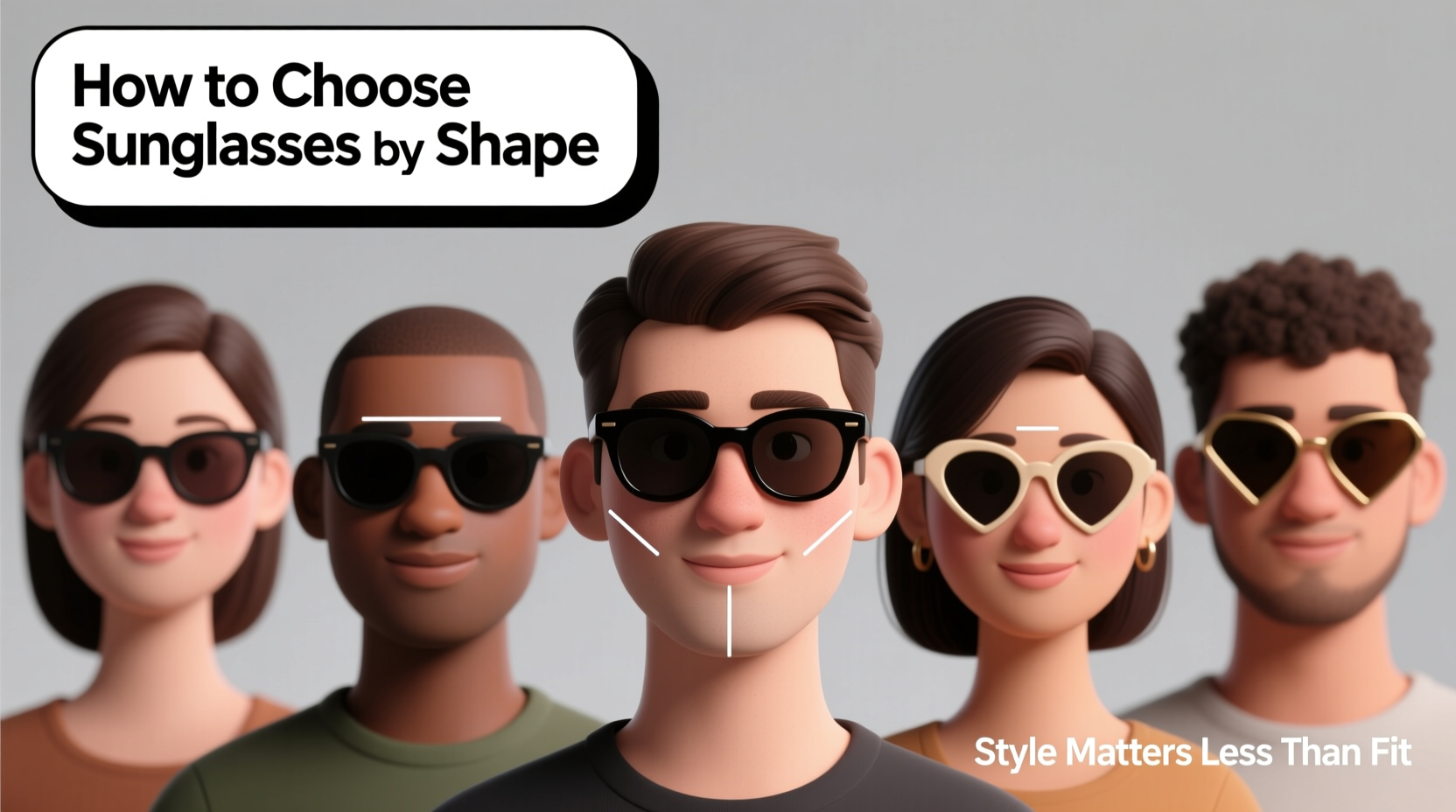
Before selecting any eyewear, identify your face shape. This is not about vanity—it’s about symmetry, proportion, and optical ergonomics. Most adult faces fall into one of six primary categories: oval, round, square, heart, diamond, and oblong. Each has distinct characteristics that respond differently to various frame styles.
To determine your face shape, stand in front of a mirror with your hair pulled back. Use a washable marker to trace the outline of your face on the glass. Step back and analyze the silhouette using these guidelines:
- Oval: Forehead slightly wider than the jawline, with soft curves and balanced proportions.
- Round: Equal width and length, full cheeks, and a rounded jawline.
- Square: Strong jaw, wide forehead, and angular features with nearly equal measurements.
- Heart: Broad forehead tapering to a narrow chin; often seen with high cheekbones.
- Diamond: Narrow forehead and jaw, with prominent cheekbones as the widest point.
- Oblong: Longer than wide, with a flat forehead, elongated chin, and minimal angular contrast.
Once identified, use this classification as your starting point—not a restriction, but a framework for smarter selection.
The Principles of Proportion and Balance
The goal of matching sunglasses to face shape is balance. Frames should either complement existing symmetry or correct perceived imbalances. This doesn’t mean hiding your features—it means highlighting them thoughtfully.
Consider three key principles:
- Width Matching: Sunglasses should not extend beyond the sides of your face. Frames too wide look oversized; too narrow appear pinched.
- Height & Vertical Emphasis: Taller frames add structure to shorter faces; lower-profile frames prevent elongation on already long faces.
- Angle Harmony: Angular frames (square, rectangular) contrast well with soft facial lines, while curved frames soften strong jawlines.
These rules are rooted in visual psychology. Studies in facial perception show that people subconsciously judge symmetry and proportion within milliseconds. Well-chosen sunglasses subtly improve these cues, enhancing attractiveness without drawing attention to the glasses themselves.
Tip: Hold potential frames up to your face in natural light. Observe whether they visually \"anchor\" your features or seem to float awkwardly.Matching Frames to Face Shapes: A Practical Guide
Now that you understand your face shape and the principles of balance, apply them directly to frame selection. Below is a detailed breakdown by category.
| Face Shape | Best Frame Styles | Framing Strategy | Avoid |
|---|---|---|---|
| Oval | Most styles work—aviators, wayfarers, cat-eye, rectangular | Maintain natural balance; avoid overwhelming delicate proportions | Frames taller than the face or overly thick rims |
| Round | Square, rectangular, geometric, angular brow lines | Add definition and length; create vertical interest | Circular or small frames that emphasize roundness |
| Square | Rounded aviators, oval, round, semi-rimless, cat-eye with lift | Softens angles; balances strong jaw and forehead | Boxy, sharp-edged frames that exaggerate angularity |
| Heart | Aviators, round, rimless bottom, cat-eye, butterfly | Broaden lower face; draw attention upward | Narrow frames or those pinching at temples |
| Diamond | Oval, rimless, cat-eye, round with decorative temples | Highlight eyes; soften cheekbone prominence | Small or narrow frames that don’t span cheek width |
| Oblong | Large, wide, deep-set frames; wraparounds, clubmaster styles | Shorten facial appearance; add horizontal width | Thin wire frames or tall, narrow lenses |
For example, someone with a round face benefits from angular frames because the contrast creates visual length. Conversely, a person with a square jaw finds harmony in round lenses, which echo softer curves and reduce perceived harshness.
“Frame choice isn’t cosmetic—it’s architectural. You’re designing around bone structure.” — Lena Torres, Eyewear Designer at Vista Optics
Step-by-Step: How to Choose Sunglasses Based on Your Face Shape
Follow this five-step process the next time you shop for sunglasses, whether online or in-store.
- Determine your face shape. Use the tracing method or take a straight-on photo and measure key points: forehead, cheekbones, jawline, and face length.
- Assess your dominant features. Do you want to highlight your eyes? Minimize a broad forehead? Soften a strong chin? Let intent guide style.
- Select 2–3 frame types aligned with your shape. Refer to the table above. For instance, if you have a heart-shaped face, try aviators and cat-eye styles.
- Test for fit and proportion. Frames should rest comfortably on ears and nose. Temples shouldn’t press, and lenses should sit just above cheekbones. No skin should be visible between lens edge and brow.
- Review in multiple lighting conditions. Natural daylight reveals true color and reflection issues. Check side profiles to ensure the frame doesn’t tilt or gap.
This methodical approach eliminates guesswork and reduces post-purchase regret. It also empowers you to experiment confidently within your structural boundaries.
Real-World Example: From Frustration to Fit
Take James, a 34-year-old teacher with a square face. He loved the bold look of classic Wayfarers but found they made his jaw appear heavier and his expressions stern. After years of avoiding photos in sunglasses, he consulted an optician who analyzed his facial proportions. She recommended trying a vintage-inspired Clubmaster frame—rectangular but with a rounded top line and acetate upper rim. The subtle curve softened his angularity, while the defined brow bar maintained sophistication. “It was like the glasses finally matched how I see myself,” James said. “Not boxy, not trendy—just balanced.”
This case illustrates that even popular, universally praised styles aren’t one-size-fits-all. Personalization matters.
Additional Factors Beyond Face Shape
While face shape is foundational, other elements influence sunglass suitability.
- Skin Tone & Frame Color: Warm undertones (golden, olive) pair well with tortoiseshell, gold, or warm brown. Cool tones (pink, blue undertones) suit black, silver, gray, or jewel tones.
- Hair Color & Contrast: High-contrast hair (e.g., platinum blonde or jet black) can handle bolder frames. Low-contrast coloring may benefit from translucent or neutral-toned acetate.
- Lifestyle Needs: Active users need wraparound, polarized, and impact-resistant lenses. Office commuters might prefer lightweight titanium frames with blue-light filtering.
- Proportional Adjustments: Facial features like a large nose bridge or high cheekbones affect fit. Look for adjustable nose pads or customizable hinges.
Frequently Asked Questions
Can I wear round glasses if I have a round face?
You can, but proceed carefully. Small, subtly round frames with thin metal rims may work if they sit higher on the face and include angular detailing (e.g., hexagonal lenses). However, large circular frames will likely exaggerate roundness. Opt for slight oval variations instead.
Are there sunglasses that suit multiple face shapes?
Yes. Aviators, with their teardrop shape and medium width, flatter oval, heart, and oblong faces. Round frames with moderate size suit oval and diamond shapes. The key is scale—adjusting frame width and depth to match facial dimensions.
What if my face doesn’t fit neatly into one category?
Many people have hybrid shapes—round-square or oval-heart. In such cases, prioritize your most dominant feature. If your jaw is rounded but your forehead is wide, treat it as a round face with width considerations. Focus on balancing the strongest visual element first.
Expert Checklist: Selecting Sunglasses Like a Pro
Use this checklist before finalizing your purchase:
- ✅ Identified my face shape accurately
- ✅ Chose frame style that adds balance (not contrast)
- ✅ Ensured frame width matches or slightly exceeds face width
- ✅ Checked that lenses don’t touch cheeks or brows
- ✅ Verified temple comfort and secure ear grip
- ✅ Confirmed UV400 protection and lens quality
- ✅ Considered color compatibility with skin and hair tone
- ✅ Tested in daylight and profile view
Skipping even one step can compromise both aesthetics and function. Sunglasses are both protective gear and identity markers—they deserve thoughtful selection.
Conclusion: Style With Purpose
Choosing sunglasses based on face shape isn’t about conforming to rigid rules—it’s about aligning style with structure. When form follows function, the result is effortless elegance. You stop fighting your features and start showcasing them. Whether you're drawn to retro cat-eyes, sporty wraps, or minimalist rims, let facial geometry be your silent guide.
Next time you browse a rack of sunglasses, pause. Trace your face shape. Assess proportions. Ask not just “Do I like this?” but “Does this like me?” The right pair won’t just protect your eyes—it will complete your face.
🚀 Ready to find your perfect pair? Start by identifying your face shape today—and share your journey in the comments. What surprised you about your ideal frame style?