
Hiking in humid conditions presents a unique challenge: moisture from sweat and the environment can saturate your feet, increasing friction and dramatically raising the risk of blisters. While footwear often gets the spotlight, it’s the sock���often overlooked—that plays the most critical role in protecting your feet. The right hiking sock manages moisture, reduces friction, and maintains comfort over long distances. Choosing poorly can lead to painful hotspots, ruined trips, and even infections. But with the right knowledge, you can select socks that keep your feet dry, cool, and blister-free—even in the muggiest environments.
Understanding the Science Behind Blisters in Humid Conditions
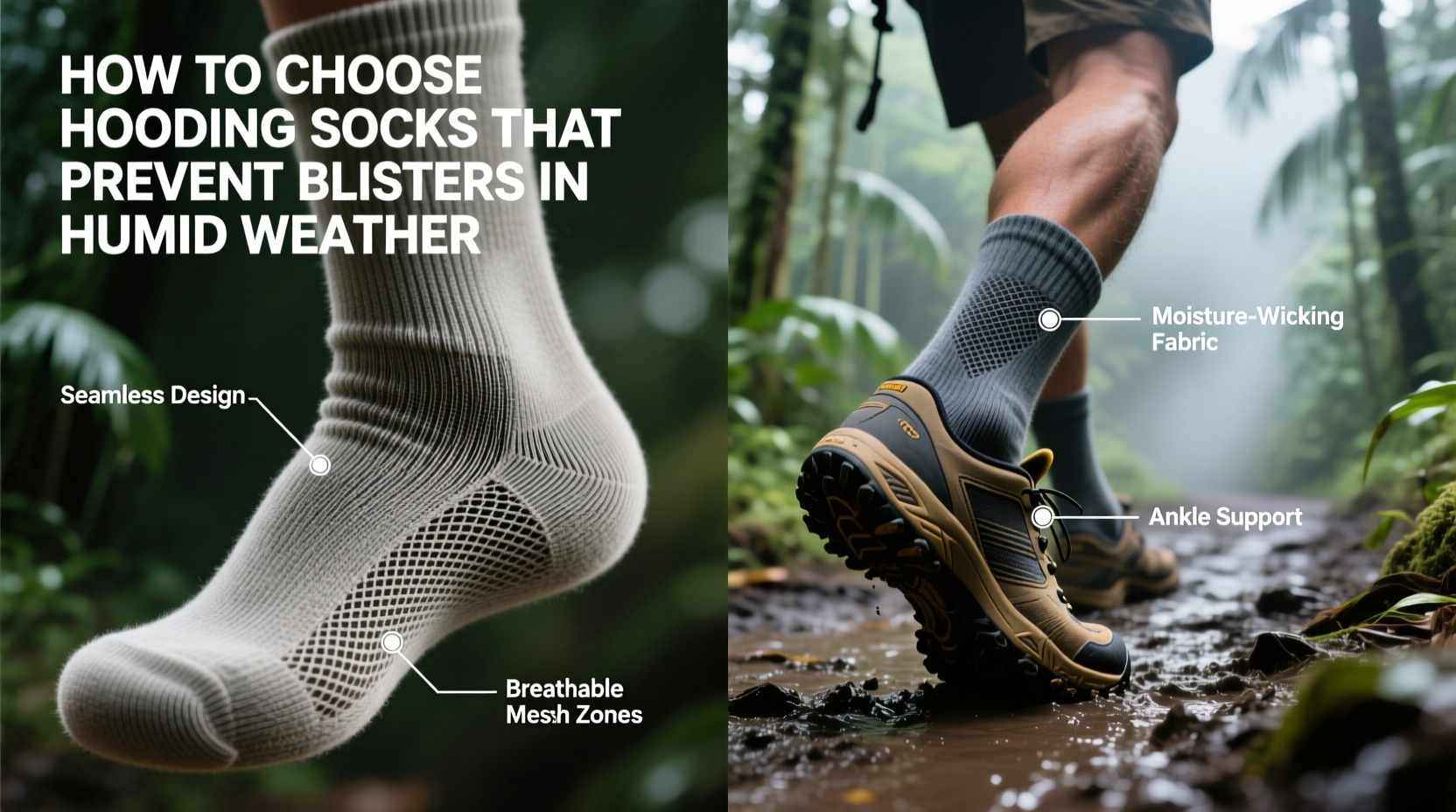
Blisters form when layers of skin separate due to repeated friction. In humid weather, this process accelerates. Sweat softens the outer layer of skin (epidermis), making it more vulnerable. When combined with constant rubbing from boots or ill-fitting socks, the weakened skin shears apart, filling with fluid as a protective response.
Humidity exacerbates this because:
- High ambient moisture slows evaporation, keeping feet damp for longer.
- Sweat production increases as the body tries to cool down, overwhelming natural wicking mechanisms.
- Damp socks lose cushioning and shape, leading to bunching and increased friction zones.
The key is not just staying dry—but managing moisture effectively. A sock that pulls sweat away from the skin and allows it to evaporate prevents prolonged dampness, reducing both friction and skin breakdown.
“Moisture management is the single most important factor in blister prevention during tropical or humid hikes.” — Dr. Lena Torres, Sports Podiatrist and Outdoor Medicine Specialist
Material Matters: What Socks Are Best for Humid Weather?
Not all sock materials perform equally in high humidity. Some trap moisture; others degrade when wet. The best choices balance wicking, durability, and breathability.
Synthetic Fibers: The Go-To for Performance
Synthetic blends—especially those containing polypropylene, polyester, or nylon—are engineered for moisture-wicking. These fibers pull sweat away from the skin and spread it across the fabric surface where it can evaporate. Unlike cotton, they don’t absorb water, so they stay light and maintain their structure.
Polyester is widely used in performance hiking socks due to its durability and quick-dry properties. Nylon adds strength, especially in high-wear areas like heels and toes.
Avoid Cotton at All Costs
Cotton absorbs up to 7% of its weight in water and holds it close to the skin. Once wet, it loses insulating ability and becomes abrasive. In humid climates, cotton socks act like sponges, creating an ideal environment for maceration (skin breakdown) and blisters.
Tip: Never wear cotton socks on a hike—especially in humid regions. Even a small cotton blend (over 5%) can compromise performance.Merino Wool: A Natural Contender
Despite being a natural fiber, merino wool excels in humid conditions. It can absorb up to 30% of its weight in moisture without feeling wet and continues to regulate temperature. It also has natural antimicrobial properties, reducing odor even after extended use.
However, pure merino is less durable than synthetics. Most high-performance hiking socks blend merino with nylon or spandex (typically 60–70% merino, 25–35% synthetic) to enhance stretch and abrasion resistance.
Emerging Materials: Bamboo and TENCEL™
Bamboo-derived viscose and TENCEL™ (lyocell) are gaining popularity for their softness and eco-friendly production. They offer moderate moisture absorption and good breathability but are generally less durable than synthetics. Best used in lighter-weight socks for day hikes rather than multi-day treks.
Fit and Construction: How Sock Design Prevents Blisters
A sock can be made of the best materials but still fail if the fit is wrong. Poor fit leads to slippage, wrinkling, and pressure points—all precursors to blisters.
Snug, Not Tight: The Ideal Fit
Your hiking sock should hug your foot without constricting circulation. There should be no excess material at the heel or toe, and the cuff should stay in place without digging into your calf. Look for socks with anatomical shaping—left and right-specific designs minimize internal movement.
Targeted Cushioning
Different parts of the foot experience different pressures. High-quality hiking socks feature zoned cushioning:
- Extra padding in the heel and ball of foot for impact absorption.
- Lighter weave in the arch and top of foot to enhance breathability.
- Reinforced toe seams to reduce irritation.
Seamless or Flat-Lock Seams
Traditional bulky seams rub against the skin, causing hotspots. Seamless knitting or flat-lock stitching eliminates raised ridges, especially in the toe area. Always try on socks and run your finger over the toe seam—if you feel a bump, it will likely cause trouble on the trail.
Compression and Arch Support
Socks with light compression help stabilize the foot inside the boot, reducing micro-movements that lead to friction. Integrated arch bands keep the sock from slipping and maintain consistent contact with the skin.
| Feature | Benefit for Humid Weather | Top Brands Offering This |
|---|---|---|
| Merino-synthetic blend | Wicks moisture while resisting odor | Darn Tough, Smartwool, Icebreaker |
| Mesh ventilation zones | Increases airflow over top of foot | Injinji, Feetures, Wrightsock |
| Double-layer construction | Reduces skin-to-boot friction | Wrightsock, ExOfficio |
| Anatomical left/right fit | Eliminates bunching and creasing | CEP, Smartwool, Darn Tough |
Layering Strategies: Double Up for Maximum Protection
In extreme humidity or on long-distance treks, many hikers use a two-sock system. This involves wearing a thin inner liner sock under a thicker outer hiking sock.
The principle is simple: the inner sock moves with your foot, the outer sock moves with your boot. Since they slide against each other, friction is absorbed between the layers—not between your skin and the sock.
How the Two-Sock System Works
- Inner Liner: Made of ultra-thin synthetic or silk-like material. Fits tightly to the foot, wicking moisture immediately.
- Outer Hiking Sock: Provides cushioning and structure. Typically mid-weight merino or synthetic blend.
- Friction Gap: The interface between the two socks acts as a shear zone, preventing energy transfer to the skin.
This method is particularly effective for hikers prone to heel or toe blisters. It also allows for faster drying—liner socks can be changed mid-hike if needed.
Tip: Use white liner socks so you can spot early signs of rubbing—like discoloration or faint red marks—before they turn into blisters.Real-World Example: The Appalachian Trail in Summer
During a thru-hiker survey conducted in 2022, 68% of respondents who completed the southern section of the Appalachian Trail (known for oppressive summer humidity) reported using a double-sock system. Among them, 84% said they experienced fewer blisters compared to previous hikes with single socks. One hiker, Sarah M., noted: “I switched to Injinji liner socks and Darn Tough over-socks halfway through Georgia. My feet stopped blistering entirely—even in 90% humidity and 95°F heat.”
Step-by-Step Guide: Choosing the Right Sock for Your Next Humid Hike
Selecting the ideal sock isn’t guesswork. Follow this practical sequence before your next trip:
- Evaluate your hiking conditions: Duration, terrain, and expected humidity levels. For multi-day hikes in tropics, prioritize moisture-wicking and durability.
- Choose material blend: Opt for 60–80% merino wool blended with nylon/spandex, or 100% performance synthetics. Avoid cotton.
- Determine thickness: Lightweight for breathability in extreme heat; mid-weight for cushioning on rugged trails.
- Decide on single or double layer: If you’re blister-prone, test a liner + hiking sock combo at home first.
- Try before you buy: Wear potential socks around the house with your hiking boots. Walk up stairs, squat, and simulate trail motion to check for slippage or pressure points.
- Break them in gradually: Wear new socks on short walks before committing to a full day hike.
- Pack spares: Bring at least one extra pair per day in humid conditions. Change socks during breaks if feet feel damp.
Frequently Asked Questions
Can I use running socks for hiking in humid weather?
Running socks are designed for shorter durations and often lack the reinforced heel/toe and arch support needed for hiking. While some high-performance running socks may work for day hikes, dedicated hiking socks offer better cushioning, durability, and fit stability over uneven terrain.
How often should I change my hiking socks in humid conditions?
Change socks whenever they feel damp or after 3–5 hours of continuous hiking in high humidity. Mid-hike changes during rest stops can significantly reduce blister risk. Carry spare socks in a ziplock bag to keep them dry.
Do toe socks really prevent blisters?
Toes socks (like those from Injinji) separate each toe, eliminating inter-toe friction—a common source of blisters. Many ultrarunners and backpackers swear by them in humid climates. However, they require adjustment; wear them with minimalist or wide-toe-box boots for best results.
Checklist: Picking Blister-Proof Socks for Humid Hikes
- ☐ Material is synthetic or merino blend—no cotton
- ☐ Snug, anatomical fit with no loose fabric
- ☐ Seamless or flat-seam construction, especially at toes
- ☐ Moisture-wicking and quick-drying
- ☐ Consider double-layer system if blister-prone
- ☐ Test socks with your hiking boots before the trip
- ☐ Pack at least one extra pair per day
Final Thoughts: Small Gear, Big Impact
It’s easy to overlook socks when planning a hike. Yet, no piece of gear affects your comfort and endurance more directly. In humid weather, where every step risks moisture buildup and friction, your socks become your first line of defense. Investing time in selecting the right pair—based on material, fit, and function—can mean the difference between a rewarding journey and a painful retreat.
Don’t wait for a blister to teach you the lesson. Apply these insights now: test new socks, pack spares, and prioritize moisture management. Your feet will carry you miles—make sure they’re protected every step of the way.
💬 Have a sock strategy that saved your hike? Share your experience in the comments and help fellow adventurers walk farther, smarter, and blister-free.








