Winter in the city presents a unique set of challenges. You're navigating crowded sidewalks, hopping on and off public transit, moving between heated indoor spaces and biting cold streets. Your outerwear needs to adapt—offering warmth without bulk, protection from wind and light precipitation, and enough style to match your daily wardrobe. Two popular contenders dominate the urban winter scene: the hooded puffer jacket and the quilted vest. Both are staples in modern cold-weather dressing, but they serve different purposes. Choosing between them—or deciding how to use both—can make or break your comfort and mobility during the colder months.
The decision isn’t just about personal taste. It’s about function, climate, activity level, and even social context. A parka built for Arctic expeditions might be overkill for a commute from Brooklyn to Manhattan, just as a sleeveless vest could leave you shivering during a late-night walk home. Understanding the strengths and limitations of each garment helps you build smarter layers and stay comfortable throughout the season.
Understanding the Core Differences
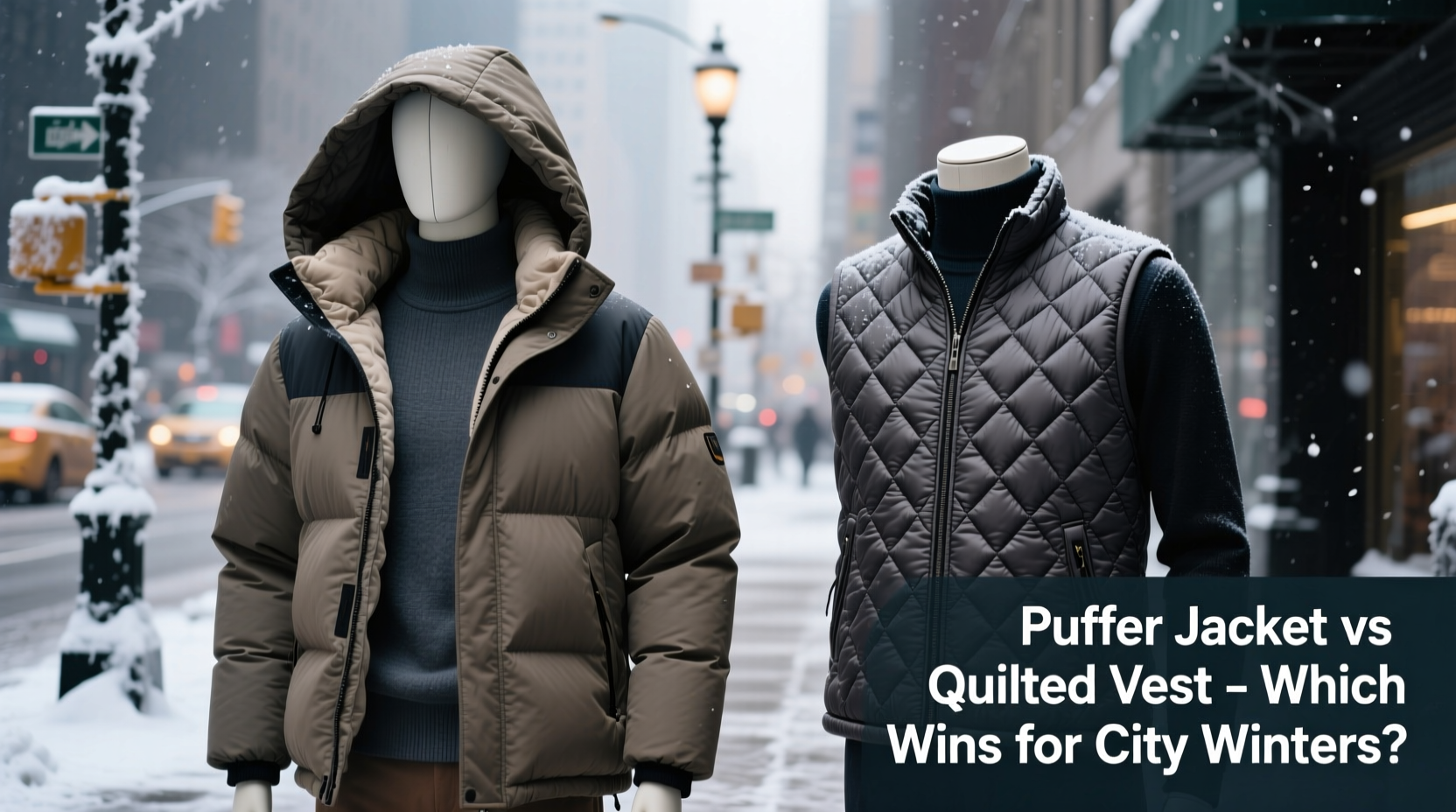
At first glance, both the hooded puffer jacket and the quilted vest share design DNA: stitched compartments filled with insulating material, typically down or synthetic fibers. But their structure leads to vastly different performance outcomes.
A **hooded puffer jacket** is a full-coverage insulated coat designed to trap heat across the entire upper body, including the head. The hood adds protection from wind and light snow, while long sleeves shield arms from cold exposure. Most are water-resistant or treated with durable water repellent (DWR) finishes, making them suitable for variable urban weather.
In contrast, a **quilted vest** is a sleeveless garment that insulates only the core—chest, back, and upper abdomen. It leaves arms free, allowing greater range of motion and easier temperature regulation when moving between environments. Because it lacks sleeves and a hood, it relies heavily on what’s worn underneath and above it.
The fundamental distinction lies in coverage versus flexibility. One maximizes thermal retention; the other prioritizes breathability and layering versatility.
“Urban winters demand adaptive clothing. Static insulation fails when you’re transitioning from subway heat to outdoor chill every 20 minutes.” — Lena Torres, Urban Apparel Designer at MetroLayer Studio
Warmth and Thermal Efficiency Compared
When evaluating winter wear, warmth is often the top priority—but not all warmth is created equal. How heat is distributed, retained, and managed matters just as much as total insulation.
Puffer jackets typically offer superior overall warmth. Their full construction traps body heat efficiently, especially around the neck, shoulders, and arms—areas prone to rapid heat loss. The hood further reduces convective heat escape from the head, which can account for up to 10% of total body heat loss in cold conditions. High-fill-power down models (650+ fill) provide excellent warmth-to-weight ratios, keeping you warm without excessive bulk.
Quilted vests, while highly effective at warming the torso, do nothing for extremities. Arms remain exposed unless covered by a mid-layer like a sweater or an outer shell. However, this can be an advantage: during active commutes—walking briskly, climbing stairs, cycling—the core generates heat faster than limbs. A vest prevents overheating while still protecting vital organs, reducing sweat buildup that leads to post-exertion chills.
Tip: Pair a quilted vest with a lightweight thermal long-sleeve base and a windproof overshirt for balanced urban layering.Heat Retention Breakdown
| Feature | Hooded Puffer Jacket | Quilted Vest |
|---|---|---|
| Core Insulation | Excellent | Excellent |
| Arm Coverage | Full (sleeves) | None |
| Hood Protection | Yes | No |
| Ventilation Control | Limited (zips only) | High (open sides, arm movement) |
| Sweat Management | Poor (traps moisture) | Good (allows airflow) |
| Best For | Static exposure, low activity | Active movement, variable temps |
Practicality in City Environments
The urban landscape shapes how we dress. Subways, office buildings, cafes, and elevators create microclimates that shift rapidly. Stepping outside may require serious insulation, but stepping into a heated lobby demands breathability. This stop-and-go rhythm favors garments that support dynamic layering.
Hooded puffers excel in sustained cold exposure. If your routine involves waiting for buses, walking long distances, or spending extended time outdoors, the full coverage provides consistent protection. However, their bulk can become problematic indoors. Removing a puffer means carrying it or draping it over a chair—often awkward in tight spaces. Many also generate excess heat when sitting near radiators or under office lighting.
Quilted vests shine in transitional settings. They can be worn over a button-down shirt during a meeting, then layered under a wool coat when heading out. Their low profile fits under overcoats without adding thickness, and they compress easily into backpacks when not needed. Since arms are free, gesturing, typing, or holding coffee doesn’t require constant adjustment.
One real-world example illustrates this well: Sarah, a graphic designer living in Chicago, used to rely solely on a heavy puffer during her December commute. She found herself overheating on the train, removing the jacket, and then freezing during the final block walk home. After switching to a quilted vest over a merino turtleneck, she maintained core warmth while avoiding sweat and discomfort. “I finally stopped feeling like I was either roasting or shivering,” she said. “It’s subtle, but it changed my whole winter experience.”
Style and Wardrobe Integration
Fashion plays a role in functional decisions, especially in cities where appearance influences professional and social interactions. Puffer jackets have evolved from clunky ski gear to sleek, tailored silhouettes. Modern versions come in minimalist black, matte navy, or even cropped cuts that pair well with jeans and boots. A well-designed puffer can anchor an outfit, especially when balanced with slim-fit pants and clean footwear.
Quilted vests, meanwhile, offer more styling versatility. Worn over a collared shirt or chunky knit, they add texture and visual interest without overwhelming the look. Designers like Loro Piana and Arc'teryx have elevated the vest into high-end menswear and womenswear, using premium materials and refined stitching patterns. In business-casual environments, a vest can signal preparedness without appearing overly sporty.
That said, vests risk looking incomplete if not styled intentionally. Without proper layering, they can appear like an afterthought. Pairing them with short sleeves or flimsy tees undermines both warmth and aesthetics.
Layering Strategies for Maximum Performance
Neither garment is inherently superior—it’s how they integrate into a broader layering system that determines effectiveness.
The ideal urban winter outfit follows a three-layer model:
- Base Layer: Moisture-wicking fabric (e.g., merino wool or technical synthetics) to keep skin dry.
- Middle Layer: Insulating piece (fleece, sweater, or vest) to retain heat.
- Outer Layer: Wind- and water-resistant shell (like a puffer or overcoat) to block elements.
In mild urban winters (-5°C to 5°C / 23°F to 41°F), a quilted vest often serves perfectly as the middle layer. Combine it with a windproof field jacket or trench coat as the outer shell, and you gain protection without sacrificing mobility.
In harsher conditions (below -5°C / 23°F), especially with wind or precipitation, the hooded puffer functions best as the outermost layer. Its integrated hood and sealed cuffs minimize drafts, and its continuous insulation prevents cold spots.
For extreme variability—common in cities with glass-heavy architecture and underground transit systems—consider combining both. Wear a thin vest under a packable puffer. When entering a warm space, unzip the puffer or remove it entirely, leaving the vest to maintain core warmth without bulk.
Checklist: Building Your Ideal City Winter Layering System
- ✅ Assess your daily temperature fluctuations (indoor vs. outdoor)
- ✅ Choose a moisture-wicking base layer in breathable fabric
- ✅ Select a mid-layer: vest for activity, puffer for static exposure
- ✅ Add a wind-resistant outer shell if needed
- ✅ Test the combination during a trial commute
- ✅ Ensure ease of removal and portability
- ✅ Prioritize hoods and collar coverage if walking frequently
Frequently Asked Questions
Can I wear a quilted vest in heavy snow?
Only if properly layered. A vest alone offers no protection from wet conditions. Pair it with a waterproof outer coat and ensure arms are covered by long sleeves. Avoid relying on a vest as your sole outerwear in snowfall.
Are puffer jackets too bulky for city life?
Not necessarily. Look for streamlined, waist-length puff ers with adjustable hems and compressible designs. Many modern versions pack into their own pocket, making them easy to carry once indoors.
Which is better for commuting by bike or foot?
A quilted vest often performs better due to superior ventilation. Cyclists generate significant body heat; a full puffer can lead to dampness and chill later. A vest allows heat to escape through the arms while shielding the core from wind.
Final Verdict: Matching Garment to Lifestyle
There is no universal winner in the hooded puffer jacket versus quilted vest debate. The right choice depends on your specific urban environment, daily routines, and personal tolerance for temperature shifts.
If your days involve long stretches outdoors—deliveries, construction, dog walking, or early morning waits—the hooded puffer jacket is the clear choice. Its comprehensive coverage and weather resistance provide reliable defense against persistent cold.
If you move frequently between heated interiors and brief outdoor exposures—office workers, creatives, students, parents dropping kids at school—a quilted vest offers smarter thermal regulation. It supports layering, reduces overheating, and integrates seamlessly into diverse outfits.
Many find the optimal solution lies in owning both. Use the vest as a workhorse mid-layer during shoulder seasons and milder winters, reserving the puffer for truly frigid days. Together, they form a flexible armor against unpredictable city weather.
“The future of urban outerwear isn’t one perfect coat—it’s intelligent layering. Adaptability beats maximum insulation in most metropolitan climates.” — Dr. Marcus Lin, Climate-Responsive Fashion Researcher, MIT Media Lab
Conclusion
City winters reward thoughtful preparation. Rather than chasing trends or defaulting to last year’s coat, assess how you actually live, move, and feel during the coldest months. The hooded puffer jacket and quilted vest represent two philosophies of warmth: total enclosure versus strategic insulation. By understanding their roles, you gain control over comfort, style, and efficiency.
Start by auditing your typical day. How much time do you spend outside? How often do temperatures shift dramatically? Are you walking, biking, or mostly riding transit? Answer these honestly, then test combinations that align with your reality. Whether you lean toward the cozy reliability of a puffer or the agile simplicity of a vest, the goal remains the same: staying warm, mobile, and confident on the urban frontier.
💬 What’s your go-to winter layer? Have you tried combining a vest and puffer? Share your urban winter strategies in the comments and help others dress smarter this season.